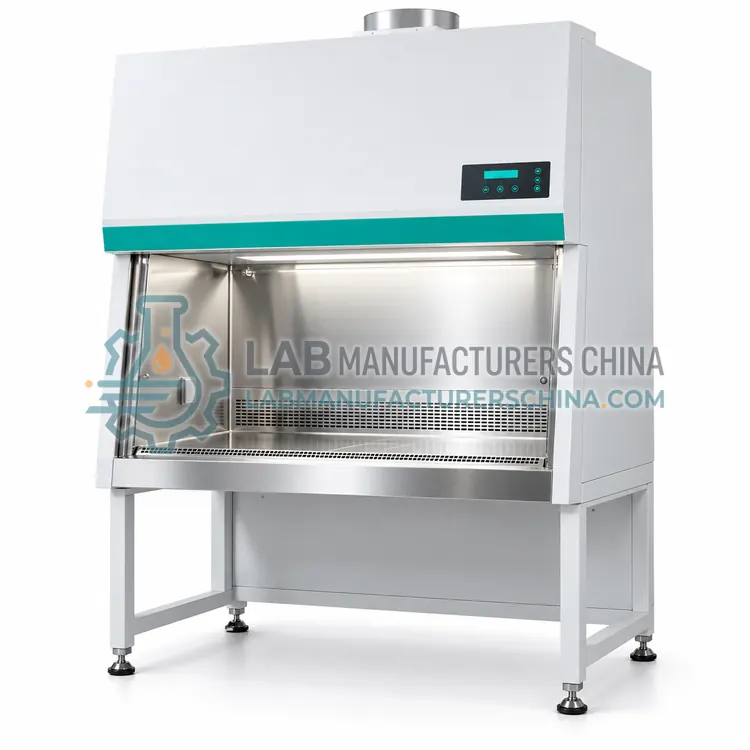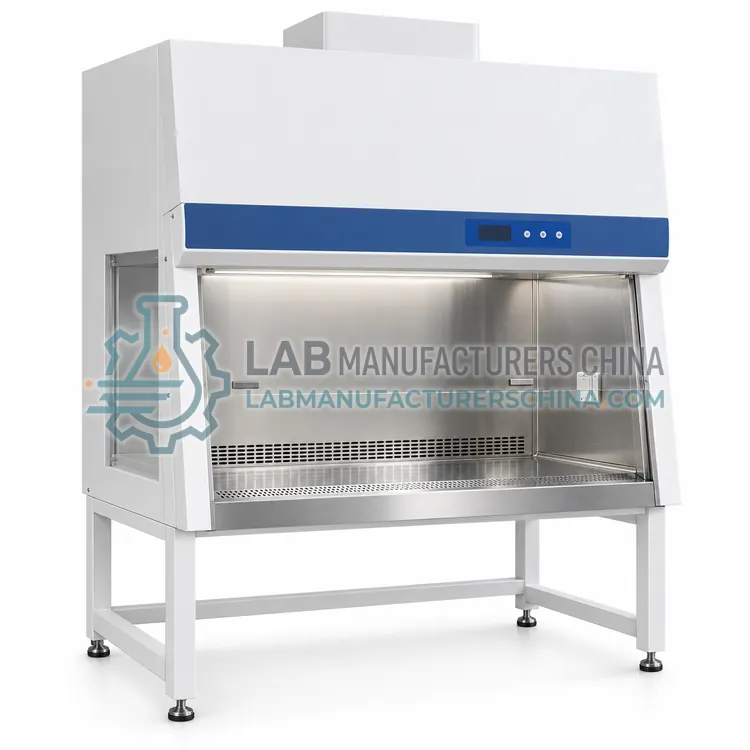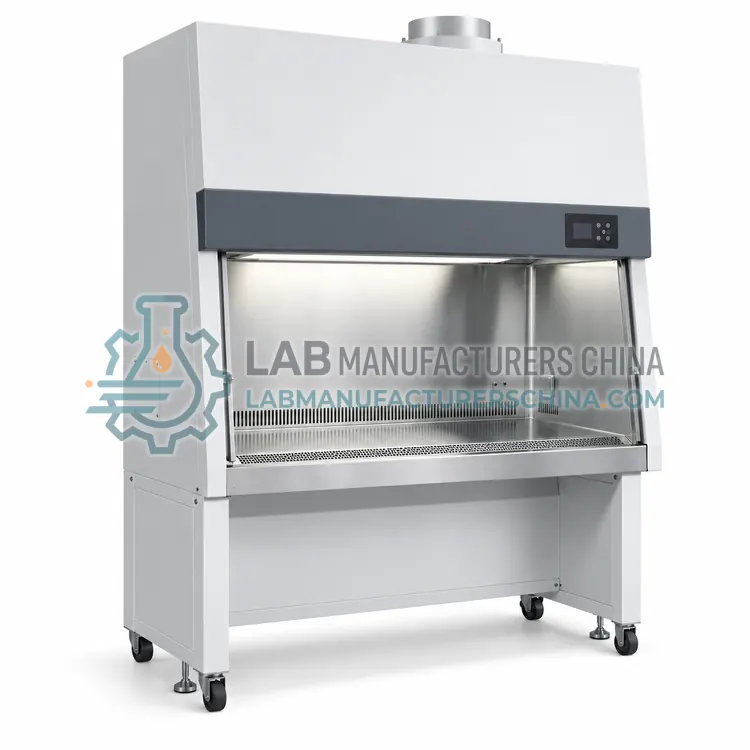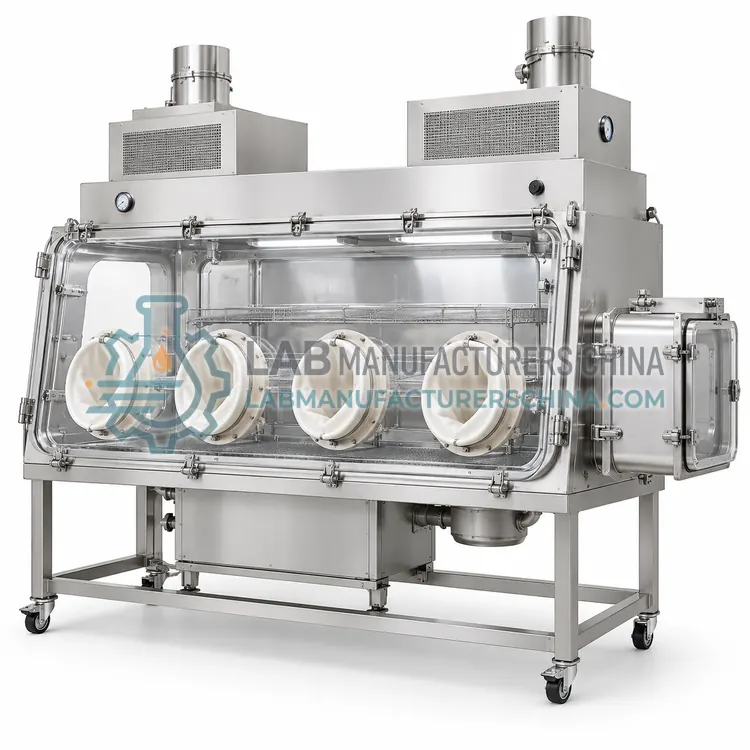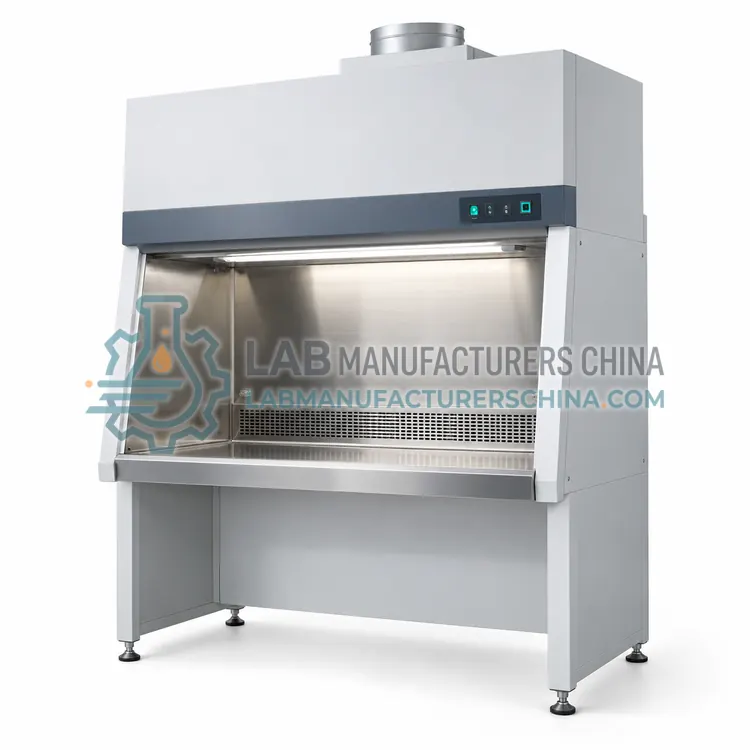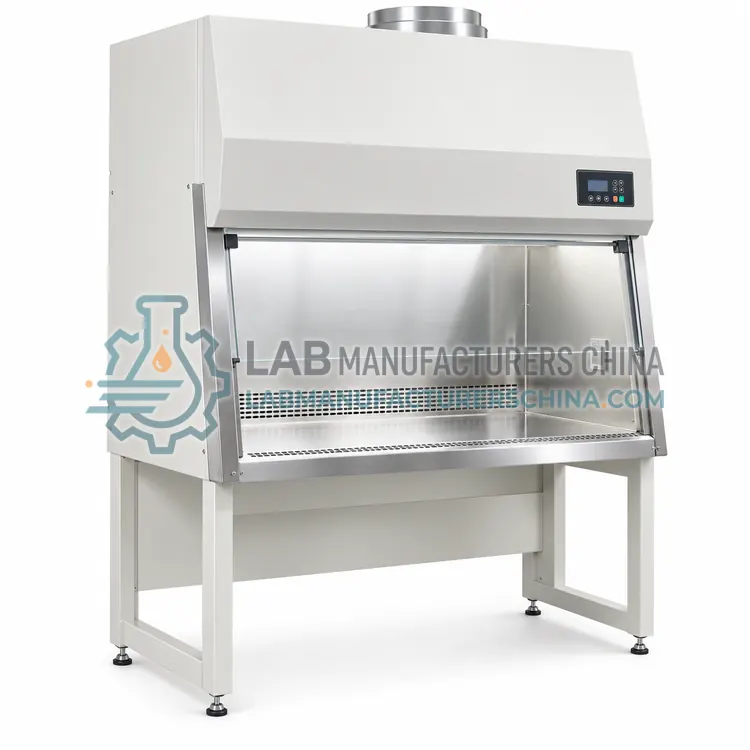
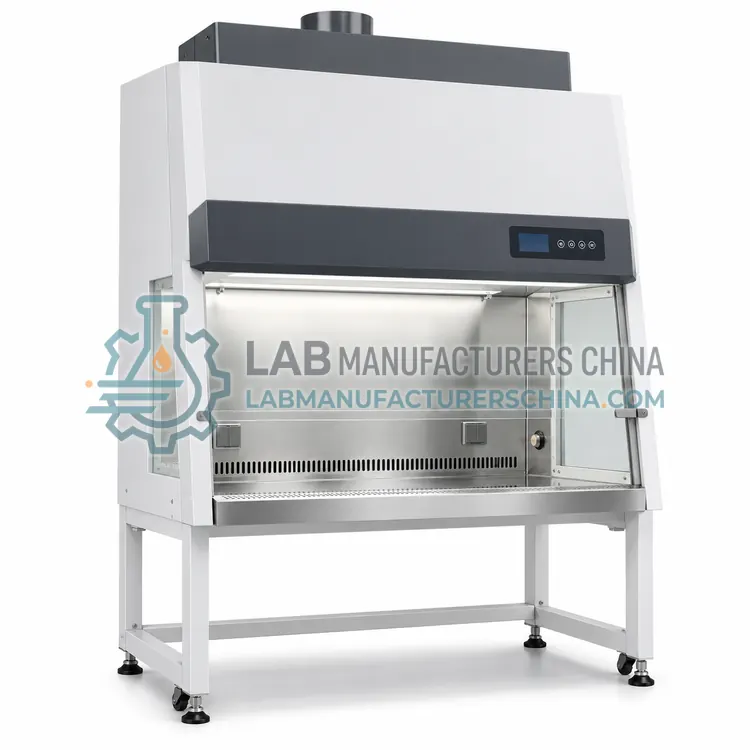
Class II Type B2 Biosafety Cabinet
II 级 B2 型生物安全柜
- SKU CLS-0002
- Class II Cabinets
- CE (to be confirmed)
- ISO 9001 manufacturing (to be confirmed)
Price on request — FOB / CIF quoted per order
Prices depend on configuration, quantity and destination port.
Key specifications
| Cabinet type | Class II Type B2 |
|---|---|
| Inflow velocity | 0.38–0.51 m/s |
| Downflow velocity | 0.25–0.35 m/s |
| Recirculation | 0 %, total exhaust |
| Total exhaust | 700–1600 m3/h |
| HEPA grade | H14 supply and exhaust |
Request a quote Download brochure · to be provided
By Lab Manufacturers China Technical TeamLast reviewed Standards: EN 12469 (biosafety cabinets), NSF/ANSI 49 (biosafety cabinetry), ISO 14644-1 (cleanroom classification)
What is the Class II Type B2 Biosafety Cabinet?
A Class II Type B2 biosafety cabinet exhausts 100 % of its air to the atmosphere through a dedicated duct, with no recirculation. It suits work with volatile toxic chemicals, radionuclides or hazardous vapours.
What is the Class II Type B2 Biosafety Cabinet?
A Class II Type B2 biosafety cabinet exhausts 100 % of its air to the atmosphere through a dedicated duct, with no recirculation. It suits work with volatile toxic chemicals, radionuclides or hazardous vapours.
Overview
The B2 cabinet draws all supply air from outside the building through a HEPA filter, passes it over the work zone, and exhausts 100 % through a second HEPA filter and a dedicated duct. There is no recirculation into the room, so volatile toxic chemicals and radionuclides cannot return to the workspace. The total exhaust volume is higher than an A2 because the supply air is external, typically 700–1600 m3/h depending on width. Inflow velocity is 0.38–0.51 m/s and downflow 0.25–0.35 m/s. A dedicated exhaust fan and duct, an airflow alarm and an interlock between the fan and the cabinet are required, and the building must supply corresponding make-up air. Widths are commonly 900–1800 mm. Because of the external air supply and duct, installation needs coordination with the building services and cannot share a general exhaust header.
How does it work?
A Class II cabinet maintains three protective airflows at once. Room air is drawn through the front grille at an inflow velocity of about 0.38–0.51 m/s, forming an air curtain that keeps aerosols inside. A second stream of HEPA-filtered air flows downward over the work zone at about 0.25–0.35 m/s to protect the sample from contamination. Exhaust air passes a second HEPA filter before recirculation or discharge. The proportion recirculated defines the type: Type A2 returns about 70 % and exhausts 30 %, Type B1 exhausts about 70 %, and Type B2 exhausts 100 % without recirculation. A pressure or airflow sensor and alarm warn of loss of flow, and a negative-pressure plenum may surround the contaminated ductwork. Filter integrity and airflow are verified by aerosol testing at certification. The work surface is stainless steel, and a sash limits the operator's access to the work zone.
What are the key features?
- 100 % exhaust with no recirculation
- External HEPA-filtered supply air
- Dedicated exhaust fan and duct required
- Fan-to-cabinet interlock and airflow alarm
- Inflow 0.38–0.51 m/s, downflow 0.25–0.35 m/s
- Widths 900–1800 mm
What are the technical specifications?
A typical class ii type b2 biosafety cabinet configuration offers cabinet type of Class II Type B2, inflow velocity of 0.38–0.51 m/s, downflow velocity of 0.25–0.35 m/s, recirculation of 0 %, total exhaust, total exhaust of 700–1600 m3/h and HEPA grade of H14 supply and exhaust. Values are indicative of the product class; the exact figures for each configuration are confirmed on the quotation and the calibration documents supplied with the instrument.
Which applications is it used for?
The Class II Type B2 Biosafety Cabinet is used in volatile toxic chemical handling, radionuclide work, antineoplastic and hazardous drug preparation and aerosol work requiring total exhaust. Across the wider Class II Cabinets class, laboratories also deploy it for cell culture and aseptic technique, clinical microbiology and diagnostics and pharmaceutical sterility testing.
Which standards and certifications apply?
Relevant standards and methods include EN 12469 (biosafety cabinets), NSF/ANSI 49 (biosafety cabinetry), ISO 14644-1 (cleanroom classification), EU GMP Annex 1 (sterile manufacturing), GB 19489 (biosafety laboratory requirements) and IEC 61010-1. Certification candidates for this model are CE and ISO 9001 manufacturing; each is to be confirmed for the specific configuration before shipment, and certificates are supplied only where they have been issued.
Place the cabinet at least 30 cm from walls, doors and air diffusers, since cross-drafts above 0.15 m/s degrade the air curtain. Move arms slowly and avoid rapid movements that break the inflowing air. Do not place items over the front grille, because this blocks inflow and reduces protection, and keep large equipment towards the rear. Recertify at least annually and after filter change, fan repair or relocation, using aerosol leak, airflow and inflow velocity tests. For B2 and ducted types, confirm the exhaust fan is dedicated and interlocked, and verify make-up air. Clean surfaces with compatible disinfectants, use UV only as a supplement, and never work with toxic chemicals in an A2 cabinet without a vapour assessment.
How do I select the right Class II Type B2 Biosafety Cabinet?
Choose Type B2 when volatile toxic chemicals, radionuclides or perchloric acid vapour must not recirculate. Confirm a dedicated exhaust fan, hard duct and adequate make-up air are available. RFQ: width, total exhaust, duct route, fan capacity, interlock and make-up air provisions.
How does it compare with other Class II Cabinets variants?
Start from the biological risk assessment and the chemicals used. Type A2 suits most microbiology, cell culture and sterile work where no volatile toxic chemicals or radionuclides are involved. Choose Type B2 when volatile toxic chemicals, radionuclides or large amounts of vapour must be exhausted to atmosphere without recirculation. Type B1 is used when small amounts of volatile chemicals are handled and a dedicated exhaust exists. Type A1 is limited to non-toxic, non-volatile work because its plenum is under positive pressure. Type C1 is convertible and can switch between recirculating and exhaust modes as the workload changes. Confirm internal width and height for equipment, decide on recirculating or ducted exhaust, and verify certification to EN 12469 or NSF/ANSI 49. Plan annual recertification and filter replacement.
Full specifications
| Cabinet type | Class II Type B2 |
|---|---|
| Inflow velocity | 0.38–0.51 m/s |
| Downflow velocity | 0.25–0.35 m/s |
| Recirculation | 0 %, total exhaust |
| Total exhaust | 700–1600 m3/h |
| HEPA grade | H14 supply and exhaust |
| Duct connection | Dedicated, hard ducted |
| Interlock | Fan to cabinet, standard |
| Width | 900–1800 mm |
| Work surface | Stainless steel 304 |
Indicative values for this product class. Final specifications are confirmed on the quotation and in the calibration documents supplied with the instrument.
Applications
- Volatile toxic chemical handling
- Radionuclide work
- Antineoplastic and hazardous drug preparation
- Aerosol work requiring total exhaust
Key features
- 100 % exhaust with no recirculation
- External HEPA-filtered supply air
- Dedicated exhaust fan and duct required
- Fan-to-cabinet interlock and airflow alarm
- Inflow 0.38–0.51 m/s, downflow 0.25–0.35 m/s
- Widths 900–1800 mm
Frequently asked questions about Class II Type B2 Biosafety Cabinet
When volatile toxic chemicals, radionuclides or other hazardous vapours are used and must be exhausted to atmosphere rather than recirculated. It is the standard choice for antineoplastic drug handling and radionuclide work.
Because it takes supply air from outside the building and exhausts all of it, rather than recirculating 70 %. Total exhaust of 700–1600 m3/h means the building must provide matching make-up air.
No, it needs a dedicated exhaust fan and duct, with an interlock so the cabinet alarms or shuts down if exhaust fails. Sharing with general exhaust can disturb airflow and spread contamination.
It protects the operator, the environment and the work simultaneously, using inflow to contain aerosols, HEPA-filtered downflow to protect the sample, and HEPA-filtered exhaust. This three-way protection distinguishes it from fume hoods and clean benches.
Type A2 is usual for cell culture without volatile toxic chemicals, because it protects the product and recirculates most air. Choose Type B2 if volatile toxic chemicals or radionuclides are used.
Not for volatile toxic or flammable chemicals, because recirculated vapour passes the HEPA filter and returns to the room. Use a Type B2 cabinet with 100 % exhaust for such work, after a risk assessment.
Related models