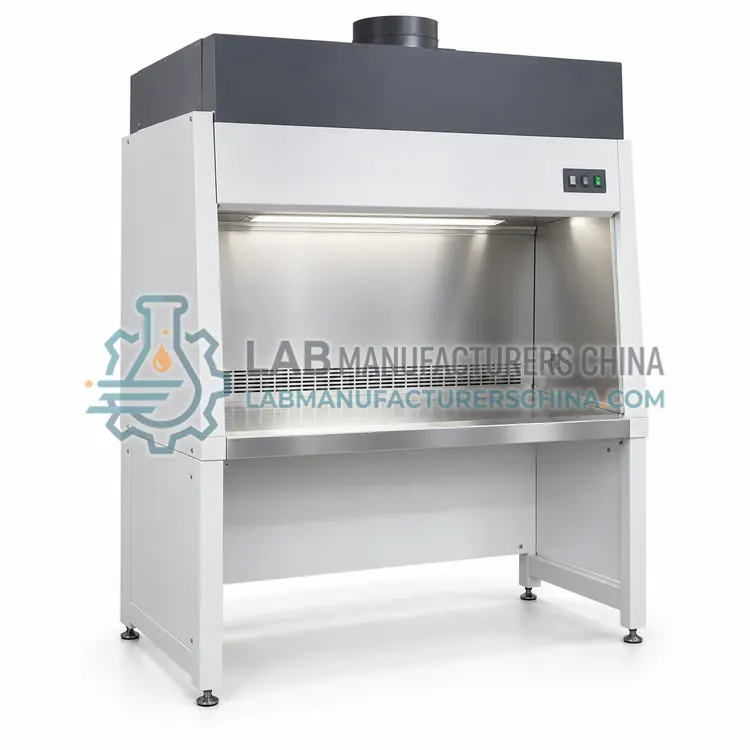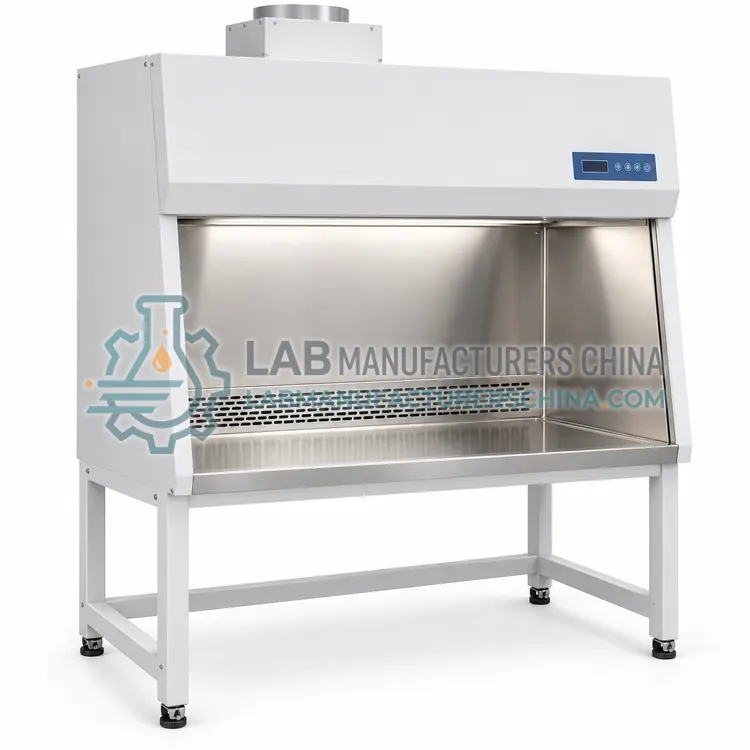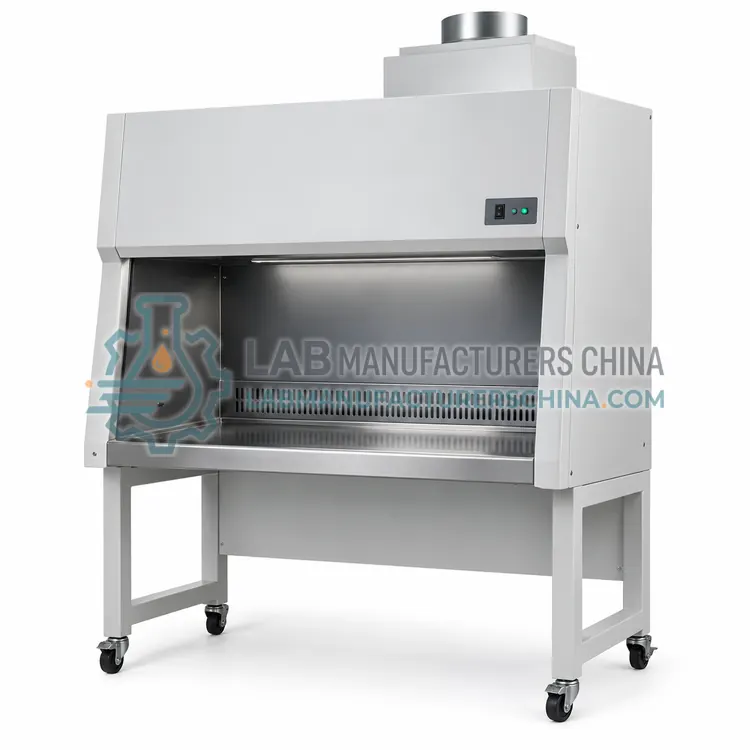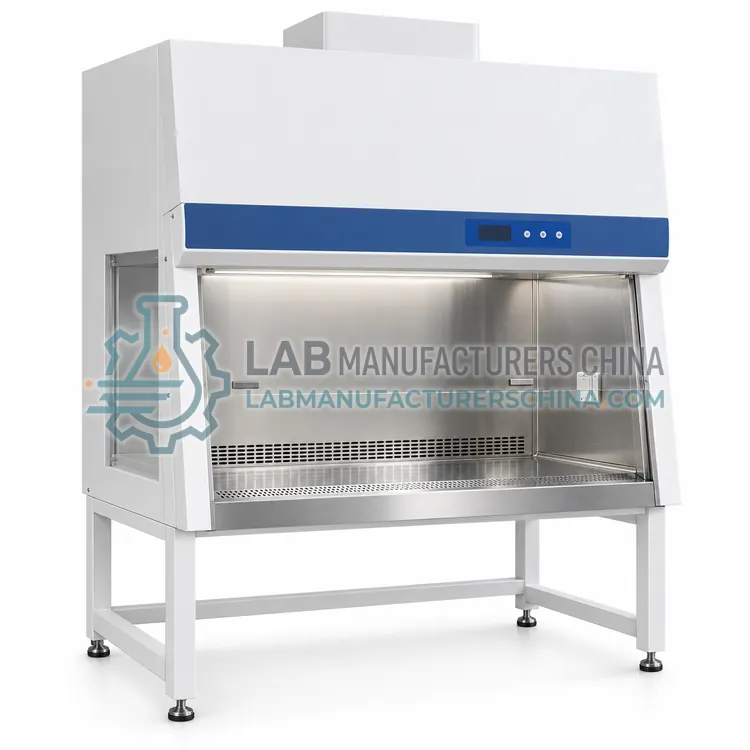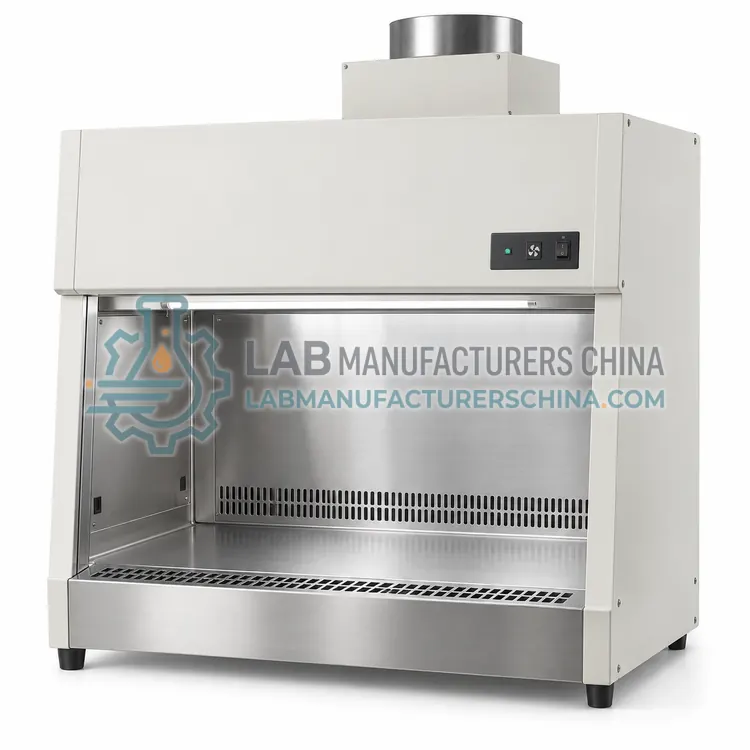
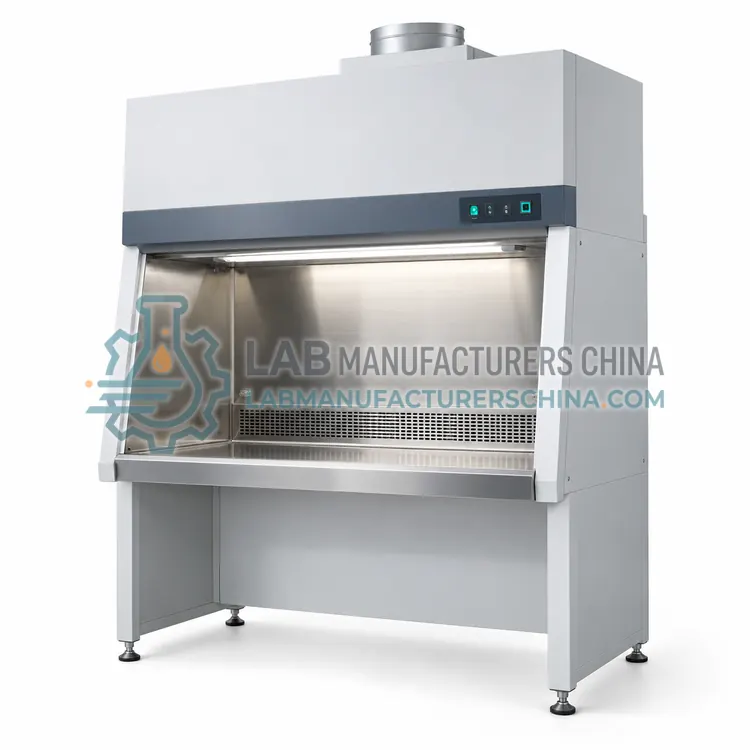
Ducted Class I Biosafety Cabinet
管道式 I 级生物安全柜
- SKU CIC-0003
- Class I Cabinets
- CE (to be confirmed)
- ISO 9001 manufacturing (to be confirmed)
Price on request — FOB / CIF quoted per order
Prices depend on configuration, quantity and destination port.
Key specifications
| Cabinet class | Class I |
|---|---|
| Inflow velocity | 0.7–1.0 m/s, monitored |
| HEPA grade | H14, ≥ 99.97 % at 0.3 µm |
| Duct connection | Thimble or direct collar |
| Duct diameter | 200–300 mm |
| Airflow | 300–800 m3/h |
Request a quote Download brochure · to be provided
By Lab Manufacturers China Technical TeamLast reviewed Standards: EN 12469 (biosafety cabinets), NSF/ANSI 49 (biosafety cabinetry), ISO 14644-1 (cleanroom classification)
What is the Ducted Class I Biosafety Cabinet?
A ducted Class I biosafety cabinet exhausts all air to the atmosphere after HEPA filtration. It is chosen when aerosols, odours or chemicals must leave the room completely rather than recirculate into it.
What is the Ducted Class I Biosafety Cabinet?
A ducted Class I biosafety cabinet exhausts all air to the atmosphere after HEPA filtration. It is chosen when aerosols, odours or chemicals must leave the room completely rather than recirculate into it.
Overview
This cabinet is engineered for a permanent connection to an exhaust system, with a collar or thimble that accepts the duct while allowing the cabinet to be certified. All air passes a HEPA filter and then a duct to the roof or discharge point, so nothing is returned to the room. A thimble connection with a small air gap avoids disturbing the cabinet balance, while a direct connection gives tighter control but requires a fan interlock and airflow alarm. Inflow velocity is held at 0.7–1.0 m/s and monitored continuously. The work surface is stainless steel, and a service panel allows filter replacement from the front. Roof discharge must meet local emission and odour requirements. The design is used where recirculation is unacceptable for safety or regulatory reasons.
How does it work?
A Class I cabinet works like a ventilated enclosure with a single HEPA-filtered exhaust path. Room air is pulled through the front opening at an inflow velocity of about 0.7–1.0 m/s, sweeps across the work surface, and carries aerosols and particles away from the operator. The air then passes a HEPA filter rated at least 99.97 % efficient at 0.3 µm before being discharged, either back into the room through a recirculating arrangement or, more commonly, to the atmosphere through a duct. Because there is no filtered supply air over the work zone, the cabinet does not protect the sample from contamination. Cabinets have a stainless steel work surface, a glass or polycarbonate sash, interior lighting and usually a UV lamp for surface decontamination between uses. Airflow alarms and a front grille complete the design; performance is confirmed by filter leak and airflow testing.
What are the key features?
- Permanent duct connection to atmosphere
- Thimble or direct collar with air gap
- Continuous inflow velocity monitoring
- Fan interlock and low-airflow alarm
- Front-access HEPA filter replacement
- Roof discharge compliant with local rules
What are the technical specifications?
A typical ducted class i biosafety cabinet configuration offers cabinet class of Class I, inflow velocity of 0.7–1.0 m/s, monitored, HEPA grade of H14, ≥ 99.97 % at 0.3 µm, duct connection of Thimble or direct collar, duct diameter of 200–300 mm and airflow of 300–800 m3/h. Values are indicative of the product class; the exact figures for each configuration are confirmed on the quotation and the calibration documents supplied with the instrument.
Which applications is it used for?
The Ducted Class I Biosafety Cabinet is used in work with odorous or hazardous aerosols, anaerobic and microaerophilic culture, chemical and radionuclide handling and reference laboratory containment. Across the wider Class I Cabinets class, laboratories also deploy it for low-risk microbiology, centrifuge and equipment enclosures and veterinary and agricultural work.
Which standards and certifications apply?
Relevant standards and methods include EN 12469 (biosafety cabinets), NSF/ANSI 49 (biosafety cabinetry), ISO 14644-1 (cleanroom classification), GB 19489 (biosafety laboratory requirements) and IEC 61010-1 (safety requirements for electrical equipment). Certification candidates for this model are CE and ISO 9001 manufacturing; each is to be confirmed for the specific configuration before shipment, and certificates are supplied only where they have been issued.
Install the cabinet away from doors, vents and high-traffic areas, with clearance for service and filter replacement. If ducted, verify the exhaust fan and duct are dedicated and that airflow cannot fall below the alarm threshold; an undersized or blocked duct can reverse the internal flow. Confirm filter integrity and inflow velocity at installation and at least annually, and record results. Reduce clutter inside the cabinet, since bulky items disturb airflow and reduce protection. Clean the work surface before and after use, use UV lamps only as a supplement to chemical disinfection, and never rely on UV for penetrating surfaces. Confirm that the exhaust discharge point meets local requirements.
How do I select the right Ducted Class I Biosafety Cabinet?
Choose the ducted version when nothing may return to the room, or where local rules forbid recirculation. Confirm duct size, fan capacity and discharge location. RFQ: airflow, duct diameter and route, fan details, alarm requirements and connection type.
How does it compare with other Class I Cabinets variants?
Choose a Class I cabinet when operator and environmental protection are needed but the sample does not require protection, for example for low-risk microbiology, homogenising, or housing a centrifuge or shaking device. Confirm the inflow velocity and HEPA exhaust arrangement, and decide whether exhaust goes to the atmosphere by duct or is filtered and recirculated, since recirculation is not acceptable for many agents. Match the internal height to the equipment housed and the external footprint to the bench or floor space. Check whether the cabinet must be connected to an exhaust system and whether a thimble or direct connection is used. Confirm certification to EN 12469 or NSF/ANSI 49 where applicable, and plan annual recertification. Class I cabinets are not suitable when sterile product protection is required.
Full specifications
| Cabinet class | Class I |
|---|---|
| Inflow velocity | 0.7–1.0 m/s, monitored |
| HEPA grade | H14, ≥ 99.97 % at 0.3 µm |
| Duct connection | Thimble or direct collar |
| Duct diameter | 200–300 mm |
| Airflow | 300–800 m3/h |
| Fan interlock | Standard on direct connection |
| Work surface | Stainless steel 304 |
| Alarm | Low airflow, audible and visual |
| Width | 900–1800 mm |
Indicative values for this product class. Final specifications are confirmed on the quotation and in the calibration documents supplied with the instrument.
Applications
- Work with odorous or hazardous aerosols
- Anaerobic and microaerophilic culture
- Chemical and radionuclide handling
- Reference laboratory containment
Key features
- Permanent duct connection to atmosphere
- Thimble or direct collar with air gap
- Continuous inflow velocity monitoring
- Fan interlock and low-airflow alarm
- Front-access HEPA filter replacement
- Roof discharge compliant with local rules
Frequently asked questions about Ducted Class I Biosafety Cabinet
To remove aerosols, odours and chemical vapour from the room entirely rather than rely on filtering and recirculation. Some work and some jurisdictions require discharge to atmosphere.
A thimble leaves a small air gap around the duct so the building exhaust does not pull on the cabinet, making balancing easier. A direct connection gives tighter control but needs a fan interlock and airflow alarm.
A continuous airflow monitor with alarm detects deviation, and a fan interlock shuts the cabinet down or alarms if exhaust stops. The exhaust fan should be dedicated or controlled so inflow velocity stays in range.
No. It protects the operator and environment only, because unfiltered room air flows over the work surface. Use a Class II cabinet when the sample must also be protected from contamination.
It can if the exhausted air passes a HEPA filter, but many agents and chemicals require discharge to the atmosphere by duct. Check the risk assessment and any local or institutional rules before choosing recirculation.
About 0.7–1.0 m/s at the front opening, higher than a Class II cabinet because there is no downward supply air. Confirm the actual value at commissioning and monitor it with the airflow alarm.
Related models