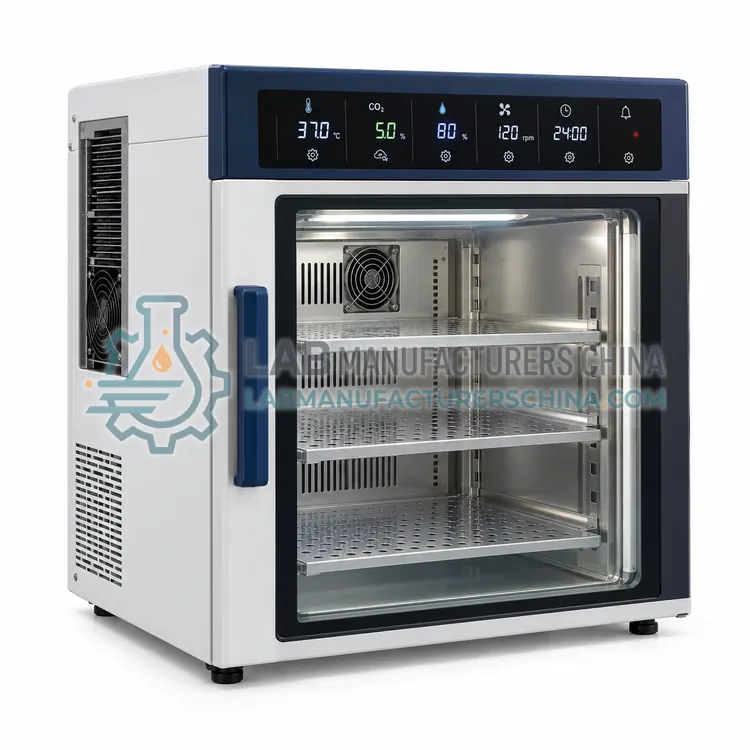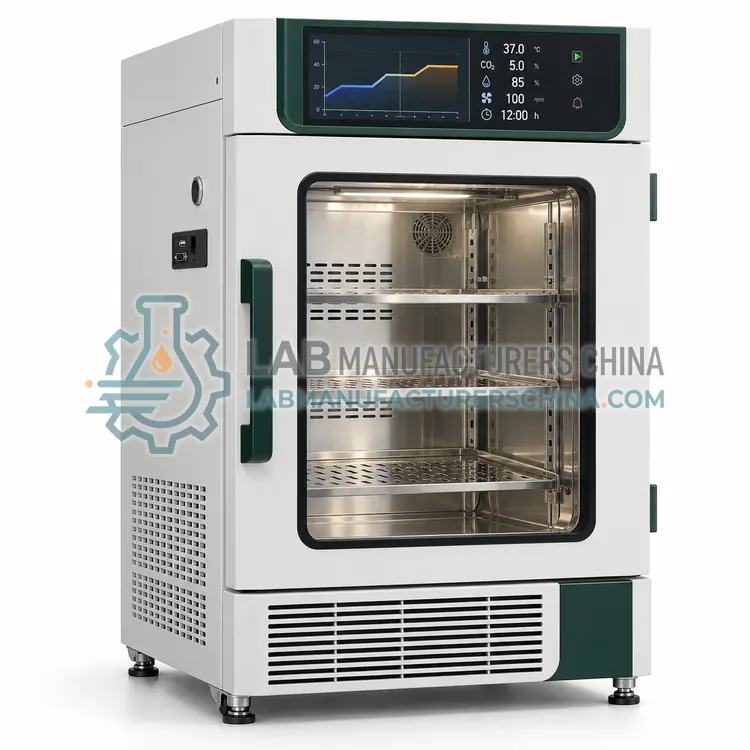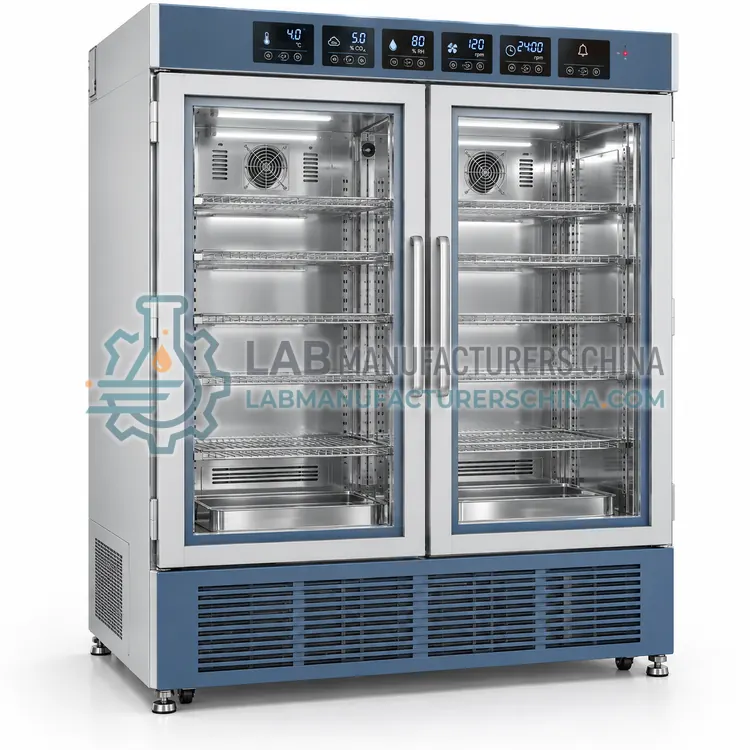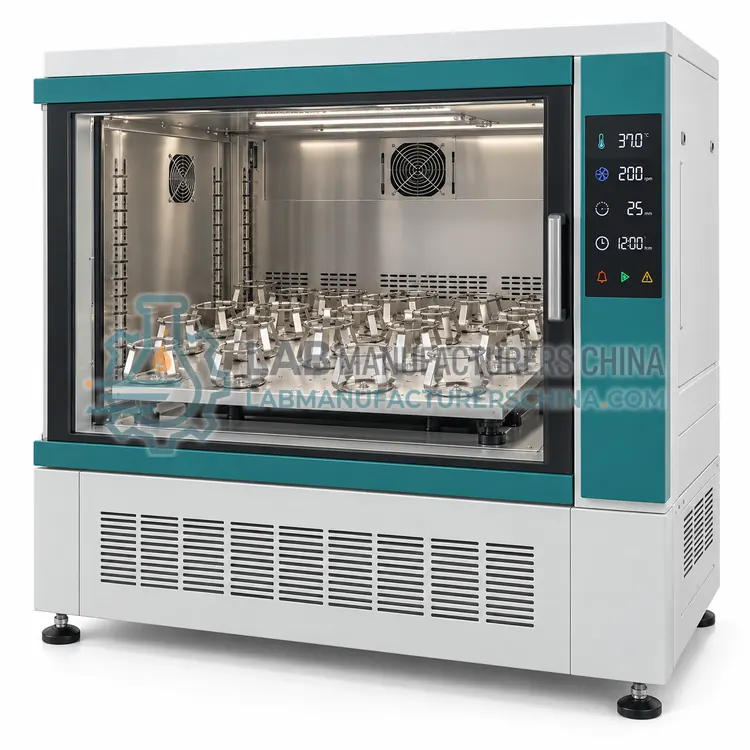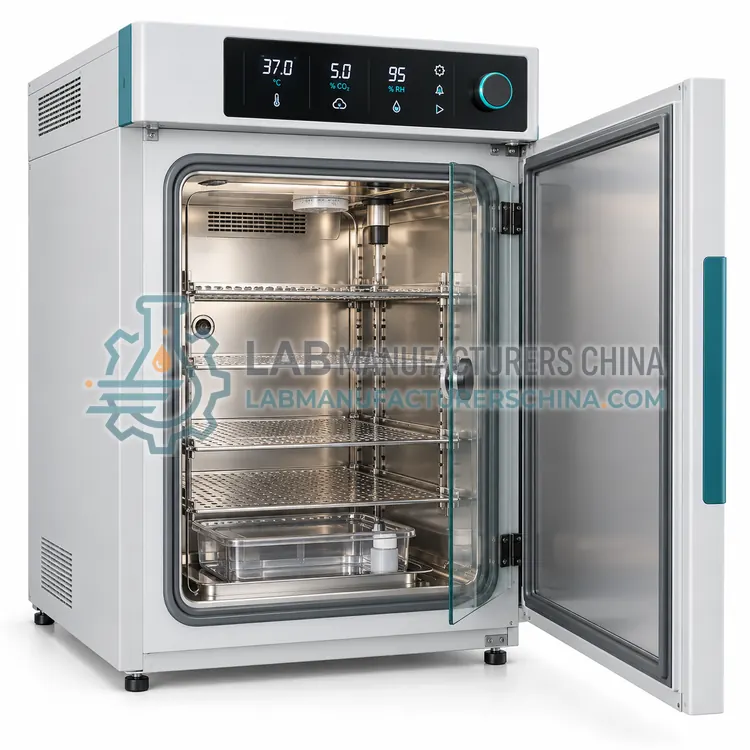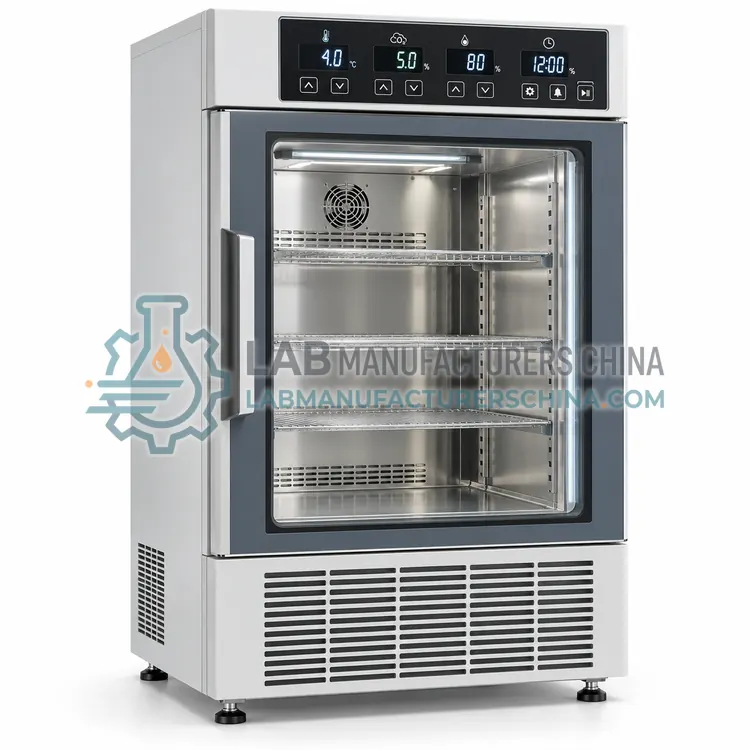
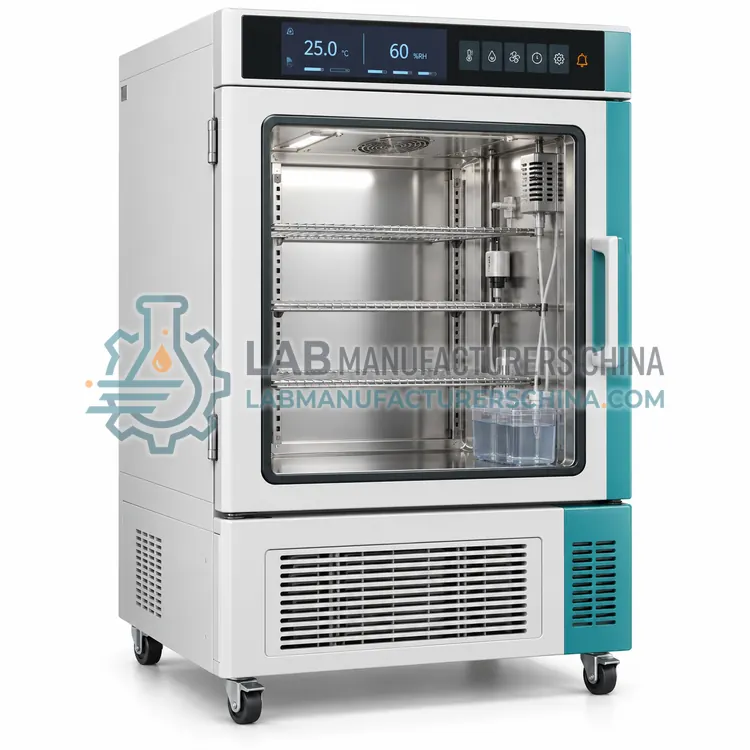
Cooled Incubator with Humidity Control
带湿度控制的低温培养箱
- SKU CIN-0003
- Cooling Incubators
- CE (to be confirmed)
- ISO 9001 manufacturing (to be confirmed)
- RoHS (to be confirmed)
Price on request — FOB / CIF quoted per order
Prices depend on configuration, quantity and destination port.
Key specifications
| Chamber volume | 50–500 L |
|---|---|
| Temperature range | 0–60 C |
| Temperature uniformity | ±0.5–1 C |
| Humidity range | 20–95% RH |
| Humidity accuracy | ±2–5% RH |
| Humidity sensor | Capacitive or chilled mirror |
Request a quote Download brochure · to be provided
By Lab Manufacturers China Technical TeamLast reviewed Standards: IEC 61010-1, IEC 61010-2-010, DIN 12880
What is the Cooled Incubator with Humidity Control?
A cooled incubator with humidity control adds regulated relative humidity to below-ambient temperature control. It is chosen for shelf-life, food and stability work where both temperature and moisture influence the final result.
What is the Cooled Incubator with Humidity Control?
A cooled incubator with humidity control adds regulated relative humidity to below-ambient temperature control. It is chosen for shelf-life, food and stability work where both temperature and moisture influence the final result.
Overview
This incubator adds humidity regulation to a refrigerated chamber, using a humidifier or steam generator to raise humidity and a condensing coil or desiccant path to lower it. Relative humidity is held from about 20 to 95 percent, often with plus or minus 2 to 5 percent accuracy, while temperature spans 0 to 60 C. This matters for shelf-life and food studies, where products respond to both temperature and water activity, and for materials that absorb moisture. Uniformity of plus or minus 0.5 to 1 C is kept by forced air, and humidity sensors are calibrated or replaced on schedule because they drift. Chambers run 50 to 500 liters, with chilled mirrors or capacitive sensors for measurement and drainage to remove condensate. Cleaning is more demanding than in a dry incubator.
How does it work?
A cooling incubator adds a refrigeration circuit or Peltier modules to a heated, insulated chamber. A compressor circuit evaporates refrigerant in a coil, absorbing heat, and condenses it outside; Peltier modules move heat electrically with no refrigerant, which suits smaller chambers. A Pt100 or thermistor sensor feeds a PID controller that coordinates heating and cooling to hold the setpoint from below ambient to about 60 C, switching between modes as needed. Forced-air circulation keeps uniformity within plus or minus 0.5 to 1 C, and defrost cycles prevent ice build-up on the evaporator, which would block airflow. Chamber walls are stainless steel, and doors carry heaters or heated frames to avoid condensation at low temperature. Programmable controllers, alarms and data logging support stability and shelf-life methods.
What are the key features?
- Regulated relative humidity of 20 to 95 percent
- Temperature control from 0 to 60 C
- Humidifier and condensing or desiccant path
- Chilled mirror or capacitive humidity sensor
- Forced-air circulation for uniformity
- Drainage for condensate removal
What are the technical specifications?
A typical cooled incubator with humidity control configuration offers chamber volume of 50–500 L, temperature range of 0–60 C, temperature uniformity of ±0.5–1 C, humidity range of 20–95% RH, humidity accuracy of ±2–5% RH and humidity sensor of Capacitive or chilled mirror. Values are indicative of the product class; the exact figures for each configuration are confirmed on the quotation and the calibration documents supplied with the instrument.
Which applications is it used for?
The Cooled Incubator with Humidity Control is used in food shelf-life and stability studies, pharmaceutical and cosmetic stability, packaging and material moisture tests and sample conditioning at controlled humidity. Across the wider Cooling Incubators class, laboratories also deploy it for enzyme and biochemical assays at low temperature, stability and shelf-life studies and sample storage and conditioning.
Which standards and certifications apply?
Relevant standards and methods include IEC 61010-1, IEC 61010-2-010, DIN 12880, ISO 9001 and ISO 17025. Certification candidates for this model are CE, ISO 9001 manufacturing and RoHS; each is to be confirmed for the specific configuration before shipment, and certificates are supplied only where they have been issued.
Place the incubator where it can reject heat freely, with clearance around the condenser and vents, and avoid confined cabinets that raise ambient temperature. Keep the condenser fins clean, since dust reduces cooling and increases power use. Do not open the door at low temperature more than necessary, because ice forms on the evaporator and frames. Defrost on the recommended schedule, and drain condensate so it does not pool. Verify temperature at the working setpoint, not at a single midpoint, and calibrate with a reference probe at several positions. Check door heaters, gaskets and the refrigeration system during scheduled service, and keep records.
How do I select the right Cooled Incubator with Humidity Control?
Select the humidity-controlled cooled incubator when both temperature and relative humidity drive the result, as in shelf-life and food studies. Dry cooled incubators suffice when humidity is irrelevant. In the RFQ, specify temperature and humidity ranges, accuracy, sensor type, volume and cleaning access.
How does it compare with other Cooling Incubators variants?
Choose a cooling incubator whenever the setpoint is at or below room temperature, because heating-only incubators cannot reach it, especially in warm rooms. Define the temperature range first, from a lower limit near 0 C for most units to lower values for specialized models, and decide whether you need humidity control. Select a compressor design for larger chambers and faster cooling, or Peltier for compact, quiet units without refrigerant. Match chamber volume to the load and check uniformity at the working temperature, since low-temperature operation widens gradients. Consider defrost strategy, condensation control, programmability and data logging, and confirm power, ventilation and heat rejection requirements.
Full specifications
| Chamber volume | 50–500 L |
|---|---|
| Temperature range | 0–60 C |
| Temperature uniformity | ±0.5–1 C |
| Humidity range | 20–95% RH |
| Humidity accuracy | ±2–5% RH |
| Humidity sensor | Capacitive or chilled mirror |
| Cooling system | Compressor |
| Defrost | Automatic |
| Humidification | Humidifier or steam generator |
| Power supply | 220 V, 50/60 Hz |
Indicative values for this product class. Final specifications are confirmed on the quotation and in the calibration documents supplied with the instrument.
Applications
- Food shelf-life and stability studies
- Pharmaceutical and cosmetic stability
- Packaging and material moisture tests
- Sample conditioning at controlled humidity
Key features
- Regulated relative humidity of 20 to 95 percent
- Temperature control from 0 to 60 C
- Humidifier and condensing or desiccant path
- Chilled mirror or capacitive humidity sensor
- Forced-air circulation for uniformity
- Drainage for condensate removal
Frequently asked questions about Cooled Incubator with Humidity Control
Most control 20 to 95 percent relative humidity at temperatures up to about 60 C, with accuracy of plus or minus 2 to 5 percent. Achieving high humidity at low temperature is harder because the dew point is low, so performance should be checked at the working point.
Capacitive and chilled-mirror sensors drift with contamination, condensation and age, so humidity readings can become several percent wrong. Periodic calibration or replacement, plus cleaning and drainage, keeps control accurate for stability and shelf-life data.
It can be, for products stored cold where moisture still matters, but high humidity is harder to reach because the air holds little water at low temperature. The achievable range should be confirmed with the manufacturer for the intended setpoint.
Because a standard incubator only heats. If the required setpoint is at or below room temperature, or the room is warm, a cooling incubator with refrigeration is needed to reach and hold it precisely. It also allows temperatures like 20 or 25 C in summer conditions.
Compressor refrigeration is efficient at larger volumes and can reach lower temperatures, but uses refrigerant and makes some noise and vibration. Peltier modules are compact, quiet and refrigerant-free but suit smaller chambers and use more power per degree of cooling.
Door heaters and heated frames keep glass and gaskets above the dew point, while scheduled defrost cycles melt ice from the evaporator. Condensate drains away so it does not pool, and airflow is maintained for uniform temperature.
Related models