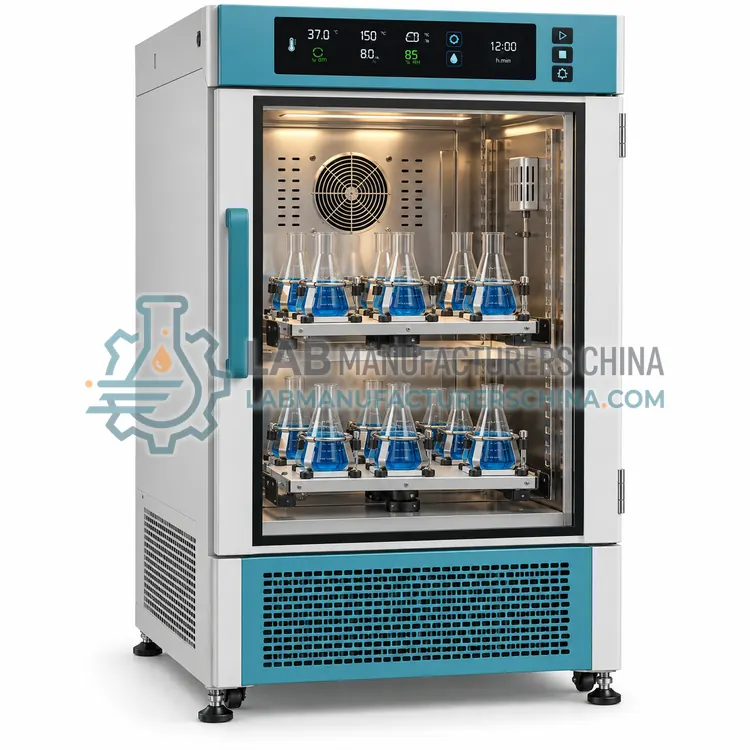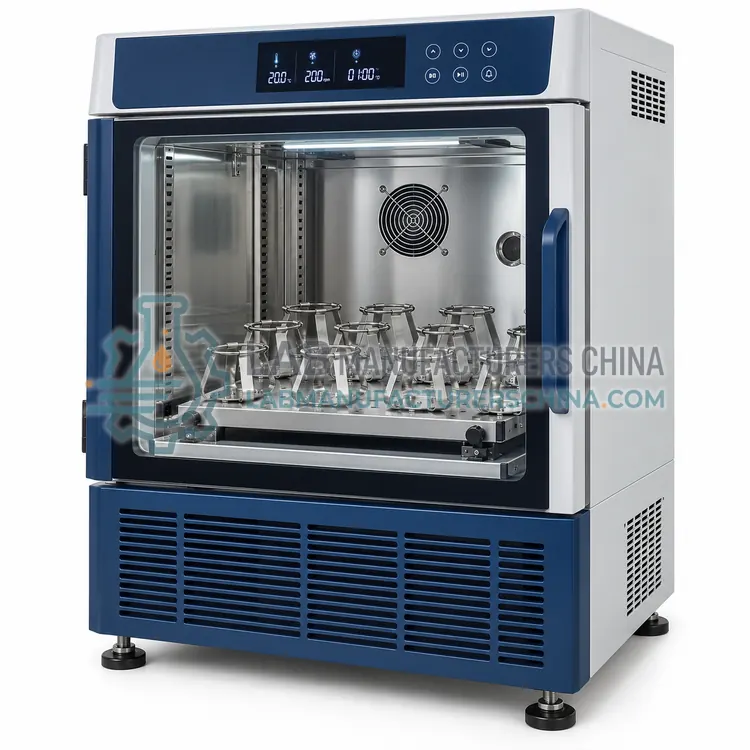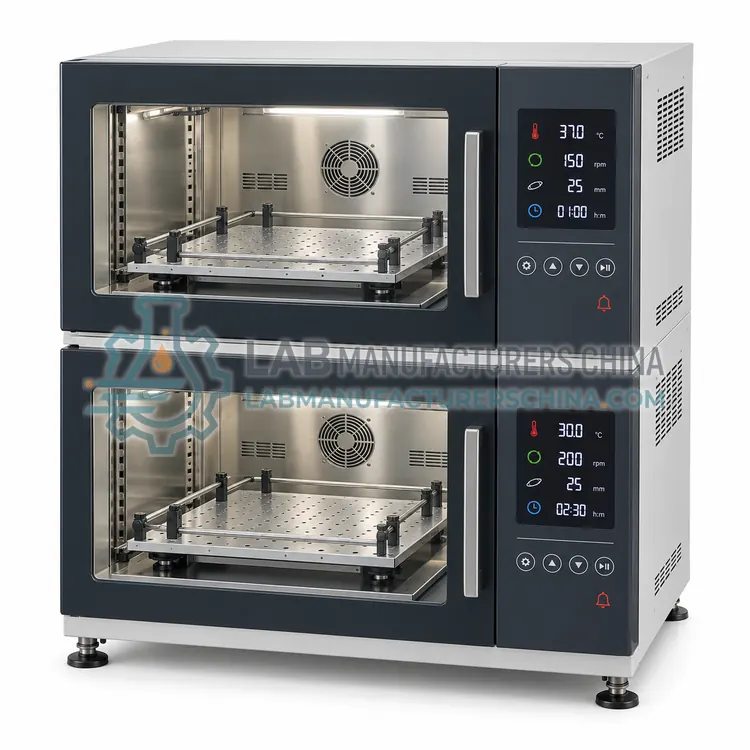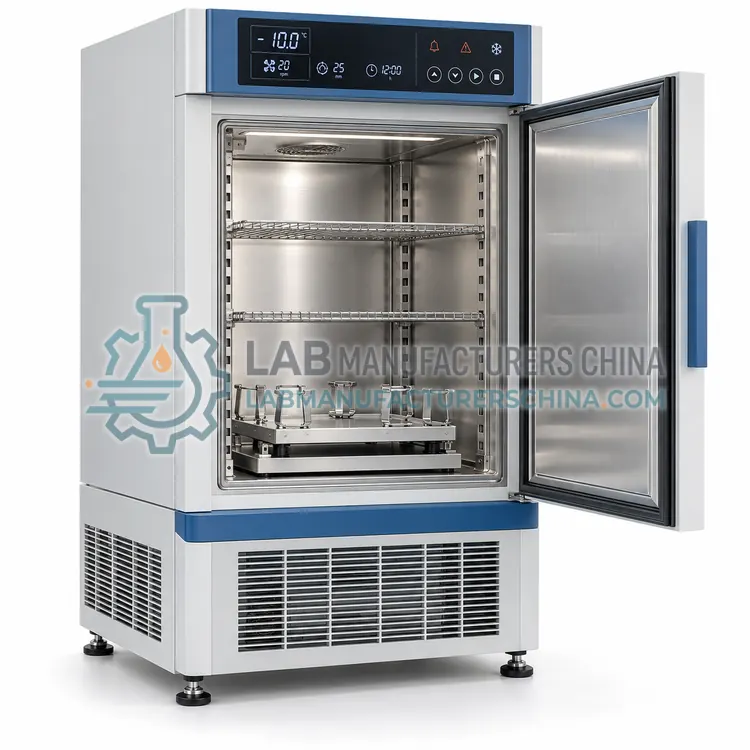
Large-Capacity Shaking Incubator
大容量恒温振荡培养箱
- SKU SHI-0004
- Shaking Incubators
- CE (to be confirmed)
- ISO 9001 manufacturing (to be confirmed)
- RoHS (to be confirmed)
Price on request — FOB / CIF quoted per order
Prices depend on configuration, quantity and destination port.
Key specifications
| Chamber volume | 500–1500+ L |
|---|---|
| Temperature range | RT+5 to 60 C |
| Temperature uniformity | ±1–2 C |
| Speed range | 20–250 rpm |
| Orbit diameter | 25–50 mm |
| Platform size | 1000×800 to 1500×1000 mm |
Request a quote Download brochure · to be provided
By Lab Manufacturers China Technical TeamLast reviewed Standards: IEC 61010-1, IEC 61010-2-051, IEC 61010-2-010
What is the Large-Capacity Shaking Incubator?
A large-capacity shaking incubator provides 500 to 1500 liters of agitated temperature-controlled space for very high throughput. It is chosen when production-scale culture volumes must be handled together in one large chamber.
What is the Large-Capacity Shaking Incubator?
A large-capacity shaking incubator provides 500 to 1500 liters of agitated temperature-controlled space for very high throughput. It is chosen when production-scale culture volumes must be handled together in one large chamber.
Overview
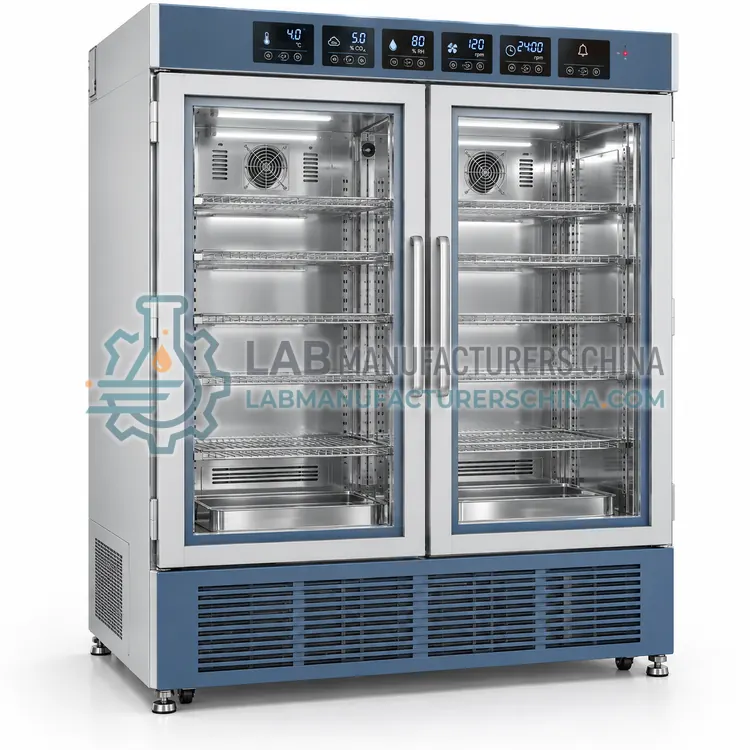
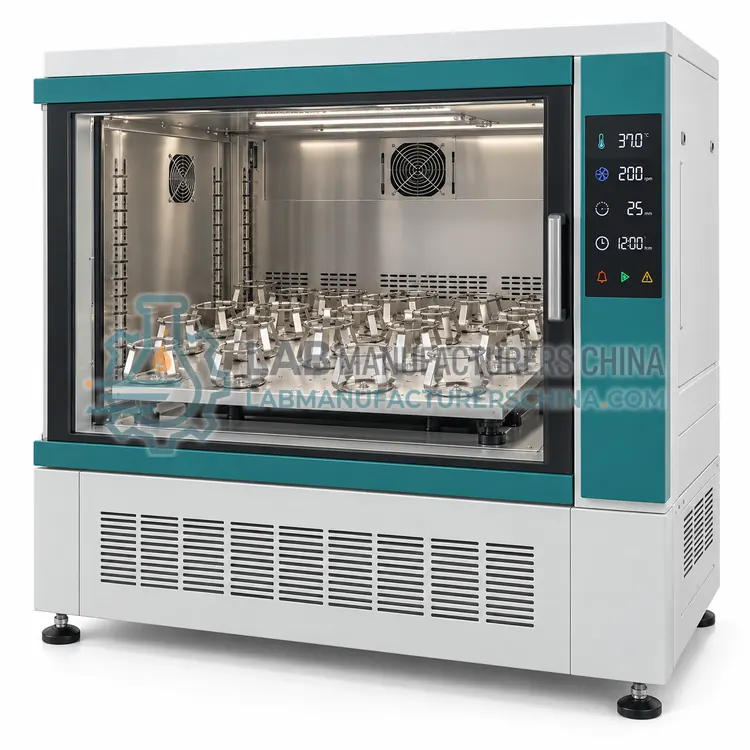
This incubator scales shaking and temperature control to 500 to 1500 liters or more, often floor standing with double doors and a heavy platform holding dozens of flasks or several carboys. Drives are reinforced with large bearings and, in many designs, a magnetic coupling that avoids shaft seals. Load ratings reach 50 to 100 kg, speeds run 20 to 250 rpm with orbits of 25 to 50 mm, and temperature reaches ambient plus 5 to 60 C, with refrigeration optional. Forced air and multi-zone control keep uniformity within plus or minus 1 to 2 C under full load. Programmable controllers log temperature and speed. It serves pilot-scale fermentation, high-throughput screening and production support where many cultures must run together.
How does it work?
A shaking incubator places an orbital drive inside an insulated, heated chamber. A brushless motor turns an eccentric bearing that moves the platform in a circular path, with orbit diameters of 19 to 50 mm and speeds of 20 to 400 rpm. The chamber is heated by elements and, in refrigerated models, cooled by a compressor, all held by a PID controller. Air circulates naturally or with a fan to keep temperature uniform around the flasks. Platforms accept clamps, racks and trays for flasks, tubes or plates, and loads must be balanced so the drive does not vibrate. Closed-loop speed control holds rpm against load change, and timers or programmed profiles run the cycle. Door interlocks stop the platform when opened, protecting the operator from moving parts.
What are the key features?
- Chamber volume of 500 to 1500 liters or more
- Heavy platform with magnetic or reinforced drive
- Load rating of 50 to 100 kg
- Speed 20 to 250 rpm with 25 to 50 mm orbit
- Multi-zone forced air for uniform temperature
- Programmable control logging temperature and speed
What are the technical specifications?
A typical large-capacity shaking incubator configuration offers chamber volume of 500–1500+ L, temperature range of RT+5 to 60 C, temperature uniformity of ±1–2 C, speed range of 20–250 rpm, orbit diameter of 25–50 mm and platform size of 1000×800 to 1500×1000 mm. Values are indicative of the product class; the exact figures for each configuration are confirmed on the quotation and the calibration documents supplied with the instrument.
Which applications is it used for?
The Large-Capacity Shaking Incubator is used in pilot-scale fermentation, high-throughput screening, production support culture and large-volume expression runs. Across the wider Shaking Incubators class, laboratories also deploy it for bacterial and yeast liquid culture, protein and plasmid expression and fermentation and bioprocess development.
Which standards and certifications apply?
Relevant standards and methods include IEC 61010-1, IEC 61010-2-051, IEC 61010-2-010, DIN 12880 and ISO 9001. Certification candidates for this model are CE, ISO 9001 manufacturing and RoHS; each is to be confirmed for the specific configuration before shipment, and certificates are supplied only where they have been issued.
Balance the platform by loading flasks symmetrically, since an unbalanced load causes vibration, noise and bearing wear. Do not exceed the load rating at the chosen speed, and keep clamps tight. Site the unit on a level, stable surface with clearance for ventilation and door swing, away from heat sources. Clean spills promptly, because spilled medium corrodes the chamber and clamps. Check drive belts and bearings on schedule, and inspect clamps for wear. Verify temperature with a reference probe and consider stopping shaking during the check. Keep the chamber loaded to stabilize temperature, and log rpm and temperature for regulated culture work.
How do I select the right Large-Capacity Shaking Incubator?
Select the large-capacity shaking incubator when many cultures or large vessels must run together and smaller units would be impractical. Confirm floor loading, door access, three-phase power and heat rejection. In the RFQ, specify vessel sizes and count, load mass, speed and orbit, temperature range and drive type.
How does it compare with other Shaking Incubators variants?
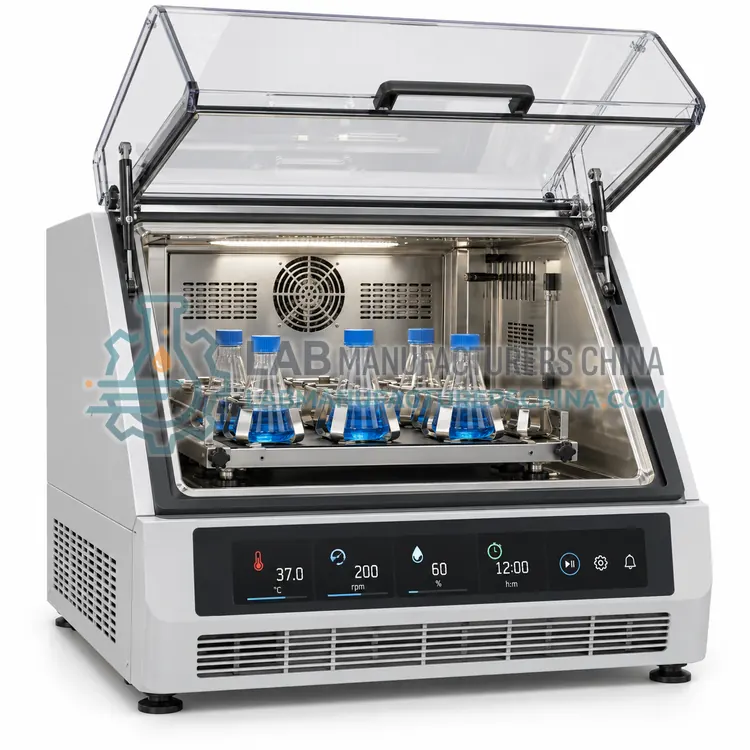
Choose a shaking incubator when the culture needs both mixing and controlled temperature, which static incubators cannot provide. Set the temperature range first, choosing a cooling model if the setpoint is at or below ambient. Match orbit diameter and speed to the organism: bacteria often need 200 to 300 rpm with a 25 mm orbit, while gentle mammalian suspension culture uses lower speeds. Size the chamber and platform for the flask count and the largest vessel, and check the load rating at the chosen speed. Decide between benchtop and floor-standing for space and capacity, and confirm clamp types, door interlock, data logging and alarm functions.
Full specifications
| Chamber volume | 500–1500+ L |
|---|---|
| Temperature range | RT+5 to 60 C |
| Temperature uniformity | ±1–2 C |
| Speed range | 20–250 rpm |
| Orbit diameter | 25–50 mm |
| Platform size | 1000×800 to 1500×1000 mm |
| Load rating | 50–100 kg |
| Drive type | Magnetic or reinforced belt |
| Cooling option | Optional compressor |
| Power supply | 380 V, 3-phase, 50/60 Hz |
Indicative values for this product class. Final specifications are confirmed on the quotation and in the calibration documents supplied with the instrument.
Applications
- Pilot-scale fermentation
- High-throughput screening
- Production support culture
- Large-volume expression runs
Key features
- Chamber volume of 500 to 1500 liters or more
- Heavy platform with magnetic or reinforced drive
- Load rating of 50 to 100 kg
- Speed 20 to 250 rpm with 25 to 50 mm orbit
- Multi-zone forced air for uniform temperature
- Programmable control logging temperature and speed
Frequently asked questions about Large-Capacity Shaking Incubator
Typically 50 to 100 kg when balanced, with the rating falling at higher speeds. Such loads demand a reinforced or magnetic drive, and the platform must be loaded symmetrically and checked for clamped flasks before each run.
A magnetic coupling turns the platform without a shaft passing through the chamber wall, so there is no seal to wear or leak and fewer lint and contamination traps. It also reduces vibration and simplifies cleaning of the chamber interior.
Yes in most cases, since drive, heating and optional cooling together draw enough power to warrant 380 V three-phase supply. Smaller large-capacity models may still run on single phase, so the rating should be confirmed before installation.
It grows liquid cultures under controlled temperature and continuous agitation, which increases aeration and keeps cells and nutrients in suspension. It is used for bacterial and yeast culture, protein expression, fermentation, solubility tests and cell suspension culture.
Most bacterial cultures grow well at 150 to 300 rpm with a 19 to 25 mm orbit. Faster shaking increases aeration but also shear and foam, so the setting is balanced against the organism and vessel. Mammalian suspension cells usually need gentler agitation.
Only when the setpoint is at or below ambient or the room is warm. Heating-only models cover 5 to 80 C above ambient, while refrigerated versions extend the range to 0 C or below for temperature-sensitive cultures.
Related models