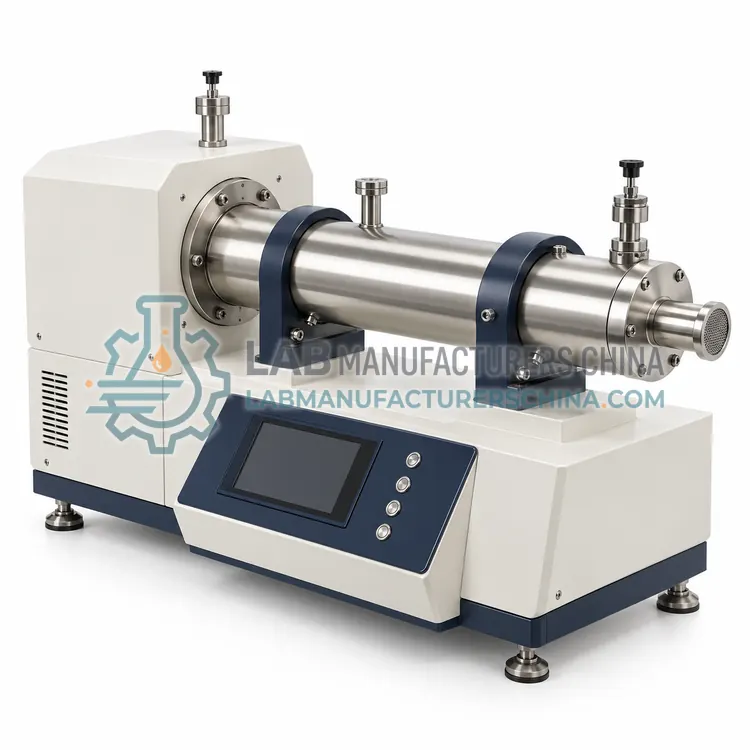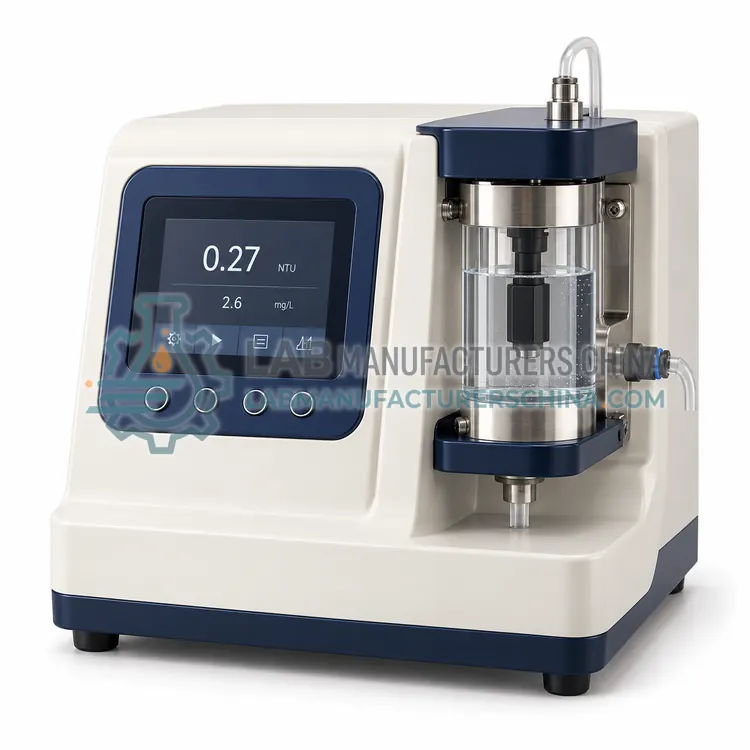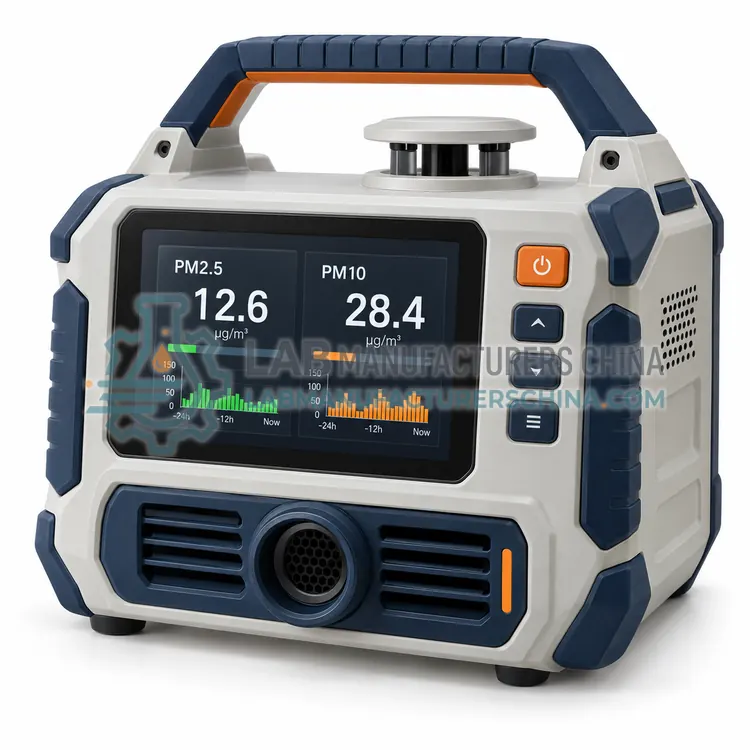
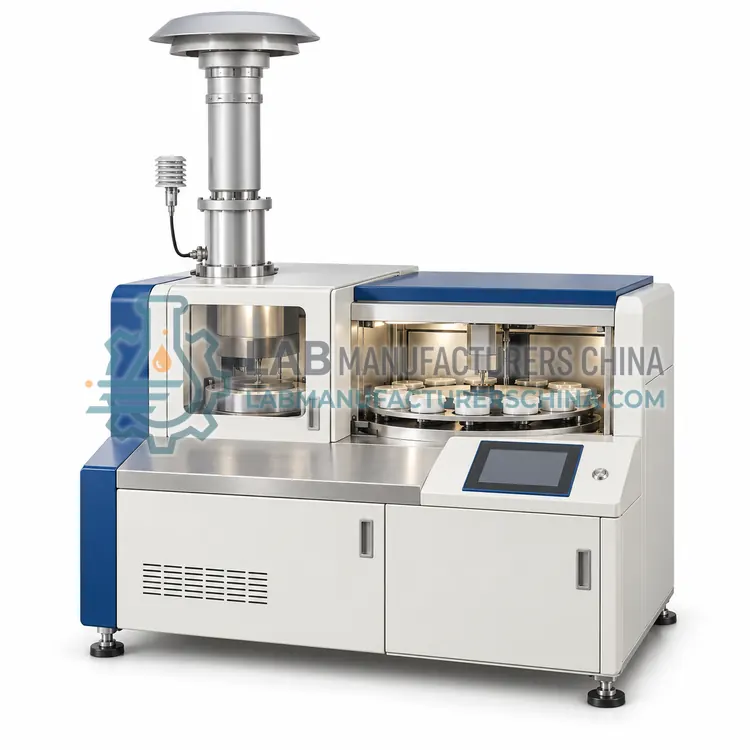
Beta Attenuation PM10/PM2.5 Ambient Monitor
β 射线衰减法 PM10/PM2.5 环境监测仪
- SKU AIM-0002
- Air Monitoring
- CE (to be confirmed)
- China environmental monitoring instrument certification (to be confirmed)
- US EPA equivalence designation (to be confirmed)
Price on request — FOB / CIF quoted per order
Prices depend on configuration, quantity and destination port.
Key specifications
| Measurement principle | Beta attenuation |
|---|---|
| Concentration range | 0–10,000 µg/m³ |
| Detection limit | <2 µg/m³ (1 h) |
| Resolution | 0.1 µg/m³ |
| Sample flow | 16.7 L/min |
| Time resolution | 1 h (configurable) |
Request a quote Download brochure · to be provided
By Lab Manufacturers China Technical TeamLast reviewed Standards: EN 12341, EN 14211, EN 14212
What is the Beta Attenuation PM10/PM2.5 Ambient Monitor?
A reference-grade continuous monitor that determines particulate mass by measuring the attenuation of beta radiation through a filter tape loaded with sampled particles. It is the right choice for regulatory ambient air networks that require equivalence to gravimetric methods.
What is the Beta Attenuation PM10/PM2.5 Ambient Monitor?
A reference-grade continuous monitor that determines particulate mass by measuring the attenuation of beta radiation through a filter tape loaded with sampled particles. It is the right choice for regulatory ambient air networks that require equivalence to gravimetric methods.
Overview
Ambient air passes through a PM10 inlet and, where needed, a PM2.5 cyclone, and particles deposit on a glass fiber filter tape. A carbon-14 or krypton-85 source beams beta particles through the deposit onto a detector, and mass is calculated from the attenuation because absorption depends almost entirely on mass rather than composition. The tape advances automatically after each cycle, typically hourly, and a dynamic heating or dehumidifier system controls sample humidity to around 35 percent. Flow is regulated at 16.7 L/min with temperature and pressure compensation. Instruments are designated by national or EPA equivalence programs, and show detection limits under 2 µg/m³ per hour. A tape roll lasts about two to three months, and periodic membrane span checks verify calibration.
How does it work?
Air monitors sample air through an inlet and quantify target components by physical or chemical sensing. Particulate instruments use laser light scattering, beta ray attenuation or gravimetric collection on filters, often after a size-selective inlet such as a PM2.5 impactor. Gas sensing uses electrochemical cells, metal oxide semiconductors, non-dispersive infrared absorption, photoionization, or ultraviolet and chemiluminescence analyzers for reference-grade measurements. Active samplers draw air at a controlled flow, for example 16.7 L/min for PM filters or 0.1 to 1 L/min for sorbent tubes and impingers, while passive samplers rely on diffusion. Meteorological sensors record wind, temperature, humidity and pressure to interpret results. A controller logs data, applies calibration factors and communicates over wireless networks.
What are the key features?
- Beta attenuation principle measures mass independent of particle composition or color.
- Dynamic heating holds sample relative humidity near 35 percent to avoid water bias.
- Automatic filter tape advance supports one to three months of unattended operation.
- Flow regulated at 16.7 L/min with temperature and pressure compensation for accuracy.
- Dual-channel models report PM10 and PM2.5 from one instrument with shared pump.
- Built-in membrane span check verifies calibration without opening the detector.
What are the technical specifications?
A typical beta attenuation pm10/pm2.5 ambient monitor configuration offers measurement principle of Beta attenuation, concentration range of 0–10,000 µg/m³, detection limit of <2 µg/m³ (1 h), resolution of 0.1 µg/m³, sample flow of 16.7 L/min and time resolution of 1 h (configurable). Values are indicative of the product class; the exact figures for each configuration are confirmed on the quotation and the calibration documents supplied with the instrument.
Which applications is it used for?
The Beta Attenuation PM10/PM2.5 Ambient Monitor is used in regulatory ambient air networks, urban air quality stations, industrial fence-line monitoring and air pollution research. Across the wider Air Monitoring class, laboratories also deploy it for regional air quality networks, indoor air quality assessment and occupational exposure monitoring.
Which standards and certifications apply?
Relevant standards and methods include EN 12341, EN 14211, EN 14212, EN 14625, EN 14626, ISO 7708, US EPA 40 CFR Part 50 and HJ 653. Certification candidates for this model are CE, China environmental monitoring instrument certification and US EPA equivalence designation; each is to be confirmed for the specific configuration before shipment, and certificates are supplied only where they have been issued.
Site the inlet away from local sources and obstructions, typically 1.5 to 15 m above ground with a clear airflow, following regulatory siting criteria. Use inert sampling lines such as PTFE for reactive gases and keep them short. Calibrate gas analyzers with certified standards and zero air, and verify flow rates on samplers with a traceable flow meter. Replace filters, pump diaphragms and sensor cells on schedule, and protect instruments from condensation and extreme temperatures with shelters or enclosures. Sensor-based devices drift with humidity and temperature, so collocate with a reference periodically. Document all events, because flagged data is required for validation and for any compliance reporting.
How do I select the right Beta Attenuation PM10/PM2.5 Ambient Monitor?
Select beta attenuation when regulators require reference-equivalent continuous PM data, accepting higher cost and shelter needs. Laser monitors are cheaper but indicative only. Specify PM10 only or dual PM10/PM2.5, inlet heating, tape supply, sampling height, communications protocol and the equivalence status needed by your jurisdiction.
How does it compare with other Air Monitoring variants?
Define the pollutants, the required accuracy and the decision the data supports. Regulatory networks need reference or equivalent analyzers, while screening, mapping and community monitoring can use sensor-based units with periodic collocation. For exposure assessment of workers, personal pumps with sorbent tubes or filters are required. Indoor air quality investigations usually use handheld instruments for CO2, temperature, humidity, VOC and particulates. Check range, detection limit, response time, humidity compensation and operating temperature. Consider calibration effort, consumables, power availability and communication. For mobile surveys, consider battery life, GPS and weight. Confirm that the supplier provides calibration certificates and data formats compatible with your reporting platform.
Full specifications
| Measurement principle | Beta attenuation |
|---|---|
| Concentration range | 0–10,000 µg/m³ |
| Detection limit | <2 µg/m³ (1 h) |
| Resolution | 0.1 µg/m³ |
| Sample flow | 16.7 L/min |
| Time resolution | 1 h (configurable) |
| Beta source | Carbon-14, about 3.7 MBq |
| Filter tape life | About 60–90 days |
| Humidity control | Heated inlet, target RH 35% |
| Operating temperature | −20 to 50 °C (in shelter) |
| Power supply | 220 VAC, 50 Hz, 250 W |
Indicative values for this product class. Final specifications are confirmed on the quotation and in the calibration documents supplied with the instrument.
Applications
- Regulatory ambient air networks
- Urban air quality stations
- Industrial fence-line monitoring
- Air pollution research
Key features
- Beta attenuation principle measures mass independent of particle composition or color.
- Dynamic heating holds sample relative humidity near 35 percent to avoid water bias.
- Automatic filter tape advance supports one to three months of unattended operation.
- Flow regulated at 16.7 L/min with temperature and pressure compensation for accuracy.
- Dual-channel models report PM10 and PM2.5 from one instrument with shared pump.
- Built-in membrane span check verifies calibration without opening the detector.
Frequently asked questions about Beta Attenuation PM10/PM2.5 Ambient Monitor
Beta particles lose energy mainly by interacting with electrons, and the absorption depends on the areal mass density of material rather than its chemical identity. Variation between particle types is small, so the method gives consistent mass readings.
The carbon-14 sources used are low activity, typically a few MBq, and are exempt or subject to simple notification in many jurisdictions. Local regulations on radioactive sources still apply, so confirm requirements with your national regulator before import.
A standard roll holds enough length for about 60 to 90 days at hourly sampling. Replacement is done during routine visits, along with inlet cleaning, flow checks and leak tests, and the roll type and advance distance should match the instrument model.
It measures particulate matter such as PM2.5 and PM10, gases including CO, CO2, NO2, SO2 and O3, volatile organic compounds, and meteorological variables such as wind, temperature and humidity. Some samplers collect material on filters or sorbents for laboratory analysis.
Laser scattering sensors track trends well but typically overestimate mass at high humidity and vary between units. After collocation and correction against a reference monitor they can reach about 10 to 25 percent error, which suits screening but not compliance.
Active sampling draws air through a filter or sorbent with a pump at a controlled flow, giving time-weighted concentrations over hours. Passive sampling relies on diffusion onto a sorbent over days or weeks, needing no power but giving lower time resolution and accuracy.
Related models
Indoor Air Quality Monitor for CO2, VOC and Formaldehyde
室内空气质量监测仪(CO2、VOC 和甲醛)
- CE (to be confirmed)
- +2