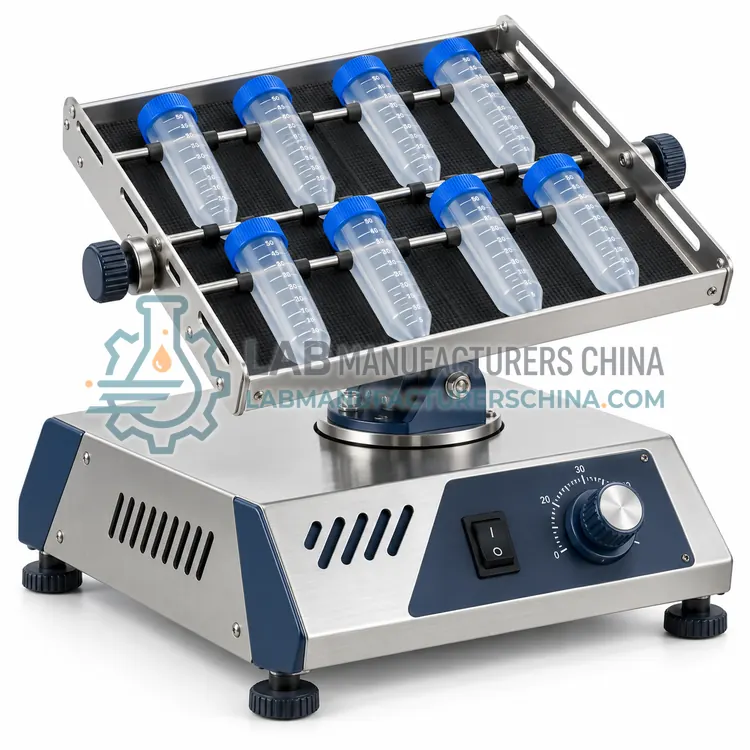
How do Tube Mixers work?
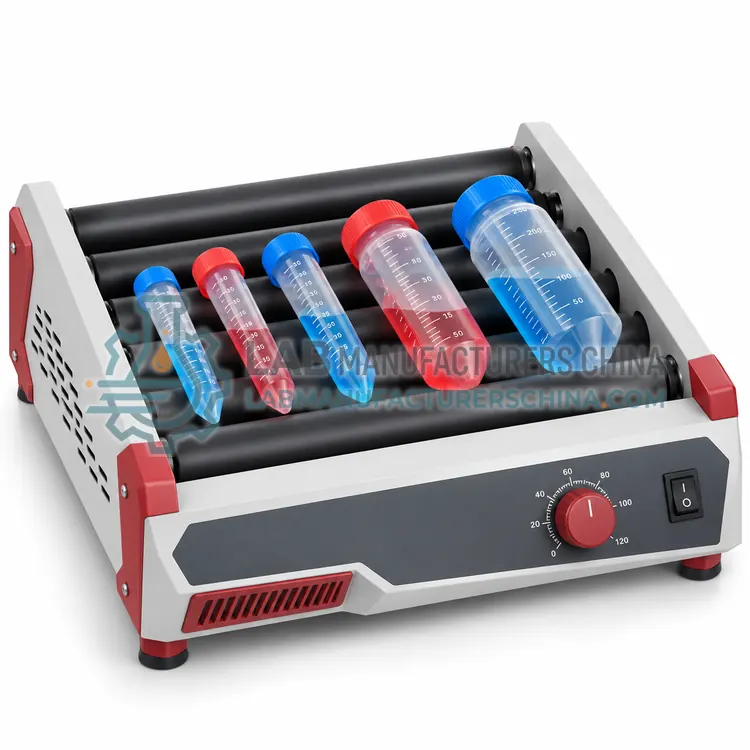
Tube mixers use a motor-driven mechanism to move containers in a slow, repeating pattern. Roller mixers have parallel rollers, typically 4 to 8, that turn tubes or bottles about their own axis so liquid spreads over the inner wall. Rocking mixers have a platform tilted up and down around a horizontal axis, which moves liquid back and forth across the vessel. Seesaw or 3D rockers combine tilt and rotation in a wave-like motion. Reciprocating versions move a tray linearly. Speeds are low, from 5 to 80 cycles or rpm, and tilt angles are around 5 to 20 degrees. Components include a DC or AC gear motor, drive shaft or cam, platform or rollers, a speed controller, a timer, and non-slip mats or holders. Because forces are gentle, the mixers are suited to cells, blood and protein solutions that would be damaged by vortexing.
Which Tube Mixers variants are available?
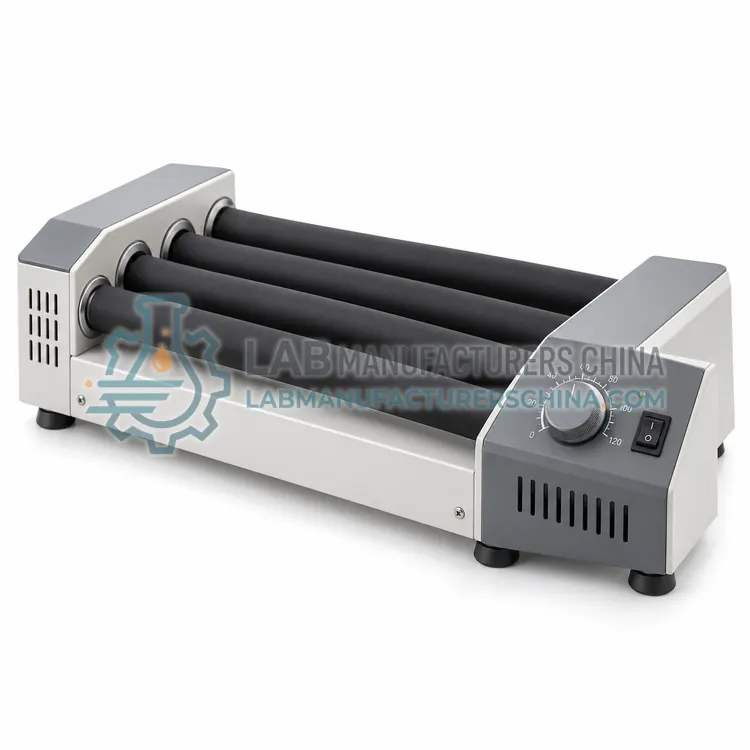
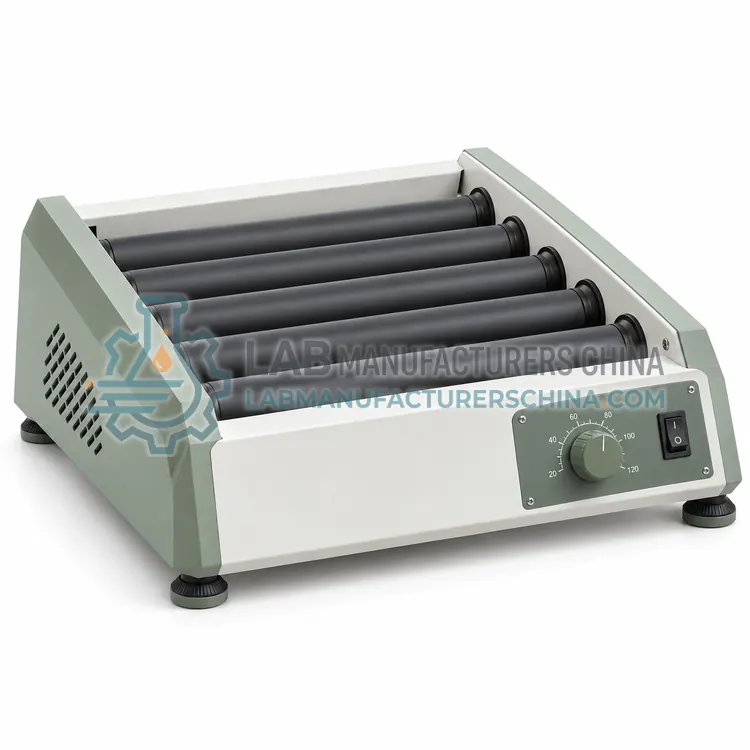
- Tube Roller Mixer — A tube roller mixer rotates tubes about their own axis on parallel rollers at low speed.
- Bottle Roller Mixer for Cell Culture Vessels — A bottle roller mixer rotates cylindrical bottles, roller bottles and media bottles on heavy-duty rollers at low speed.
- Blood Roller Mixer with Rocking Action — A blood roller mixer combines slow rolling with a slight rocking tilt to mix anticoagulant into blood collection tubes without hemolysis.
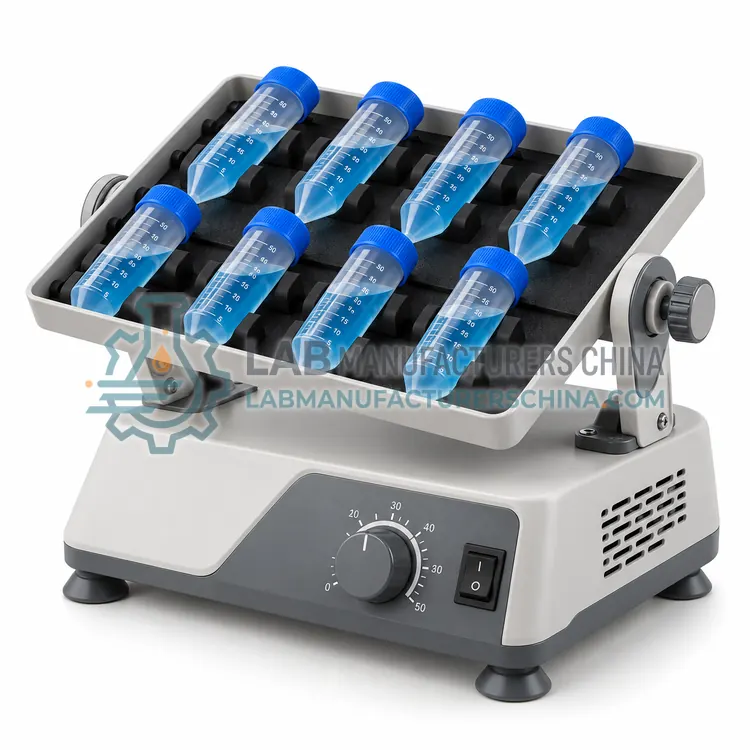
- Platform Rocking Mixer — A platform rocking mixer tilts a flat platform up and down around a horizontal axis at low frequency.
- 3D Seesaw Rocker — A 3D seesaw rocker combines tilting in two axes with a slight rotation to create a wave-like motion.
How do I choose the right variant?
Choose a tube mixer by motion type, container format, speed and load. Roller mixers suit tubes, bottles and cell culture roller bottles, and they provide continuous gentle mixing for viscous or settling samples. Rocking mixers suit flat vessels, gels, blots and staining trays where liquid should wash across a surface. Seesaw or 3D rockers provide a wave motion for blots and multiple plates. Check the maximum load, because large bottles can reach several kilograms. Confirm that speed and tilt angle are adjustable, and that the platform or rollers are compatible with your vessels. For incubator or cold-room use, verify temperature and humidity ratings. Timers, reversible direction and program memory matter if protocols are standardized. Also consider cleanability, noise and whether a removable mat or roller set is needed.
Where are Tube Mixers used?
Tube Mixers are specified in blood tube and sample mixing, cell culture roller bottles, western blot staining and washing, buffer and reagent preparation and sample suspension before analysis.
Which standards and certifications apply?
Work with Tube Mixers is commonly governed by IEC 61010-1, IEC 61010-2-051, EN 61326-1, GB 4793.1 and CLSI GP41. Instrument certifications such as CE marking are confirmed per configuration and never assumed.
What are the key considerations before purchase?
Place the mixer on a flat, stable surface with enough clearance for the moving platform or rollers. Keep loads within the rated limit and distribute them evenly to protect bearings and gear motors. Use non-slip mats or holders for bottles and tubes, and keep caps tight to prevent leaks into the drive. If operated in incubators, confirm the rating for humidity and temperature and use a remote controller where available. Clean mats and platforms with mild disinfectant and check for cracks. Periodically verify speed with a tachometer and record results if your quality system requires it. Electrical safety should follow IEC 61010-1, and instruments for cell culture should be made from materials that tolerate disinfectants and UV where used.