How do Vortex Mixers work?
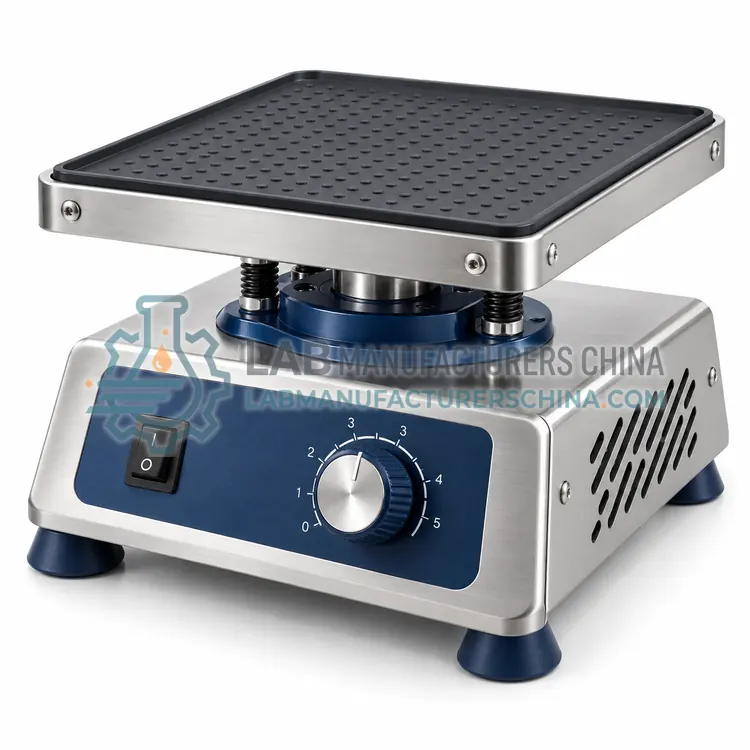
A vortex mixer has an electric motor with an eccentric shaft that moves a rubber cup, platform or head in a small orbital path, typically 3 to 6 mm in diameter, at speeds of about 100 to 3,000 rpm. When a tube is pressed onto the cup, or held in a clamp, the orbital motion transmits to the liquid, which swirls up the tube wall and forms a vortex at the center. The mixing effect depends on speed, orbit diameter, tube shape and liquid volume. Touch-activated models start when pressure is applied to the cup, while continuous mode runs until switched off. Speed controllers use a potentiometer or a digital tachometer loop, and some units add a timer or pulse function. Rubber feet or suction cups dampen vibration and keep the unit stationary on the bench.
Which Vortex Mixers variants are available?
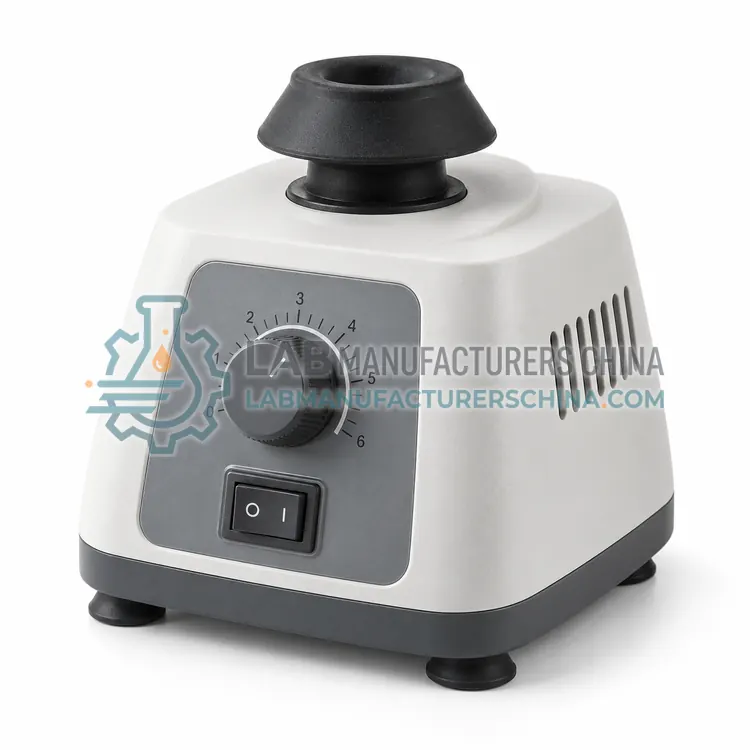
- Mini Vortex Mixer — A mini vortex mixer is a small, lightweight unit with a fixed or limited speed range, designed for quick single-tube mixing of microtubes and small vials.
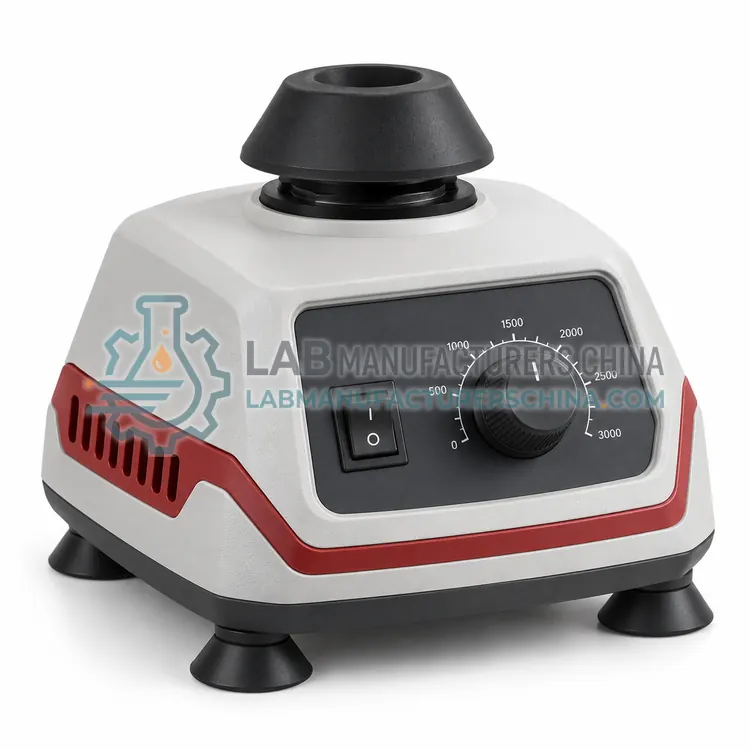
- Analog Variable-Speed Vortex Mixer — An analog variable-speed vortex mixer uses a rotary knob to adjust speed from about 100 to 3,000 rpm, with touch and continuous modes.
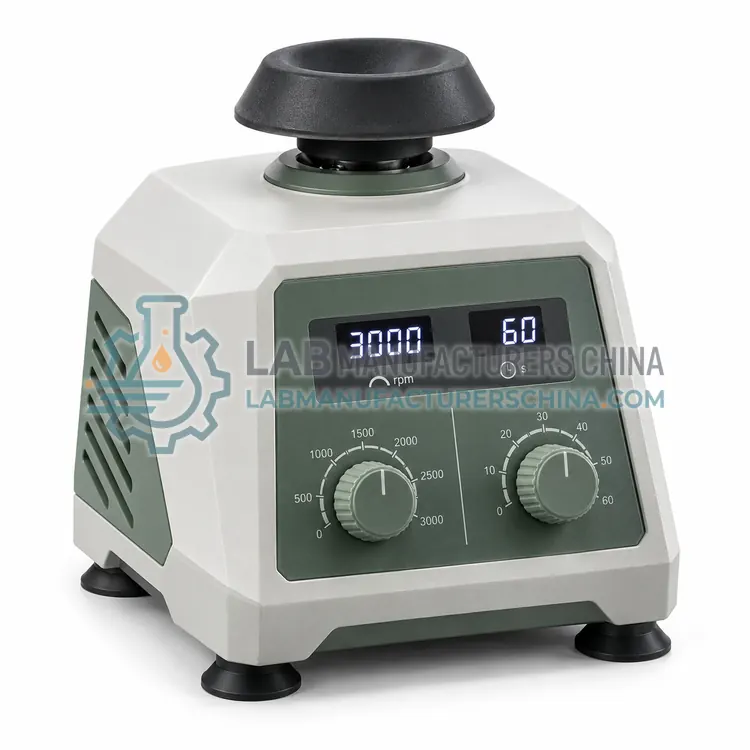
- Digital Vortex Mixer with Timer and Speed Display — A digital vortex mixer shows set and actual speed, regulates it in closed loop and offers a timer, so mixing can be documented and reproduced.
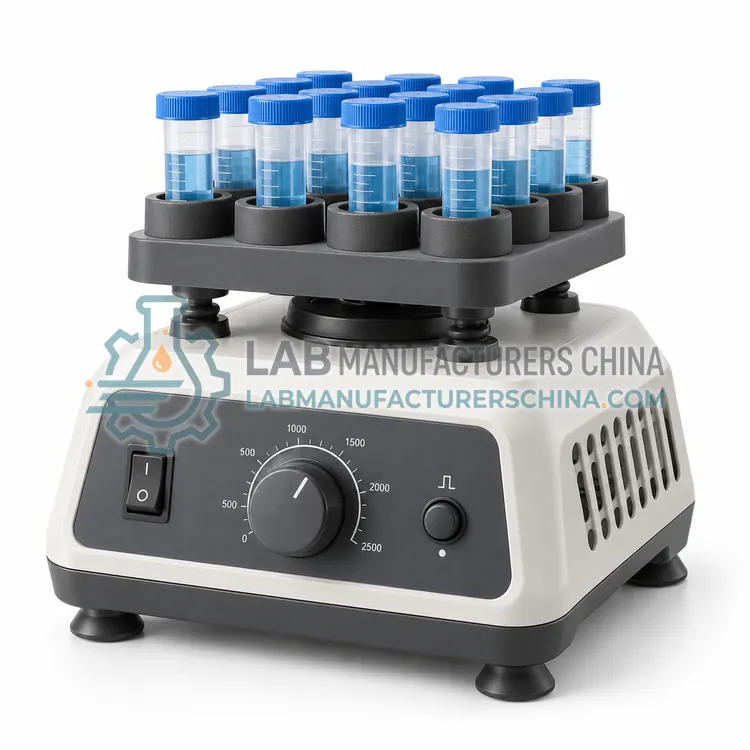
- Multi-Tube Pulsing Vortex Mixer — A multi-tube pulsing vortex mixer holds 12 to 60 tubes in a foam or rack platform and applies orbital pulses to all of them at once.
- Adjustable-Orbit Vortex Shaker — An adjustable-orbit vortex shaker lets the user change orbit diameter, typically 2 to 10 mm, in addition to speed, so the same instrument can mix microtubes, larger tubes, vials and microplates with suitable motion.
How do I choose the right variant?
Decide first on the typical tube and volume, since orbit and speed must match the job: microtubes and small vials mix well with 3 to 4.5 mm orbits, while larger tubes or flasks benefit from wider orbits of up to 6 mm or more. Choose variable speed for resuspending pellets or preventing foaming, with a low minimum speed for gentle mixing. Touch and continuous modes together offer flexibility. Digital displays and timers add reproducibility when a method specifies speed and time. For multiple tubes, select a platform or multi-tube head, and verify tube capacity and whether adapters are available for PCR tubes, strips or plates. Also check noise, footprint, cup material, and compliance with IEC 61010. Include tube types, typical volume and required rpm in the inquiry.
Where are Vortex Mixers used?
Vortex Mixers are specified in resuspension of cell and bacterial pellets, reagent mixing for PCR and immunoassays, sample preparation for LC-MS and HPLC, mixing of extraction solvents and vial mixing in clinical chemistry.
Which standards and certifications apply?
Work with Vortex Mixers is commonly governed by IEC 61010-1, IEC 61010-2-051, IEC 61326-1, GB 4793.1 and ISO 9001. Instrument certifications such as CE marking are confirmed per configuration and never assumed.
What are the key considerations before purchase?
Place the mixer on a flat, stable surface and ensure feet or suction cups are in contact. Do not overload the platform, and use secure clamps or foam inserts when mixing many tubes. Use tubes with closed caps, since aerosols can form during vigorous mixing, and work inside a safety cabinet for infectious or hazardous samples. Clean rubber cups with a mild disinfectant, and replace them when worn, because worn cups reduce mixing effectiveness and may shed particles. Avoid running at maximum speed with small volumes that splash. Verify speed periodically with a tachometer, record maintenance and follow IEC 61010-1 for electrical safety. For regulated work, include the mixer in the preventive maintenance schedule.