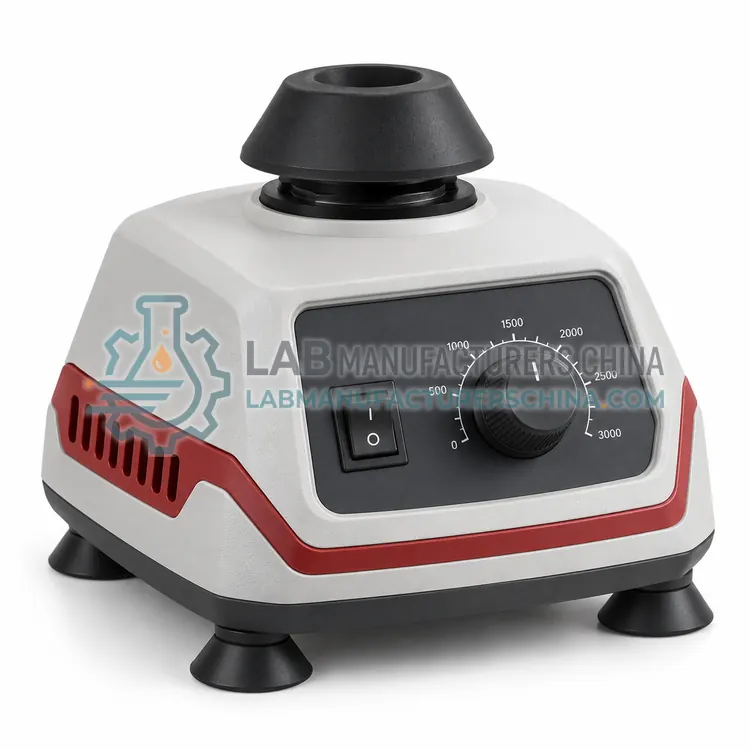
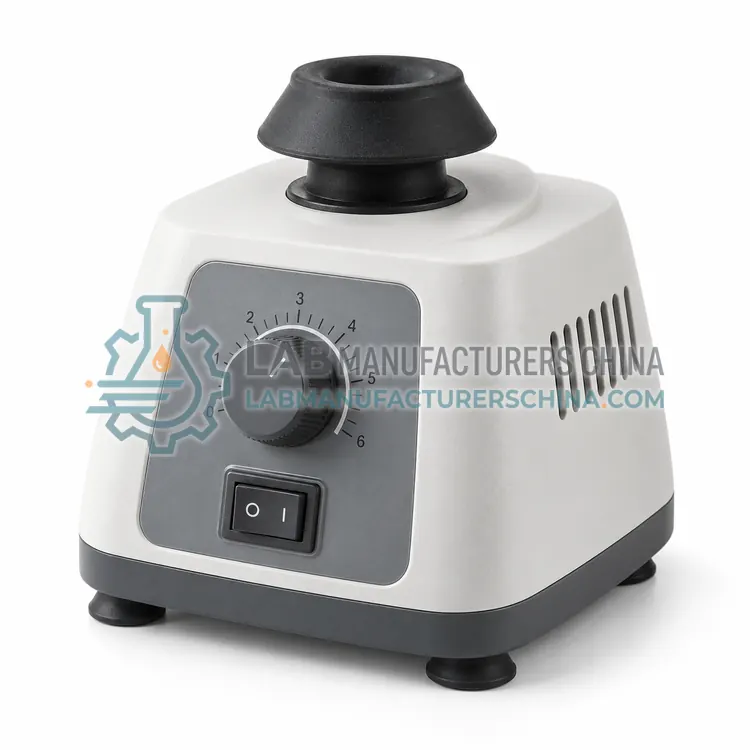
Analog Variable-Speed Vortex Mixer
模拟调速涡旋混合器
- SKU VOM-0002
- Vortex Mixers
- CE (to be confirmed)
- RoHS (to be confirmed)
- ISO 9001 manufacturing (to be confirmed)
Price on request — FOB / CIF quoted per order
Prices depend on configuration, quantity and destination port.
Key specifications
| Speed range | 100–3,000 rpm |
|---|---|
| Orbit diameter | 4.5 mm |
| Max tube volume | 50 mL |
| Operating modes | Touch and continuous |
| Speed control | Analog knob, open loop |
| Max load | 0.5–1 kg |
Request a quote Download brochure · to be provided
By Lab Manufacturers China Technical TeamLast reviewed Standards: IEC 61010-1, IEC 61010-2-051, IEC 61326-1
What is the Analog Variable-Speed Vortex Mixer?
An analog variable-speed vortex mixer uses a rotary knob to adjust speed from about 100 to 3,000 rpm, with touch and continuous modes. It is the standard general-purpose choice for laboratories that need gentle resuspension and vigorous mixing from one instrument.
What is the Analog Variable-Speed Vortex Mixer?
An analog variable-speed vortex mixer uses a rotary knob to adjust speed from about 100 to 3,000 rpm, with touch and continuous modes. It is the standard general-purpose choice for laboratories that need gentle resuspension and vigorous mixing from one instrument.
Overview
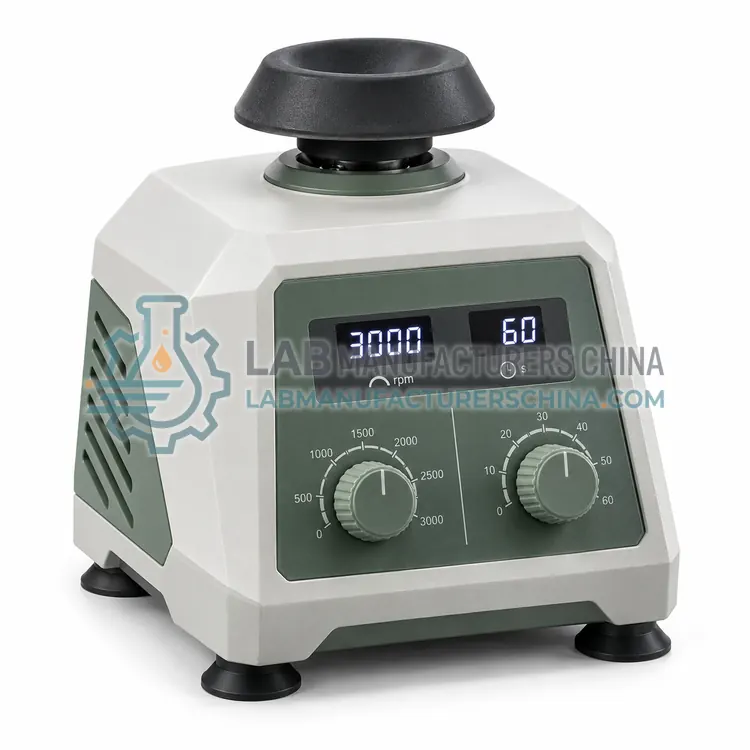
This is the common workhorse vortex mixer. A rotary knob sets motor voltage, giving a speed range that starts low, at about 100 to 500 rpm, for gentle resuspension and rises to 2,500 to 3,000 rpm for vigorous mixing. The orbit is usually 4 to 5 mm, which works for tubes from microtubes up to 50 mL conical tubes. Operation is touch or continuous, selected by a switch. The housing is heavy enough, at 2 to 3 kg, and has suction feet, so it stays in place at full speed. A rubber cup is standard, and interchangeable heads or platforms can be added. As speed is set by a dial without feedback, actual rpm varies with load, so it suits routine work rather than methods requiring documented speed. Motors are often brushless for long life.
How does it work?
A vortex mixer has an electric motor with an eccentric shaft that moves a rubber cup, platform or head in a small orbital path, typically 3 to 6 mm in diameter, at speeds of about 100 to 3,000 rpm. When a tube is pressed onto the cup, or held in a clamp, the orbital motion transmits to the liquid, which swirls up the tube wall and forms a vortex at the center. The mixing effect depends on speed, orbit diameter, tube shape and liquid volume. Touch-activated models start when pressure is applied to the cup, while continuous mode runs until switched off. Speed controllers use a potentiometer or a digital tachometer loop, and some units add a timer or pulse function. Rubber feet or suction cups dampen vibration and keep the unit stationary on the bench.
What are the key features?
- Variable speed from about 100 to 3,000 rpm by rotary knob
- Touch and continuous operation selectable by switch
- 4–5 mm orbit suited to tubes from 0.5 to 50 mL
- Standard rubber cup with optional heads and platforms
- Weighted housing with suction feet for vibration-free operation
- Brushless motor for long service life
What are the technical specifications?
A typical analog variable-speed vortex mixer configuration offers speed range of 100–3,000 rpm, orbit diameter of 4.5 mm, max tube volume of 50 mL, operating modes of Touch and continuous, speed control of Analog knob, open loop and max load of 0.5–1 kg. Values are indicative of the product class; the exact figures for each configuration are confirmed on the quotation and the calibration documents supplied with the instrument.
Which applications is it used for?
The Analog Variable-Speed Vortex Mixer is used in routine reagent mixing, pellet resuspension, sample preparation for HPLC and LC-MS, mixing of extraction solvents and general laboratory daily use. Across the wider Vortex Mixers class, laboratories also deploy it for resuspension of cell and bacterial pellets, reagent mixing for PCR and immunoassays and sample preparation for LC-MS and HPLC.
Which standards and certifications apply?
Relevant standards and methods include IEC 61010-1, IEC 61010-2-051, IEC 61326-1, GB 4793.1 and ISO 9001. Certification candidates for this model are CE, RoHS and ISO 9001 manufacturing; each is to be confirmed for the specific configuration before shipment, and certificates are supplied only where they have been issued.
Place the mixer on a flat, stable surface and ensure feet or suction cups are in contact. Do not overload the platform, and use secure clamps or foam inserts when mixing many tubes. Use tubes with closed caps, since aerosols can form during vigorous mixing, and work inside a safety cabinet for infectious or hazardous samples. Clean rubber cups with a mild disinfectant, and replace them when worn, because worn cups reduce mixing effectiveness and may shed particles. Avoid running at maximum speed with small volumes that splash. Verify speed periodically with a tachometer, record maintenance and follow IEC 61010-1 for electrical safety. For regulated work, include the mixer in the preventive maintenance schedule.
How do I select the right Analog Variable-Speed Vortex Mixer?
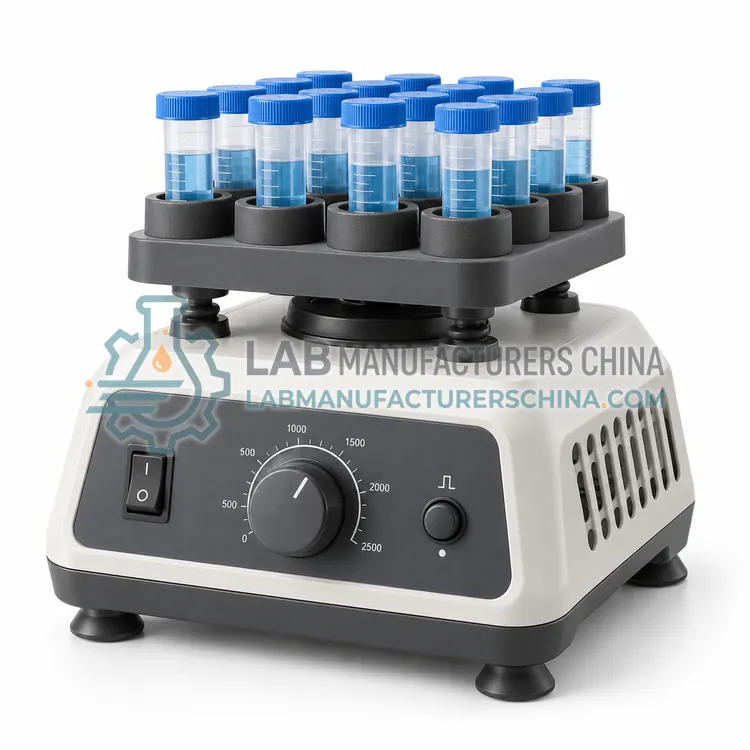
Select the analog variable-speed mixer as the general-purpose workhorse for routine mixing. If methods specify rpm or mixing time, choose a digital model with display and timer. For more than a few tubes at once, consider a multi-tube head or dedicated multi-tube vortexer. State tube types and required minimum speed in your RFQ.
How does it compare with other Vortex Mixers variants?
Decide first on the typical tube and volume, since orbit and speed must match the job: microtubes and small vials mix well with 3 to 4.5 mm orbits, while larger tubes or flasks benefit from wider orbits of up to 6 mm or more. Choose variable speed for resuspending pellets or preventing foaming, with a low minimum speed for gentle mixing. Touch and continuous modes together offer flexibility. Digital displays and timers add reproducibility when a method specifies speed and time. For multiple tubes, select a platform or multi-tube head, and verify tube capacity and whether adapters are available for PCR tubes, strips or plates. Also check noise, footprint, cup material, and compliance with IEC 61010. Include tube types, typical volume and required rpm in the inquiry.
Full specifications
| Speed range | 100–3,000 rpm |
|---|---|
| Orbit diameter | 4.5 mm |
| Max tube volume | 50 mL |
| Operating modes | Touch and continuous |
| Speed control | Analog knob, open loop |
| Max load | 0.5–1 kg |
| Motor type | Brushless DC |
| Motor power | 40–60 W |
| Noise level | < 60 dB(A) |
| Weight | 2–3 kg |
Indicative values for this product class. Final specifications are confirmed on the quotation and in the calibration documents supplied with the instrument.
Applications
- Routine reagent mixing
- Pellet resuspension
- Sample preparation for HPLC and LC-MS
- Mixing of extraction solvents
- General laboratory daily use
Key features
- Variable speed from about 100 to 3,000 rpm by rotary knob
- Touch and continuous operation selectable by switch
- 4–5 mm orbit suited to tubes from 0.5 to 50 mL
- Standard rubber cup with optional heads and platforms
- Weighted housing with suction feet for vibration-free operation
- Brushless motor for long service life
Frequently asked questions about Analog Variable-Speed Vortex Mixer
With a minimum speed of about 100 to 500 rpm it can resuspend pellets and mix delicate samples gently. For the most fragile biological samples, rotary or rocking mixing remains gentler than any orbital vortexing.
An open-loop analog drive has no feedback, so load from the tube slows the motor slightly. This is normal. If stable speed under load is essential, choose a digital model with closed-loop speed regulation.
Most models accept interchangeable cups, platforms, flask clamps and multi-tube foam heads. Confirm the attachment mounting system and maximum load rating, since heavy attachments reduce achievable speed and stress the motor.
A vortex mixer mixes small liquid volumes in tubes and vials by orbital shaking. It is used to combine reagents, resuspend pellets, dissolve powders in solvent and prepare samples for chromatography, PCR and immunoassays in just seconds.
A 3–4.5 mm orbit suits microtubes and small vials. Larger orbits of 5–6 mm or more mix bigger tubes and greater volumes more efficiently. If you use both, choose a model with an adjustable or medium orbit and a wide speed range.
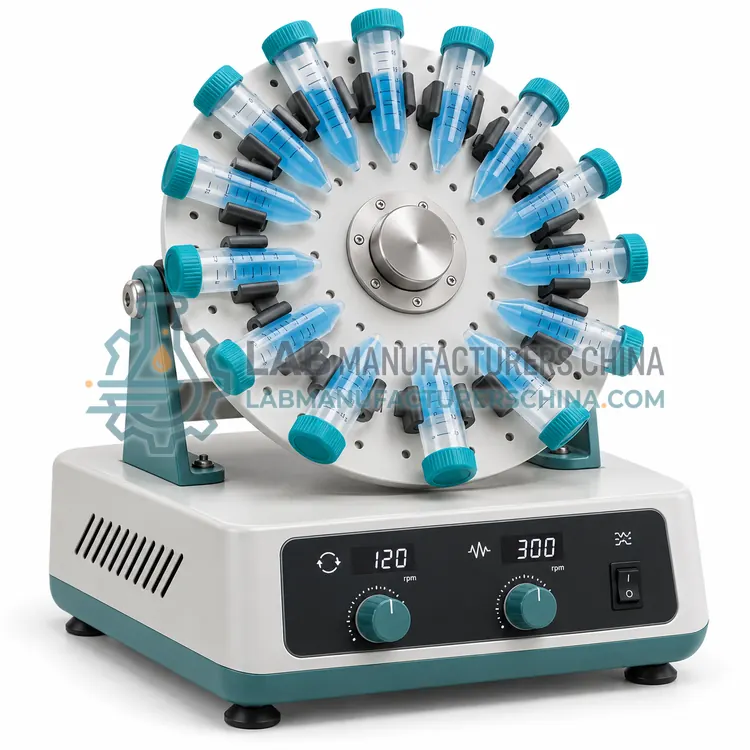
Yes, vigorous vortexing can cause shear, foaming and denaturation of fragile cells, high-molecular-weight DNA and some proteins. Use low speed or short pulses, or switch to rotary or rocking mixing for delicate samples.
Related models