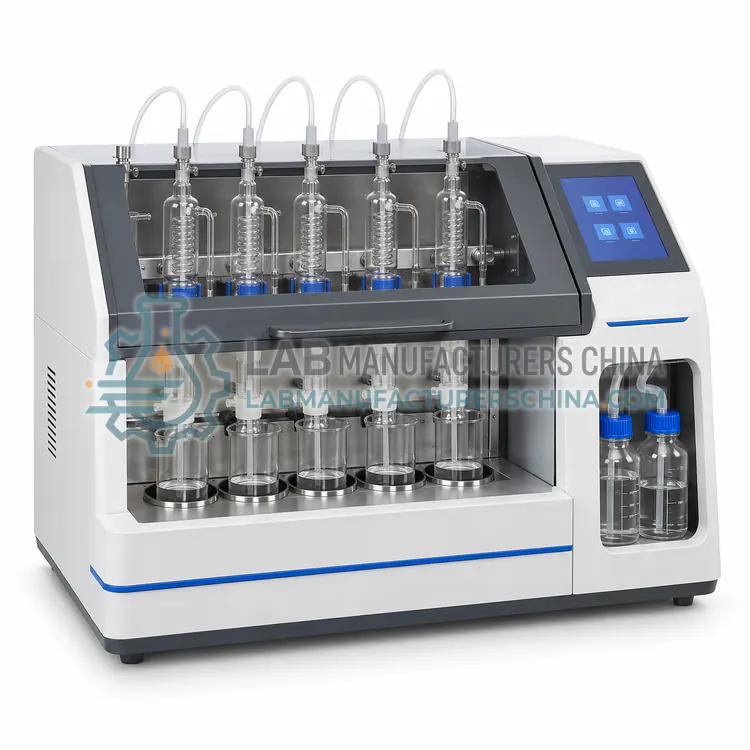
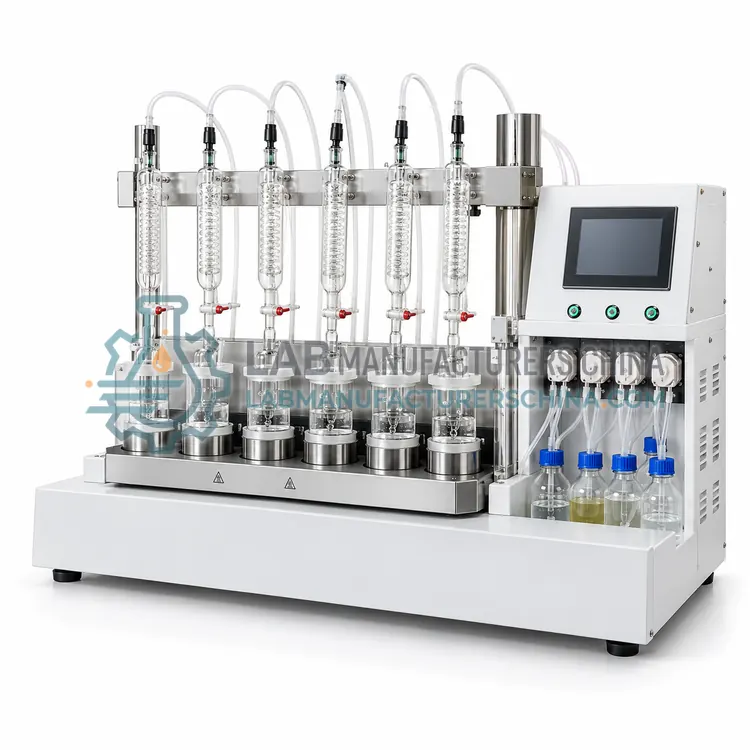
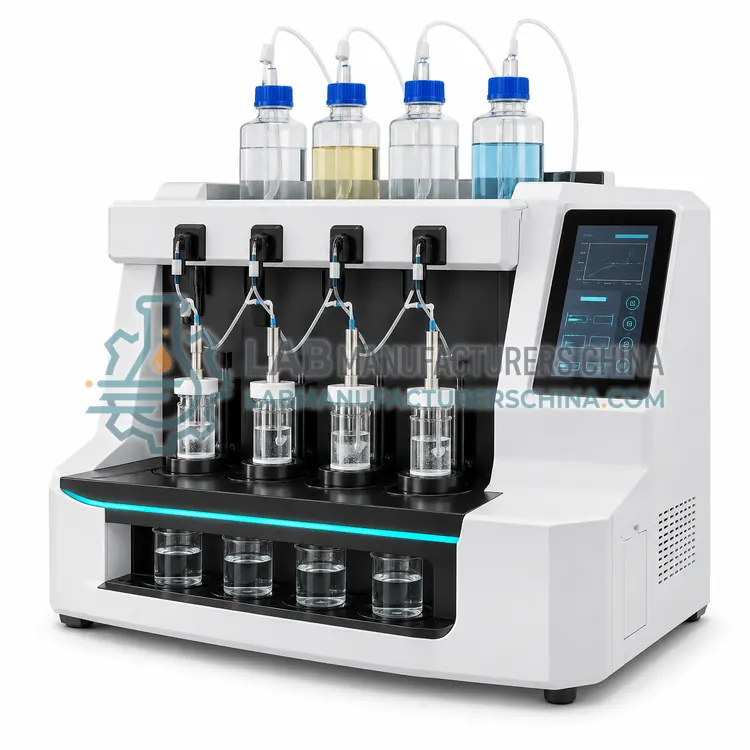
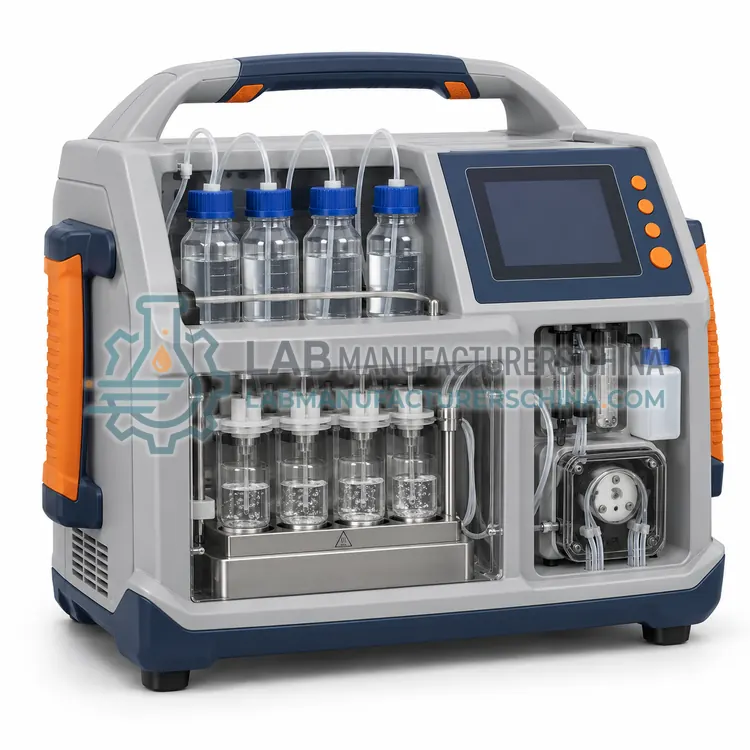
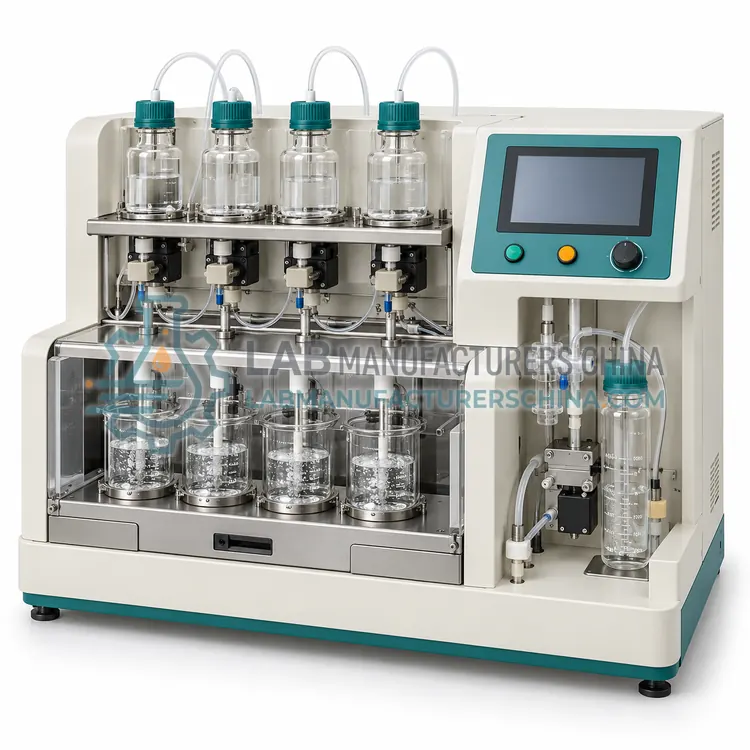
How do Fiber Analyzers work?
Fiber is a family of carbohydrate polymers and lignin that resist digestion, so methods measure an operationally defined residue. The Weende crude fiber method digests the sample sequentially with dilute acid and alkali, then filters, dries, ignites and weighs the residue, capturing cellulose and part of the lignin. Detergent methods use neutral or acid detergent solutions to isolate neutral detergent fiber, which includes hemicellulose, cellulose and lignin, or acid detergent fiber, which excludes hemicellulose. Enzymatic-gravimetric dietary fiber methods treat the sample with amylase, protease and amyloglucosidase to remove starch and protein, then precipitate soluble fiber with alcohol and weigh the total residue, correcting for ash and protein. HPLC-based methods quantify individual fiber fractions after enzymatic digestion, which supports labelling of specific fiber types.
Which Fiber Analyzers variants are available?
- Crude Fiber Analyzer (Weende Method) — A crude fiber analyzer performs the Weende method, digesting the sample with acid and alkali and weighing the dried residue.
- Detergent Fiber Analyzer for NDF and ADF — A detergent fiber analyzer measures neutral and acid detergent fiber using boiling detergent solutions and refluxing filtration.
- Filter Bag Fiber Analyzer — A filter bag fiber analyzer places samples in porous bags and digests, rinses and extracts them in a shared vessel, allowing many samples per batch.
- Enzymatic-Gravimetric Dietary Fiber Analyzer — An enzymatic-gravimetric dietary fiber analyzer removes starch and protein with enzymes, precipitates soluble fiber with alcohol and weighs the residue.
- HPLC Dietary Fiber Analyzer for Fiber Fractions — An HPLC dietary fiber analyzer separates and quantifies individual fiber components such as resistant starch, beta-glucan or inulin after enzymatic digestion.
How do I choose the right variant?
Choose the method according to the fiber value you must report. Crude fiber is an older, inexpensive measure still used for feed regulation and some export certificates, but it underestimates total fiber considerably. Detergent fiber methods give NDF and ADF values used in feed formulation and ruminant nutrition, and they are rapid with filter bag systems. For human nutrition labelling, enzymatic-gravimetric methods such as AOAC 991.43 give total dietary fiber and, with additional steps, insoluble and soluble fractions. HPLC-based methods are needed when individual fiber components, such as beta-glucan or inulin, must be declared or studied. Always check that the accredited method applies to your matrix and that ash and protein corrections are included.
Where are Fiber Analyzers used?
Fiber Analyzers are specified in dietary fiber declaration for nutrition labelling, crude fiber compliance for feed and export, NDF and ADF values for ration formulation, cereal, legume and vegetable fiber testing, fiber enrichment claim verification and method development and reference comparisons.
Which standards and certifications apply?
Work with Fiber Analyzers is commonly governed by ISO 5498, ISO 6541, ISO 6865, ISO 16472, AOAC 991.43, AOAC 985.29, AOAC 2011.25 and ISO/IEC 17025. Instrument certifications such as CE marking are confirmed per configuration and never assumed.
What are the key considerations before purchase?
Fiber analysis is sensitive to filtration and transfer losses, so crucibles, fritted glassware and filter bags must be prepared, dried and weighed consistently, and residues must be handled without spillage. Enzyme activities vary between lots, so incubation times, temperatures and pH buffers must follow the method exactly, and each batch should include a blank and a control sample. The ashing step requires a muffle furnace at 525 to 550 °C with a stable, calibrated controller. Drying and cooling to constant mass before weighing are essential for gravimetric accuracy. Because results are operationally defined, laboratories should state the method, the corrections applied and participate in proficiency-testing schemes for dietary fiber.