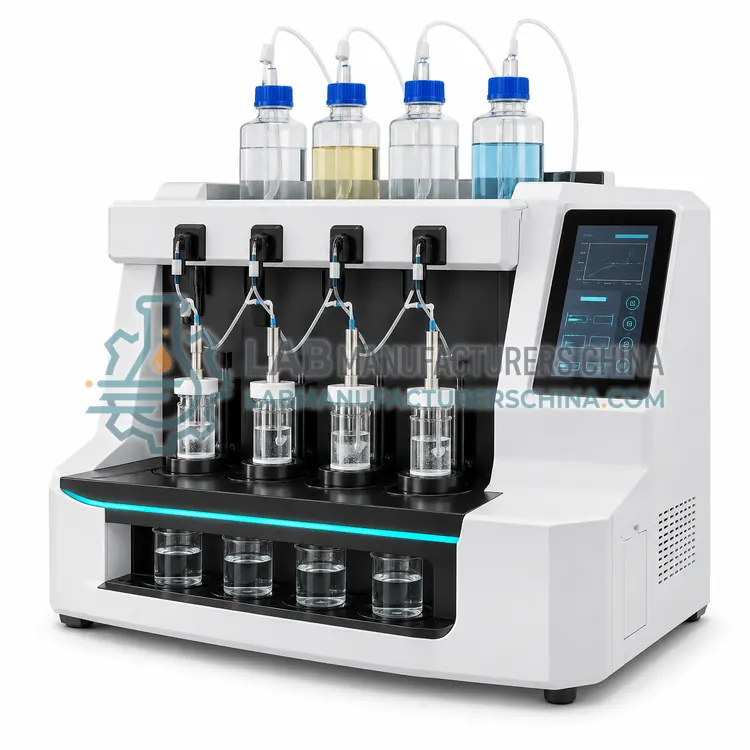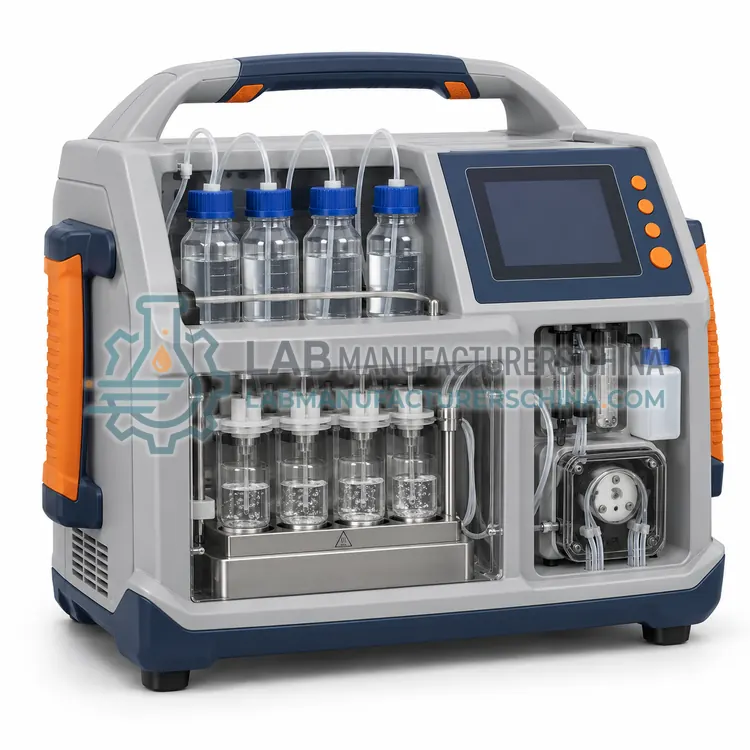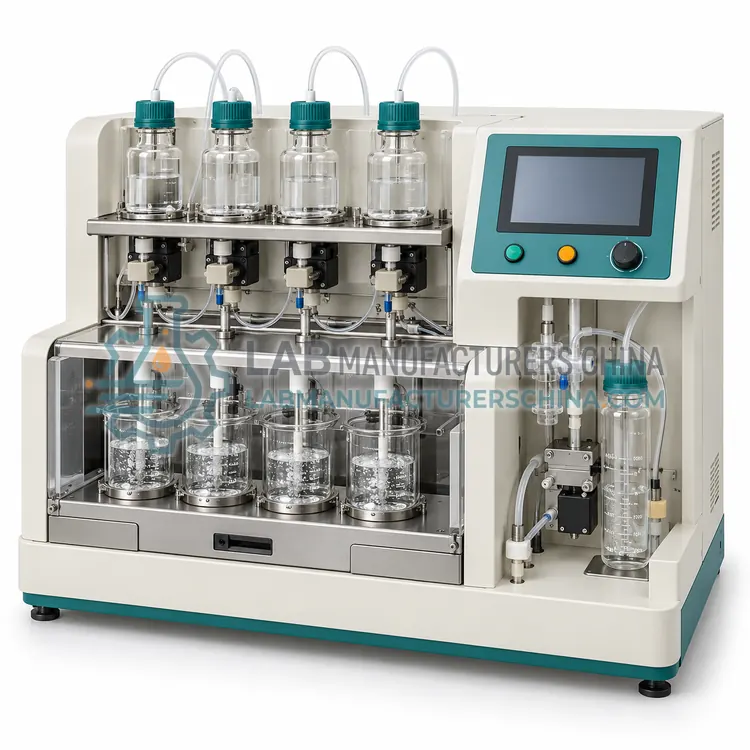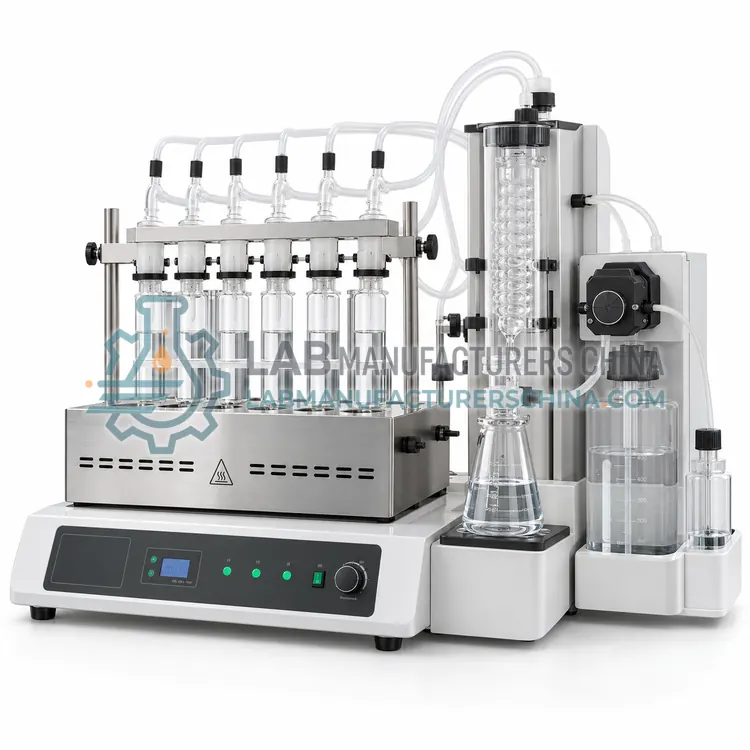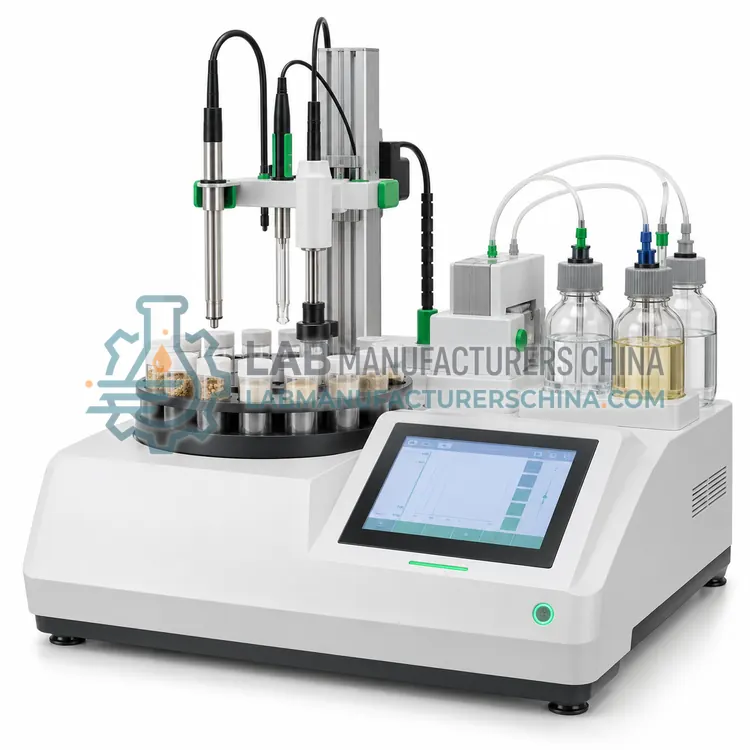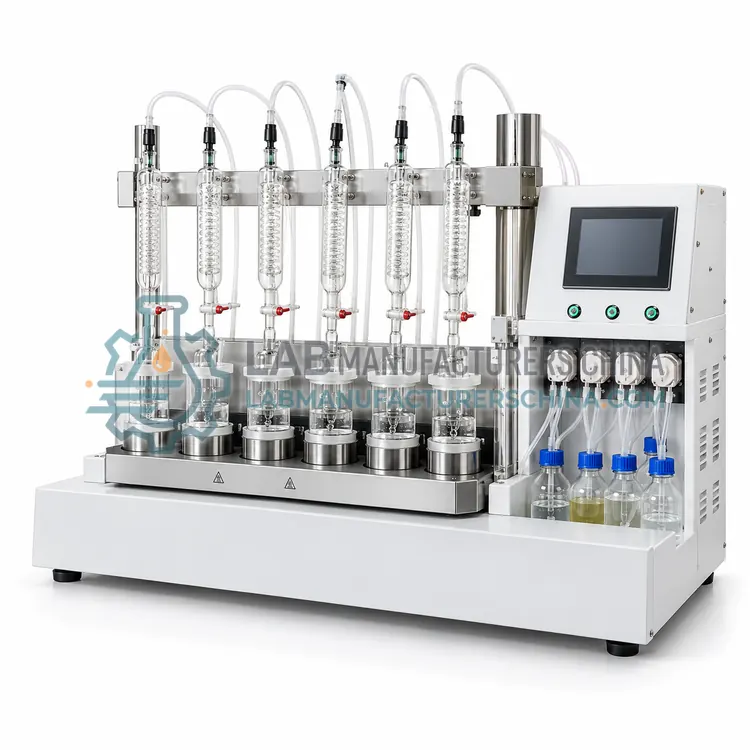
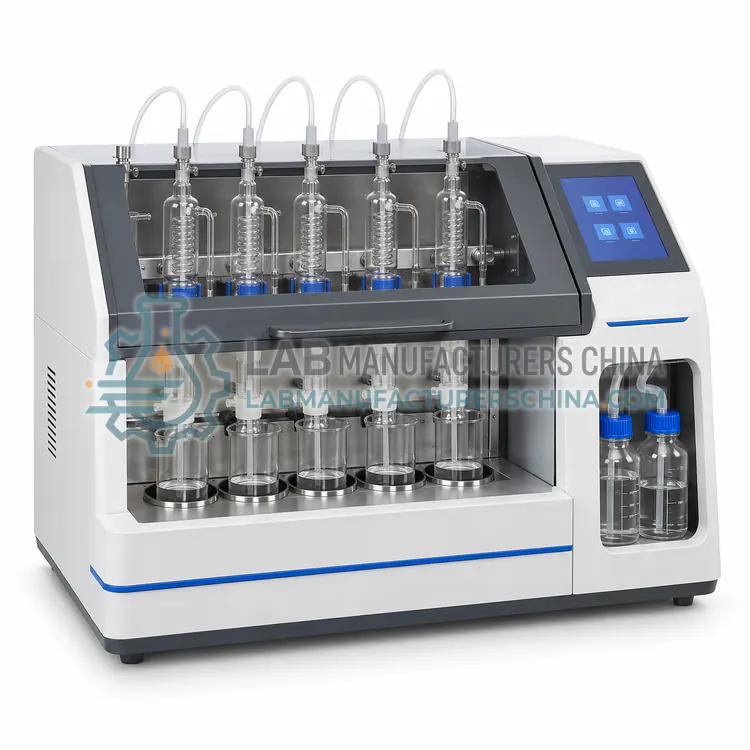
Crude Fiber Analyzer (Weende Method)
粗纤维分析仪(Weende 法)
- SKU FIA-0001
- Fiber Analyzers
- CE (to be confirmed)
- ISO 9001 manufacturing (to be confirmed)
Price on request — FOB / CIF quoted per order
Prices depend on configuration, quantity and destination port.
Key specifications
| Digestion positions | 6 simultaneous |
|---|---|
| Acid digestion | 0.255 mol/L sulfuric acid, 30 min |
| Alkali digestion | 0.313 mol/L sodium hydroxide, 30 min |
| Crucible type | Sintered glass or silica, porosity 2 |
| Heating | Electric heaters with individual control |
| Ashing temperature | 525–550 °C in muffle furnace |
Request a quote Download brochure · to be provided
By Lab Manufacturers China Technical TeamLast reviewed Standards: ISO 5498, ISO 6541, ISO 6865
What is the Crude Fiber Analyzer (Weende Method)?
A crude fiber analyzer performs the Weende method, digesting the sample with acid and alkali and weighing the dried residue. It provides the crude fiber value still used in feed regulation and many export certificates.
What is the Crude Fiber Analyzer (Weende Method)?
A crude fiber analyzer performs the Weende method, digesting the sample with acid and alkali and weighing the dried residue. It provides the crude fiber value still used in feed regulation and many export certificates.
Overview
The system heats the sample with dilute sulfuric acid for 30 minutes, filters it, then digests the residue with dilute sodium hydroxide for a further 30 minutes. After filtration and washing, the residue is dried, weighed, ignited in a muffle furnace at 525 to 550 °C and weighed again, so crude fiber is calculated from the mass loss corrected for ash. Multi-position units handle six samples at once with individual heating, filtration and washing, which reduces variation between operators. Crucibles with sintered glass or silica frits hold the residue, and careful transfer and consistent drying are critical because the residue is small. The method underestimates total fiber because it removes hemicellulose and much of the lignin.
How does it work?
Fiber is a family of carbohydrate polymers and lignin that resist digestion, so methods measure an operationally defined residue. The Weende crude fiber method digests the sample sequentially with dilute acid and alkali, then filters, dries, ignites and weighs the residue, capturing cellulose and part of the lignin. Detergent methods use neutral or acid detergent solutions to isolate neutral detergent fiber, which includes hemicellulose, cellulose and lignin, or acid detergent fiber, which excludes hemicellulose. Enzymatic-gravimetric dietary fiber methods treat the sample with amylase, protease and amyloglucosidase to remove starch and protein, then precipitate soluble fiber with alcohol and weigh the total residue, correcting for ash and protein. HPLC-based methods quantify individual fiber fractions after enzymatic digestion, which supports labelling of specific fiber types.
What are the key features?
- Six-position simultaneous acid and alkali digestion
- Individual filtration and washing for each crucible
- Sintered glass or silica crucibles for residue retention
- Programmed heating and reflux timing
- Drying and ashing workflow with ash correction
- Simple design with low reagent cost
What are the technical specifications?
A typical crude fiber analyzer (weende method) configuration offers digestion positions of 6 simultaneous, acid digestion of 0.255 mol/L sulfuric acid, 30 min, alkali digestion of 0.313 mol/L sodium hydroxide, 30 min, crucible type of Sintered glass or silica, porosity 2, heating of Electric heaters with individual control and ashing temperature of 525–550 °C in muffle furnace. Values are indicative of the product class; the exact figures for each configuration are confirmed on the quotation and the calibration documents supplied with the instrument.
Which applications is it used for?
The Crude Fiber Analyzer (Weende Method) is used in feed and forage crude fiber compliance, export certificate fiber testing, cereal and by-product fiber screening and reference comparison for rapid methods. Across the wider Fiber Analyzers class, laboratories also deploy it for dietary fiber declaration for nutrition labelling, crude fiber compliance for feed and export and NDF and ADF values for ration formulation.
Which standards and certifications apply?
Relevant standards and methods include ISO 5498, ISO 6541, ISO 6865, ISO 16472, AOAC 991.43, AOAC 985.29, AOAC 2011.25 and ISO/IEC 17025. Certification candidates for this model are CE and ISO 9001 manufacturing; each is to be confirmed for the specific configuration before shipment, and certificates are supplied only where they have been issued.
Fiber analysis is sensitive to filtration and transfer losses, so crucibles, fritted glassware and filter bags must be prepared, dried and weighed consistently, and residues must be handled without spillage. Enzyme activities vary between lots, so incubation times, temperatures and pH buffers must follow the method exactly, and each batch should include a blank and a control sample. The ashing step requires a muffle furnace at 525 to 550 °C with a stable, calibrated controller. Drying and cooling to constant mass before weighing are essential for gravimetric accuracy. Because results are operationally defined, laboratories should state the method, the corrections applied and participate in proficiency-testing schemes for dietary fiber.
How do I select the right Crude Fiber Analyzer (Weende Method)?
Select a crude fiber analyzer when regulation, customer specification or export documentation requires the Weende value. Confirm the number of positions against your workload and that crucibles and a suitable muffle furnace are available. Be aware that this method is not suitable for dietary fiber labelling.
How does it compare with other Fiber Analyzers variants?
Choose the method according to the fiber value you must report. Crude fiber is an older, inexpensive measure still used for feed regulation and some export certificates, but it underestimates total fiber considerably. Detergent fiber methods give NDF and ADF values used in feed formulation and ruminant nutrition, and they are rapid with filter bag systems. For human nutrition labelling, enzymatic-gravimetric methods such as AOAC 991.43 give total dietary fiber and, with additional steps, insoluble and soluble fractions. HPLC-based methods are needed when individual fiber components, such as beta-glucan or inulin, must be declared or studied. Always check that the accredited method applies to your matrix and that ash and protein corrections are included.
Full specifications
| Digestion positions | 6 simultaneous |
|---|---|
| Acid digestion | 0.255 mol/L sulfuric acid, 30 min |
| Alkali digestion | 0.313 mol/L sodium hydroxide, 30 min |
| Crucible type | Sintered glass or silica, porosity 2 |
| Heating | Electric heaters with individual control |
| Ashing temperature | 525–550 °C in muffle furnace |
| Sample mass | 1–3 g |
| Crude fiber range | 0.1–50 percent |
| Filtration | Vacuum filtration |
| Materials | Borosilicate glass, PTFE tubing |
Indicative values for this product class. Final specifications are confirmed on the quotation and in the calibration documents supplied with the instrument.
Applications
- Feed and forage crude fiber compliance
- Export certificate fiber testing
- Cereal and by-product fiber screening
- Reference comparison for rapid methods
Key features
- Six-position simultaneous acid and alkali digestion
- Individual filtration and washing for each crucible
- Sintered glass or silica crucibles for residue retention
- Programmed heating and reflux timing
- Drying and ashing workflow with ash correction
- Simple design with low reagent cost
Frequently asked questions about Crude Fiber Analyzer (Weende Method)
The acid and alkali treatment dissolves hemicellulose and much of the lignin and cellulose, leaving only the most resistant residue. Total dietary fiber includes all these fractions, so crude fiber values are typically several times lower.
Ignition at 525 to 550 °C removes organic residue so that mineral matter, which originates from the sample and reagents, is not counted as fiber. The ash value is subtracted from the dried residue mass.
The residue is small relative to the sample, so any material lost during filtration or transfer directly biases the result. Consistent vacuum, careful washing and pre-weighed crucibles control this source of error.
Crude fiber is the residue left after acid and alkali digestion and represents only part of the cellulose and lignin. Dietary fiber is measured enzymatically and includes soluble and insoluble non-starch polysaccharides, resistant starch and lignin, so it is much higher.
Neutral detergent fiber estimates total cell wall content and relates to feed intake, while acid detergent fiber estimates cellulose plus lignin and relates to digestibility. Both are used in ruminant ration formulation and feed evaluation.
The residue contains mineral matter from the sample and from reagents, which would be counted as fiber if not removed. Ignition in a muffle furnace at 525 to 550 °C burns off organic material, and the remaining ash is subtracted.
Related models