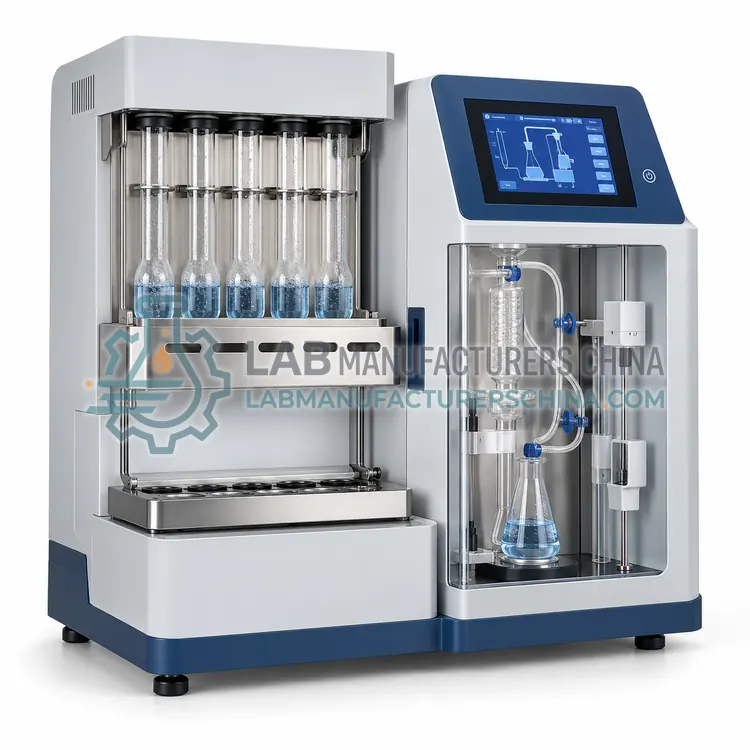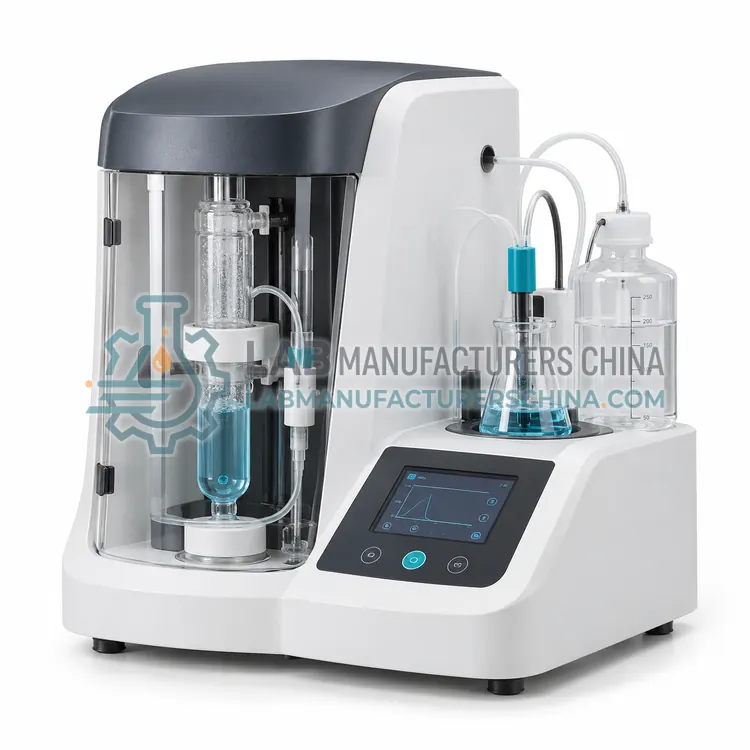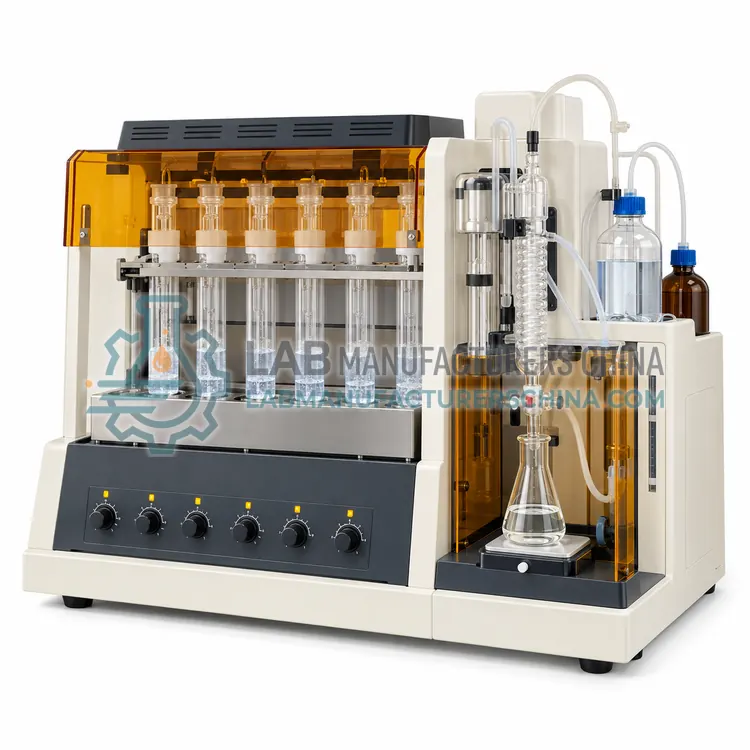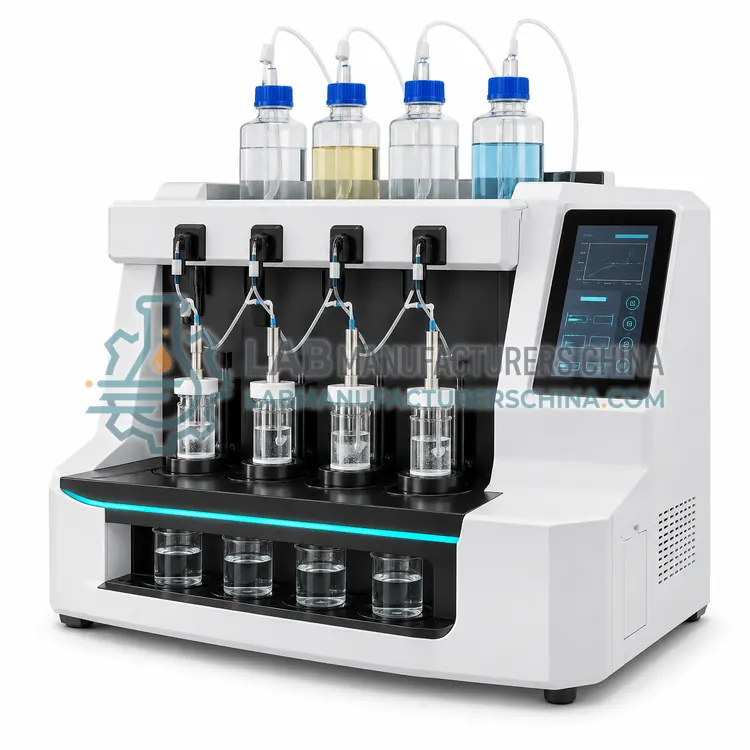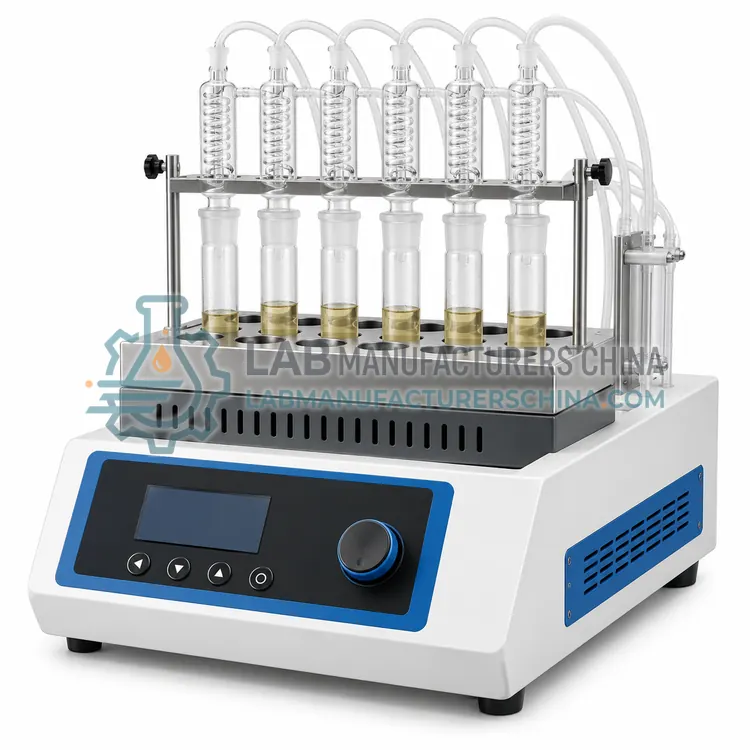
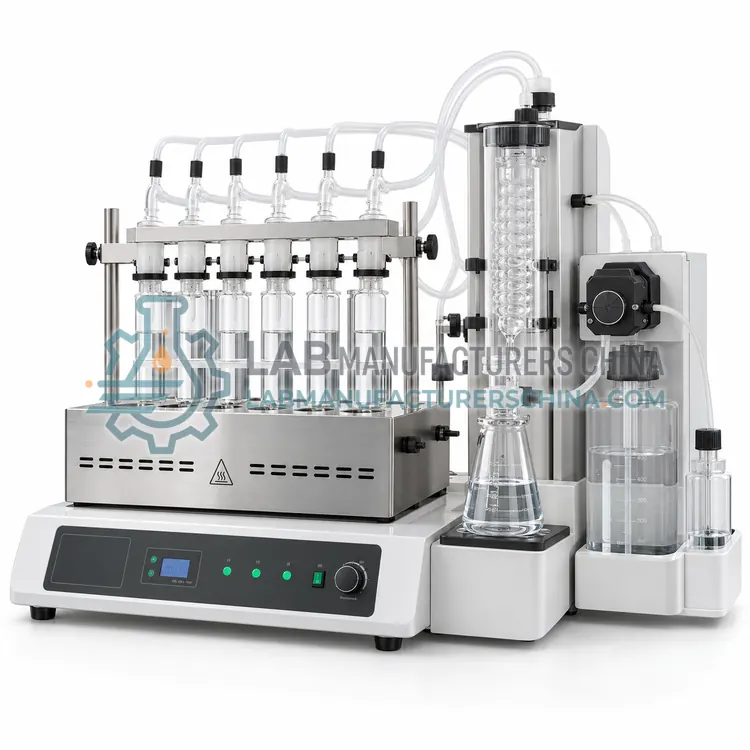
Automated Kjeldahl Digestion Block with Scrubber
带酸雾吸收的自动凯氏消解仪
- SKU KJS-0002
- Kjeldahl Systems
- CE (to be confirmed)
- ISO 9001 manufacturing (to be confirmed)
Price on request — FOB / CIF quoted per order
Prices depend on configuration, quantity and destination port.
Key specifications
| Positions | 12–40 tubes |
|---|---|
| Tube volume | 250 mL or 400 mL |
| Temperature range | Ambient to 450 °C |
| Temperature stability | ±1 °C |
| Programmes | Stored multi-step ramps |
| Scrubber | Water, alkali or neutralising solution |
Request a quote Download brochure · to be provided
By Lab Manufacturers China Technical TeamLast reviewed Standards: ISO 1871, ISO 8968-1, ISO 5983-2
What is the Automated Kjeldahl Digestion Block with Scrubber?
An automated Kjeldahl digestion block runs programmed temperature ramps and captures acid fumes in an integrated scrubber. It improves safety and reproducibility for laboratories digesting many food and feed samples each day.
What is the Automated Kjeldahl Digestion Block with Scrubber?
An automated Kjeldahl digestion block runs programmed temperature ramps and captures acid fumes in an integrated scrubber. It improves safety and reproducibility for laboratories digesting many food and feed samples each day.
Overview
The block heats twelve to forty tubes through a stored temperature program that includes a slow initial ramp to prevent foaming, a boiling stage for complete oxidation and a cooling stage. Exhaust gases pass through a water, alkali or neutralising scrubber that removes sulfur dioxide, sulfur trioxide and acid mist, protecting the operator and the laboratory air. Sensors monitor block temperature, and some models detect the clearing endpoint by optical or conductivity change and hold the sample at that state. Because the program is stored and repeated exactly, digestion completeness is more consistent than with manual control, which matters for accreditation. Reagent addition can also be automated, reducing exposure to concentrated acid.
How does it work?
The Kjeldahl method converts nitrogen in the sample to ammonium sulfate by heating with concentrated sulfuric acid and a catalyst, usually copper or selenium with potassium sulfate to raise the boiling point. Organic matter is oxidised and the nitrogen is retained as ammonium. The digest is then made alkaline with sodium hydroxide, releasing ammonia, which is steam-distilled into a receiver containing boric acid or a standard acid. The amount of ammonia is determined by titration, and nitrogen content is calculated from the titre. A conversion factor, typically 6.25 for food, 6.38 for milk or 5.7 for wheat flour, converts nitrogen into protein. Blank determinations, catalyst choice and digestion completeness are the main factors that determine accuracy, and the method is the traditional reference for protein content.
What are the key features?
- Programmed temperature ramps for foaming and boiling stages
- Integrated water or alkali acid scrubber
- Twelve to forty tube capacity
- Automatic endpoint detection by a clearing sensor
- Over-temperature and door interlocks for safety
- Reagent dosing option to limit acid exposure
What are the technical specifications?
A typical automated kjeldahl digestion block with scrubber configuration offers positions of 12–40 tubes, tube volume of 250 mL or 400 mL, temperature range of Ambient to 450 °C, temperature stability of ±1 °C, programmes of Stored multi-step ramps and scrubber of Water, alkali or neutralising solution. Values are indicative of the product class; the exact figures for each configuration are confirmed on the quotation and the calibration documents supplied with the instrument.
Which applications is it used for?
The Automated Kjeldahl Digestion Block with Scrubber is used in routine food and feed protein digestion, milk, meat and cereal sample batches, accredited laboratory Kjeldahl workflows and high-throughput contract testing. Across the wider Kjeldahl Systems class, laboratories also deploy it for reference protein determination in food and feed, milk and dairy nitrogen testing and cereal, flour and grain protein measurement.
Which standards and certifications apply?
Relevant standards and methods include ISO 1871, ISO 8968-1, ISO 5983-2, AOAC 2001.11, AOAC 920.87 and ISO/IEC 17025. Certification candidates for this model are CE and ISO 9001 manufacturing; each is to be confirmed for the specific configuration before shipment, and certificates are supplied only where they have been issued.
Kjeldahl work involves concentrated sulfuric acid, hot sodium hydroxide and noxious fumes, so a fume hood, an exhaust scrubber and acid-resistant surfaces are required, along with gloves, goggles and a face shield. Digestion must be complete and free of charring; adding hydrogen peroxide or using a catalyst mixture helps, and selenium catalysts need careful handling because of toxicity. The distillation apparatus must be steam-tight and conditioned before the first sample to avoid low recoveries, and blank values should be subtracted for each batch. The standard acid and sodium hydroxide solutions need regular standardisation, and titrators should be checked with certified materials. Document temperatures, times, reagent batches and catalyst lots.
How do I select the right Automated Kjeldahl Digestion Block with Scrubber?
Choose an automated block with scrubber when you run regular Kjeldahl batches and need consistent digestion plus assured fume control. Confirm that the stored programmes cover your matrices, that the scrubber is sized for your acid load, and that endpoint detection matches your method requirements.
How does it compare with other Kjeldahl Systems variants?
Choose the scale of the system from your sample numbers and the accuracy you need. Manual digestion blocks with six to twelve positions suit low-throughput laboratories and teaching use but demand careful timing and fume control. Automated digestion blocks add temperature programming, exhaust scrubbing and unattended runs, which improve safety and reproducibility. Steam distillation units with automatic alkali addition and titration cut operator time and variability and are the core of routine Kjeldahl work. Integrated analyzers link digestion, distillation and titration in one workflow and are convenient where many samples are processed daily. Micro-Kjeldahl systems use smaller sample and reagent volumes, which reduces waste and is useful when sample material is limited. Whatever the scale, confirm recovery with reference materials.
Full specifications
| Positions | 12–40 tubes |
|---|---|
| Tube volume | 250 mL or 400 mL |
| Temperature range | Ambient to 450 °C |
| Temperature stability | ±1 °C |
| Programmes | Stored multi-step ramps |
| Scrubber | Water, alkali or neutralising solution |
| Endpoint detection | Optical or conductivity sensor |
| Digestion time | 30–90 min programmed |
| Safety | Over-temperature cut-out, door interlock |
| Power | 230 V, 50/60 Hz, 3–4 kW |
Indicative values for this product class. Final specifications are confirmed on the quotation and in the calibration documents supplied with the instrument.
Applications
- Routine food and feed protein digestion
- Milk, meat and cereal sample batches
- Accredited laboratory Kjeldahl workflows
- High-throughput contract testing
Key features
- Programmed temperature ramps for foaming and boiling stages
- Integrated water or alkali acid scrubber
- Twelve to forty tube capacity
- Automatic endpoint detection by a clearing sensor
- Over-temperature and door interlocks for safety
- Reagent dosing option to limit acid exposure
Frequently asked questions about Automated Kjeldahl Digestion Block with Scrubber
Fast heating makes high-fat or high-sugar samples foam and climb the tube, which can cause losses and contamination. A controlled ramp boils off water gently before the temperature rises to full digestion.
It removes sulfur dioxide, sulfur trioxide and acid mist produced during digestion with concentrated sulfuric acid. Alkali or neutralising solutions absorb these gases so that exhaust air meets workplace limits.
Yes. Laboratories validate them with certified reference materials and spiked samples, then record the clearing time and temperature profile for each matrix. Stored programmes make this validation repeatable between operators and shifts.
It is the traditional reference method accepted by pharmacopoeias, food regulations and feed standards, and it is robust across many matrices. Its direct acid digestion step also makes it suitable for referee analysis and for validating faster combustion methods.
Copper sulfate and selenium are the common catalysts, usually with potassium sulfate to raise the boiling point of the acid mixture. Copper is less toxic but slower, while selenium is faster but requires careful handling and disposal.
Reagents, glassware and laboratory air contribute small amounts of nitrogen that would be counted as sample nitrogen. A blank carried through digestion, distillation and titration gives that contribution, which is subtracted from each result.
Related models