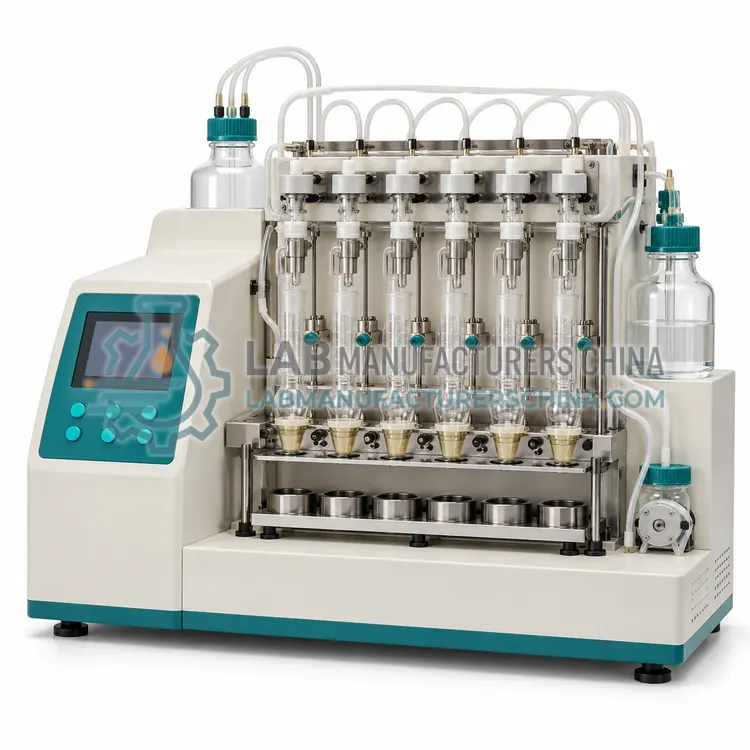
How do Fat Analyzers work?
Fat is not a single compound but a mixture of triglycerides, phospholipids and other lipids, so methods recover an operationally defined fraction. Soxhlet extraction repeatedly cycles a solvent such as petroleum ether or hexane through the sample, dissolving lipids that are then weighed after solvent evaporation. The Randall method shortens this by immersing the sample in boiling solvent before the rinsing step. Acid hydrolysis with hydrochloric acid releases fat bound in proteins and cell walls before extraction, which raises recovery for dairy, meat and baked products. The Roese-Gottlieb and Mojonnier procedures use ammonia, alcohol and a mixed solvent for dairy products. Pulsed NMR measures the hydrogen signal of liquid fat directly, without solvent, after calibration against a reference method.
Which Fat Analyzers variants are available?
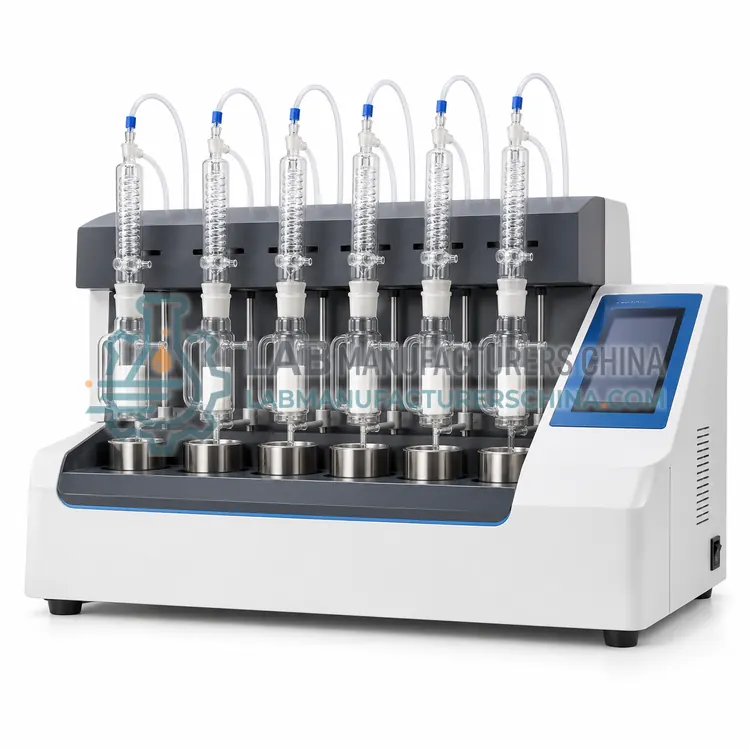
- Automated Soxhlet Fat Extraction System — An automated Soxhlet system cycles solvent through food or feed samples to extract free fat, then recovers the solvent and weighs the residue.
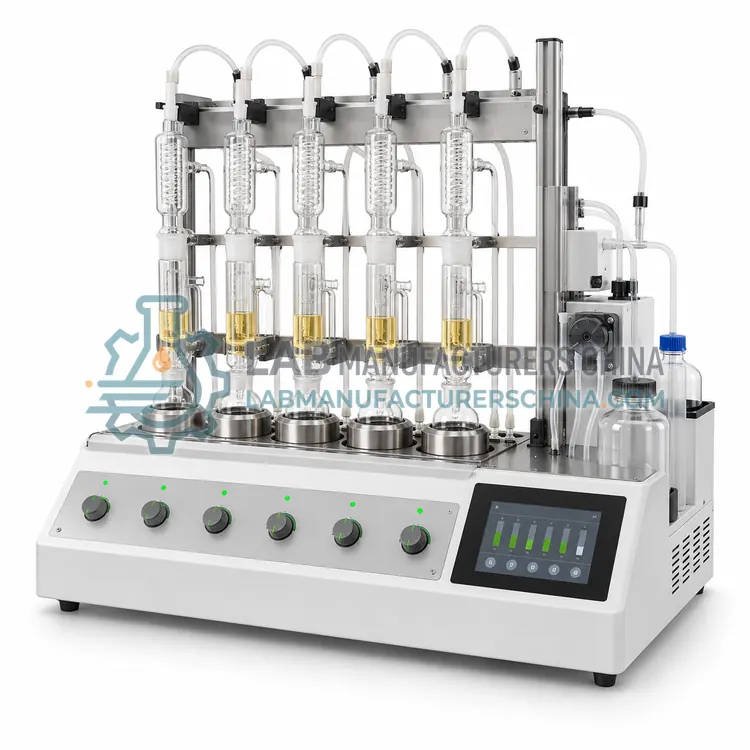
- Randall Extraction System for Fat Analysis — A Randall extraction system immerses the sample in boiling solvent before a short rinsing step, cutting extraction time substantially.
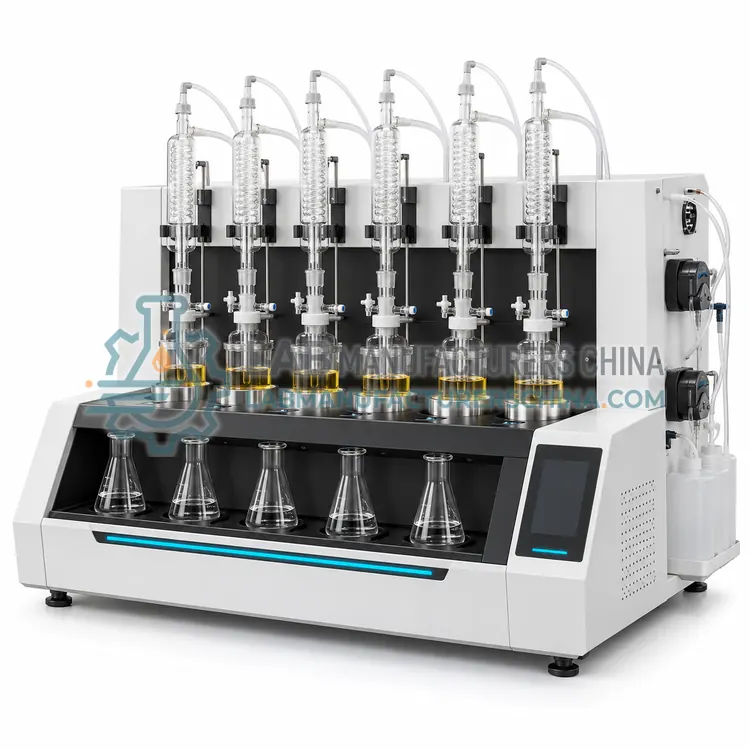
- Acid Hydrolysis Extraction System for Total Fat — An acid hydrolysis extraction system digests the sample with hydrochloric acid to release bound fat before solvent extraction.
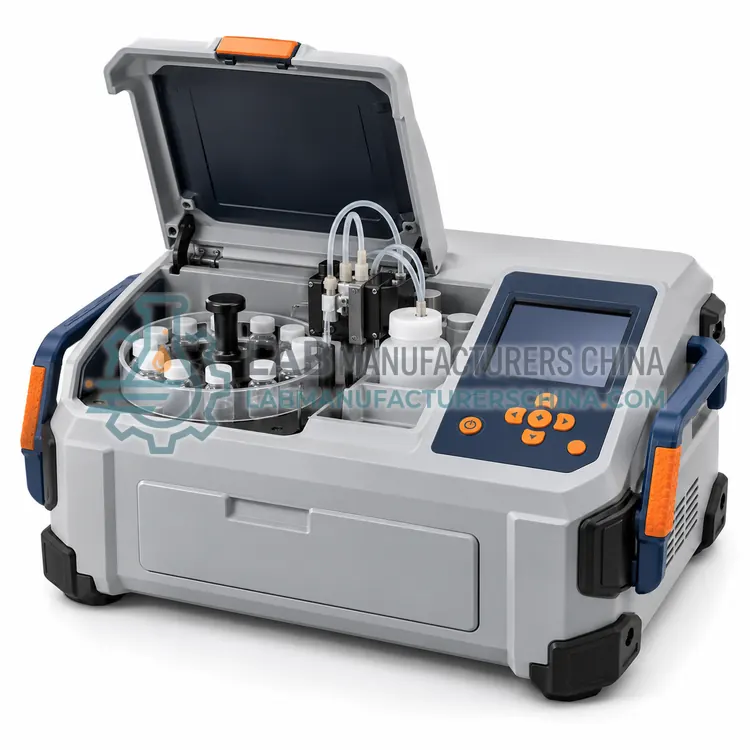
- Pulsed NMR Food Fat Analyzer — A pulsed NMR food analyzer measures fat and moisture directly from the hydrogen signal of the sample, with no solvent and no weighing of extracts.
- Butyrometer Centrifuge for Milk Fat Determination — A butyrometer centrifuge determines milk fat by the Gerber method, separating fat under centrifugal force after acid digestion in a graduated butyrometer.
How do I choose the right variant?
Choose the method from the product and the fat fraction you must report. Soxhlet and Randall systems are the classic reference methods for free fat in feed, cereals and snack products, with Randall offering faster runs and lower solvent use. Acid hydrolysis extraction is required when fat is bound within the matrix, as in dairy powders, meat products and bakery goods. Roese-Gottlieb or Mojonnier procedures are standard for milk and dairy products. Pulsed NMR gives solvent-free results in minutes and suits routine control of oilseeds, chocolate and snack products once calibrated against a reference method. For milk fat specifically, butyrometer centrifugation remains a rapid, low-cost screening method on the intake platform.
Where are Fat Analyzers used?
Fat Analyzers are specified in total fat determination for nutrition labelling, feed and pet food crude fat control, dairy product fat standardisation and pricing, oilseed and nut fat content testing, snack, bakery and confectionery process control and method validation and reference comparisons.
Which standards and certifications apply?
Work with Fat Analyzers is commonly governed by ISO 1443, ISO 1735, ISO 3433, AOAC 920.39, AOAC 989.05 and ISO/IEC 17025. Instrument certifications such as CE marking are confirmed per configuration and never assumed.
What are the key considerations before purchase?
Solvent extraction requires ventilation, fume extraction and solvent recovery, and laboratories must follow local rules for flammable and chlorinated solvents. Extraction thimbles, boiling stones and drying ovens must be clean and the drying step controlled, because residual solvent and moisture bias the weighed fat. Acid hydrolysis needs careful handling of hot hydrochloric acid and adequate rinsing to remove acid before extraction. NMR analysers must be calibrated and temperature-stabilised, and calibration transfer between instruments should be demonstrated. Reference standards, duplicate determinations and participation in proficiency testing are expected for accredited laboratories.