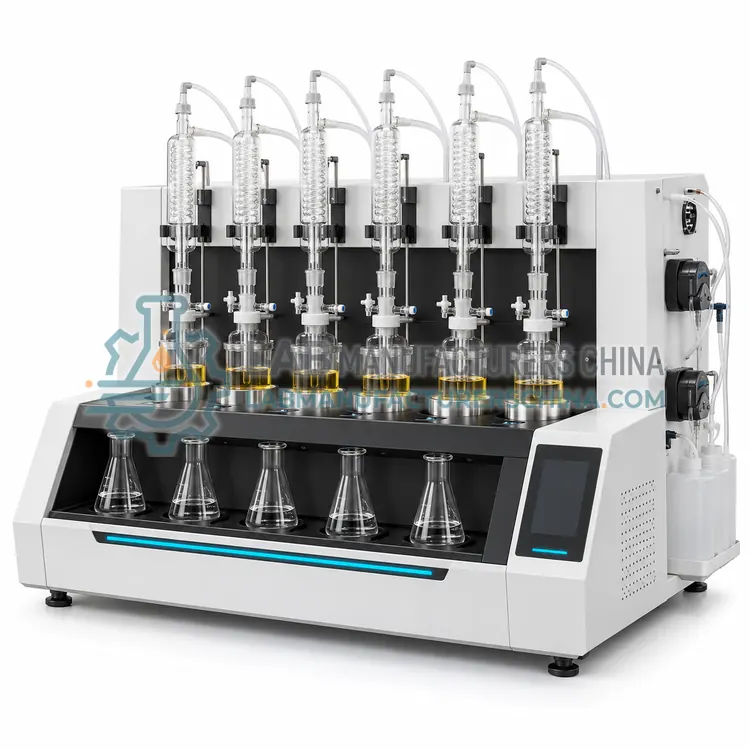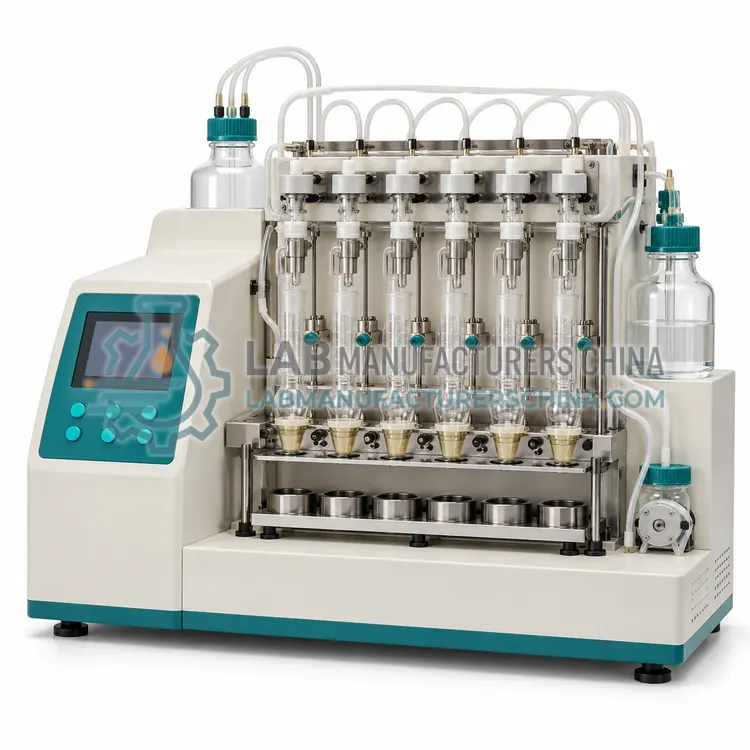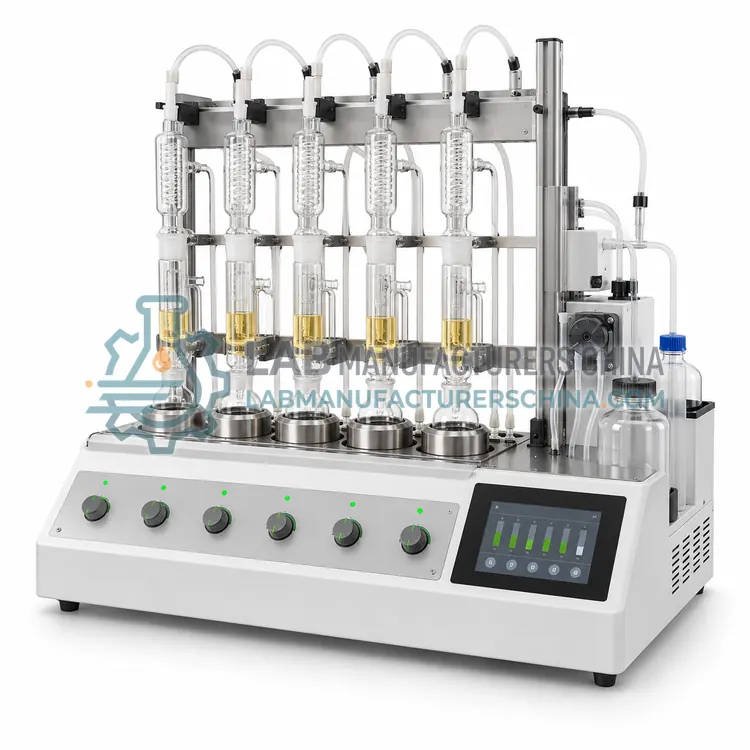
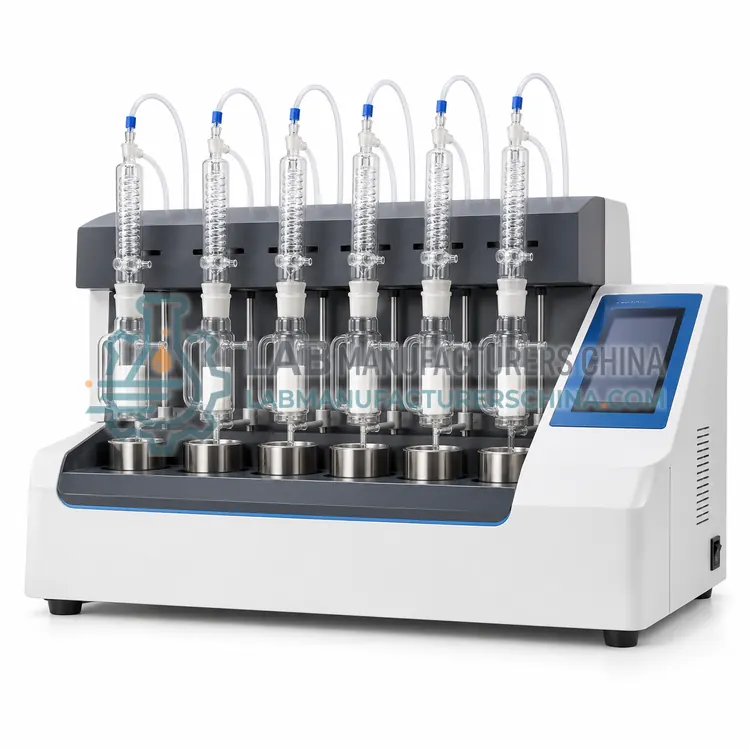
Automated Soxhlet Fat Extraction System
自动索氏脂肪提取系统
- SKU FAN-0001
- Fat Analyzers
- CE (to be confirmed)
- ISO 9001 manufacturing (to be confirmed)
Price on request — FOB / CIF quoted per order
Prices depend on configuration, quantity and destination port.
Key specifications
| Extraction positions | 6 simultaneous |
|---|---|
| Solvent volume | 25–100 mL per position |
| Extraction time | 30–120 min programmable |
| Temperature range | Ambient to 150 °C |
| Solvent recovery | ≥ 80 percent |
| Sample mass | 0.5–10 g depending on fat content |
Request a quote Download brochure · to be provided
By Lab Manufacturers China Technical TeamLast reviewed Standards: ISO 1443, ISO 1735, ISO 3433
What is the Automated Soxhlet Fat Extraction System?
An automated Soxhlet system cycles solvent through food or feed samples to extract free fat, then recovers the solvent and weighs the residue. It is the classic reference approach for crude fat in cereals, feed and snacks.
What is the Automated Soxhlet Fat Extraction System?
An automated Soxhlet system cycles solvent through food or feed samples to extract free fat, then recovers the solvent and weighs the residue. It is the classic reference approach for crude fat in cereals, feed and snacks.
Overview
Sample is placed in a cellulose thimble in an extraction cup, and the instrument performs boiling, rinsing and solvent recovery automatically. Heated solvent vapour condenses and drips through the thimble, dissolving lipids, and the cycle repeats for the programmed time. At the end, solvent is distilled off for reuse and the cup is dried and weighed; the fat is calculated as a percentage of the sample mass. Six-position units are common, with extraction times of 30 to 120 minutes depending on the matrix and method. Because petroleum ether and hexane are flammable and hazardous, the system includes sealed vessels, fume connections and solvent recovery, which reduces exposure and consumable cost compared with manual glassware assemblies.
How does it work?
Fat is not a single compound but a mixture of triglycerides, phospholipids and other lipids, so methods recover an operationally defined fraction. Soxhlet extraction repeatedly cycles a solvent such as petroleum ether or hexane through the sample, dissolving lipids that are then weighed after solvent evaporation. The Randall method shortens this by immersing the sample in boiling solvent before the rinsing step. Acid hydrolysis with hydrochloric acid releases fat bound in proteins and cell walls before extraction, which raises recovery for dairy, meat and baked products. The Roese-Gottlieb and Mojonnier procedures use ammonia, alcohol and a mixed solvent for dairy products. Pulsed NMR measures the hydrogen signal of liquid fat directly, without solvent, after calibration against a reference method.
What are the key features?
- Six-position simultaneous extraction with individual cups
- Automated boiling, rinsing and solvent recovery cycles
- Programmable extraction time and temperature
- Sealed vessels with fume exhaust connection
- Solvent recovery above 80 percent for reuse
- Drying and weighing workflow with result calculation
What are the technical specifications?
A typical automated soxhlet fat extraction system configuration offers extraction positions of 6 simultaneous, solvent volume of 25–100 mL per position, extraction time of 30–120 min programmable, temperature range of Ambient to 150 °C, solvent recovery of ≥ 80 percent and sample mass of 0.5–10 g depending on fat content. Values are indicative of the product class; the exact figures for each configuration are confirmed on the quotation and the calibration documents supplied with the instrument.
Which applications is it used for?
The Automated Soxhlet Fat Extraction System is used in crude fat in feed and pet food, cereal, snack and bakery fat control, oilseed and nut fat determination and reference method comparison for rapid analysers. Across the wider Fat Analyzers class, laboratories also deploy it for total fat determination for nutrition labelling, feed and pet food crude fat control and dairy product fat standardisation and pricing.
Which standards and certifications apply?
Relevant standards and methods include ISO 1443, ISO 1735, ISO 3433, AOAC 920.39, AOAC 989.05 and ISO/IEC 17025. Certification candidates for this model are CE and ISO 9001 manufacturing; each is to be confirmed for the specific configuration before shipment, and certificates are supplied only where they have been issued.
Solvent extraction requires ventilation, fume extraction and solvent recovery, and laboratories must follow local rules for flammable and chlorinated solvents. Extraction thimbles, boiling stones and drying ovens must be clean and the drying step controlled, because residual solvent and moisture bias the weighed fat. Acid hydrolysis needs careful handling of hot hydrochloric acid and adequate rinsing to remove acid before extraction. NMR analysers must be calibrated and temperature-stabilised, and calibration transfer between instruments should be demonstrated. Reference standards, duplicate determinations and participation in proficiency testing are expected for accredited laboratories.
How do I select the right Automated Soxhlet Fat Extraction System?
Choose an automated Soxhlet system when you need a recognised reference extraction with good solvent economy and low operator exposure. Specify the number of positions against your daily workload and confirm the thimble sizes for your sample types. Check that fume extraction and solvent storage are planned in the laboratory.
How does it compare with other Fat Analyzers variants?
Choose the method from the product and the fat fraction you must report. Soxhlet and Randall systems are the classic reference methods for free fat in feed, cereals and snack products, with Randall offering faster runs and lower solvent use. Acid hydrolysis extraction is required when fat is bound within the matrix, as in dairy powders, meat products and bakery goods. Roese-Gottlieb or Mojonnier procedures are standard for milk and dairy products. Pulsed NMR gives solvent-free results in minutes and suits routine control of oilseeds, chocolate and snack products once calibrated against a reference method. For milk fat specifically, butyrometer centrifugation remains a rapid, low-cost screening method on the intake platform.
Full specifications
| Extraction positions | 6 simultaneous |
|---|---|
| Solvent volume | 25–100 mL per position |
| Extraction time | 30–120 min programmable |
| Temperature range | Ambient to 150 °C |
| Solvent recovery | ≥ 80 percent |
| Sample mass | 0.5–10 g depending on fat content |
| Thimble size | 26 × 60 mm or 33 × 80 mm |
| Solvents | Petroleum ether, hexane, diethyl ether |
| Recovery system | Built-in solvent recycling |
| Safety | Sealed vessels, exhaust port, over-temperature cut-out |
Indicative values for this product class. Final specifications are confirmed on the quotation and in the calibration documents supplied with the instrument.
Applications
- Crude fat in feed and pet food
- Cereal, snack and bakery fat control
- Oilseed and nut fat determination
- Reference method comparison for rapid analysers
Key features
- Six-position simultaneous extraction with individual cups
- Automated boiling, rinsing and solvent recovery cycles
- Programmable extraction time and temperature
- Sealed vessels with fume exhaust connection
- Solvent recovery above 80 percent for reuse
- Drying and weighing workflow with result calculation
Frequently asked questions about Automated Soxhlet Fat Extraction System
Conventional Soxhlet runs take about 4 to 6 hours, while automated systems with boiling and rinsing stages usually finish in 30 to 120 minutes. The correct time is defined by the reference method and confirmed by a recovery check.
Petroleum ether and hexane are the most common because they are selective for non-polar lipids and relatively easy to recover, while diethyl ether extracts a broader range including some polar lipids but is more hazardous and prone to peroxide formation.
Residual solvent and absorbed moisture add mass to the extraction cup and inflate the fat result. Cups are dried in a controlled oven and cooled in a desiccator to constant mass before weighing on an analytical balance.
Crude fat is the fraction extracted by a solvent such as petroleum ether and includes triglycerides and some other lipids but not fat bound in cell structures. Total fat is measured after acid hydrolysis and includes bound fat, so it is higher for many foods.
In dairy powders, meat products and baked goods, fat is trapped inside proteins and cell structures that solvent cannot reach. Hydrochloric acid breaks these bonds and releases the fat, so recovery is markedly higher and results represent total rather than free fat.
Pulsed nuclear magnetic resonance excites hydrogen nuclei in liquid fat and measures their signal, which is proportional to fat content after calibration. The method needs no solvent and takes only a few minutes, but solids such as cocoa butter require a melting or tempering step.