Lab Manufacturers China

Embedding Stations

包埋机

EMS · Pathology Equipment · 5 models

By Lab Manufacturers China Technical TeamLast reviewed Standards: IEC 61010-1, IEC 61010-2-010, IEC 61326-1

Standards referenced

  • IEC 61010-1
  • IEC 61010-2-010
  • IEC 61326-1
  • ISO 15189
  • ISO 13485

What are Embedding Stations?

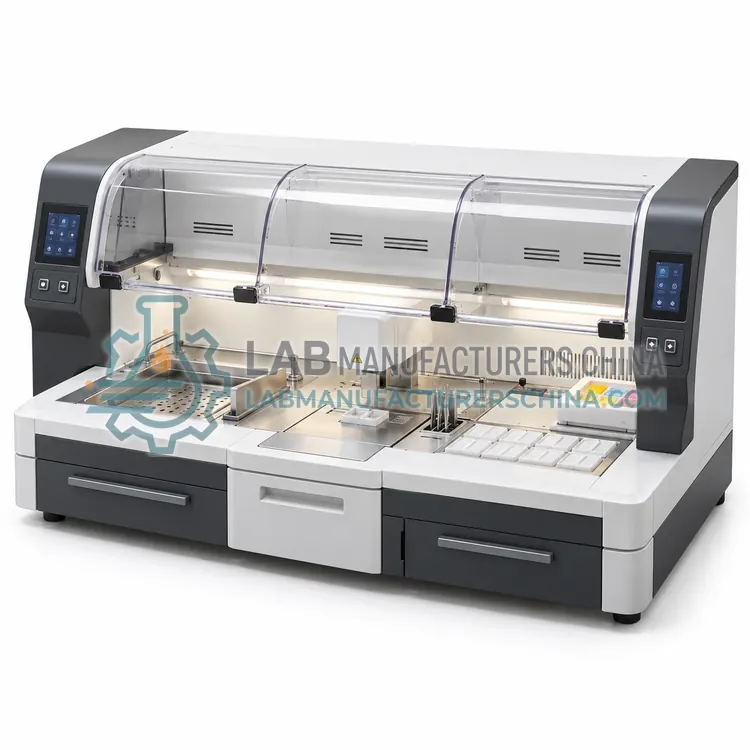
Embedding stations hold molten paraffin, dispense it into molds and cool the filled blocks so processed tissue can be oriented and sectioned. Histology and pathology laboratories use them after tissue processing to produce uniform paraffin blocks with a dispenser, heated work area, forceps warmer and a cold plate.

5 models of Embedding Stations

The 5 models below are current configurations; specifications are confirmed on quotation.

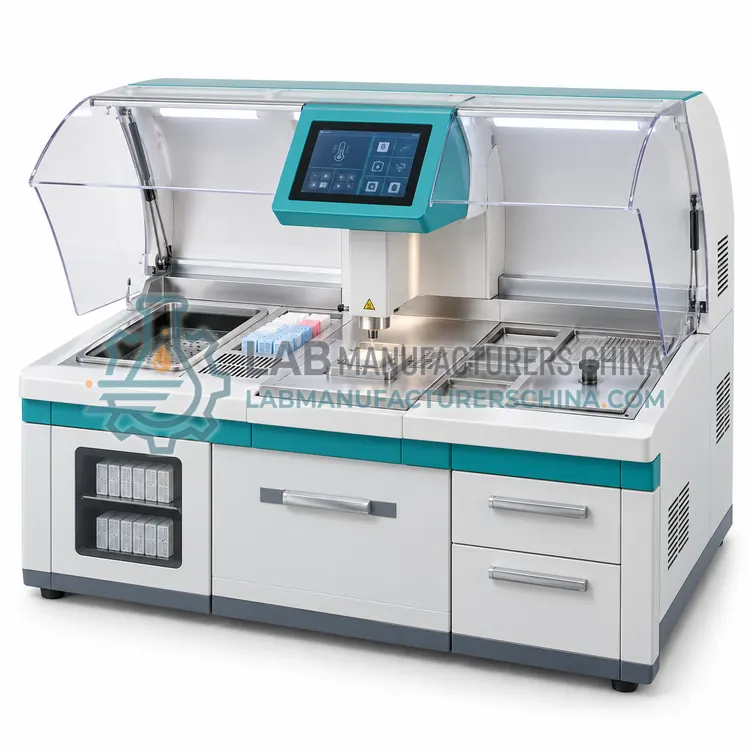
Combined Paraffin Embedding Station

组合式石蜡包埋机

  • EMS-0001
  • Embedding Stations
  • CE (to be confirmed)
  • IEC 61010-1 compliance (to be confirmed)
  • ISO 13485 manufacturing (to be confirmed)
Paraffin tank volume:
3–5 L
Paraffin temperature:
Ambient to 75 °C
Work area temperature:
Ambient to 75 °C
Cold plate temperature:
–5 to 5 °C
Cold plate capacity:
20–40 molds
Cassette tray capacity:
100–150 cassettes

A combined paraffin embedding station integrates a heated dispenser, work area, forceps warmer and cold plate in one unit. It fits small to medium histology laboratories that embed a few hundred blocks per day with one operator.

Request a quote
View details

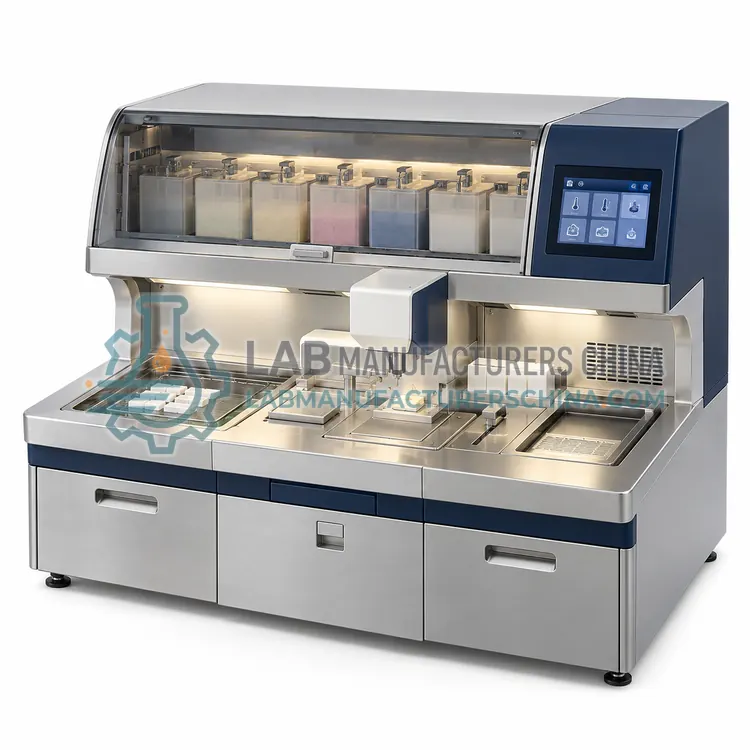
Modular Embedding Center with Separate Cold Plate

带独立冷台的模块化包埋中心

  • EMS-0002
  • Embedding Stations
  • CE (to be confirmed)
  • IEC 61010-1 compliance (to be confirmed)
  • ISO 13485 manufacturing (to be confirmed)
Paraffin tank volume:
4–9 L
Paraffin temperature:
Ambient to 75 °C
Cold plate temperature:
–10 to 5 °C
Cold plate capacity:
40–80 molds
Cooling method:
Peltier or compressor
Cassette tray capacity:
150–250 cassettes

A modular embedding center splits the paraffin dispenser and the cold plate into separate units so two operators can embed and cool in parallel. It suits medium to high-volume services that need flexible layouts and fast cooling.

Request a quote
View details

Automated Tissue Embedding System

自动组织包埋系统

  • EMS-0003
  • Embedding Stations
  • CE (to be confirmed)
  • IEC 61010-1 compliance (to be confirmed)
  • ISO 13485 manufacturing (to be confirmed)
Throughput:
100–250 blocks/h
Mold magazine capacity:
100–200 molds
Paraffin tank volume:
6–10 L
Paraffin temperature:
Ambient to 75 °C
Cooling zone temperature:
–10 to 5 °C
Barcode reading:
1D / 2D cassette codes

An automated tissue embedding system handles base molds, paraffin filling and cassette placement mechanically, leaving the operator to orient tissue. It is used in large histology departments that need consistent block quality and higher throughput.

Request a quote
View details

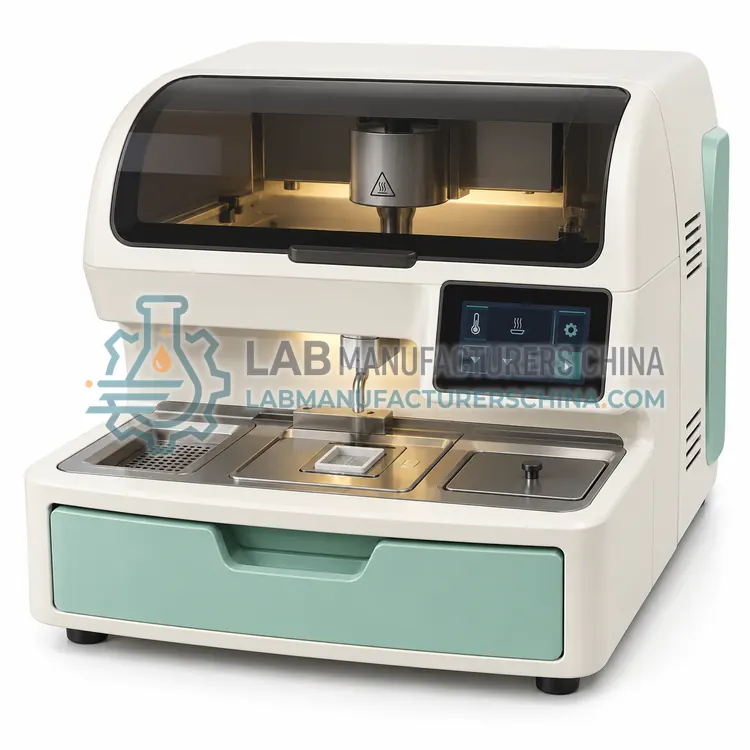
Portable Benchtop Paraffin Dispenser

台式便携石蜡分配器

  • EMS-0004
  • Embedding Stations
  • CE (to be confirmed)
  • IEC 61010-1 compliance (to be confirmed)
  • ISO 13485 manufacturing (to be confirmed)
Paraffin tank volume:
1.5–3 L
Paraffin temperature:
Ambient to 75 °C
Temperature stability:
±1 °C
Melting time from cold:
about 60–90 min
Dispenser control:
Hand lever
Forceps warmer:
1 well

A portable benchtop paraffin dispenser provides a heated wax reservoir and dispensing spout without a cold plate. It is a low-cost choice for small laboratories or as a backup, where blocks are cooled on a separate plate.

Request a quote
View details

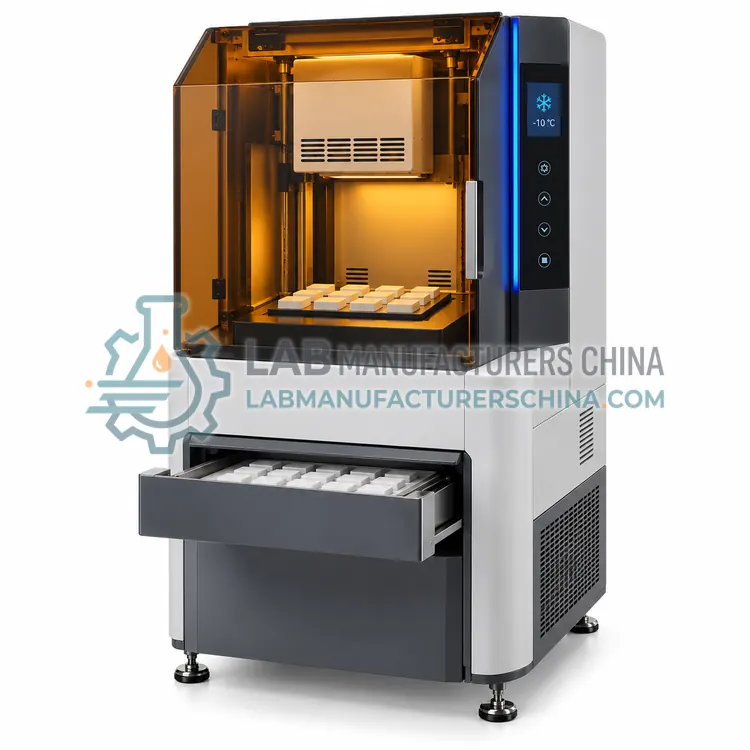
Standalone Peltier Cold Plate for Paraffin Blocks

独立半导体冷台(石蜡蜡块用)

  • EMS-0005
  • Embedding Stations
  • CE (to be confirmed)
  • IEC 61010-1 compliance (to be confirmed)
  • ISO 13485 manufacturing (to be confirmed)
Plate temperature:
–10 to 5 °C
Mold capacity:
30–60 base molds
Cooling method:
Peltier thermoelectric
Cooling time to –5 °C:
about 10–20 min
Temperature stability:
±1 °C
Plate material:
Stainless steel or aluminum

A standalone Peltier cold plate cools filled embedding molds to solidify paraffin blocks quickly, without a dispenser attached. It is added to a dispenser-only setup or to a modular center when cooling capacity limits block throughput.

Request a quote
View details

Compare Embedding Stations models

ModelParaffin tank volumeParaffin temperatureCold plate temperatureCold plate capacityCassette tray capacity
Combined Paraffin Embedding StationEMS-00013–5 LAmbient to 75 °C–5 to 5 °C20–40 molds100–150 cassettes
Modular Embedding Center with Separate Cold PlateEMS-00024–9 LAmbient to 75 °C–10 to 5 °C40–80 molds150–250 cassettes
Automated Tissue Embedding SystemEMS-00036–10 LAmbient to 75 °C———
Portable Benchtop Paraffin DispenserEMS-00041.5–3 LAmbient to 75 °C———
Standalone Peltier Cold Plate for Paraffin BlocksEMS-0005—————

Indicative values for this product class. Final specifications are confirmed on the quotation and in the calibration documents supplied with the instrument.

How do Embedding Stations work?

An embedding station combines a heated paraffin reservoir with a dispensing spout, a heated work surface and a separate cold plate. Processed tissue in its cassette is kept warm in a heated tray. The operator picks up the tissue with heated forceps, places it in a base mold filled with paraffin from the dispenser, orients it for sectioning, then sets the labeled cassette on top as a mounting base. The mold moves to the cold plate, where a Peltier or compressor-cooled surface solidifies the wax rapidly and uniformly, typically reaching 0 to –10 °C. Thermostats hold the paraffin at 60 to 65 °C, slightly above its melting point, and a flow valve or foot pedal controls dispensing. Modular designs separate the dispenser and cold plate, while combined units have both in one housing.

Which Embedding Stations variants are available?

  • Combined Paraffin Embedding Station — A combined paraffin embedding station integrates a heated dispenser, work area, forceps warmer and cold plate in one unit.
  • Modular Embedding Center with Separate Cold Plate — A modular embedding center splits the paraffin dispenser and the cold plate into separate units so two operators can embed and cool in parallel.
  • Automated Tissue Embedding System — An automated tissue embedding system handles base molds, paraffin filling and cassette placement mechanically, leaving the operator to orient tissue.
  • Portable Benchtop Paraffin Dispenser — A portable benchtop paraffin dispenser provides a heated wax reservoir and dispensing spout without a cold plate.
  • Standalone Peltier Cold Plate for Paraffin Blocks — A standalone Peltier cold plate cools filled embedding molds to solidify paraffin blocks quickly, without a dispenser attached.

How do I choose the right variant?

Decide between a combined unit and modular components. Combined stations save space and suit small labs, while separate dispensers and cold plates let two operators work in parallel in busy services. Check paraffin tank volume against daily block counts, and compare cold plate capacity and temperature range, since cooling speed affects throughput and block quality. Look at ergonomic features such as foot control, flow rate adjustment, magnifier lights, forceps warmers and cassette tray size. For large workloads consider automated embedding systems that handle molds mechanically. Confirm that the wax temperature is stable, spare heaters are available and the tank is easy to clean. Specify voltage, filter type and whether the unit should connect to cassette or block labeling workflows.

Where are Embedding Stations used?

Embedding Stations are specified in histology blocks, surgical pathology, research tissue banking, veterinary histology and teaching laboratories.

Which standards and certifications apply?

Work with Embedding Stations is commonly governed by IEC 61010-1, IEC 61010-2-010, IEC 61326-1, ISO 15189 and ISO 13485. Instrument certifications such as CE marking are confirmed per configuration and never assumed.

What are the key considerations before purchase?

Place the station on a stable bench with ventilation and away from drafts. Allow the paraffin to melt fully before use, and do not leave it above the recommended temperature for long periods, since prolonged heating degrades wax. Filter and change paraffin on a regular schedule and clean the dispenser nozzle to avoid blockage. Use heat-resistant gloves, because reservoirs and forceps are hot. Verify wax temperature with a calibrated thermometer, inspect cold plate condition and clean spilled paraffin promptly to prevent fire risk and slips. Check electrical safety and cord condition routinely, and follow local rules for paraffin waste disposal.

Frequently asked questions about Embedding Stations

An embedding station dispenses molten paraffin and cools it so processed tissue can be oriented in a mold and formed into a solid block. The block is then mounted on a microtome to cut thin sections for slides.

Need help specifying Embedding Stations?

Request a quote