Summary
Start a water-testing laboratory by defining the parameters, sample matrices and regulations you must meet, then select methods, instruments, facilities and quality controls to match. Core equipment covers field and bench meters, photometric and titration tools, microbiology, and trace-metal or organic analysis, supported by sampling procedures and ISO/IEC 17025 practices.
What should be defined before buying any instrument?
Every instrument decision follows from three definitions: the water types, the parameters and the regulation or client requirement.
Water types may include drinking water, surface and groundwater, wastewater and effluent, process or boiler water, or seawater. Each has a different matrix, concentration range and interference profile.
Parameters fall into groups: physical (temperature, turbidity, color, conductivity, total dissolved solids), chemical (pH, alkalinity, hardness, chloride, sulfate, nitrate, ammonia, phosphate, COD, BOD, total organic carbon, dissolved oxygen), trace metals (lead, arsenic, cadmium, mercury and others), organic contaminants (pesticides, volatile organic compounds), and microbiological indicators (total coliforms, Escherichia coli, heterotrophic plate count).
The regulatory reference fixes the limit values and the approved methods. Examples include the WHO Guidelines for Drinking-water Quality, national drinking water standards such as GB 5749 in China, and discharge standards for wastewater. Method libraries such as Standard Methods for the Examination of Water and Wastewater, ISO methods and US EPA methods describe how to test each parameter.
Estimate expected sample numbers per week, turnaround time and whether results are for compliance, monitoring or research. A laboratory serving compliance testing will need accreditation, which affects budget and schedule.
Which core instruments does a general water laboratory need?
A general laboratory normally starts with the following equipment, scaled to sample volume.
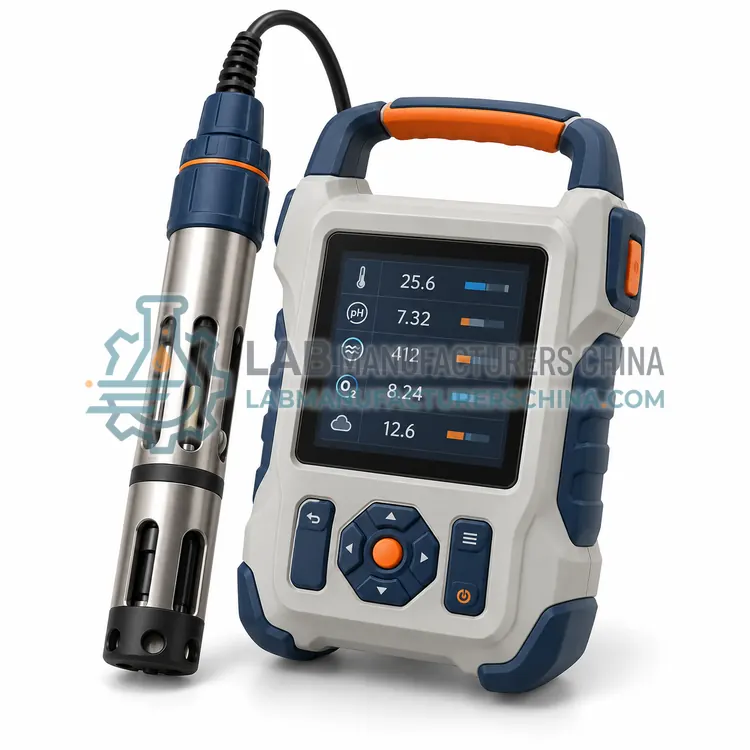
- Multiparameter meters: pH (ISO 10523), conductivity (ISO 7888), dissolved oxygen and temperature, with calibration buffers and standards. Field versions allow on-site readings.
- Turbidity meter: nephelometric readings in NTU or FNU, with calibration standards, following ISO 7027.
- UV-Vis spectrophotometer or photometer: for ammonia, nitrite, nitrate, phosphate, iron, chlorine, COD after digestion and color.
- COD digester and BOD incubator: COD by dichromate method (ISO 15705) and BOD by dilution and incubation at 20 °C (ISO 5815).
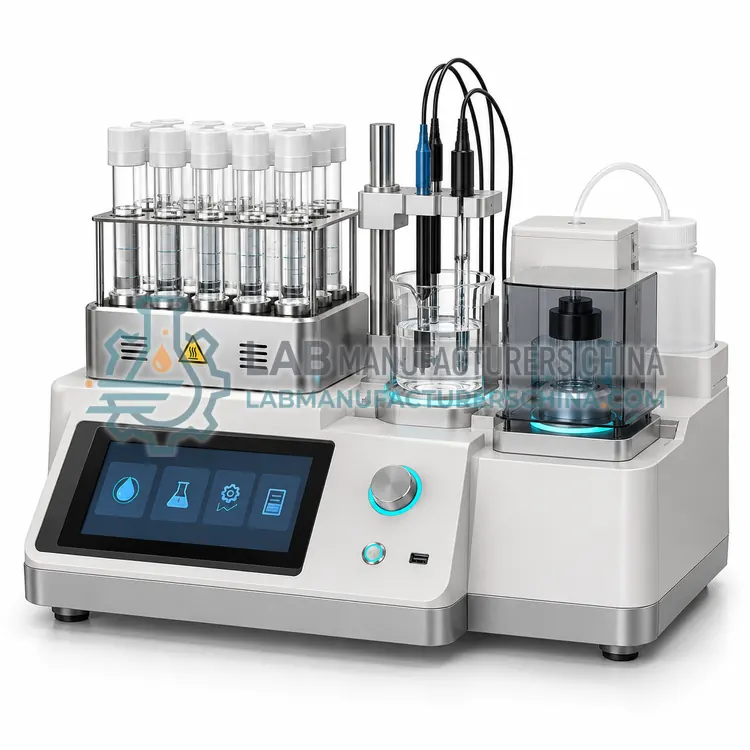
- Titration equipment: burettes or automatic titrators for alkalinity, hardness and chloride.
- Analytical balance, with readability of 0.1 mg, plus drying oven for total solids and suspended solids.
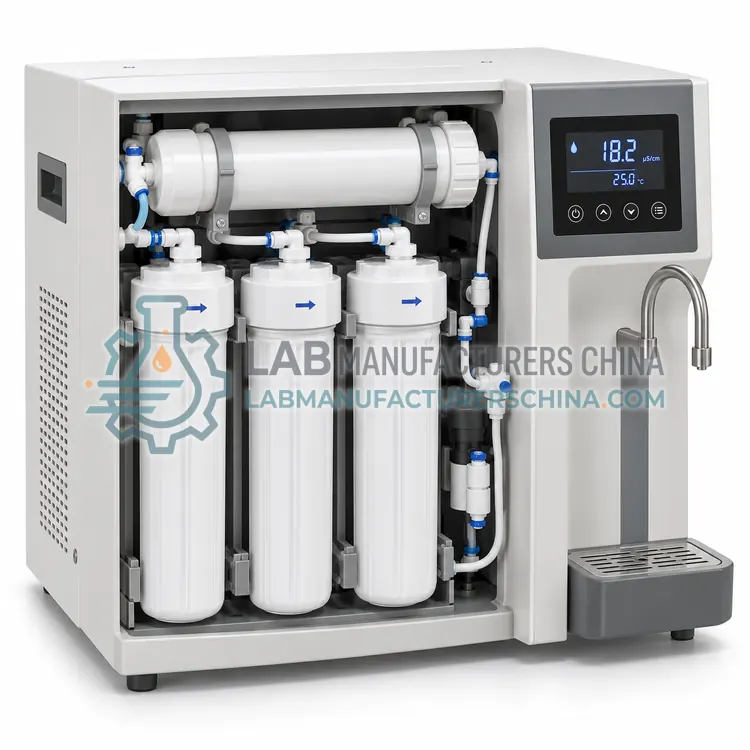
- Water purification system for reagent water, with resistivity monitoring.
- Refrigerator for samples and reagents, typically kept at 4 ± 2 °C.
- Glassware, volumetric apparatus, pipettes and filtration equipment.
Measure each method's detection limit against the regulatory limit before deciding. An instrument that detects only at the limit leaves no margin for interference or uncertainty.
What equipment is needed for trace metals, ions and microbiology?
Once routine parameters are covered, the laboratory expands by analysis type.
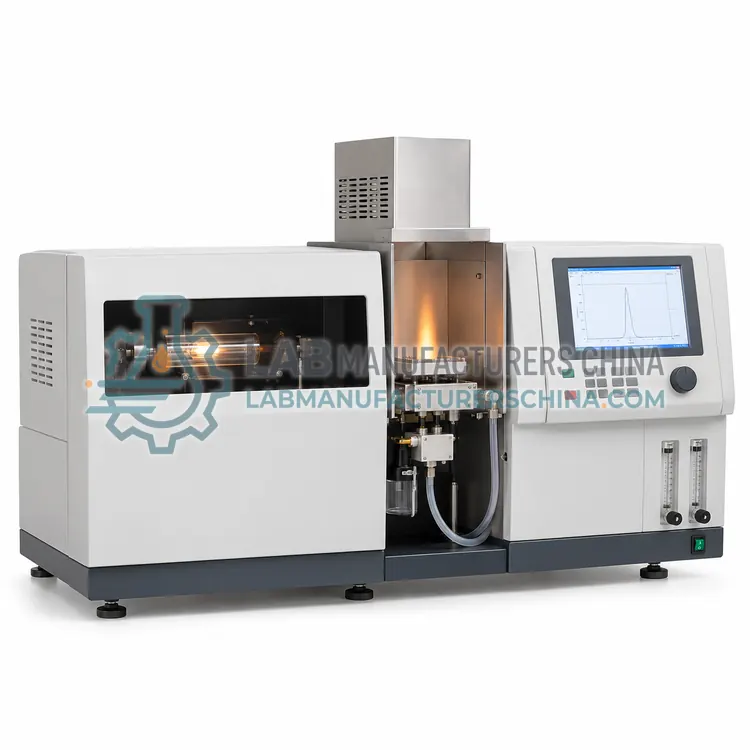
For trace metals, choose among flame atomic absorption for mg/L-level metals, graphite furnace atomic absorption for µg/L levels (ISO 15586), ICP-OES for multi-element work at about µg/L to mg/L, and ICP-MS for ng/L to µg/L and many elements at once (ISO 17294-2). Mercury is often measured on a dedicated cold-vapor analyzer, and arsenic and selenium by hydride generation. A microwave digestion system prepares samples, and trace-metal work needs acid-cleaned labware and high-purity reagents.
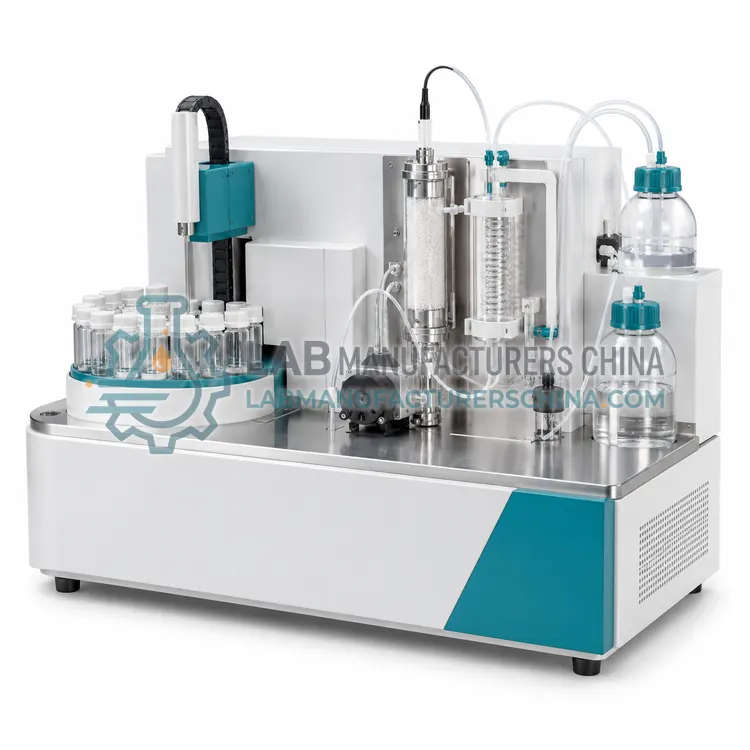
For anions and cations, ion chromatography determines fluoride, chloride, nitrite, nitrate, bromate and sulfate, in line with ISO 10304-1.
For organics, GC, GC-MS and HPLC, with sample preparation such as solid-phase extraction and purge-and-trap, handle pesticides, VOCs and disinfection by-products. These are the most demanding areas in cost and training.
For microbiology, plan a clean room area with an autoclave, incubators, membrane filtration unit, colony counter and a biosafety cabinet or laminar flow cabinet. Methods such as ISO 9308-1 for Escherichia coli and coliforms and ISO 6222 for culturable microorganisms apply.
Buy these capabilities in stages, driven by sample demand.
How should sampling and sample handling be organized?
Analytical results are only as good as the sample. Sampling is a documented procedure, not an afterthought. The general guidance is in the ISO 5667 series, with ISO 5667-3 covering preservation and handling.
- Use containers suited to the parameter: borosilicate glass for organics, polyethylene or polypropylene for metals and most ions, and sterile containers with thiosulfate for chlorinated water in microbiology.
- Preserve as required, for example acidification to pH below 2 for metals, cooling to about 4 °C for most parameters, and analysis of pH, dissolved oxygen and temperature in the field.
- Observe holding times. Microbiological samples should be analyzed within 24 hours as a typical limit, and BOD samples ideally within 24 to 48 hours.
- Label each container with a unique identifier, location, date, time, sampler and preservative, and use a chain-of-custody record when results may be disputed.
- Take field blanks, duplicates and, where needed, trip blanks to detect contamination and assess precision.
Plan receiving and storage space for samples, including a cold room or refrigerators with temperature logging, and a separate retained-sample area. A sample management system, even a simple one, reduces transcription errors.
How should the laboratory be laid out and supplied?
Layout reduces cross-contamination and protects instruments. Separate areas are usually needed for sample reception and storage, wet chemistry, instrumental analysis, microbiology, trace-metal preparation and balances. A sterile or low-traffic room is necessary for microbiology.
Facilities to plan include the following.
- Benches with chemical-resistant tops, sinks and eyewash, with drainage suited to acids and solvents.
- Fume hoods for acid digestion and solvent work, and local exhaust for ICP and atomic absorption instruments.
- Stable power with earthing, voltage regulation or uninterruptible supply for sensitive instruments, and separate circuits for heating equipment.
- Gas supply: argon for ICP, acetylene and air for flame AAS, nitrogen, helium or hydrogen for chromatography, with cylinder storage and leak detection.
- Temperature control of 20 to 25 °C and humidity management, with vibration-free benches for balances.
- Reagent water, typically Type I or Type II according to ISO 3696, with a supply point at each work area.
- Waste segregation and storage for acids, solvents and biohazards, and a safety plan covering spills and first aid.
Involve a laboratory designer early; changes after construction cost far more than changes at the planning stage.
How do quality assurance and accreditation fit in?
A laboratory that supports compliance or legal decisions usually seeks accreditation to ISO/IEC 17025, which sets general requirements for the competence of testing and calibration laboratories. It covers impartiality, personnel competence, equipment, traceability, method validation, sampling, reporting and management of nonconforming work.
Practical elements of a quality system include the following.
- Method verification or validation: demonstrate detection limit, working range, precision, bias and uncertainty for each method.
- Equipment records: calibrate balances, pipettes, thermometers and meters using traceable standards, and log maintenance.
- Reference materials: use certified reference materials and calibration standards with certificates.
- Ongoing quality control: method blanks, calibration verification, spiked samples, duplicates and control charts.
- Proficiency testing: participate in inter-laboratory comparisons for the main parameters.
- Training and authorization of analysts, with records.
- Document control and data integrity, whether on paper or in a laboratory information system.
Accreditation takes time, often a year or more from first documentation to assessment. Ask suppliers for installation and operational qualification documents, calibration certificates and method application notes. A reputable supplier will state which certifications it holds and provide documents on request.