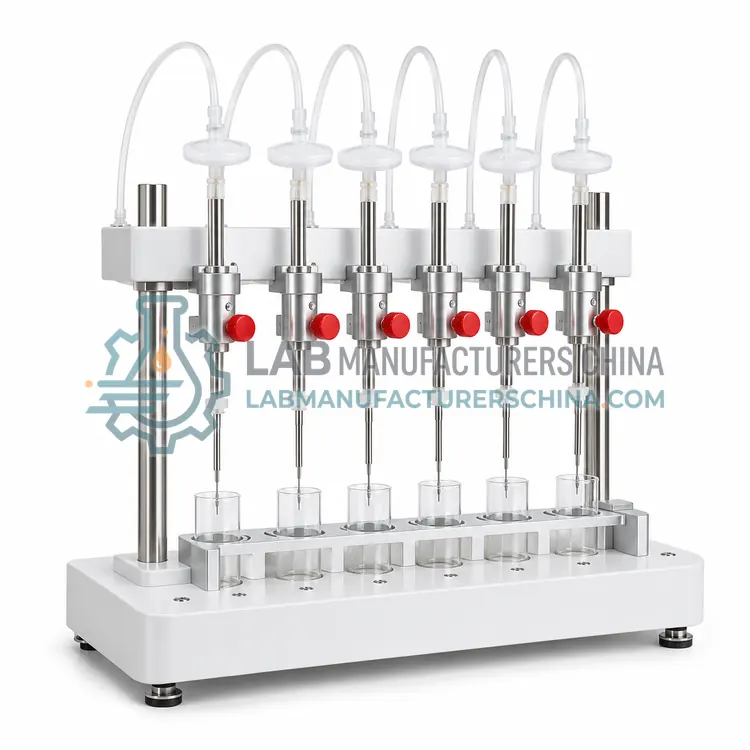
How do Sampling Systems work?
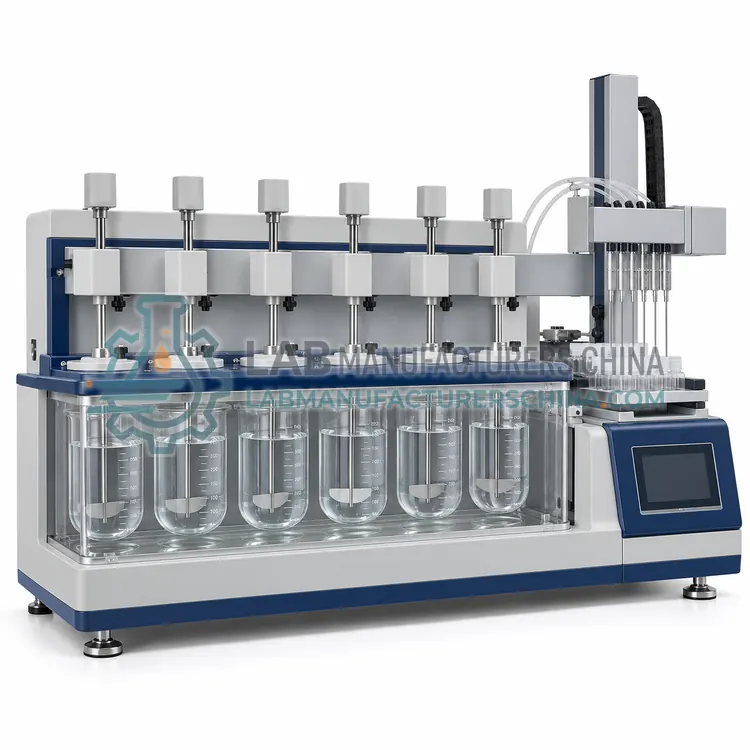
A sampling system places a filtered probe in the compendial sampling zone of each vessel and moves a defined volume of medium by syringe pump, peristaltic pump or vacuum to the destination. Valves select the channel, timers trigger sampling at preset times, and flush steps clear the lines. Probes are fitted with filters, typically 10 µm full-flow or 0.45 µm, which stop dissolution by removing undissolved particles. In-situ fibre-optic probes skip withdrawal entirely and measure absorbance in the vessel. Data such as time, volume and vial position are logged. Performance depends on timing accuracy, volume accuracy, dead volume, adsorption to tubing and filters, and the effect of the probe on hydrodynamics. Replacement of sampled volume with fresh medium can keep vessel volume constant.
Which Sampling Systems variants are available?
- Syringe-Pump Automated Dissolution Sampler — A syringe-pump automated dissolution sampler withdraws fixed aliquots from each vessel through filtered cannulas and dispenses them into vials or a flow cell at preset times.
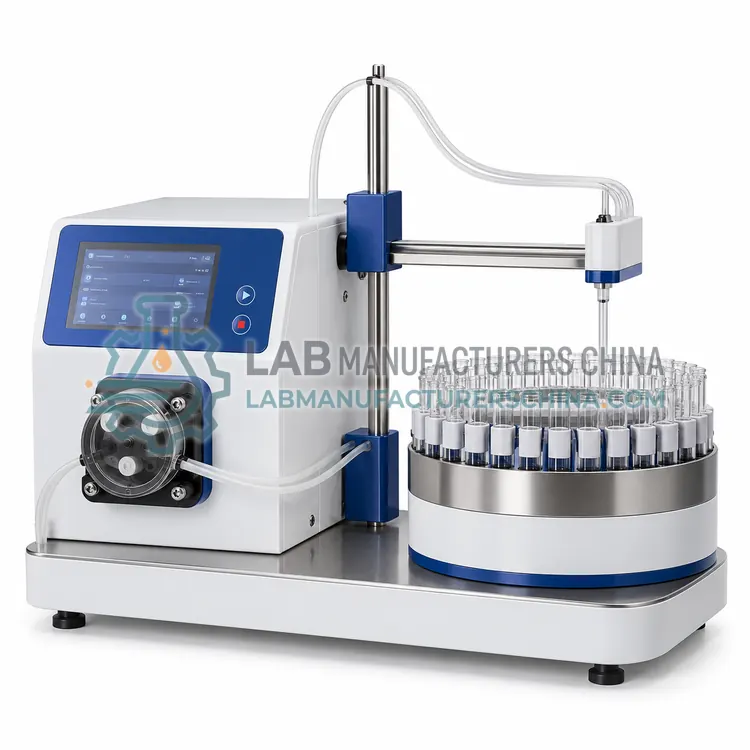
- Peristaltic Pump Online Sampler with Fraction Collector — A peristaltic pump online sampler continuously or intermittently pumps medium from each vessel through filters to a collector or UV detector and back to the vessel.
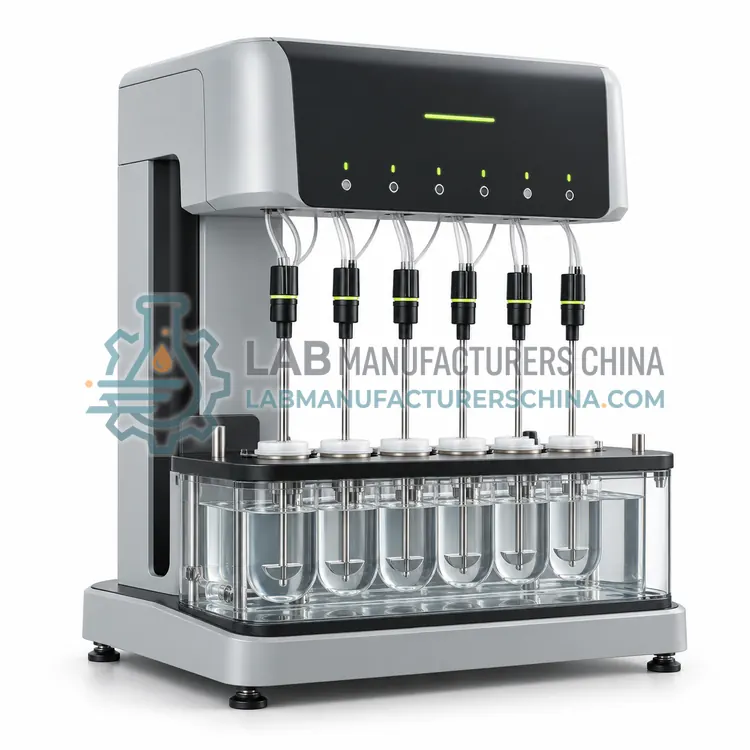
- Fibre-Optic UV Dip Probe Dissolution System — A fibre-optic UV dip probe system measures drug concentration in situ by immersing probes in each dissolution vessel and reading absorbance through a spectrometer.
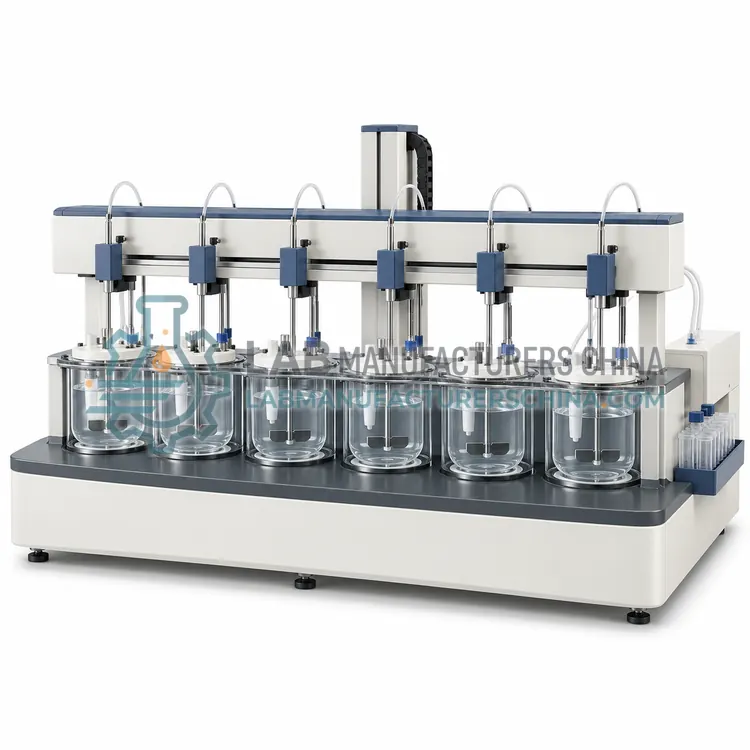
- Automated Dissolution Sampler with Media Replacement — This sampler withdraws each sample and immediately replaces the same volume with fresh pre-heated medium, keeping vessel volume constant.
- Manual Dissolution Sampling Cannula and Filter Set — A manual sampling set consists of stainless steel cannulas, full-flow filters and syringes used to withdraw timed samples from dissolution vessels by hand.
How do I choose the right variant?
Match the system to the number of time points, unattended operation needs and analytical method. Syringe-pump samplers give accurate aliquots and suit vial-based HPLC analysis. Peristaltic online systems suit continuous UV profiles and fraction collection. Fibre-optic probes give the fastest time resolution without withdrawal but need UV-active, non-interfering analytes. Media replacement is worth having when withdrawn volume exceeds a few percent of vessel volume. Manual kits suit single-point QC and backup. Key specifications are timing accuracy, volume accuracy, channel count, filter options, carry-over, compatibility with the existing tester and software data integrity. Validate against manual sampling before replacing it in a regulated method.
Where are Sampling Systems used?
Sampling Systems are specified in dissolution profile automation, regulated QC testing, extended-release studies and bioequivalence dissolution studies.
Which standards and certifications apply?
Work with Sampling Systems is commonly governed by USP <711>, USP <1092>, Ph. Eur. 2.9.3, JP 6.10, ChP 0931, ASTM E2503 and 21 CFR Part 11. Instrument certifications such as CE marking are confirmed per configuration and never assumed.
What are the key considerations before purchase?
Validate automated sampling against manual pulls during OQ and method transfer, checking timing, volume accuracy and carry-over. Clean and inspect probes and cannulas regularly, since blockage and film build-up affect recovery. Replace pump tubing and filters per schedule, and evaluate drug adsorption on tubing and filters. Keep cannula position within the compendial zone and avoid contact with paddles or baskets. Ensure software provides audit trail, user access control and time-stamped records. Include samplers in preventive maintenance and calibration programs alongside the dissolution tester.