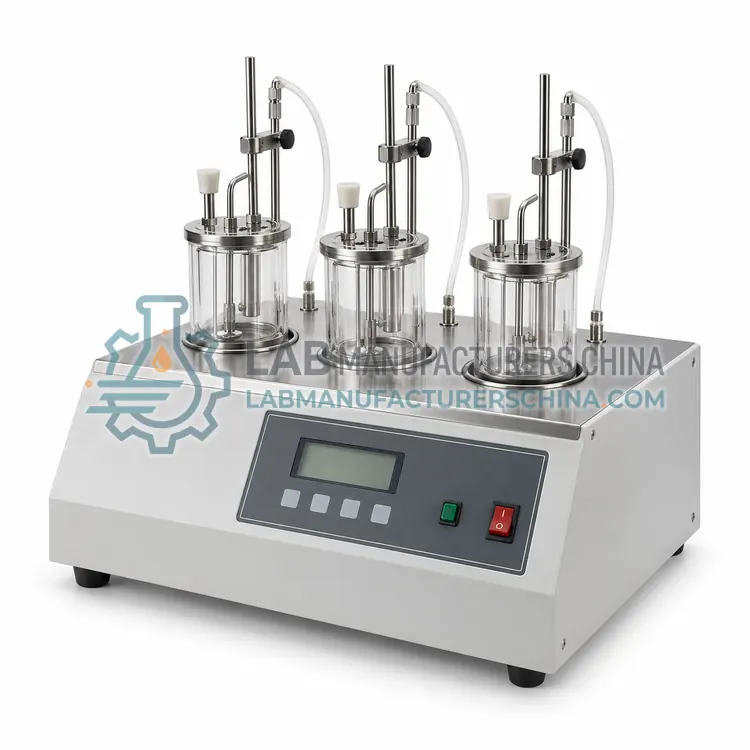
How do Oxidation Stability work?
Oxidation converts hydrocarbons into acids, sludge and varnish through free-radical chain reactions that speed up once inhibitors are consumed. Accelerated tests expose an oil sample to oxygen or air at elevated temperature, often with copper and iron catalyst wire and water, and monitor the reaction. In rotating pressure vessel tests, a sealed bomb containing oil, water and a copper coil is charged with oxygen at 620 kPa, heated to 150 °C and rotated, and the time until pressure falls by 175 kPa is recorded. Turbine oil tests run for thousands of hours and measure time to an acid number of 2.0 mg KOH/g. Differential scanning calorimetry detects the exothermic onset under oxygen pressure, and thin-film methods measure oxygen uptake. Induction time reflects the oil's remaining antioxidant reserve.
Which Oxidation Stability variants are available?
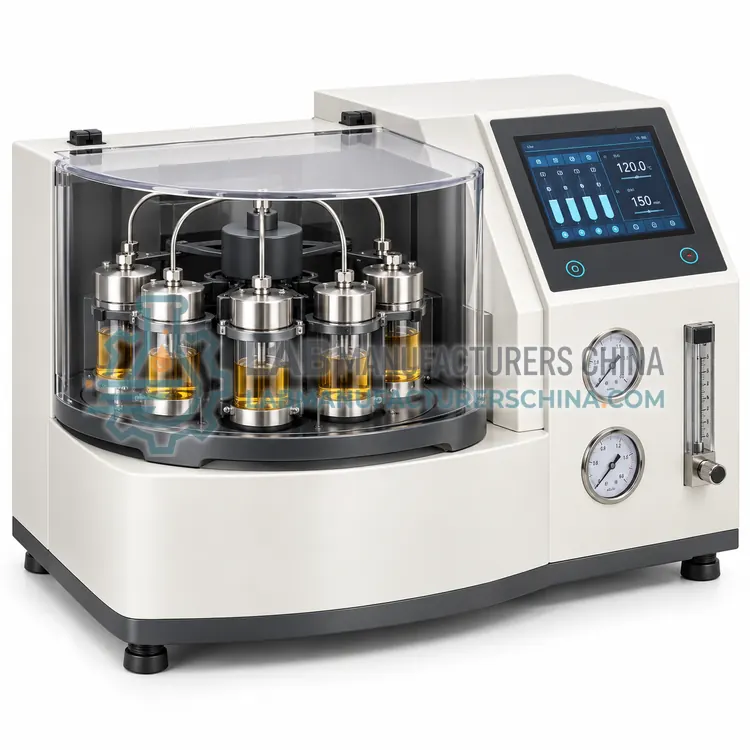
- Rotating Pressure Vessel Oxidation Tester (RPVOT) — A rotating pressure vessel oxidation tester heats a sealed bomb holding oil, water and copper catalyst in oxygen at 150 °C and records the minutes until pressure drops by 175 kPa.
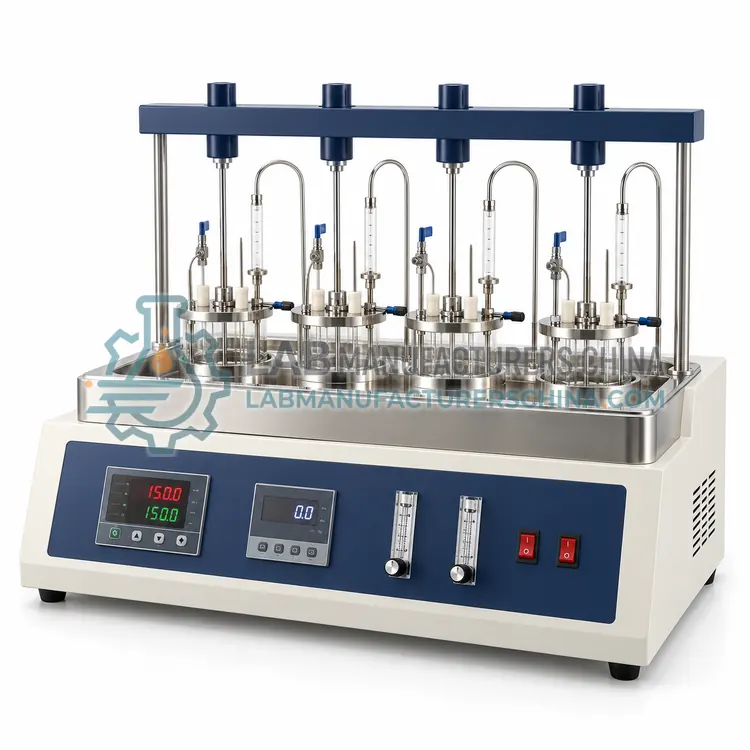
- Turbine Oil Oxidation Stability Tester (TOST) — A turbine oil oxidation stability tester holds oil with water and iron-copper catalyst at 95 °C under oxygen for thousands of hours, measuring time to an acid number of 2.0 mg KOH/g.
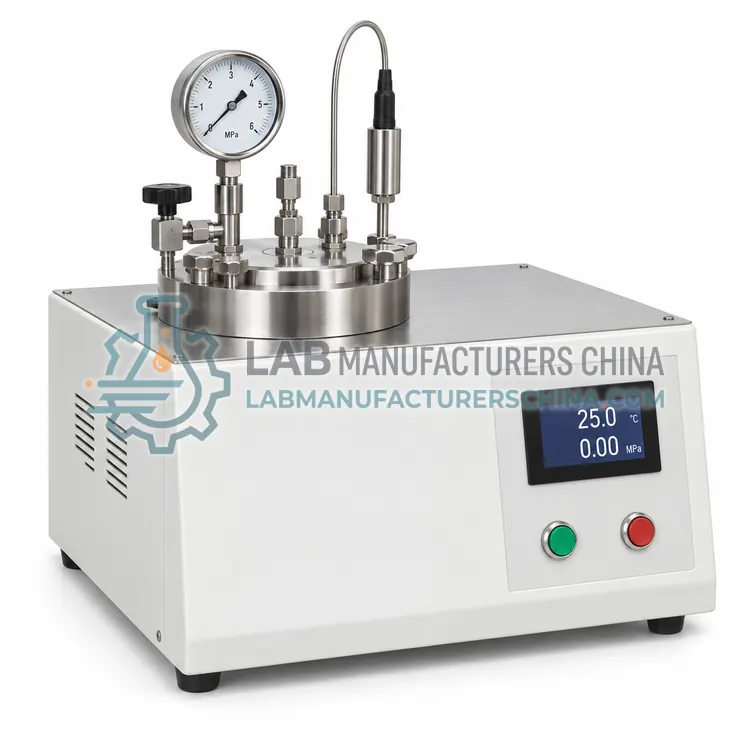
- Pressure DSC Oxidation Induction Time Analyzer — A pressure differential scanning calorimeter measures the onset of oxidation of a small oil sample held isothermally in oxygen at elevated pressure.
- Thin-Film Oxygen Uptake Tester (TFOUT) — A thin-film oxygen uptake tester heats a small oil sample mixed with catalyst and fuel oxidation products in a pressurized oxygen vessel at 160 °C, and records the time until oxygen pressure drops.
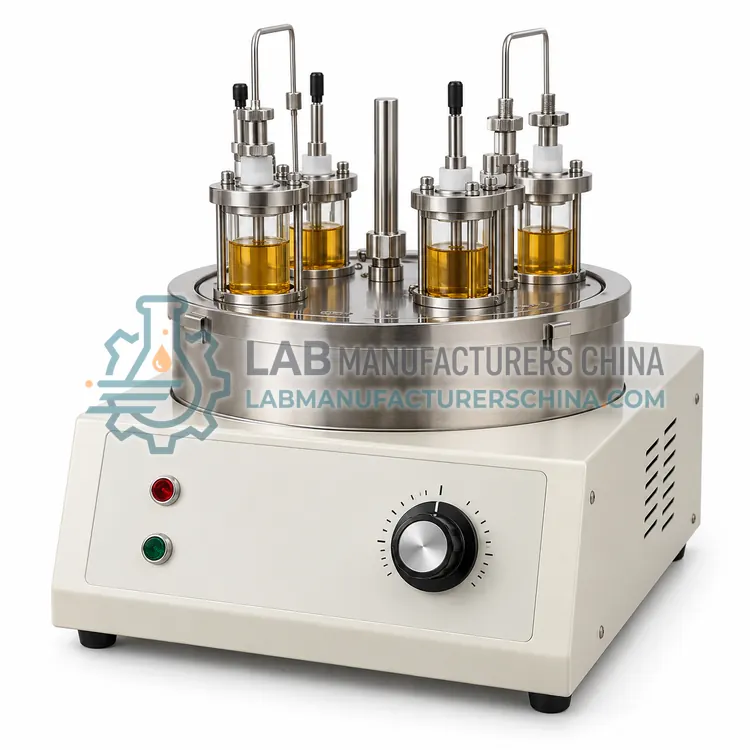
- Insulating Oil Oxidation Stability Tester — An insulating oil oxidation stability tester ages transformer oil with air or oxygen and copper catalyst at 110 to 120 °C, then measures acid number and sludge formed.
How do I choose the right variant?
Select the test that your specification names. Turbine and hydraulic oil specifications commonly call for rotating pressure vessel oxidation test (RPVOT) and the long-duration turbine oil stability test. Formulators developing additives prefer faster methods such as pressure differential scanning calorimetry or thin-film oxygen uptake, which need small samples. Insulating oil producers follow IEC 61125 or ASTM D2440. Consider the number of positions, since tests run for hours or weeks, and the degree of automation including pressure logging, endpoint detection and report generation. Check bath temperature uniformity, safety features for oxygen and pressure, and supply of glass sample containers, catalyst coil and test bombs. In the RFQ, list methods, number of simultaneous tests and sample volumes.
Where are Oxidation Stability used?
Oxidation Stability are specified in turbine oil life assessment, antioxidant additive development, hydraulic oil QC, insulating oil stability testing and engine oil oxidation screening.
Which standards and certifications apply?
Work with Oxidation Stability is commonly governed by ASTM D2272, ASTM D943, ASTM D6186, ASTM D4742, ASTM D7545, IEC 61125, ASTM D2440 and ISO 4263. Instrument certifications such as CE marking are confirmed per configuration and never assumed.
What are the key considerations before purchase?
Oxidation tests use pressurized oxygen and heated oil, so safety is the first consideration. Use oxygen-compatible, oil-free regulators and fittings, pressure relief devices and guarding, and keep the area ventilated and free of grease. Clean glassware and bombs thoroughly, since contaminants alter induction time. Prepare catalyst coils exactly per the method, using specified copper wire and polishing. Check bath temperature uniformity and sensor calibration, and test with a reference oil of known RPVOT value on a schedule. Verify leak tightness before each run and keep logs of repeat results. Dispose of used oil and water according to local rules.