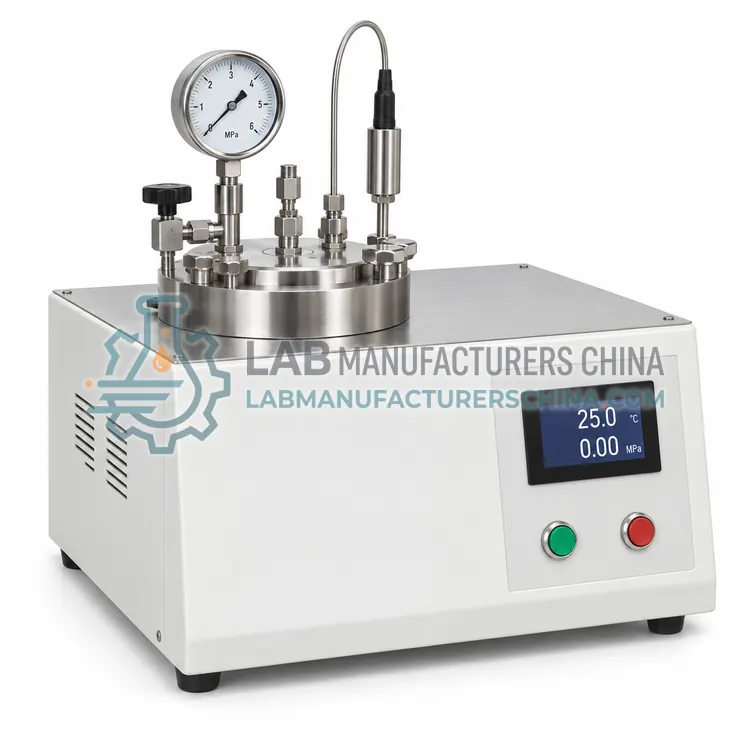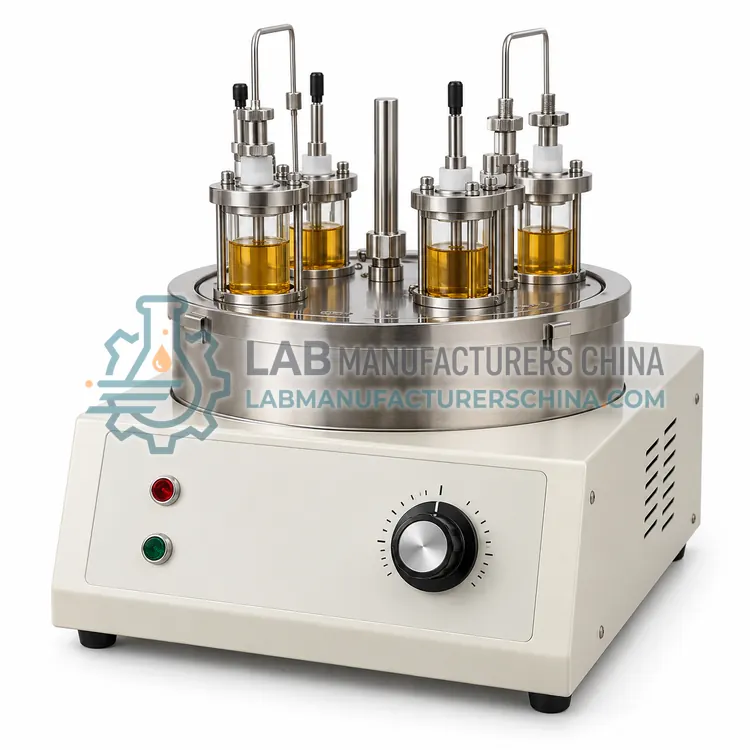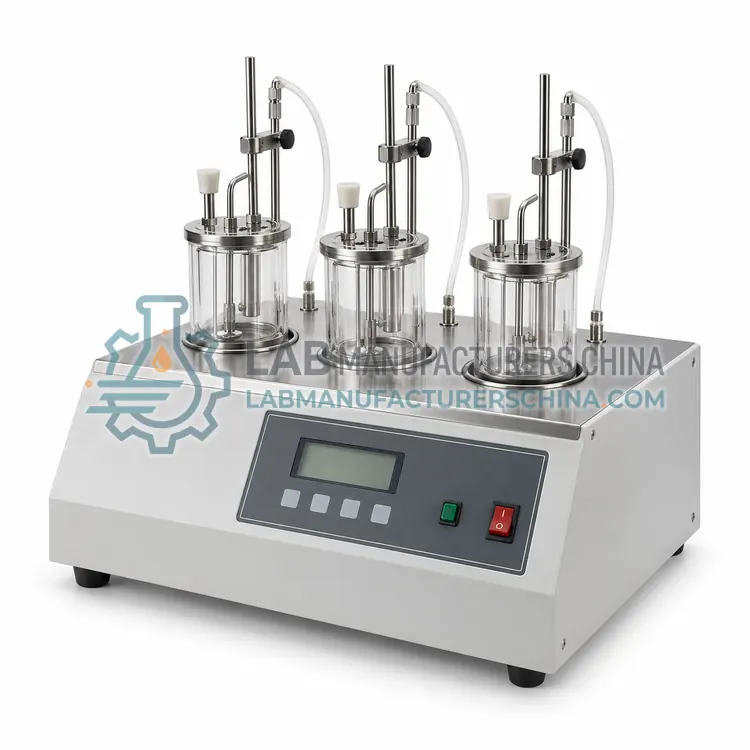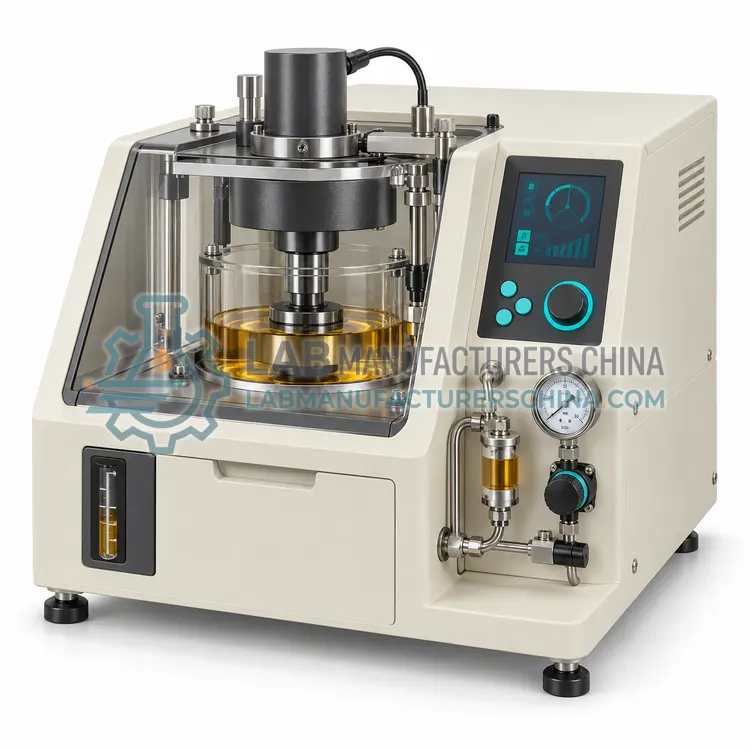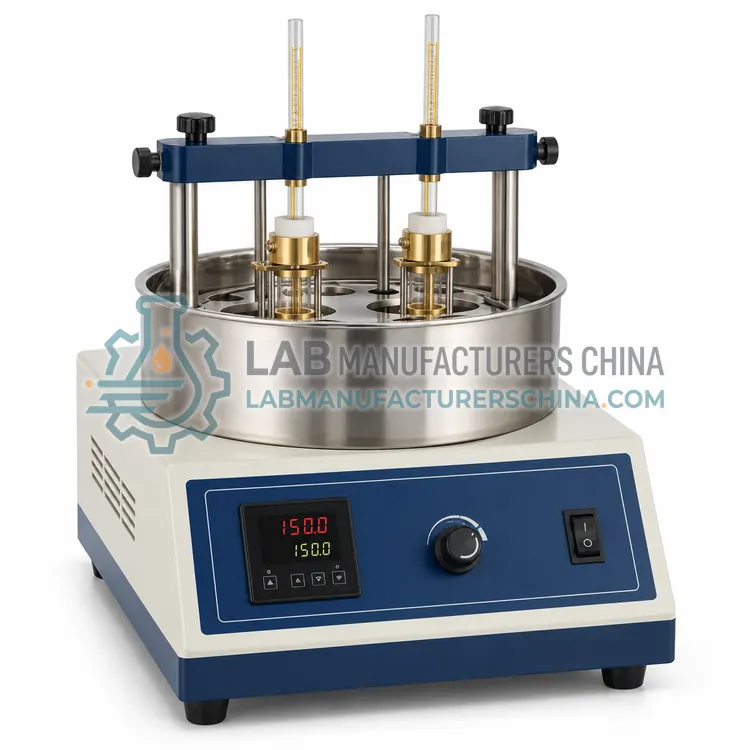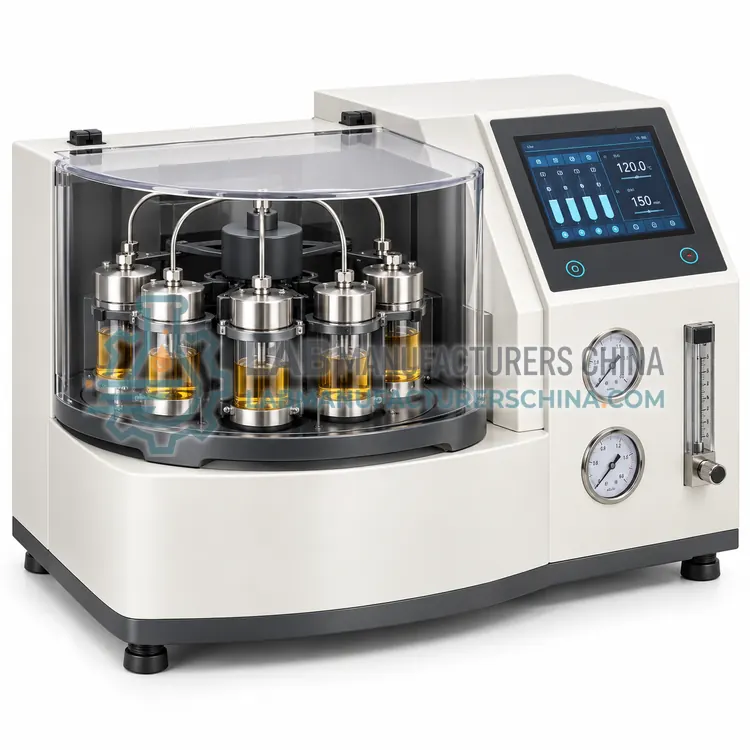
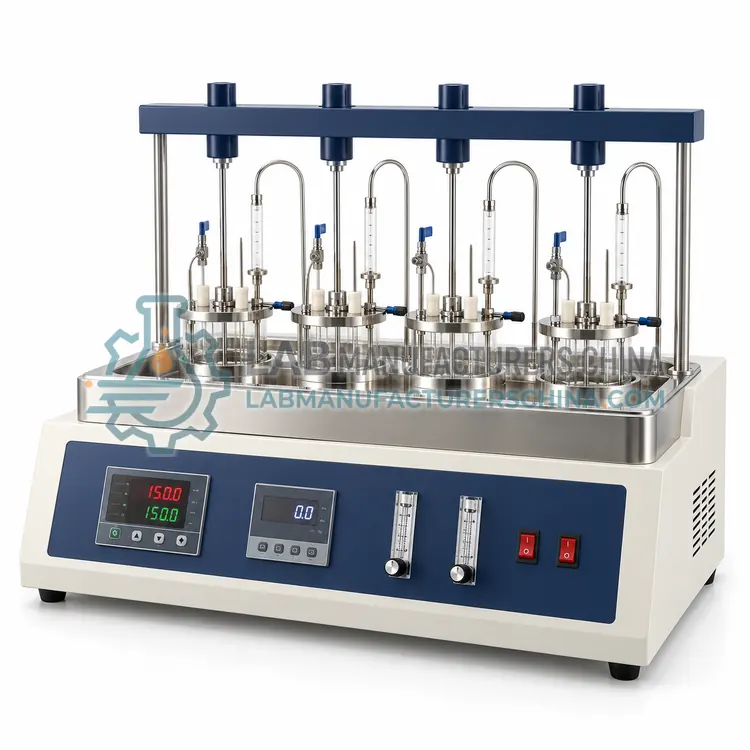
Turbine Oil Oxidation Stability Tester (TOST)
汽轮机油氧化安定性试验仪(TOST)
- SKU OXS-0002
- Oxidation Stability
- CE (to be confirmed)
- ISO 9001 manufacturing (to be confirmed)
Price on request — FOB / CIF quoted per order
Prices depend on configuration, quantity and destination port.
Key specifications
| Test temperature | 95 ± 0.2 °C |
|---|---|
| End point | Acid number 2.0 mg KOH/g |
| Oxygen flow | 3 ± 0.1 L/h per tube |
| Sample volume | 300 mL oil + 60 mL water |
| Number of tubes | 4–12 |
| Catalyst | Iron-copper coil |
Request a quote Download brochure · to be provided
By Lab Manufacturers China Technical TeamLast reviewed Standards: ASTM D2272, ASTM D943, ASTM D6186
What is the Turbine Oil Oxidation Stability Tester (TOST)?
A turbine oil oxidation stability tester holds oil with water and iron-copper catalyst at 95 °C under oxygen for thousands of hours, measuring time to an acid number of 2.0 mg KOH/g. It is the long-term reference for inhibited steam and gas turbine oil under ASTM D943.
What is the Turbine Oil Oxidation Stability Tester (TOST)?
A turbine oil oxidation stability tester holds oil with water and iron-copper catalyst at 95 °C under oxygen for thousands of hours, measuring time to an acid number of 2.0 mg KOH/g. It is the long-term reference for inhibited steam and gas turbine oil under ASTM D943.
Overview
A 300 mL oil sample with 60 mL water and an iron-copper catalyst coil is held in a large test tube in a bath at 95 °C. Oxygen is bubbled through the sample at 3 L per hour. Every 24 hours to 168 hours, a small portion of oil is withdrawn and its acid number measured by titration. The test ends when acid number reaches 2.0 mg KOH/g, and the hours are reported. Good inhibited turbine oils reach 3,000 to more than 10,000 hours. A multi-position bath holds eight or more tubes with oxygen flow meters, condensers and temperature control of ± 0.3 °C. Because the test is long and labor-intensive, it is used mostly for qualification rather than routine release, where RPVOT is used as a rapid screen.
How does it work?
Oxidation converts hydrocarbons into acids, sludge and varnish through free-radical chain reactions that speed up once inhibitors are consumed. Accelerated tests expose an oil sample to oxygen or air at elevated temperature, often with copper and iron catalyst wire and water, and monitor the reaction. In rotating pressure vessel tests, a sealed bomb containing oil, water and a copper coil is charged with oxygen at 620 kPa, heated to 150 °C and rotated, and the time until pressure falls by 175 kPa is recorded. Turbine oil tests run for thousands of hours and measure time to an acid number of 2.0 mg KOH/g. Differential scanning calorimetry detects the exothermic onset under oxygen pressure, and thin-film methods measure oxygen uptake. Induction time reflects the oil's remaining antioxidant reserve.
What are the key features?
- Multi-tube heated bath for 8 or more tubes
- Oxygen flow control at 3 L/h per tube
- Condensers to reduce water loss
- Temperature stability of ± 0.3 °C at 95 °C
- Corrosion-resistant bath with circulation
What are the technical specifications?
A typical turbine oil oxidation stability tester (tost) configuration offers test temperature of 95 ± 0.2 °C, end point of Acid number 2.0 mg KOH/g, oxygen flow of 3 ± 0.1 L/h per tube, sample volume of 300 mL oil + 60 mL water, number of tubes of 4–12 and catalyst of Iron-copper coil. Values are indicative of the product class; the exact figures for each configuration are confirmed on the quotation and the calibration documents supplied with the instrument.
Which applications is it used for?
The Turbine Oil Oxidation Stability Tester (TOST) is used in turbine oil qualification, long-life hydraulic fluid evaluation and formulation R&D for antioxidants. Across the wider Oxidation Stability class, laboratories also deploy it for turbine oil life assessment, antioxidant additive development and hydraulic oil QC.
Which standards and certifications apply?
Relevant standards and methods include ASTM D2272, ASTM D943, ASTM D6186, ASTM D4742, ASTM D7545, IEC 61125, ASTM D2440 and ISO 4263. Certification candidates for this model are CE and ISO 9001 manufacturing; each is to be confirmed for the specific configuration before shipment, and certificates are supplied only where they have been issued.
Oxidation tests use pressurized oxygen and heated oil, so safety is the first consideration. Use oxygen-compatible, oil-free regulators and fittings, pressure relief devices and guarding, and keep the area ventilated and free of grease. Clean glassware and bombs thoroughly, since contaminants alter induction time. Prepare catalyst coils exactly per the method, using specified copper wire and polishing. Check bath temperature uniformity and sensor calibration, and test with a reference oil of known RPVOT value on a schedule. Verify leak tightness before each run and keep logs of repeat results. Dispose of used oil and water according to local rules.
How do I select the right Turbine Oil Oxidation Stability Tester (TOST)?
Select a TOST bath when turbine oil specifications cite ASTM D943 or when long-term stability data are needed for approval. It is too slow for routine release. Specify the number of tubes, oxygen flow meters, temperature stability, condenser type and whether automatic sampling is wanted.
How does it compare with other Oxidation Stability variants?
Select the test that your specification names. Turbine and hydraulic oil specifications commonly call for rotating pressure vessel oxidation test (RPVOT) and the long-duration turbine oil stability test. Formulators developing additives prefer faster methods such as pressure differential scanning calorimetry or thin-film oxygen uptake, which need small samples. Insulating oil producers follow IEC 61125 or ASTM D2440. Consider the number of positions, since tests run for hours or weeks, and the degree of automation including pressure logging, endpoint detection and report generation. Check bath temperature uniformity, safety features for oxygen and pressure, and supply of glass sample containers, catalyst coil and test bombs. In the RFQ, list methods, number of simultaneous tests and sample volumes.
Full specifications
| Test temperature | 95 ± 0.2 °C |
|---|---|
| End point | Acid number 2.0 mg KOH/g |
| Oxygen flow | 3 ± 0.1 L/h per tube |
| Sample volume | 300 mL oil + 60 mL water |
| Number of tubes | 4–12 |
| Catalyst | Iron-copper coil |
| Test duration | 1,000–10,000 h |
| Bath fluid | Oil or heat-transfer fluid |
| Applicable method | ASTM D943, ISO 4263-1 (related) |
Indicative values for this product class. Final specifications are confirmed on the quotation and in the calibration documents supplied with the instrument.
Applications
- Turbine oil qualification
- Long-life hydraulic fluid evaluation
- Formulation R&D for antioxidants
Key features
- Multi-tube heated bath for 8 or more tubes
- Oxygen flow control at 3 L/h per tube
- Condensers to reduce water loss
- Temperature stability of ± 0.3 °C at 95 °C
- Corrosion-resistant bath with circulation
Frequently asked questions about Turbine Oil Oxidation Stability Tester (TOST)
Runs commonly last 2,000 to 10,000 hours, which is three months to more than a year. Plan bath capacity and titration resources accordingly.
Acid number rises sharply once inhibitors are consumed and oil oxidizes, so a value of 2.0 mg KOH/g marks the end of effective oil life in the test.
RPVOT is a faster screening tool and correlates with antioxidant level, but it does not replace the long-term stability data some specifications require. Use both where needed.
It is the resistance of the oil to chemical reaction with oxygen, which forms acids, sludge and varnish. Testing measures how long the oil lasts under accelerated conditions before it breaks down.
RPVOT measures the minutes until oxygen pressure in a heated, rotating bomb with water and copper catalyst falls by 175 kPa. A longer time indicates greater remaining antioxidant reserve in the oil.
RPVOT takes from tens of minutes to a few hundred minutes. Pressure DSC takes minutes to an hour, while turbine oil stability tests can last thousands of hours.