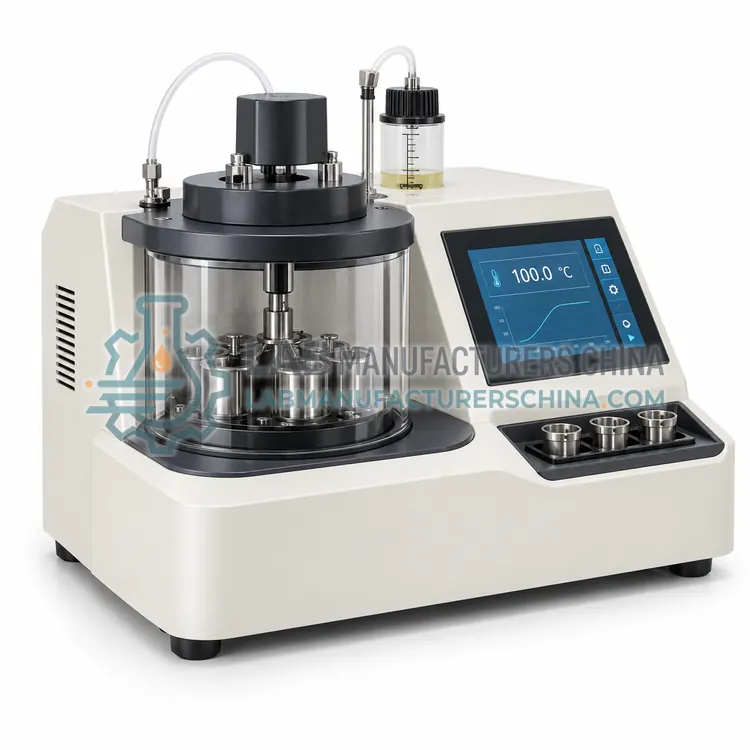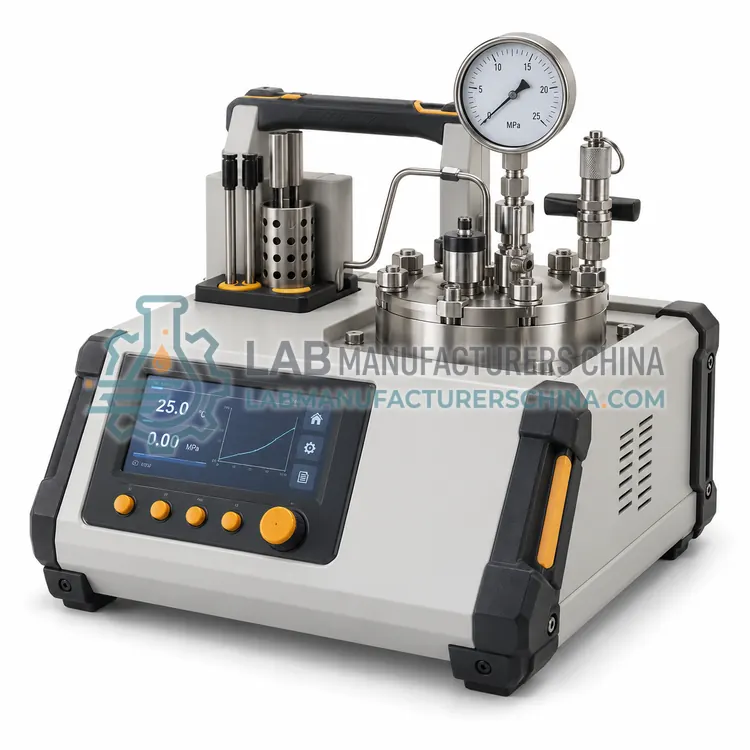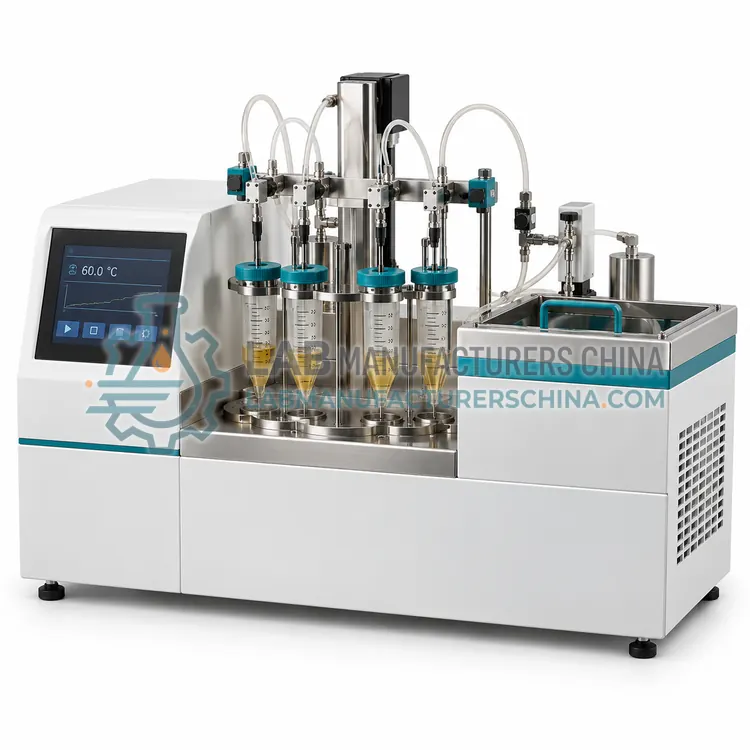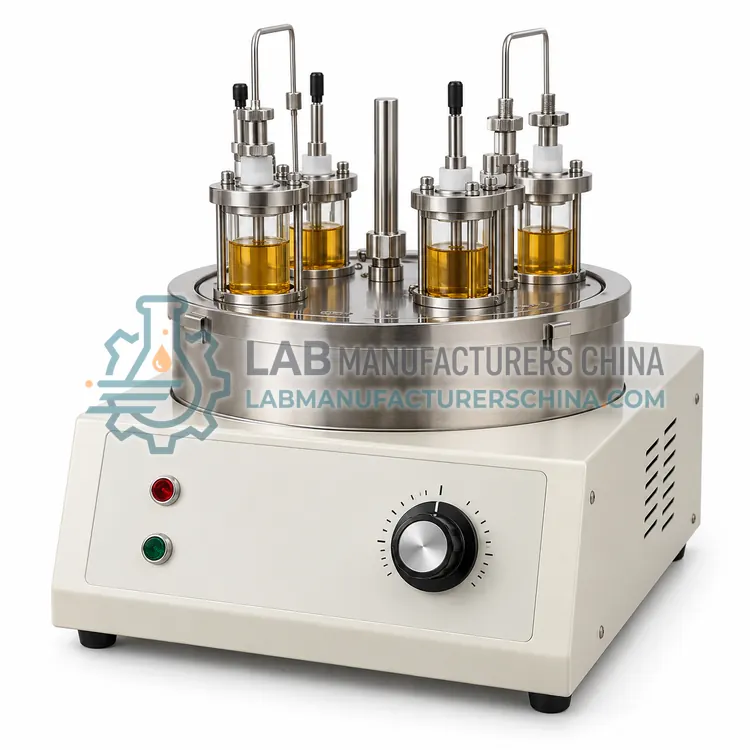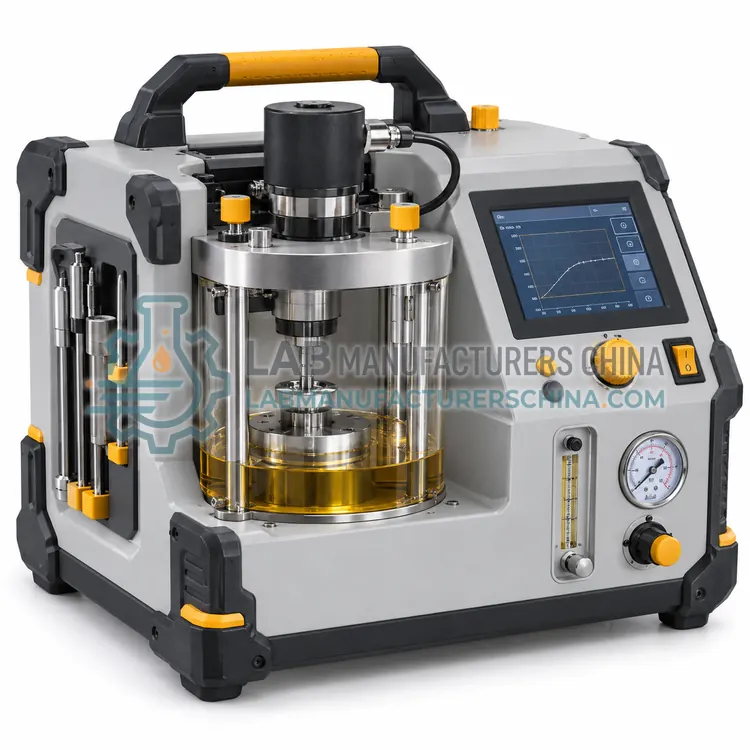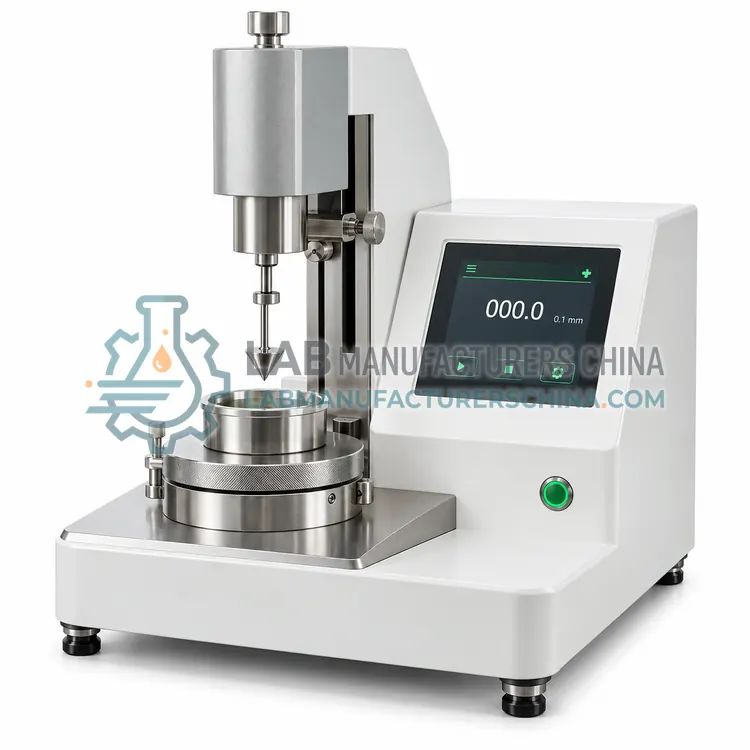
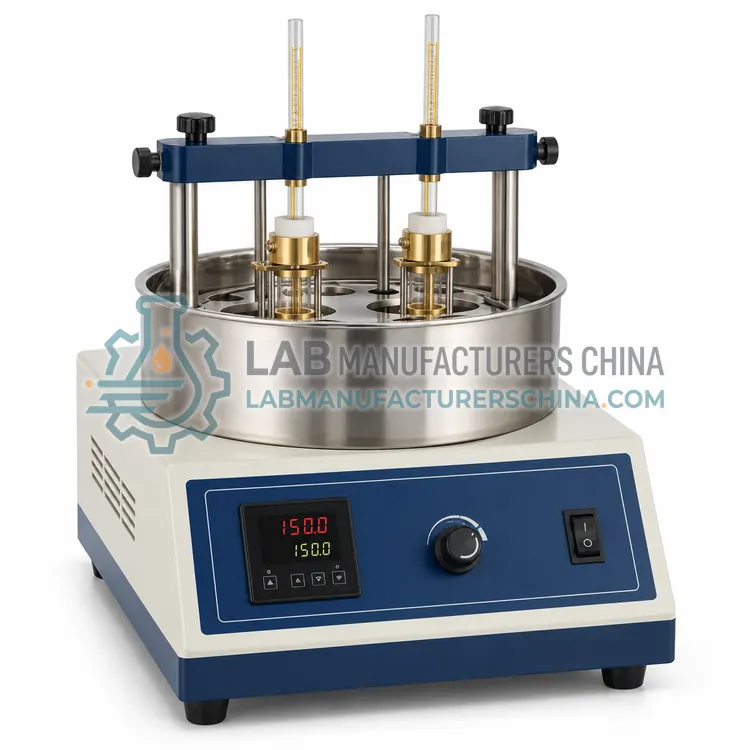
Grease Dropping Point Apparatus
润滑脂滴点测定仪
- SKU GRT-0003
- Grease Testing
- CE (to be confirmed)
- ISO 9001 manufacturing (to be confirmed)
Price on request — FOB / CIF quoted per order
Prices depend on configuration, quantity and destination port.
Key specifications
| Temperature range | Ambient to 400 °C |
|---|---|
| Heating rate | 1–1.5 °C/min near drop |
| Temperature accuracy | ± 0.5 °C |
| Temperature resolution | 0.1 °C |
| Number of cups | 1–4 (automatic units) |
| Cup type | Standard grease cup, bottom hole 2.8 mm |
Request a quote Download brochure · to be provided
By Lab Manufacturers China Technical TeamLast reviewed Standards: ASTM D217, ISO 2137, ASTM D566
What is the Grease Dropping Point Apparatus?
A dropping point apparatus heats a small cup of grease at a controlled rate and records the temperature at which the first drop falls. It gives a thermal limit for the grease structure and supports product classification under ASTM D566, D2265 and IP 396.
What is the Grease Dropping Point Apparatus?
A dropping point apparatus heats a small cup of grease at a controlled rate and records the temperature at which the first drop falls. It gives a thermal limit for the grease structure and supports product classification under ASTM D566, D2265 and IP 396.
Overview
Grease is packed into a small cup with a hole in the bottom, suspended in a test tube in a heated bath (D566) or an aluminum block (D2265). Heating rises at about 1 to 1.5 °C per minute near the expected dropping point, and the operator or an optical sensor detects the first drop or thread leaving the cup. Dropping point is the average of cup temperature and furnace temperature in D566 or cup temperature in D2265. Block versions reach 260 to 400 °C, suited to high-temperature complex soaps, polyurea and PTFE greases. Automatic instruments detect the drop with a light barrier, stop the test and record the temperature, removing operator subjectivity and letting several cups run in parallel.
How does it work?
Grease is a dispersion of a thickener, such as lithium or calcium soap, polyurea or clay, in base oil with additives. Its behavior is non-Newtonian, so tests measure structure rather than viscosity. Consistency is measured by letting a standard cone sink into the sample for five seconds and reading the penetration depth in tenths of a millimeter, usually after working the grease in a standard worker. Dropping point is the temperature at which the first drop falls from a heated cup, indicating thermal limit of the thickener structure. Oil separation measures how much base oil bleeds through a wire cone under storage conditions. Oxidation tests heat grease in oxygen and record pressure drop, and water washout tests spray or immerse grease to find the percentage lost. Standard cup, cone and temperature geometry give comparable results.
What are the key features?
- Heating block or bath up to 400 °C
- Programmable heating rate control
- Optical drop detection on automatic models
- Single or multi-cup configuration
- Data output with temperature trace
What are the technical specifications?
A typical grease dropping point apparatus configuration offers temperature range of Ambient to 400 °C, heating rate of 1–1.5 °C/min near drop, temperature accuracy of ± 0.5 °C, temperature resolution of 0.1 °C, number of cups of 1–4 (automatic units) and cup type of Standard grease cup, bottom hole 2.8 mm. Values are indicative of the product class; the exact figures for each configuration are confirmed on the quotation and the calibration documents supplied with the instrument.
Which applications is it used for?
The Grease Dropping Point Apparatus is used in high-temperature grease classification, incoming grease verification and thickener development. Across the wider Grease Testing class, laboratories also deploy it for grease batch quality control, NLGI grade determination and high-temperature grease development.
Which standards and certifications apply?
Relevant standards and methods include ASTM D217, ISO 2137, ASTM D566, ASTM D2265, IP 396, ASTM D942, ASTM D1264 and ASTM D6184. Certification candidates for this model are CE and ISO 9001 manufacturing; each is to be confirmed for the specific configuration before shipment, and certificates are supplied only where they have been issued.
Grease tests are sensitive to sample handling. Fill cups without air pockets, and bring samples to 25 °C in a bath before penetration testing. Keep cones and worker plates clean and undamaged, and verify penetrometer zero and cone mass and dimensions. Calibrate temperature sensors in dropping point blocks. For oxidation bombs, check pressure transducers and leak tightness, and treat oxygen with care: use clean, oil-free regulators and a ventilated area. Replace consumables such as wire cones and cups per the method. Keep grease waste separate from solvents, and record reference grease checks with certified materials to support laboratory accreditation.
How do I select the right Grease Dropping Point Apparatus?
Choose a block-type apparatus for greases expected to exceed 260 °C, and a bath type only if a specification demands ASTM D566. Choose automatic detection for multiple daily tests. Specify maximum temperature, number of cups, detection method, calibration kit and whether the apparatus meets D2265 or IP 396.
How does it compare with other Grease Testing variants?
Choose equipment according to the grease properties in your product specification. Every grease plant needs a penetrometer and grease worker for NLGI grade, plus a dropping point apparatus. Formulators of high-temperature and long-life greases add oxidation stability testing. Storage and bearing-application tests such as oil separation and water washout support quality control and complaint handling. Consider whether the penetrometer needs automatic operation, full-scale or quarter-scale cones, and heating capacity for the dropping point block, which is often 260 to 400 °C for high-temperature greases. Check compatibility with the standard edition cited by customers, and whether consumables such as wire cones, cups and wheel bearings are available. In the RFQ, list methods, sample throughput and the thickener types tested.
Full specifications
| Temperature range | Ambient to 400 °C |
|---|---|
| Heating rate | 1–1.5 °C/min near drop |
| Temperature accuracy | ± 0.5 °C |
| Temperature resolution | 0.1 °C |
| Number of cups | 1–4 (automatic units) |
| Cup type | Standard grease cup, bottom hole 2.8 mm |
| Drop detection | Visual or optical sensor |
| Sample mass | ≈ 1 g per cup |
| Applicable methods | ASTM D566, D2265, IP 396 |
Indicative values for this product class. Final specifications are confirmed on the quotation and in the calibration documents supplied with the instrument.
Applications
- High-temperature grease classification
- Incoming grease verification
- Thickener development
Key features
- Heating block or bath up to 400 °C
- Programmable heating rate control
- Optical drop detection on automatic models
- Single or multi-cup configuration
- Data output with temperature trace
Frequently asked questions about Grease Dropping Point Apparatus
No. Dropping point is an indicator of thermal structure limit. Continuous operating temperature is usually well below it, depending on base oil oxidation, bearing design and relubrication interval.
The apparatus heats rapidly at first and then holds about 1 to 1.5 °C per minute as the dropping point approaches. Follow the method to avoid overshoot and reading variation.
Some greases, such as clay or PTFE types, have no dropping point below the apparatus limit. Report the result as above the test maximum and use other tests to assess high-temperature behavior.
NLGI grade is a consistency number from 000 to 6 based on worked cone penetration at 25 °C. Grade 2 covers penetration of 265 to 295 tenths of a millimeter and is the most widely used for bearings.
Dropping point is the temperature at which grease changes from semi-solid to liquid and the first drop falls from a heated cup under test conditions. It indicates an upper limit, not the recommended operating temperature.
Working breaks down the thickener structure under defined shear, as in a bearing. Worked penetration shows stability, and the difference between worked and unworked values indicates mechanical stability.