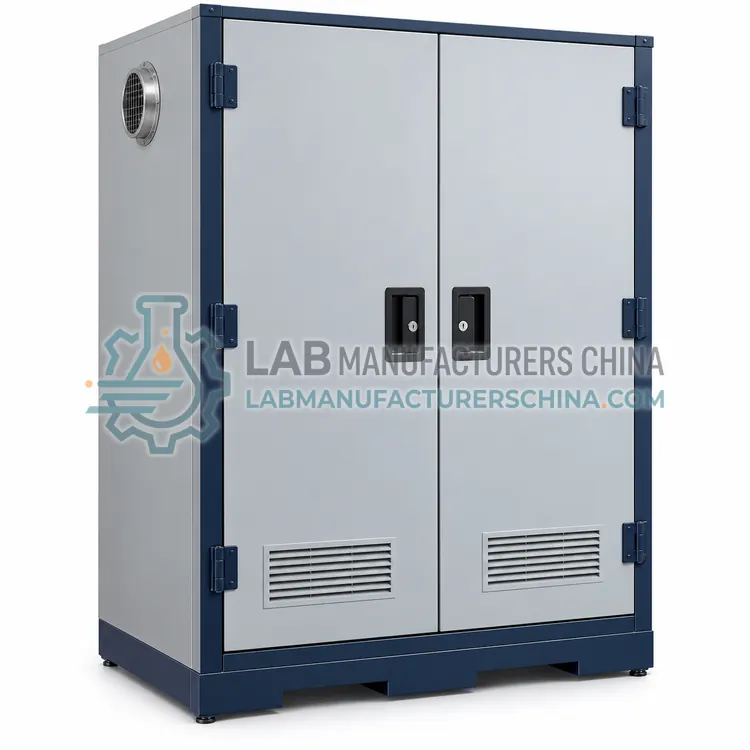
How do Safety Cabinets work?
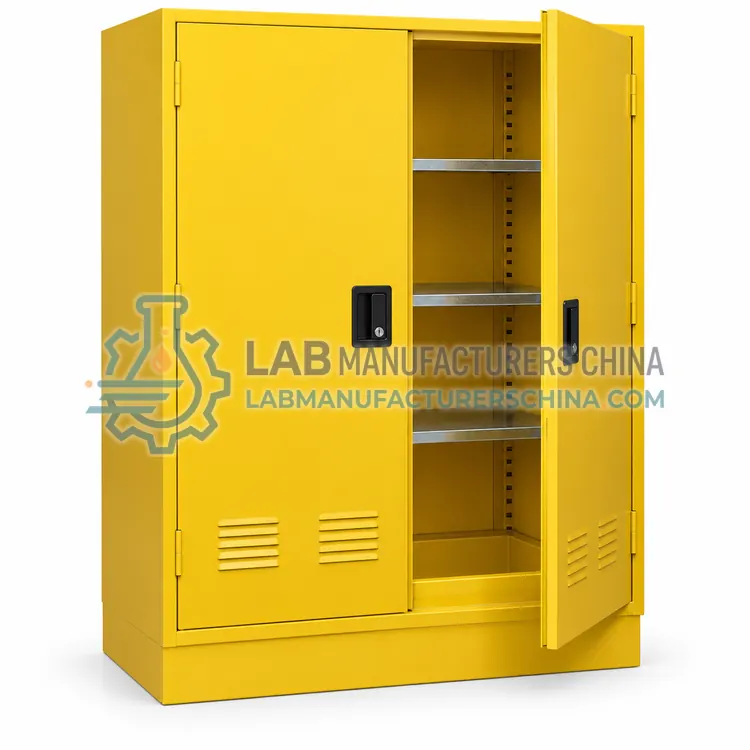
A laboratory safety cabinet is a container designed to hold hazardous chemicals safely under normal use and during a fire. Flammable liquid cabinets use double walls with an air space, thermal insulation, self-closing and self-latching doors and a sill that contains spills. They keep the internal temperature below the ignition temperature of the contents for a rated period, such as 30, 60 or 90 minutes, so occupants can evacuate and the fire service can respond. Many are tested to EN 14470-1 or FM 6050, and some are vented to relieve pressure or remove vapour. Corrosive cabinets use chemically resistant linings and often ventilated extraction so acid or base vapour does not attack the cabinet or the room. Labelling, segregation by hazard class and secondary containment trays are integral to safe use, and cabinets should be closed except when loading.
Which Safety Cabinets variants are available?
- Flammable Liquid Storage Cabinet — A flammable liquid storage cabinet is a double-walled steel cabinet with self-closing doors and a spill sill for solvent storage.
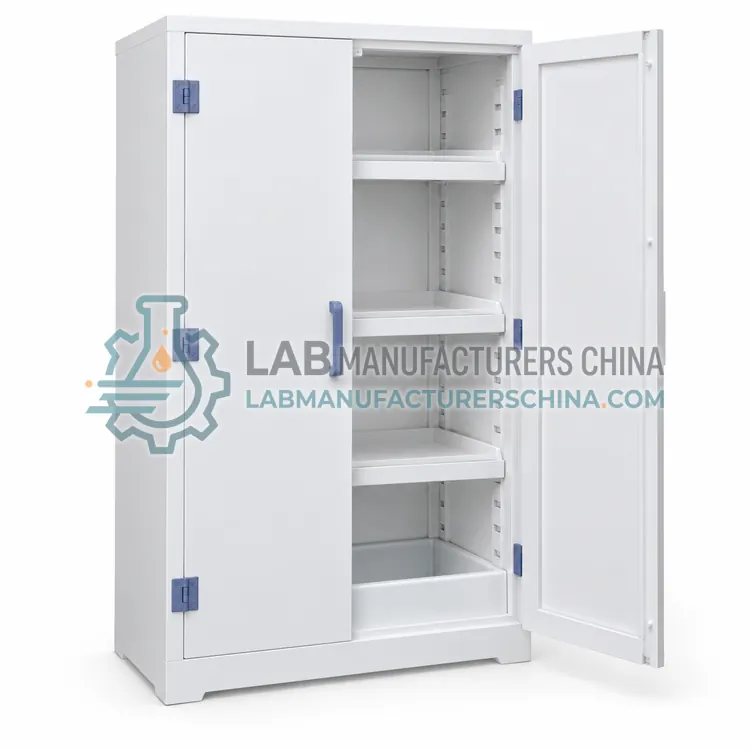
- Corrosive Storage Cabinet — A corrosive storage cabinet has a chemically resistant lining for acids or bases, often with ventilation.
- Fire-Rated Flammable Storage Cabinet — A fire-rated flammable storage cabinet is type tested to keep contents below ignition temperature for 30, 60 or 90 minutes.
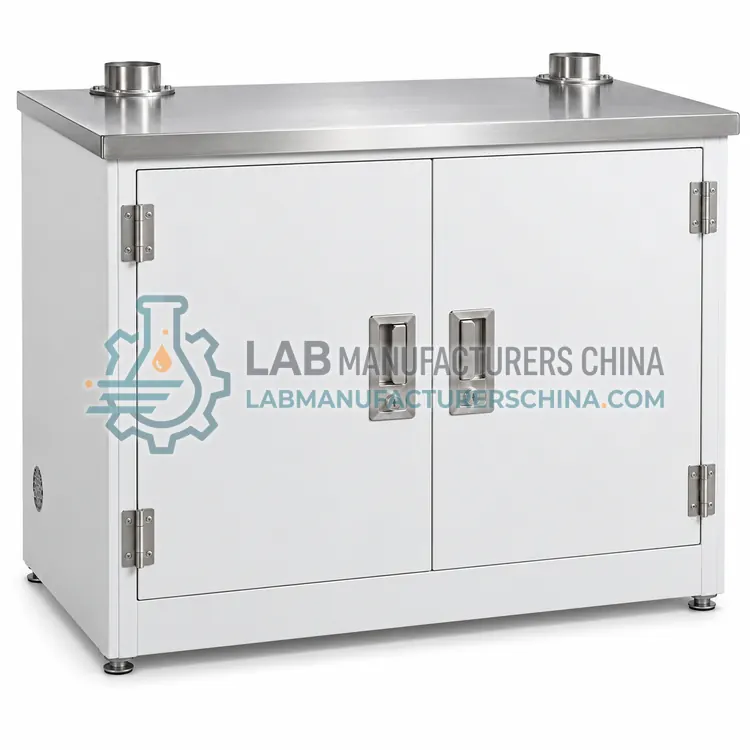
- Under-Bench Flammable Storage Cabinet — An under-bench flammable storage cabinet fits beneath a workbench to keep solvents close to the point of use.
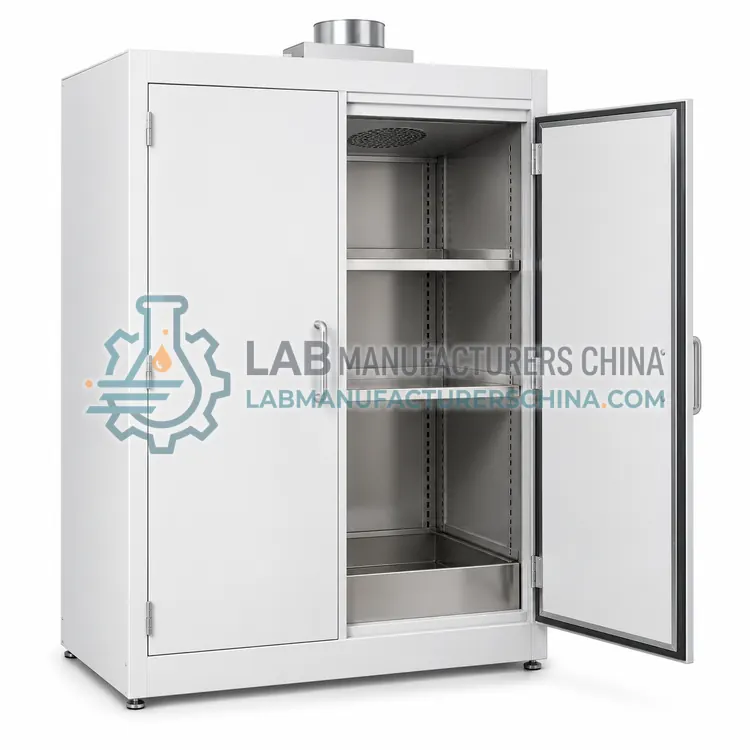
- Ventilated Flammable Storage Cabinet — A ventilated flammable storage cabinet has controlled inlet and exhaust connections to remove vapour from the cabinet.
How do I choose the right variant?
Select the cabinet by hazard class and quantity. For flammable liquids, confirm the fire rating and capacity in litres, and whether the cabinet must be fire rated under EN 14470-1 or listed to NFPA 30 and FM 6050. Choose a corrosive cabinet with a resistant lining and, where required, ventilation for acids or bases separately. Decide between freestanding, under-bench and ventilated versions to suit the room layout and airflow. Check door operation, sill height, shelf adjustability and load capacity, and plan secondary containment trays. Confirm that placement meets local codes, including distance from exits and ignition sources, room ventilation and signage. Document installation, inspection and any venting arrangement, and train staff to keep doors closed.
Where are Safety Cabinets used?
Safety Cabinets are specified in solvent storage in chemistry laboratories, acid and base storage, pharmaceutical reagent storage, teaching laboratory chemical storage and waste solvent accumulation.
Which standards and certifications apply?
Work with Safety Cabinets is commonly governed by EN 14470-1 (fire safety storage cabinets), NFPA 30 (flammable and combustible liquids code), OSHA 29 CFR 1910.106 (flammable liquids), FM 6050 (storage cabinets for flammable liquids), GB 15603 (chemical storage rules) and GHS labelling requirements. Instrument certifications such as CE marking are confirmed per configuration and never assumed.
What are the key considerations before purchase?
Place cabinets on a level, load-rated floor away from exits, heat sources and ignition points, and confirm the required distance from escape routes under local codes. Inspect doors, latches and hinges monthly and confirm self-closing and self-latching operation. Check the fire rating documentation and keep it with the asset record. If a cabinet is vented, confirm the duct does not defeat the fire rating and that the exhaust is suitable. Keep incompatible chemicals in separate cabinets, use secondary trays and never exceed the rated capacity or shelf load, since shelves may fail and spill the contents. Review stored inventory regularly and remove expired or unneeded items.