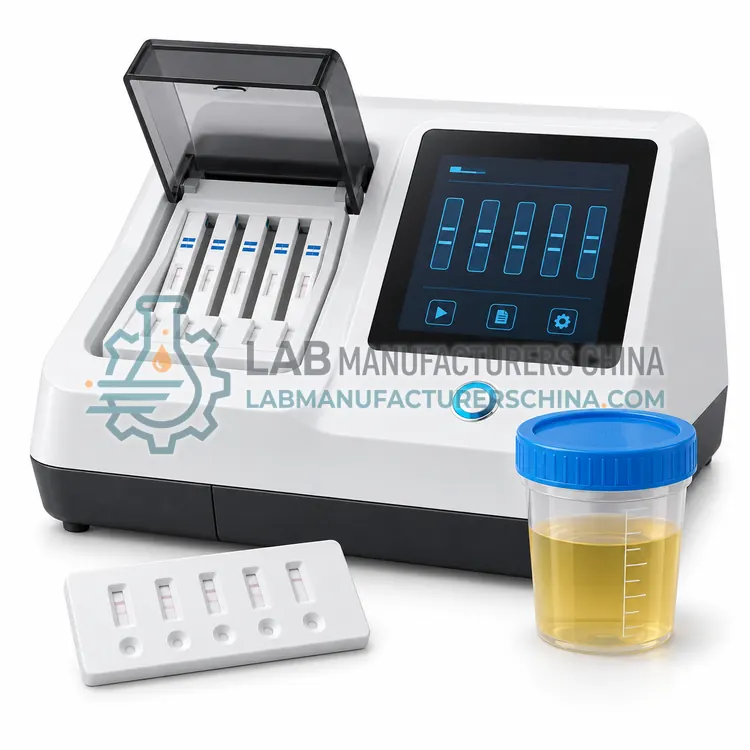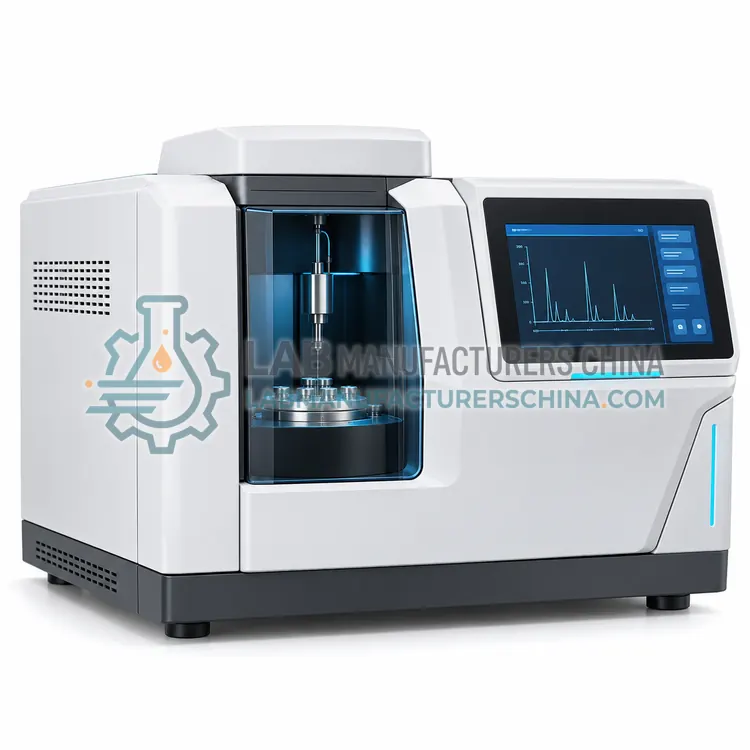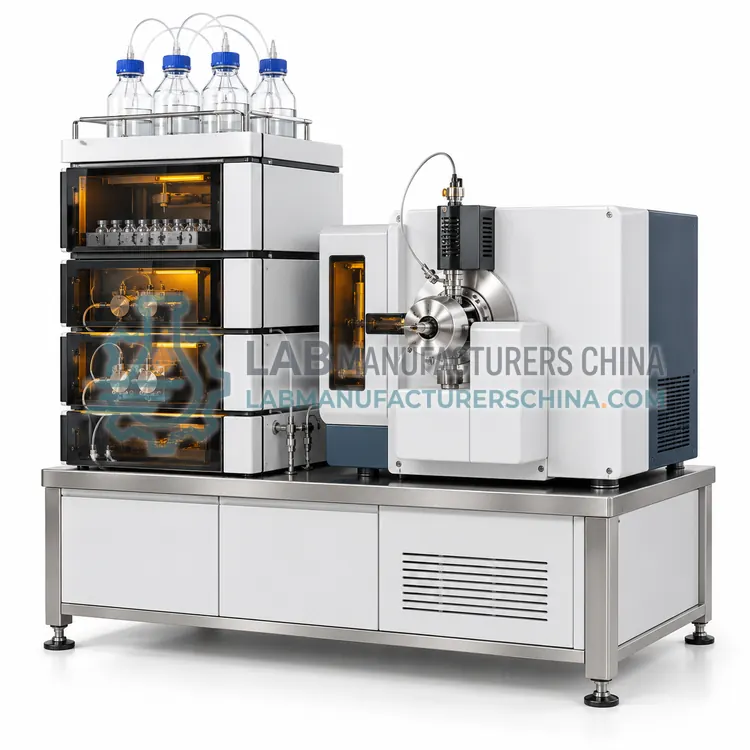
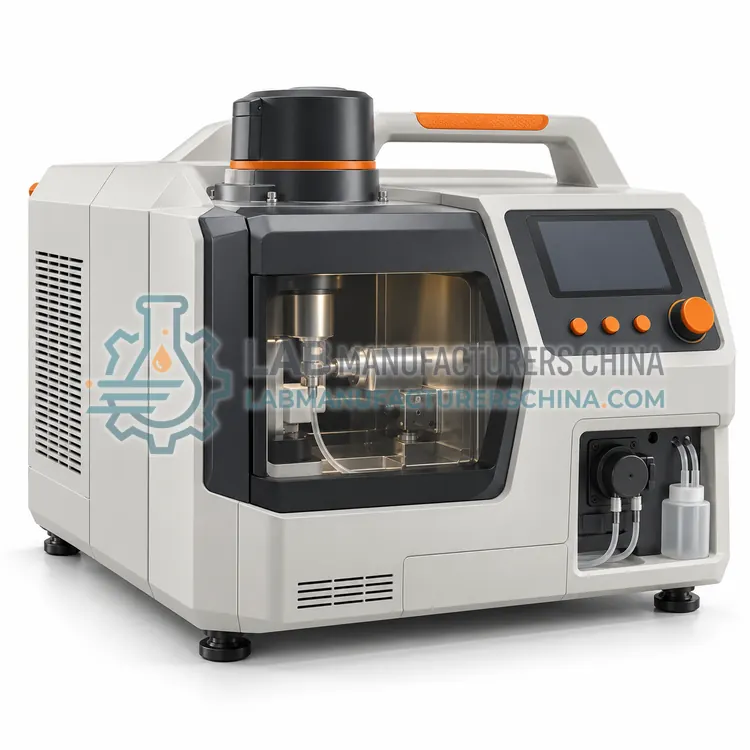
ICP-MS Toxicology Analyzer for Metals
金属毒理 ICP-MS 分析仪
- SKU TOX-0004
- Toxicology Analyzers
- CE (to be confirmed)
- ISO 9001 manufacturing (to be confirmed)
Price on request — FOB / CIF quoted per order
Prices depend on configuration, quantity and destination port.
Key specifications
| Mass range | 2–260 u |
|---|---|
| Detection limit | 0.01–0.1 µg/L |
| Collision cell gas | Helium (KED mode) |
| Plasma RF power | 1300–1600 W |
| Dynamic range | ≥ 9 orders |
| Sample uptake | 0.1–0.4 mL/min |
Request a quote Download brochure · to be provided
By Lab Manufacturers China Technical TeamLast reviewed Standards: ANSI/ASB Standard 036, ISO 15189, ISO/IEC 17025
What is the ICP-MS Toxicology Analyzer for Metals?
An ICP-MS toxicology analyzer measures trace metals and metalloids in blood, urine and tissue at ng/L levels. It is used to assess exposure to lead, arsenic, mercury, cadmium and other toxic elements.
What is the ICP-MS Toxicology Analyzer for Metals?
An ICP-MS toxicology analyzer measures trace metals and metalloids in blood, urine and tissue at ng/L levels. It is used to assess exposure to lead, arsenic, mercury, cadmium and other toxic elements.
Overview
The system introduces diluted biological samples through a nebulizer into argon plasma at about 6000 to 10,000 K, where elements are ionized. Ions pass through a quadrupole mass filter, often with a collision or reaction cell using helium to remove polyatomic interferences such as ArCl on arsenic. Detection limits are typically 0.01 to 0.1 µg/L for most toxic elements. Samples are prepared by simple dilution with an alkaline or acid diluent and internal standards such as rhodium or gallium, or by microwave digestion for tissue. Speciation, such as arsenic species, requires coupling to HPLC. The instrument needs high-purity argon, clean sample handling and trace-metal-free labware, and its matrix tolerance should be checked because blood contains high salt and protein.
How does it work?
Toxicology analyzers use several principles. Immunoassay analyzers detect drug classes through antibody binding and photometric or chemiluminescent signals, providing fast presumptive results. Gas chromatography with headspace sampling separates volatile compounds such as ethanol and detects them by flame ionization. GC-MS and LC-MS/MS separate compounds and identify them by mass spectra or specific ion transitions, giving confirmatory quantitation with isotope-labeled internal standards. Inductively coupled plasma mass spectrometry ionizes samples in argon plasma to measure metals at ng/L levels. Sample preparation steps such as protein precipitation, hydrolysis, liquid-liquid or solid-phase extraction remove interferences and improve sensitivity. Calibration, quality controls and proficiency testing are required to report results that stand up in clinical and legal settings.
What are the key features?
- Collision or reaction cell to remove polyatomic interferences
- Detection limits of 0.01 to 0.1 µg/L for toxic elements
- Simple dilute-and-shoot preparation for blood and urine
- Autosampler with rinse station to limit carryover
- Optional HPLC coupling for elemental speciation
What are the technical specifications?
A typical icp-ms toxicology analyzer for metals configuration offers mass range of 2–260 u, detection limit of 0.01–0.1 µg/L, collision cell gas of Helium (KED mode), plasma RF power of 1300–1600 W, dynamic range of ≥ 9 orders and sample uptake of 0.1–0.4 mL/min. Values are indicative of the product class; the exact figures for each configuration are confirmed on the quotation and the calibration documents supplied with the instrument.
Which applications is it used for?
The ICP-MS Toxicology Analyzer for Metals is used in lead and cadmium exposure testing, mercury and arsenic poisoning assessment, occupational health monitoring and post-mortem metal analysis. Across the wider Toxicology Analyzers class, laboratories also deploy it for clinical toxicology and poisoning cases, forensic post-mortem toxicology and workplace and driving-related testing.
Which standards and certifications apply?
Relevant standards and methods include ANSI/ASB Standard 036, ISO 15189, ISO/IEC 17025, CLSI C62 and CLSI EP15. Certification candidates for this model are CE and ISO 9001 manufacturing; each is to be confirmed for the specific configuration before shipment, and certificates are supplied only where they have been issued.
Validate each method for selectivity, accuracy, precision, carryover, matrix effects and stability, following recognized forensic or clinical toxicology guidance. Use certified reference materials, matrix-matched calibrators and independent quality controls, and participate in proficiency testing. Control carryover with blanks after high samples. Install instruments with stable power, gas purity, temperature and ventilation appropriate to solvents and acids used. Follow biosafety practices when handling blood and urine. Maintain sample retention and chain-of-custody records, and secure data with audit trails. Perform preventive maintenance on sources, columns, pumps and sample introduction systems, and document measurement uncertainty for quantitative results.
How do I select the right ICP-MS Toxicology Analyzer for Metals?
Select ICP-MS when metals and metalloids at trace levels are the target analytes. It does not detect organic drugs. In an RFQ, specify target elements and limits, matrix types, collision cell, autosampler, argon supply and speciation needs.
How does it compare with other Toxicology Analyzers variants?
Choose by the question being asked and the required evidence level. Immunoassay analyzers give rapid presumptive results for common drug classes and suit high-volume screening. Headspace GC is the dedicated method for blood alcohol and volatile substances. LC-MS/MS is chosen for broad, sensitive confirmatory panels including therapeutic drugs and new substances, while GC-MS remains strong for volatile and derivatizable compounds. ICP-MS is required when metals and metalloids are the targets. Consider sample volume, matrix, turnaround time, automation level and staff expertise. Check calibration and QC software, LIS connectivity and the availability of validated assay kits. For forensic use, confirm data integrity features, chain-of-custody support and method validation documentation.
Full specifications
| Mass range | 2–260 u |
|---|---|
| Detection limit | 0.01–0.1 µg/L |
| Collision cell gas | Helium (KED mode) |
| Plasma RF power | 1300–1600 W |
| Dynamic range | ≥ 9 orders |
| Sample uptake | 0.1–0.4 mL/min |
| Autosampler capacity | ≥ 100 positions |
| Argon consumption | approx. 15–18 L/min |
| Internal standards | Rh, Ga, Ir (online addition) |
| Power supply | 200–240 V, single phase |
Indicative values for this product class. Final specifications are confirmed on the quotation and in the calibration documents supplied with the instrument.
Applications
- Lead and cadmium exposure testing
- Mercury and arsenic poisoning assessment
- Occupational health monitoring
- Post-mortem metal analysis
Key features
- Collision or reaction cell to remove polyatomic interferences
- Detection limits of 0.01 to 0.1 µg/L for toxic elements
- Simple dilute-and-shoot preparation for blood and urine
- Autosampler with rinse station to limit carryover
- Optional HPLC coupling for elemental speciation
Frequently asked questions about ICP-MS Toxicology Analyzer for Metals
Most metals and metalloids, including lead, cadmium, mercury, arsenic, thallium and manganese, can be measured at trace levels with appropriate sample preparation and interference removal.
The cell removes polyatomic interferences, such as ArCl on arsenic, by kinetic energy discrimination or reaction, improving accuracy in complex matrices like blood and urine.
Only when coupled to HPLC for speciation. Total arsenic includes organic forms from seafood, so speciation is needed to interpret exposure.
A toxicology analyzer is an instrument that detects and quantifies drugs, poisons, alcohol or metals in biological samples. Options include immunoassay analyzers for screening and chromatography-mass spectrometry or ICP-MS systems for confirmation and quantitation.
Immunoassays detect drug classes through antibody cross-reactivity, so they can give false positives. A mass spectrometry confirmation identifies and quantifies the specific compound, which is essential for clinical decisions and legal use.
Blood alcohol is commonly measured by headspace gas chromatography with flame ionization detection. The sample is heated in a sealed vial and the vapor is injected, using an internal standard such as n-propanol.
Related models
Automated Clinical Chemistry Analyzer for Toxicology and Therapeutic Drug Monitoring
毒理学和治疗药物监测用自动临床化学分析仪
- CE (to be confirmed)
- +1