Tablet Disintegration Tester
片剂崩解仪
- SKU TAA-0003
- Tablet Analysis
- CE (to be confirmed)
- IEC 61010-1 compliance (to be confirmed)
- ISO 13485 manufacturing (to be confirmed)
Price on request — FOB / CIF quoted per order
Prices depend on configuration, quantity and destination port.
Key specifications
| Basket positions | 1–3 |
|---|---|
| Temperature range | ambient to 50 °C |
| Temperature stability | 37 ±0.5 °C |
| Stroke length | 55 ±2 mm |
| Stroke rate | 30 ±1 cycles per minute |
| Basket mesh | No. 10 mesh typical |
Request a quote Download brochure · to be provided
By Lab Manufacturers China Technical TeamLast reviewed Standards: USP <1216>, USP <1217>, USP <701>
What is the Tablet Disintegration Tester?
A tablet disintegration tester moves tablets in a basket through medium at 37 °C and records the time to complete breakdown. It is chosen when a dosage form must break into particles before the drug can dissolve and be absorbed.
What is the Tablet Disintegration Tester?
A tablet disintegration tester moves tablets in a basket through medium at 37 °C and records the time to complete breakdown. It is chosen when a dosage form must break into particles before the drug can dissolve and be absorbed.
Overview
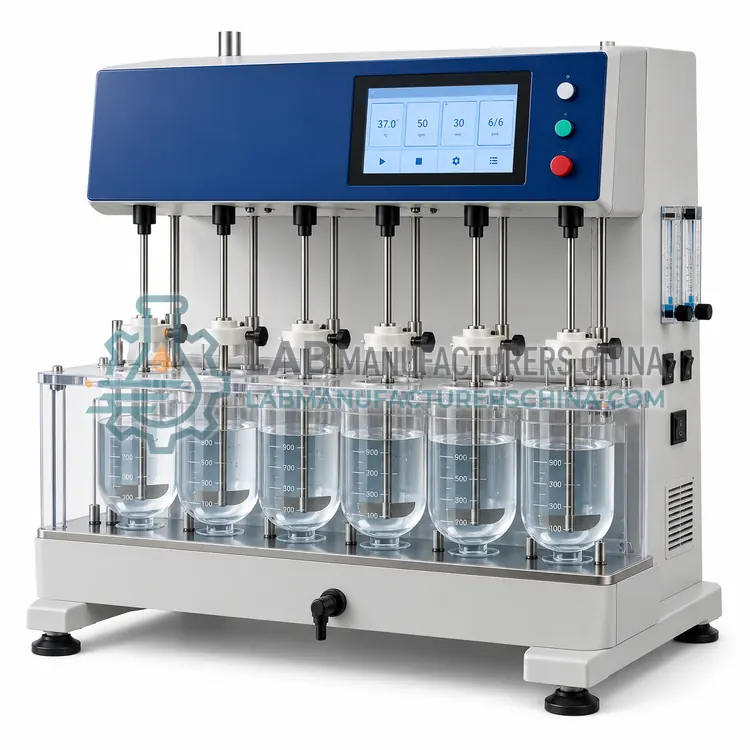
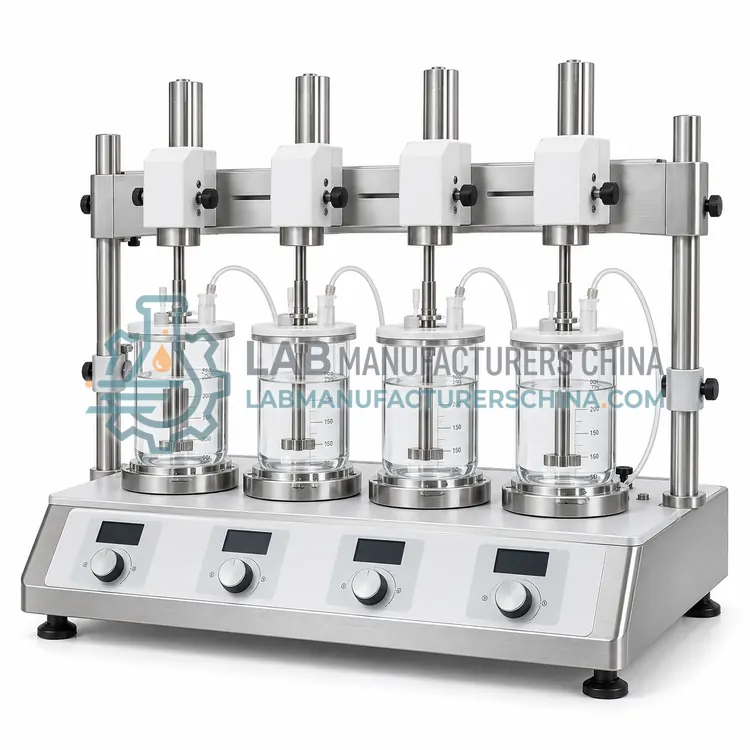
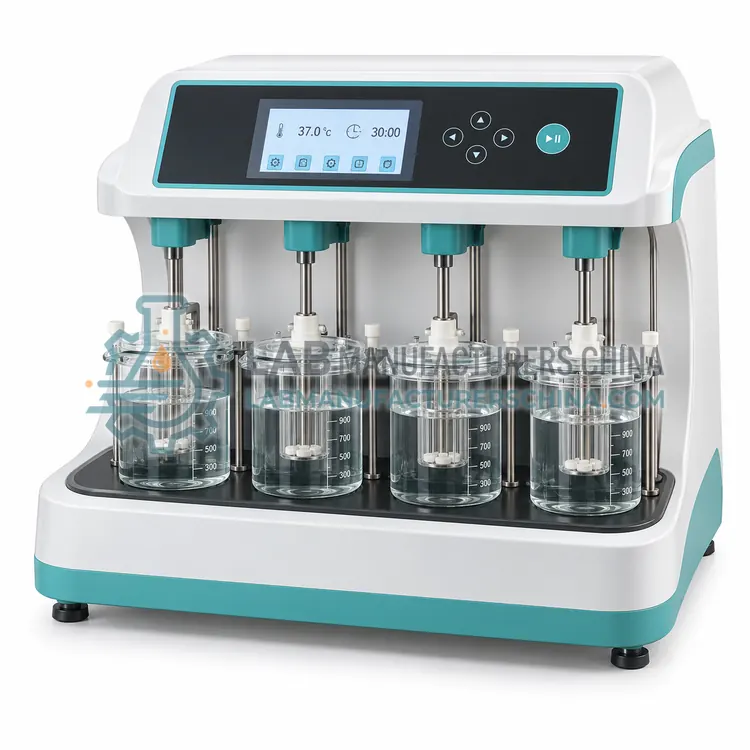
The disintegration tester suspends a basket rack assembly in a beaker of medium held at 37 °C and moves it up and down through a fixed stroke. Tablets are placed in the tubes of the basket, and the time until no residue remains, or only a soft mass without a firm core, is recorded. Basket mesh size, tube dimensions, stroke length and rate, and the type and volume of medium all affect the result and are defined by the pharmacopoeial method. Instruments usually provide one to three basket positions so several products can be tested in parallel, with programmable time and temperature control and audible or visual indication at the endpoint. Discs are used when tablets tend to float, and the choice of medium differs for plain, coated and enteric products.
How does it work?
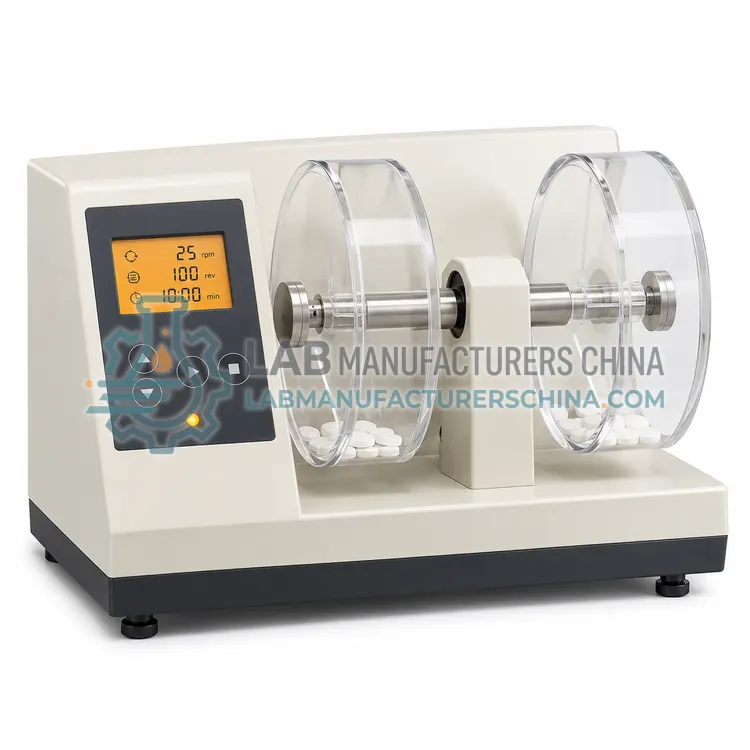
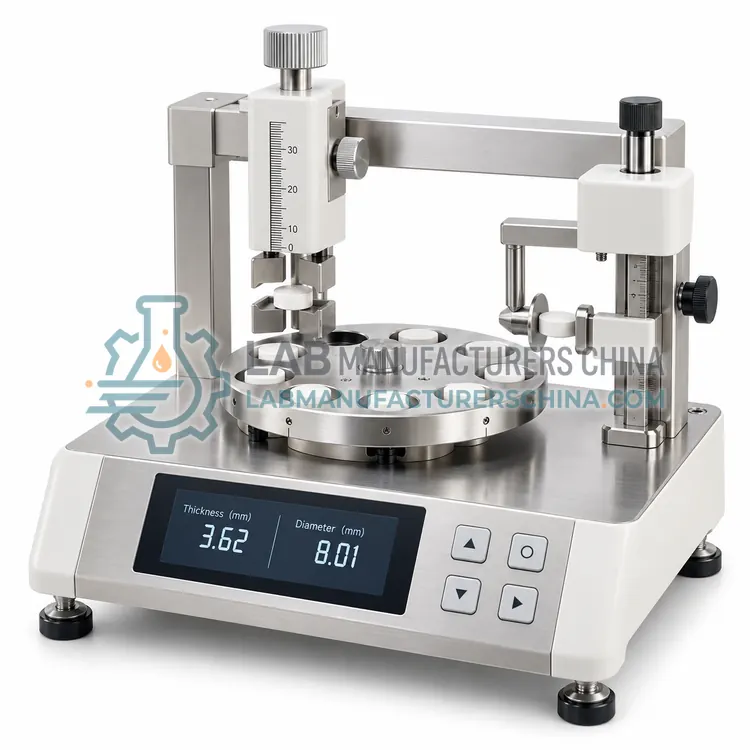
Tablet analysis applies mechanical and physical tests to individual dosage units. A hardness tester presses a tablet between two platens and records the force at which it breaks, expressed in newtons or kiloponds. A friability tester rotates tablets in a drum so they tumble and abrade, and the mass loss after a set number of revolutions indicates mechanical durability, normally less than one percent. A disintegration tester moves tablets up and down in a basket immersed in medium at 37 °C and records when no residue remains. A gauge measures thickness and diameter, and automated systems combine several tests so a batch is characterised unit by unit, which also supports statistical process control. Temperature, humidity, test speed and instrument calibration influence results.
What are the key features?
- Basket rack assembly with vertical reciprocation
- Medium held at 37 ±2 °C
- Fixed stroke length and defined rate
- Programmable time and temperature
- One to three basket positions
- Floating discs for buoyant tablets
What are the technical specifications?
A typical tablet disintegration tester configuration offers basket positions of 1–3, temperature range of ambient to 50 °C, temperature stability of 37 ±0.5 °C, stroke length of 55 ±2 mm, stroke rate of 30 ±1 cycles per minute and basket mesh of No. 10 mesh typical. Values are indicative of the product class; the exact figures for each configuration are confirmed on the quotation and the calibration documents supplied with the instrument.
Which applications is it used for?
The Tablet Disintegration Tester is used in tablet disintegration testing, capsule disintegration testing, enteric-coated product testing and formulation development. Across the wider Tablet Analysis class, laboratories also deploy it for tablet hardness release testing, friability testing of tablets and disintegration testing of tablets and capsules.
Which standards and certifications apply?
Relevant standards and methods include USP <1216>, USP <1217>, USP <701>, Ph. Eur. 2.9.1, ICH Q2(R2) and IEC 61010-1. Certification candidates for this model are CE, IEC 61010-1 compliance and ISO 13485 manufacturing; each is to be confirmed for the specific configuration before shipment, and certificates are supplied only where they have been issued.
Keep the instruments in a room with controlled temperature and humidity, because tablets absorb or lose moisture and that changes hardness and friability. Condition samples before testing and record the conditioning time. Calibrate hardness load cells and verify disintegration temperatures at defined intervals, and check friability drums for wear. Clean residues from platens, baskets and drums, and inspect for corrosion from prolonged contact with water. Test adequate numbers of units, since tablet properties vary within a batch, and keep records of results, conditions and equipment status. For automated systems, back up data and review audit trails regularly.
How do I select the right Tablet Disintegration Tester?
Specify a disintegration tester with enough basket positions for your workload and reliable temperature and stroke control. Confirm basket mesh, tube dimensions, stroke length and rate match the pharmacopoeial method. Check the endpoint detection method and the availability of discs for floating tablets.
How does it compare with other Tablet Analysis variants?
Choose instruments according to the tests in the pharmacopoeial monograph and the dosage form. Hardness, friability and disintegration testers are the core trio for conventional tablets, while thickness and diameter measurement supports weight and appearance control. Automated multi-parameter systems suit high-volume release testing and process optimisation, because they test many units and export statistics without manual records. Compare measurement ranges, accuracy and resolution, throughput, number of test positions or stations, and software for data handling and audit trails. For disintegration, check basket mesh size, stroke and temperature control; for friability, check drum dimensions, rotation speed and counting. Confirm calibration standards and qualification documents.
Full specifications
| Basket positions | 1–3 |
|---|---|
| Temperature range | ambient to 50 °C |
| Temperature stability | 37 ±0.5 °C |
| Stroke length | 55 ±2 mm |
| Stroke rate | 30 ±1 cycles per minute |
| Basket mesh | No. 10 mesh typical |
| Beaker volume | about 1000 mL |
| Power supply | 220 V, 50 Hz, about 0.5 kW |
Indicative values for this product class. Final specifications are confirmed on the quotation and in the calibration documents supplied with the instrument.
Applications
- Tablet disintegration testing
- Capsule disintegration testing
- Enteric-coated product testing
- Formulation development
Key features
- Basket rack assembly with vertical reciprocation
- Medium held at 37 ±2 °C
- Fixed stroke length and defined rate
- Programmable time and temperature
- One to three basket positions
- Floating discs for buoyant tablets
Frequently asked questions about Tablet Disintegration Tester
The endpoint is when no residue of the tablet or capsule remains in the basket, or only a soft mass with no firm, palpable core is left. The time is measured in minutes and compared with the limit in the monograph.
Discs are added to the tubes when tablets or capsules float, because floating prevents proper contact with the medium. The disc holds the sample below the surface. Their use and the number of discs should follow the monograph.
Enteric coatings are designed to resist gastric acid and dissolve in the intestine, so testing begins in acid medium and then continues in buffer at about pH 6.8. The monograph states the media, volumes and times for each stage.
Common physical tests are hardness or crushing strength, friability, disintegration time, thickness and diameter, and weight uniformity. Together with content uniformity and dissolution, they show that a batch will handle, package and release as intended.
For most compressed tablets the accepted limit is a mass loss of not more than one percent after 100 revolutions at 25 rpm, with no tablet cracked, broken or fragmented. The pharmacopoeial chapter defines the exact conditions and acceptance criteria.
Disintegration medium is held at 37 ±2 °C because higher temperatures speed disintegration and lower temperatures slow it, and results are compared against monograph limits measured under defined conditions. Temperature control and verification are therefore part of method validation.