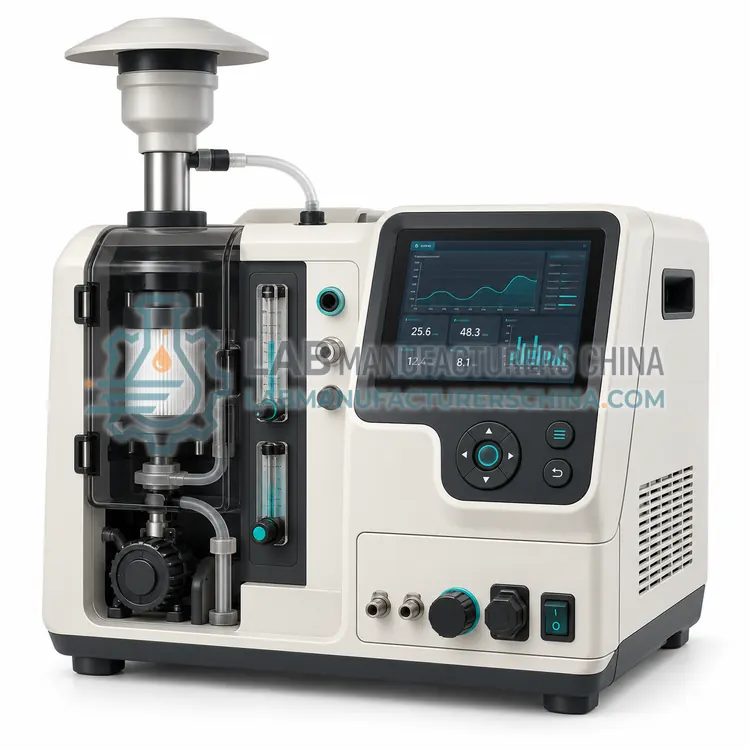
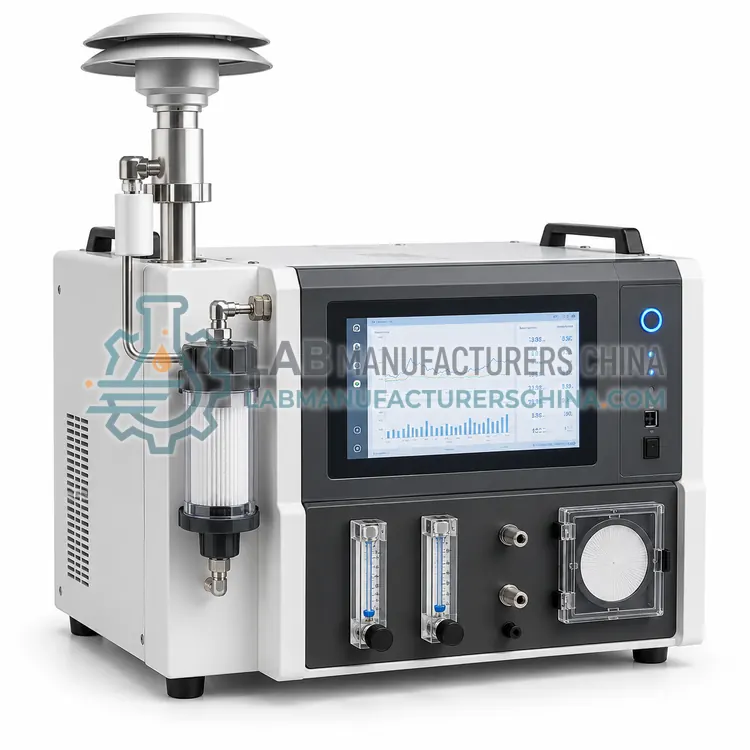
Soil Nitrogen Analyzer
土壤氮分析仪
- SKU SNA-0003
- Soil Nutrient Analyzers
- CE (to be confirmed)
- RoHS (to be confirmed)
- ISO 9001 manufacturing (to be confirmed)
Price on request — FOB / CIF quoted per order
Prices depend on configuration, quantity and destination port.
Key specifications
| Measurement principle | Kjeldahl or combustion |
|---|---|
| Nitrogen range | 0.01–10% N |
| Sample mass | 0.1–5 g |
| Digestion temperature | 350–420 °C |
| Digestion time | 45–120 min, programmable |
| Titration | Automatic, potentiometric |
Request a quote Download brochure · to be provided
By Lab Manufacturers China Technical TeamLast reviewed Standards: ISO 11261 (total nitrogen), ISO 11263 (phosphorus), ISO 11260 (CEC)
What is the Soil Nitrogen Analyzer?
A laboratory system that determines total nitrogen in soil by Kjeldahl digestion or combustion. It is the right choice for soil fertility research and nutrient budgeting that need reference total nitrogen values.
What is the Soil Nitrogen Analyzer?
A laboratory system that determines total nitrogen in soil by Kjeldahl digestion or combustion. It is the right choice for soil fertility research and nutrient budgeting that need reference total nitrogen values.
Overview
The soil nitrogen analyzer automates the Kjeldahl procedure, digesting soil with sulfuric acid, a salt and a catalyst at 350 to 420 °C, distilling the ammonia into boric acid and titrating it, or it uses combustion, in which the sample is burned in oxygen and the nitrogen oxides are reduced and measured by thermal conductivity. The Kjeldahl method does not recover nitrate and nitrite unless a pretreatment is used, so it reports organic and ammonium nitrogen, whereas combustion gives total nitrogen including nitrate. Sample mass, catalyst, digestion time and the presence of carbonates all affect the result, and calcareous soils may need additional acid. Reference soils and reagent blanks verify each batch. The analyzer suits research, nutrient budgeting and long-term fertility trials where total rather than available nitrogen is the measure of interest.
How does it work?
Soil nutrient analysis usually begins with extraction, because plant-available nutrients are a small fraction of the total. Available phosphorus is extracted in a bicarbonate or acid solution and measured by the molybdenum blue colorimetric method. Available nitrogen as ammonium and nitrate is extracted in salt solution and measured by indophenol blue or ultraviolet absorption, while total nitrogen uses Kjeldahl digestion or combustion. Potassium is extracted and measured by flame emission or atomic absorption. Automated analyzers perform these steps in continuous flow, mixing sample with reagents in tubing and reading the coloured product in a flow cell, which gives high throughput with low reagent use. Near-infrared instruments predict organic matter and nutrient content from reflectance spectra. Compact field analyzers combine extraction with a simple colorimeter or ion-selective electrode for immediate results.
What are the key features?
- Automated Kjeldahl digestion, distillation and titration.
- Combustion option gives faster total nitrogen including nitrate.
- Reagent blanks and reference soils verify each batch.
- Programmable temperature and time profiles meet standard methods.
- Reports nitrogen in percent or grams per kilogram.
- Suitable for calcareous soils with acid adjustment.
What are the technical specifications?
A typical soil nitrogen analyzer configuration offers measurement principle of Kjeldahl or combustion, nitrogen range of 0.01–10% N, sample mass of 0.1–5 g, digestion temperature of 350–420 °C, digestion time of 45–120 min, programmable and titration of Automatic, potentiometric. Values are indicative of the product class; the exact figures for each configuration are confirmed on the quotation and the calibration documents supplied with the instrument.
Which applications is it used for?
The Soil Nitrogen Analyzer is used in soil fertility research, nutrient budgeting and carbon-nitrogen studies, long-term fertility trials and environmental soil monitoring. Across the wider Soil Nutrient Analyzers class, laboratories also deploy it for fertilizer recommendation testing, soil fertility monitoring and precision agriculture management.
Which standards and certifications apply?
Relevant standards and methods include ISO 11261 (total nitrogen), ISO 11263 (phosphorus), ISO 11260 (CEC), ISO 10694 (organic carbon), HJ 634 (ammonium, nitrite and nitrate) and ISO 10390 (pH). Certification candidates for this model are CE, RoHS and ISO 9001 manufacturing; each is to be confirmed for the specific configuration before shipment, and certificates are supplied only where they have been issued.
Use representative, air-dried and sieved samples and record the preparation, because soil test values depend on sampling depth, drying and particle size. Follow the extraction conditions exactly: extractant concentration, soil to solution ratio, shaking time and temperature all change the result. Run blanks and certified reference soil with each batch, and check calibration curves daily for colorimetric methods. For continuous flow systems, maintain tubing, lamps and flow rates, and check for carry-over between samples. Keep reagents fresh and store them as the method requires, and neutralise or dispose of acid and heavy-metal waste properly. Calibrate balances and check the spectrometer wavelength accuracy. Document method, units and reporting basis so results can be compared over time and between laboratories.
How do I select the right Soil Nitrogen Analyzer?
Select the nitrogen analyzer when total nitrogen is required for research, budgeting or fertility trials, and choose combustion for speed or Kjeldahl where the method is prescribed. For available nitrogen, use an extraction-based analyzer. In an RFQ, specify the method, sample types, capacity and nitrate recovery needs.
How does it compare with other Soil Nutrient Analyzers variants?
Decide first whether the requirement is available nutrients for fertilizer recommendations, total content for nutrient budgeting, or rapid field estimates. For official recommendations, use the extraction and measurement methods prescribed by the local soil testing service, because calibrations between soil test values and crop response are tied to a specific method. Continuous flow and discrete analyzers give high throughput and good precision for routine laboratory work, while a manual spectrophotometer suits low volumes. Kjeldahl or combustion nitrogen analyzers are chosen when total nitrogen is required. Near-infrared is attractive for large sample numbers once calibrated locally, but it needs reference data. Compact field analyzers are useful for immediate guidance but have wider uncertainty. Consider digestion and extraction safety, reagent and waste handling, the sample preparation needed, and compatibility with laboratory information systems.
Full specifications
| Measurement principle | Kjeldahl or combustion |
|---|---|
| Nitrogen range | 0.01–10% N |
| Sample mass | 0.1–5 g |
| Digestion temperature | 350–420 °C |
| Digestion time | 45–120 min, programmable |
| Titration | Automatic, potentiometric |
| Repeatability | RSD ≤ 1.5% |
| Sample capacity | 6–20 positions |
| Outputs | USB, RS-232, LIMS export |
| Power supply | 220 VAC, 50 Hz |
| Operating temperature | 10–35 °C |
Indicative values for this product class. Final specifications are confirmed on the quotation and in the calibration documents supplied with the instrument.
Applications
- Soil fertility research
- Nutrient budgeting and carbon-nitrogen studies
- Long-term fertility trials
- Environmental soil monitoring
Key features
- Automated Kjeldahl digestion, distillation and titration.
- Combustion option gives faster total nitrogen including nitrate.
- Reagent blanks and reference soils verify each batch.
- Programmable temperature and time profiles meet standard methods.
- Reports nitrogen in percent or grams per kilogram.
- Suitable for calcareous soils with acid adjustment.
Frequently asked questions about Soil Nitrogen Analyzer
Not directly. Nitrate and nitrite are not recovered in the standard digestion, so Kjeldahl reports organic and ammonium nitrogen. Combustion, or a pretreatment such as salicylic acid, is needed when total nitrogen including nitrate is required.
Carbonates in calcareous soils consume acid and cause frothing, so additional sulfuric acid or a slower digestion start is used. The acid volume is adjusted to the carbonate content to ensure complete digestion without loss.
Reference soils with certified nitrogen content confirm that digestion, distillation and titration are working correctly and reveal drift. They also let laboratories demonstrate traceability, which is important for research and contractual work.
Available nutrients are the fraction a plant can take up in the short term and are measured after extraction, so they guide fertilizer rates. Total nutrients include mineral and organic forms and are used for nutrient budgets, not for immediate recommendation.
Different extractants and ratios dissolve different amounts of nutrient, so values are only comparable within one method. The calibration between soil test value and crop response is also method specific, so changing methods invalidates the interpretation.
Samples are air-dried at a moderate temperature, ground and passed through a two-millimetre sieve, with stones and roots removed. Drying and grinding affect extractability, so the same preparation is used for all samples in a comparison.
Related models