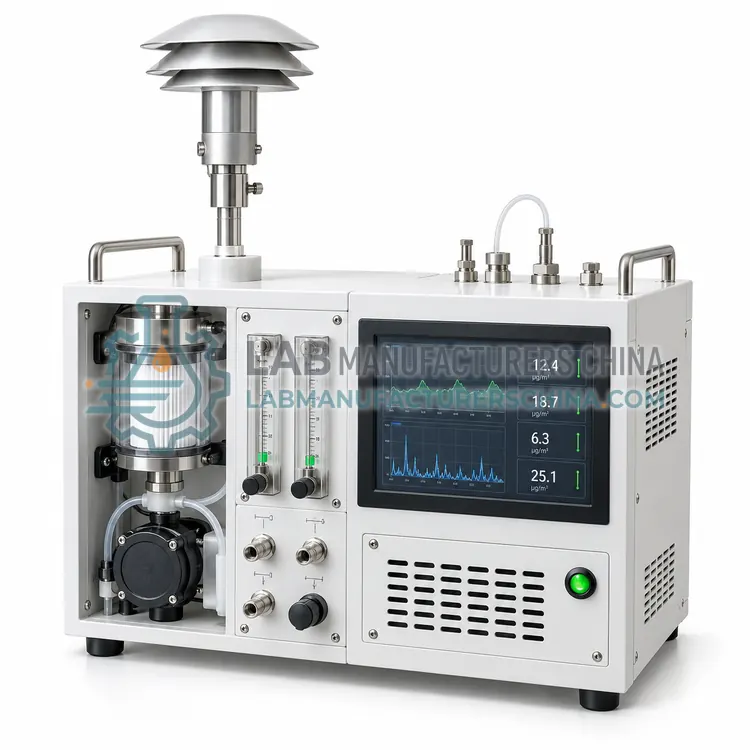
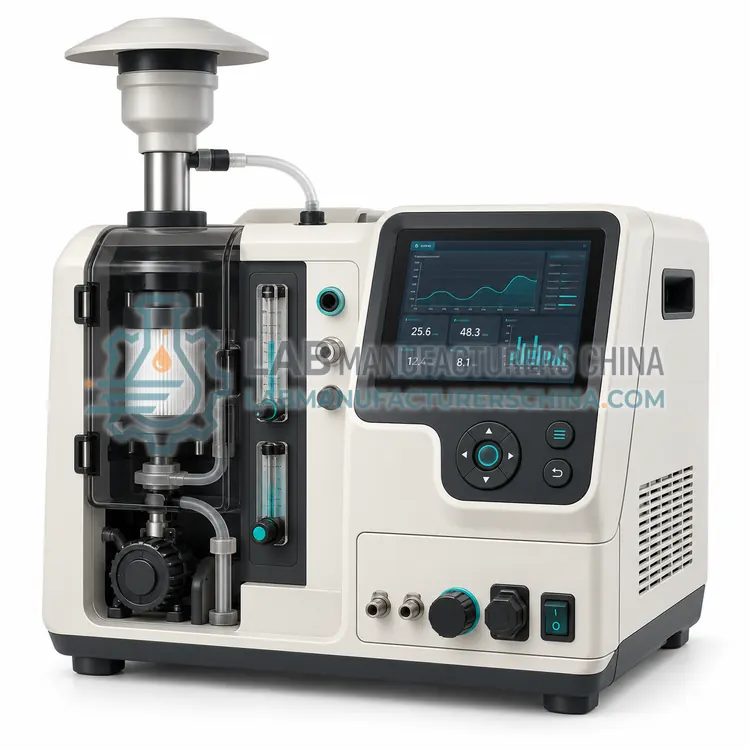
Soil NPK Nutrient Analyzer
土壤 NPK 养分分析仪
- SKU SNA-0001
- Soil Nutrient Analyzers
- CE (to be confirmed)
- RoHS (to be confirmed)
- ISO 9001 manufacturing (to be confirmed)
Price on request — FOB / CIF quoted per order
Prices depend on configuration, quantity and destination port.
Key specifications
| Nitrogen method | Indophenol blue or UV absorption |
|---|---|
| Phosphorus method | Molybdenum blue colorimetry |
| Potassium method | Flame emission or ion-selective electrode |
| Wavelength range | 400–900 nm |
| Nitrogen range | 0–50 mg/kg (available) |
| Phosphorus range | 0–50 mg/kg (available) |
Request a quote Download brochure · to be provided
By Lab Manufacturers China Technical TeamLast reviewed Standards: ISO 11261 (total nitrogen), ISO 11263 (phosphorus), ISO 11260 (CEC)
What is the Soil NPK Nutrient Analyzer?
A laboratory instrument that measures available nitrogen, phosphorus and potassium in prepared soil extracts. It is the right choice for busy soil testing laboratories that issue routine fertilizer recommendations to growers across many fields.
What is the Soil NPK Nutrient Analyzer?
A laboratory instrument that measures available nitrogen, phosphorus and potassium in prepared soil extracts. It is the right choice for busy soil testing laboratories that issue routine fertilizer recommendations to growers across many fields.
Overview
The soil NPK analyzer measures nitrogen, phosphorus and potassium in soil extracts using colorimetric and flame or electrode detection. Available phosphorus is determined as the molybdenum blue complex, available nitrogen as ammonium by indophenol blue or by ultraviolet absorption of nitrate, and potassium by flame emission or ion-selective electrode. Some instruments combine all channels in one bench-top unit with automatic reagent dosing, incubation and reading, so that a batch of extracts is processed with minimal operator intervention. Calibration curves, controls and blanks are stored, and results are reported in the units the local service uses, such as milligrams per kilogram. Because the chemistry and extraction are method specific, the instrument must be used with a defined soil testing protocol and reference soils to keep recommendations valid and comparable over seasons.
How does it work?
Soil nutrient analysis usually begins with extraction, because plant-available nutrients are a small fraction of the total. Available phosphorus is extracted in a bicarbonate or acid solution and measured by the molybdenum blue colorimetric method. Available nitrogen as ammonium and nitrate is extracted in salt solution and measured by indophenol blue or ultraviolet absorption, while total nitrogen uses Kjeldahl digestion or combustion. Potassium is extracted and measured by flame emission or atomic absorption. Automated analyzers perform these steps in continuous flow, mixing sample with reagents in tubing and reading the coloured product in a flow cell, which gives high throughput with low reagent use. Near-infrared instruments predict organic matter and nutrient content from reflectance spectra. Compact field analyzers combine extraction with a simple colorimeter or ion-selective electrode for immediate results.
What are the key features?
- Measures available NPK in one bench-top instrument.
- Automatic reagent dosing and incubation reduce operator error.
- Colorimetric and flame or electrode channels in one unit.
- Stored calibration curves and controls aid traceability.
- Reports results in local soil testing units.
- Compatible with defined soil testing protocols.
What are the technical specifications?
A typical soil npk nutrient analyzer configuration offers nitrogen method of Indophenol blue or UV absorption, phosphorus method of Molybdenum blue colorimetry, potassium method of Flame emission or ion-selective electrode, wavelength range of 400–900 nm, nitrogen range of 0–50 mg/kg (available) and phosphorus range of 0–50 mg/kg (available). Values are indicative of the product class; the exact figures for each configuration are confirmed on the quotation and the calibration documents supplied with the instrument.
Which applications is it used for?
The Soil NPK Nutrient Analyzer is used in routine fertilizer recommendation testing, soil fertility surveys, agricultural extension laboratories and precision agriculture soil grids. Across the wider Soil Nutrient Analyzers class, laboratories also deploy it for fertilizer recommendation testing, soil fertility monitoring and precision agriculture management.
Which standards and certifications apply?
Relevant standards and methods include ISO 11261 (total nitrogen), ISO 11263 (phosphorus), ISO 11260 (CEC), ISO 10694 (organic carbon), HJ 634 (ammonium, nitrite and nitrate) and ISO 10390 (pH). Certification candidates for this model are CE, RoHS and ISO 9001 manufacturing; each is to be confirmed for the specific configuration before shipment, and certificates are supplied only where they have been issued.
Use representative, air-dried and sieved samples and record the preparation, because soil test values depend on sampling depth, drying and particle size. Follow the extraction conditions exactly: extractant concentration, soil to solution ratio, shaking time and temperature all change the result. Run blanks and certified reference soil with each batch, and check calibration curves daily for colorimetric methods. For continuous flow systems, maintain tubing, lamps and flow rates, and check for carry-over between samples. Keep reagents fresh and store them as the method requires, and neutralise or dispose of acid and heavy-metal waste properly. Calibrate balances and check the spectrometer wavelength accuracy. Document method, units and reporting basis so results can be compared over time and between laboratories.
How do I select the right Soil NPK Nutrient Analyzer?
Select the NPK analyzer for high-throughput routine soil testing using a defined extraction protocol. When total nutrient content is also needed, add a Kjeldahl or combustion analyzer. In an RFQ, specify the extractants used locally, required ranges and whether potassium is measured by flame or electrode.
How does it compare with other Soil Nutrient Analyzers variants?
Decide first whether the requirement is available nutrients for fertilizer recommendations, total content for nutrient budgeting, or rapid field estimates. For official recommendations, use the extraction and measurement methods prescribed by the local soil testing service, because calibrations between soil test values and crop response are tied to a specific method. Continuous flow and discrete analyzers give high throughput and good precision for routine laboratory work, while a manual spectrophotometer suits low volumes. Kjeldahl or combustion nitrogen analyzers are chosen when total nitrogen is required. Near-infrared is attractive for large sample numbers once calibrated locally, but it needs reference data. Compact field analyzers are useful for immediate guidance but have wider uncertainty. Consider digestion and extraction safety, reagent and waste handling, the sample preparation needed, and compatibility with laboratory information systems.
Full specifications
| Nitrogen method | Indophenol blue or UV absorption |
|---|---|
| Phosphorus method | Molybdenum blue colorimetry |
| Potassium method | Flame emission or ion-selective electrode |
| Wavelength range | 400–900 nm |
| Nitrogen range | 0–50 mg/kg (available) |
| Phosphorus range | 0–50 mg/kg (available) |
| Potassium range | 0–500 mg/kg (available) |
| Sample throughput | 30–100 samples/h |
| Detection | Photometric with flame or electrode option |
| Outputs | USB, RS-232, LIMS export |
| Power supply | 220 VAC, 50 Hz |
| Operating temperature | 10–35 °C |
Indicative values for this product class. Final specifications are confirmed on the quotation and in the calibration documents supplied with the instrument.
Applications
- Routine fertilizer recommendation testing
- Soil fertility surveys
- Agricultural extension laboratories
- Precision agriculture soil grids
Key features
- Measures available NPK in one bench-top instrument.
- Automatic reagent dosing and incubation reduce operator error.
- Colorimetric and flame or electrode channels in one unit.
- Stored calibration curves and controls aid traceability.
- Reports results in local soil testing units.
- Compatible with defined soil testing protocols.
Frequently asked questions about Soil NPK Nutrient Analyzer
The choice depends on soil pH and the local soil testing service: Olsen bicarbonate for calcareous and neutral soils, Bray or Mehlich for acid soils, and other reagents where specified. Mixing methods changes the value and invalidates the recommendation model.
Potassium is extracted in ammonium acetate or another specified solution and measured by flame emission, atomic absorption or an ion-selective electrode. Flame emission is fast and inexpensive, while the electrode suits compact instruments.
Reference soils with known extractable nutrient values confirm that reagents, temperature and timing are correct and that the calibration remains valid. They also detect drift and give confidence when comparing results between runs and laboratories.
Available nutrients are the fraction a plant can take up in the short term and are measured after extraction, so they guide fertilizer rates. Total nutrients include mineral and organic forms and are used for nutrient budgets, not for immediate recommendation.
Different extractants and ratios dissolve different amounts of nutrient, so values are only comparable within one method. The calibration between soil test value and crop response is also method specific, so changing methods invalidates the interpretation.
Samples are air-dried at a moderate temperature, ground and passed through a two-millimetre sieve, with stones and roots removed. Drying and grinding affect extractability, so the same preparation is used for all samples in a comparison.
Related models