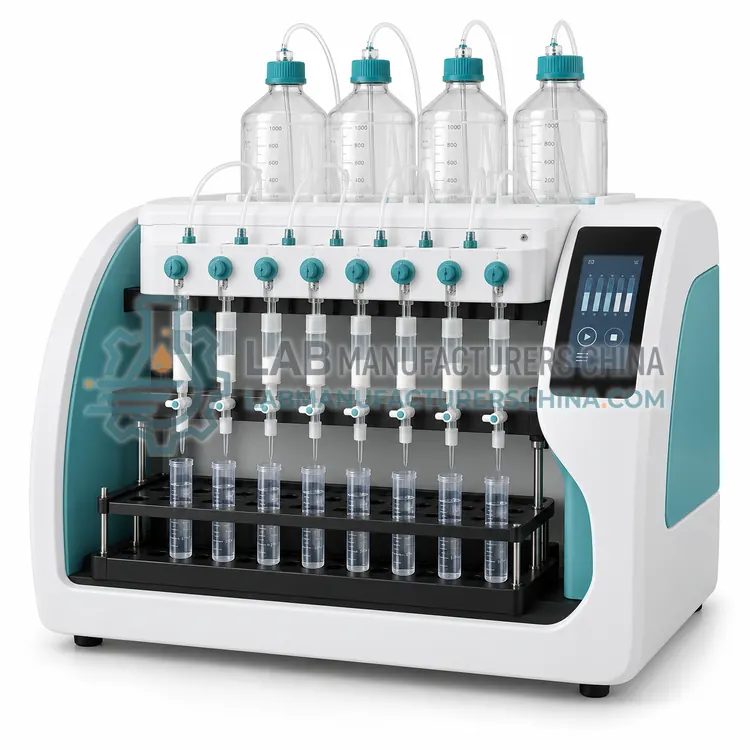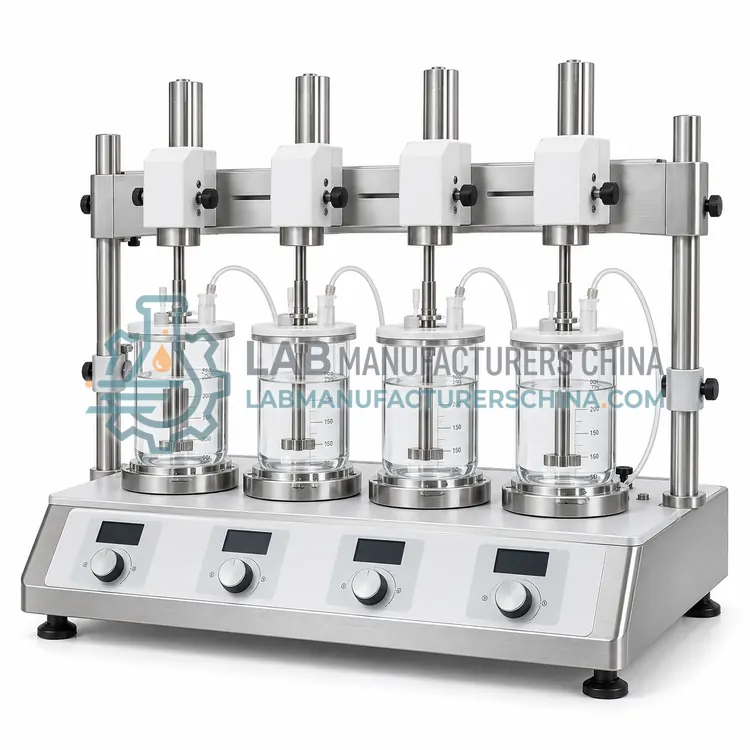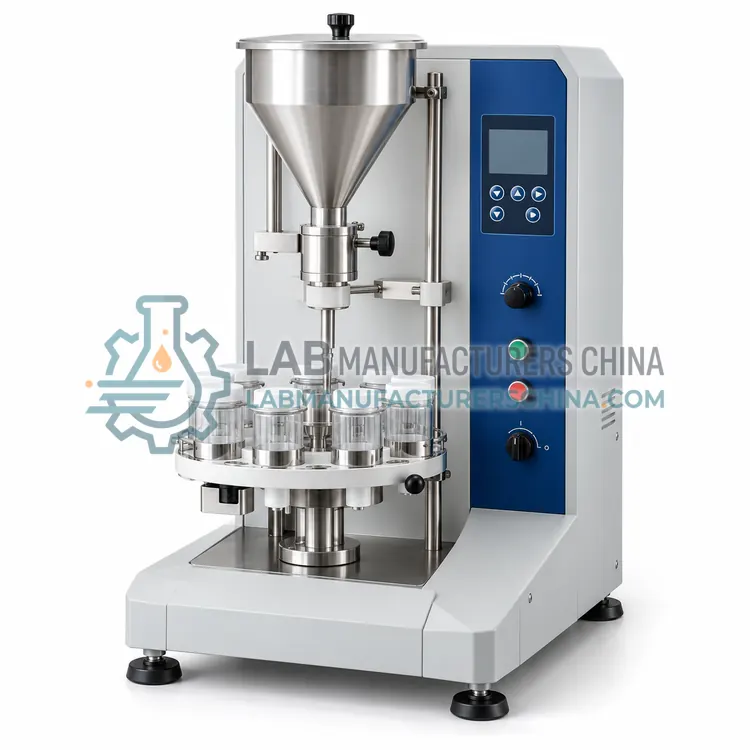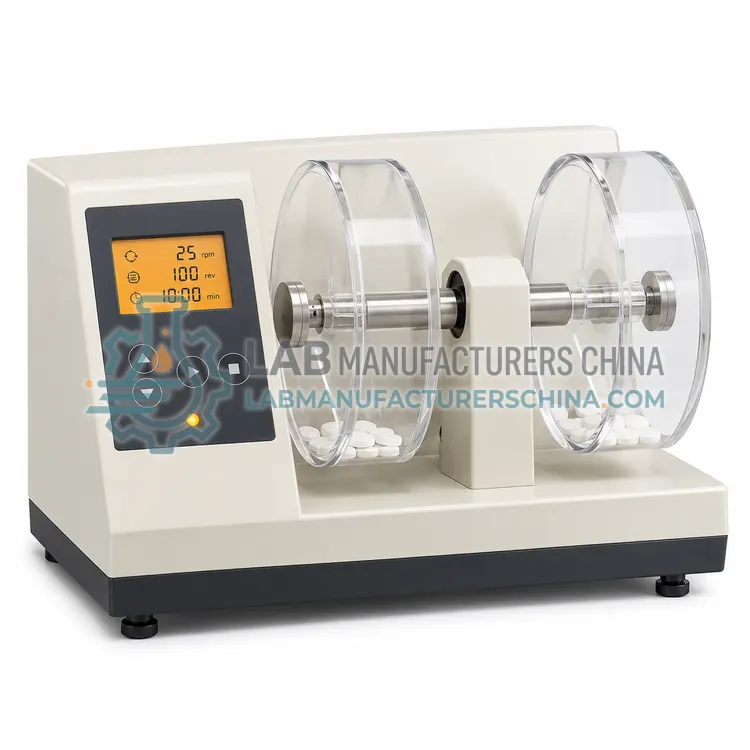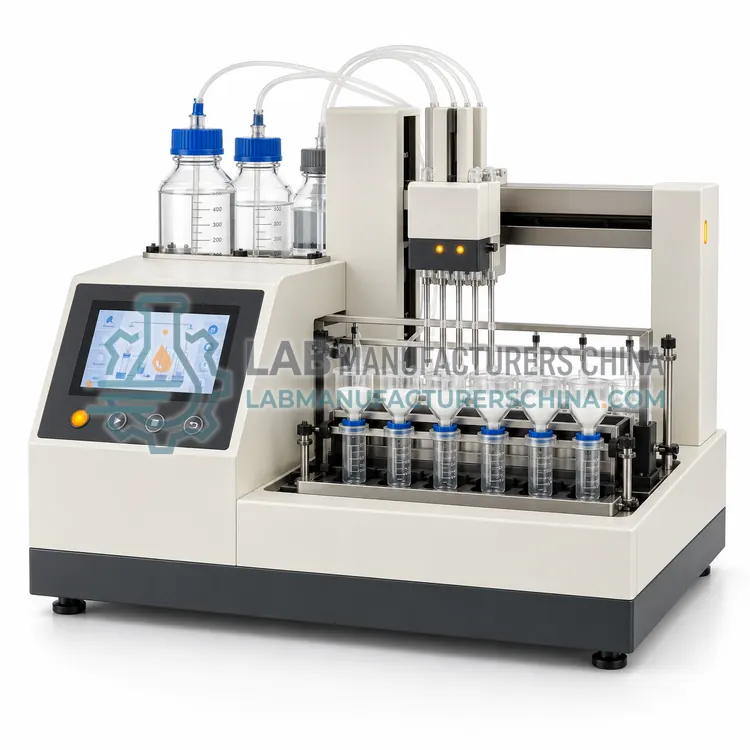
Automated Dilution and Filtration System for Pharmaceutical Analysis
药品分析自动稀释过滤系统
- CE (to be confirmed)
- +2
Welcome to Lab Manufacturers China — laboratory instruments direct from a Chinese manufacturer
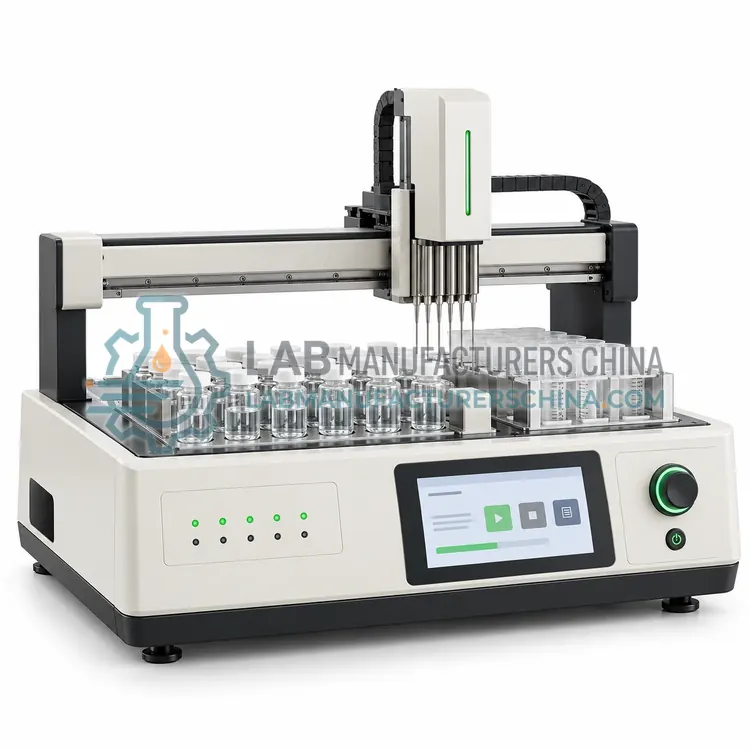
含量均匀度自动样品前处理系统
Price on request — FOB / CIF quoted per order
Prices depend on configuration, quantity and destination port.
| Units per batch | 10–30 |
|---|---|
| Balance resolution | 0.1 mg |
| Dilution ratio | up to 1:10000 |
| Extraction time | programmable, 1–60 min |
| Filtration | Membrane 0.45 µm or finer |
| Carryover control | Disposable labware or wash cycles |
By Lab Manufacturers China Technical TeamLast reviewed Standards: USP <905>, USP <711>, USP <1092>
An automated sample preparation system for content uniformity testing weighs, comminutes, extracts and dilutes individual dosage units in one sequence. It is chosen when many units must be prepared identically for each batch.
An automated sample preparation system for content uniformity testing weighs, comminutes, extracts and dilutes individual dosage units in one sequence. It is chosen when many units must be prepared identically for each batch.
Content uniformity requires that individual units, not a composite, be extracted and measured, so the workload is high and reproducibility is critical. An automated system takes each unit, weighs it on an internal balance, comminutes or disperses it, transfers the material quantitatively and performs a programmed extraction with defined solvent volume, agitation and time before dilution and filtration. Recipes are stored as methods, so the same sequence applies to every unit, and results are logged against sample identity. Units with very low or high drug content are then studied further. The main benefits are reduced operator variation, higher throughput and better data integrity; the main requirements are validated extraction completeness and cleaning between samples to avoid carryover.
Sample preparation applies mechanical and chemical steps to make a sample representative and measurable. Tablets are weighed, comminuted by crushing, milling or grinding, and then dissolved or extracted in a volumetric flask or a closed vessel with a defined solvent and time. Powders are sampled with a thief or a spinning riffler so the aliquot reflects the whole blend. Dilution is performed by hand with volumetric glassware or automatically with syringes and valves, and solutions are filtered through membranes to protect the analytical column or detector. Solid-phase extraction concentrates or cleans up analytes before chromatography. Accuracy, completeness of extraction and freedom from contamination determine whether the analytical result is valid.
A typical automated sample preparation system for content uniformity testing configuration offers units per batch of 10–30, balance resolution of 0.1 mg, dilution ratio of up to 1:10000, extraction time of programmable, 1–60 min, filtration of Membrane 0.45 µm or finer and carryover control of Disposable labware or wash cycles. Values are indicative of the product class; the exact figures for each configuration are confirmed on the quotation and the calibration documents supplied with the instrument.
The Automated Sample Preparation System for Content Uniformity Testing is used in content uniformity testing, assay of individual units, potency testing of low-dose products and batch release sample preparation. Across the wider Sample Preparation class, laboratories also deploy it for content uniformity sample preparation, assay sample preparation and dissolution sample handling.
Relevant standards and methods include USP <905>, USP <711>, USP <1092>, ICH Q2(R2), IEC 61010-1 and ISO 17025. Certification candidates for this model are CE, IEC 61010-1 compliance and ISO 13485 manufacturing; each is to be confirmed for the specific configuration before shipment, and certificates are supplied only where they have been issued.
Place equipment on a level, vibration-free bench and keep the area clean, because dust from powders can contaminate open vessels. Verify balances and pipettes at defined intervals and use certified reference weights. Confirm that extraction time and technique are reproducible, since incomplete extraction gives low assay results. Check solvent compatibility of seals, tubing and filters, and change membranes and SPE cartridges according to the method. Avoid cross-contamination by using disposable labware or validated wash cycles, and record reagent lots, sample weights and preparation conditions. Follow local rules for solvent handling and waste disposal.
Specify an automated content uniformity system when per-unit preparation is repetitive and operator variation must be minimised. Confirm units per batch, weighing accuracy, extraction reproducibility, achievable dilution and carryover control. Validate extraction completeness for each product before routine use.
Select sample preparation equipment from the analytical method and the dosage form. Content uniformity and assay of tablets need precise weighing, complete comminution and accurate dilution. Dissolution studies need large numbers of filtered aliquots taken at timed intervals. Powders and blends need representative sampling rather than grinding. Solid-phase extraction suits trace analysis and complex matrices. Compare the number of samples per run, dilution ratios achievable, weighing accuracy, solvent compatibility, filtration type and carryover control. Automated platforms that combine weighing, dilution and filtration reduce labour and improve data integrity, and their software should support method storage, audit trails and export to a laboratory information management system.
| Units per batch | 10–30 |
|---|---|
| Balance resolution | 0.1 mg |
| Dilution ratio | up to 1:10000 |
| Extraction time | programmable, 1–60 min |
| Filtration | Membrane 0.45 µm or finer |
| Carryover control | Disposable labware or wash cycles |
| Software | Method storage, audit trail, LIMS export |
| Power supply | 220 V, 50 Hz, about 0.5 kW |
Indicative values for this product class. Final specifications are confirmed on the quotation and in the calibration documents supplied with the instrument.
Content uniformity assesses the distribution of drug between units, so each unit must be extracted and measured separately. Composite samples would average out high and low units and hide unacceptable variation, which matters most for low-dose products.
By spiking known amounts of analyte into placebo and confirming recovery, by repeating extraction on already-extracted material to confirm no further analyte is released, and by comparing results with an independently validated method. Recovery should be established for each product.
Carryover between samples and incomplete extraction. Carryover is controlled with disposable labware or validated wash cycles, and incomplete extraction is detected by low recovery. Both should be checked during method validation and monitored in routine runs.
Because an analytical method can only be as good as the sample presented to it. Incomplete extraction, inaccurate weighing, non-representative sampling or contamination all produce results that are wrong even when the instrument performs perfectly.
Individual units are weighed, comminuted, transferred quantitatively to a volumetric flask and extracted with a defined solvent and time. The solution is filtered and measured, and the result for each unit is compared with the monograph acceptance criteria.
For trace analysis, complex matrices or analytes that need concentration before chromatography. The cartridge retains the analyte while interfering substances pass through, then the analyte is eluted in a small volume of solvent, which increases sensitivity and protects the column.
药品分析自动稀释过滤系统