Laboratory Drill Press for Metal Chip Sampling
金属屑样钻取机
- SKU SAR-0003
- Sample Preparation
- CE (to be confirmed)
- ISO 9001 manufacturing (to be confirmed)
Price on request — FOB / CIF quoted per order
Prices depend on configuration, quantity and destination port.
Key specifications
| Spindle speed | 100–2000 rpm, variable |
|---|---|
| Drill diameter | 3–12 mm |
| Drill material | Tungsten carbide or cobalt HSS |
| Chip size | 1–4 mm typical |
| Feed control | Manual lever or motorized |
| Sample clamping | Vice or fixture plate |
Request a quote Download brochure · to be provided
By Lab Manufacturers China Technical TeamLast reviewed Standards: ISO 14284, ASTM E1806, ASTM E3
What is the Laboratory Drill Press for Metal Chip Sampling?
A laboratory drill press produces chips from metal samples for combustion determination of carbon, sulfur, oxygen, nitrogen and hydrogen, using controlled speed and feed so the chips are not overheated. Chips must be uniform and clean.
What is the Laboratory Drill Press for Metal Chip Sampling?
A laboratory drill press produces chips from metal samples for combustion determination of carbon, sulfur, oxygen, nitrogen and hydrogen, using controlled speed and feed so the chips are not overheated. Chips must be uniform and clean.
Overview
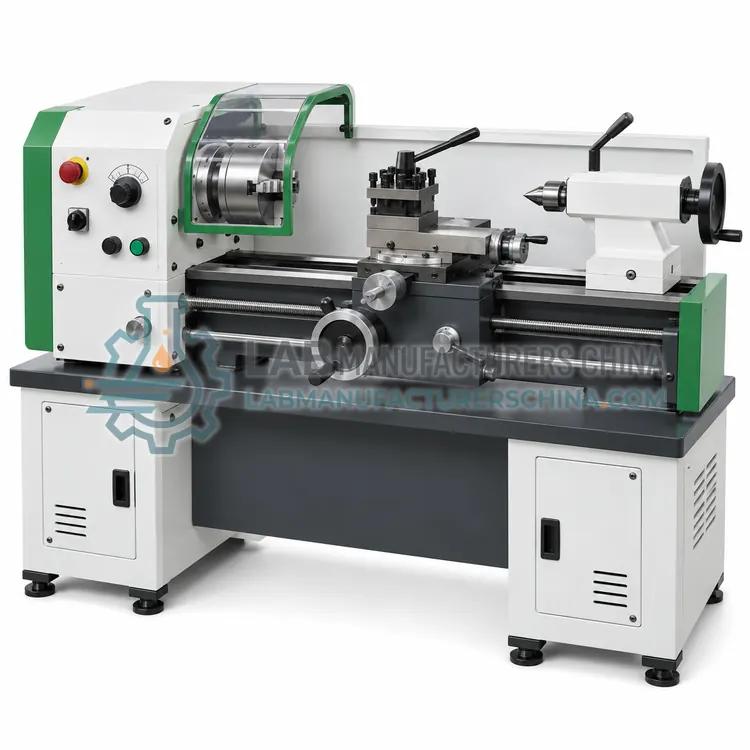
A sharp twist drill of carbide or cobalt steel cuts into the sample at a speed and feed chosen for the material, and the chips are collected in a clean tray. Cutting must be fast enough to produce discrete chips but not so aggressive that the metal discolours through oxidation, because oxidized chips give low carbon and high oxygen results. Drills are cleaned and, where possible, a small amount of the same material is sacrificed to condition the tool. Some units are fitted with a drill guide or a rotating table so that several samples can be prepared in sequence, and many laboratories use a lathe instead for turning chips with a defined geometry. Chips are then sieved if the method specifies a size range, cleaned with solvent, dried and weighed accurately for the analysis.
How does it work?
Metal analysis requires a surface or chip that is uniform, free of contamination and undamaged by heat, because spark optical emission, X-ray fluorescence and combustion methods all sample a small volume of material. A cut-off saw with coolant sections a bar or a casting without heating it above the tempering range. A milling machine or lathe removes the surface layer, which may be decarburized, scaled, coated or altered by earlier machining, to expose sound metal with a defined roughness. A drill press or lathe generates chips for combustion analysis of carbon, sulfur, oxygen, nitrogen and hydrogen, with cutting parameters chosen to avoid smearing or burning the chips. Ferroalloys and some raw materials are too hard or too coarse for these methods and are crushed or ground first. In every case the tool material and the cleaning routine matter, because residues of iron, aluminium, copper or previous samples bias the result.
What are the key features?
- Variable spindle speed for different materials
- Carbide or cobalt steel twist drills
- Clean collection tray for chips
- Sample clamping vice or drill guide
- Chip size and oxidation control by feed setting
- Optional rotating table for multiple samples
What are the technical specifications?
A typical laboratory drill press for metal chip sampling configuration offers spindle speed of 100–2000 rpm, variable, drill diameter of 3–12 mm, drill material of Tungsten carbide or cobalt HSS, chip size of 1–4 mm typical, feed control of Manual lever or motorized and sample clamping of Vice or fixture plate. Values are indicative of the product class; the exact figures for each configuration are confirmed on the quotation and the calibration documents supplied with the instrument.
Which applications is it used for?
The Laboratory Drill Press for Metal Chip Sampling is used in chip sampling for carbon and sulfur combustion, chip sampling for oxygen, nitrogen and hydrogen, sampling of bar, billet and cast products and preparation of samples for trace gas analysis. Across the wider Sample Preparation class, laboratories also deploy it for surface preparation before spark optical emission, chip sampling for carbon and sulfur determination and sectioning of castings and weld macros.
Which standards and certifications apply?
Relevant standards and methods include ISO 14284, ASTM E1806, ASTM E3, ASTM E415, ASTM E1019 and IEC 61010-1. Certification candidates for this model are CE and ISO 9001 manufacturing; each is to be confirmed for the specific configuration before shipment, and certificates are supplied only where they have been issued.
Control cutting parameters: use coolant as specified, avoid dwelling with a blunt tool and discard the first part of any cut if it has been scorched. Clean machines and tools between samples with brushes, solvent and, where relevant, a purge block of the same material, and keep the number of tools per sample type fixed so procedure is reproducible. Record the surface condition or chip size, because methods specify acceptable limits and results can be rejected if preparation is not documented. Maintain coolant quality and replace it on schedule, since contaminated coolant leaves deposits that interfere with sparks. When crushing ferroalloys, use tungsten carbide jaws and bowls and be aware that the powder may be pyrophoric in fine form. Guard rotating tools, provide extraction for dust and fume, and store samples so identity cannot be lost.
How do I select the right Laboratory Drill Press for Metal Chip Sampling?
Select the drill press when combustion and gas analysis dominate your work, and specify spindle speed range, drill sizes and clamping for your sample forms. Include a stock of cobalt or carbide drills, since a blunt drill oxidizes chips and biases results.
How does it compare with other Sample Preparation variants?
Choose equipment from the analytical method that follows. Spark optical emission needs a flat, machined surface of specified roughness and freedom from cracks and porosity, so a milling machine or a lathe is essential; portable analysers may accept a ground surface instead. Combustion and inert gas fusion methods need chips of a defined size produced without overheating, so a drill press with controlled feed or a lathe with the right tool geometry is used, and the chips are cleaned with solvent and a magnet where appropriate. Metallographic work needs a cut-off saw that sections with minimal damage and a mounting system for subsequent grinding and polishing. Ferroalloys need crushing and grinding to a fine powder with tungsten carbide tooling to avoid iron and chromium contamination. Plan for sample identification and traceability, because a mix-up between heats is a bigger error source than instrument precision.
Full specifications
| Spindle speed | 100–2000 rpm, variable |
|---|---|
| Drill diameter | 3–12 mm |
| Drill material | Tungsten carbide or cobalt HSS |
| Chip size | 1–4 mm typical |
| Feed control | Manual lever or motorized |
| Sample clamping | Vice or fixture plate |
| Cooling | No coolant, dry cutting preferred |
| Power supply | 380 V, 50/60 Hz, three phase |
Indicative values for this product class. Final specifications are confirmed on the quotation and in the calibration documents supplied with the instrument.
Applications
- Chip sampling for carbon and sulfur combustion
- Chip sampling for oxygen, nitrogen and hydrogen
- Sampling of bar, billet and cast products
- Preparation of samples for trace gas analysis
Key features
- Variable spindle speed for different materials
- Carbide or cobalt steel twist drills
- Clean collection tray for chips
- Sample clamping vice or drill guide
- Chip size and oxidation control by feed setting
- Optional rotating table for multiple samples
Frequently asked questions about Laboratory Drill Press for Metal Chip Sampling
Discolouration indicates oxidation, which adds oxygen and can lose carbon as carbon dioxide. Both biases are significant at the mg/kg levels measured by combustion and inert gas fusion methods.
With a suitable solvent such as acetone or alcohol, followed by drying. Magnetic separation is used for ferrous samples to remove any tool debris, and the cleaning procedure is kept identical between samples and standards.
Usually not, because coolant contaminates the chips and must be removed completely. Dry drilling with sharp tools and moderate feed keeps chips clean and avoids the risk of residual moisture in the combustion crucible.
Cutting generates heat that can temper or anneal the specimen, altering hardness, microstructure and gas content. Coolant removes that heat so the sectioned surface still represents the original material.
A flat surface machined to the roughness stated in the method, free from cracks, porosity, scale, coatings and oxide, with the specimen thick enough to dissipate heat so sparks do not burn through it.
With a drill press or lathe using sharp tools and moderate parameters so the chips are not discoloured or burnt, then cleaned with solvent, dried, and magnetically separated if magnetic contamination is a concern.
Related models