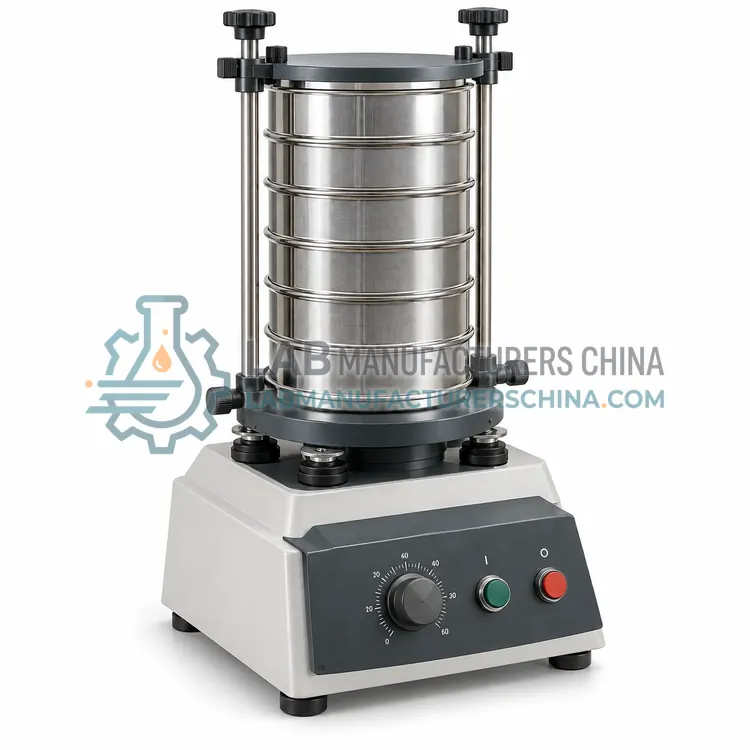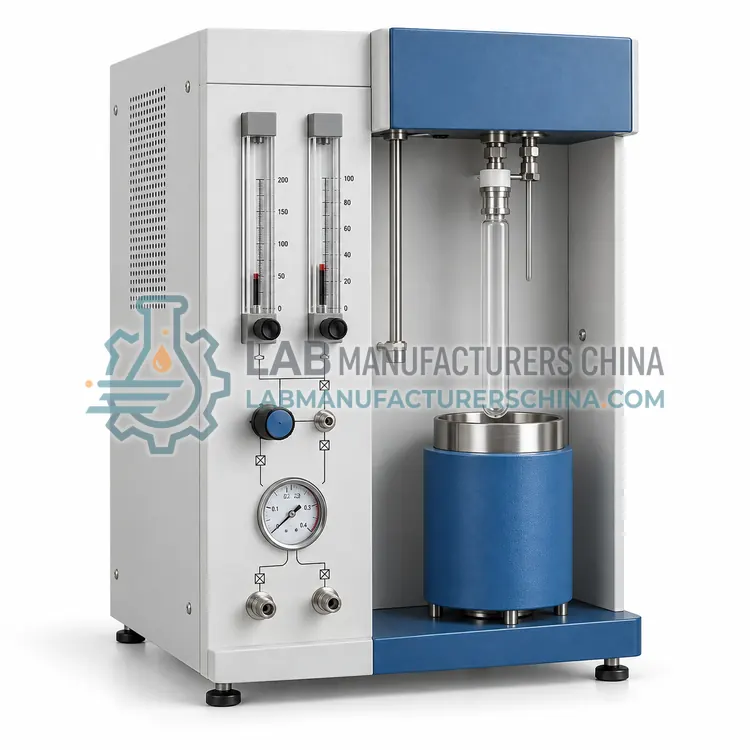
Single-Point Flow BET Surface Area Analyzer for Powder QC
粉体质控单点流动法 BET 比表面积分析仪
- CE (to be confirmed)
- +1
Welcome to Lab Manufacturers China — laboratory instruments direct from a Chinese manufacturer
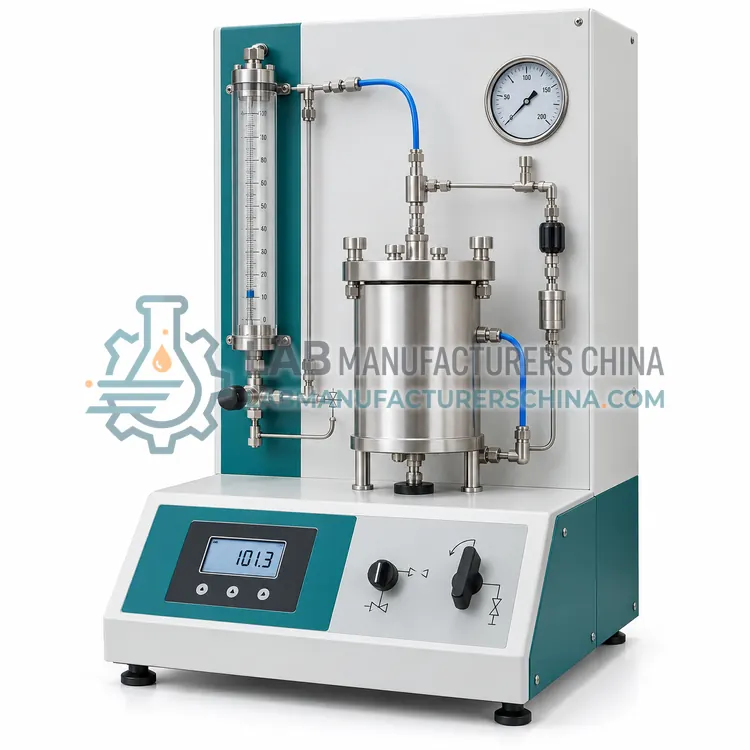
全自动透气法比表面积分析仪
Price on request — FOB / CIF quoted per order
Prices depend on configuration, quantity and destination port.
| Measurement principle | Air permeability, Kozeny–Carman / Fisher-Lea |
|---|---|
| Average particle size range | 0.2–50 µm |
| Specific surface area range | 0.05–20 m²/g |
| Bed compaction | Motorised piston, adjustable height |
| Sample mass | Approx. density in g (tube volume) |
| Pressure sensor | 0–5 kPa, ±0.25% FS |
By Lab Manufacturers China Technical TeamLast reviewed Standards: ISO 9277, ASTM D3663, ASTM C204
An automated air permeability instrument that controls airflow, pressure drop and bed compaction electronically to give specific surface and average particle size of fine powders. It provides less operator-dependent results than manual Blaine tests, for metals, ceramics and minerals in the 0.2 to 75 µm range.
An automated air permeability instrument that controls airflow, pressure drop and bed compaction electronically to give specific surface and average particle size of fine powders. It provides less operator-dependent results than manual Blaine tests, for metals, ceramics and minerals in the 0.2 to 75 µm range.
Automatic analyzers force air through a packed powder plug of controlled porosity and measure the pressure drop and flow rate with sensors rather than timing a manometer level. A motorised piston compacts a weighed sample to a preset height, removing operator variation, and the software calculates specific surface area using the Kozeny–Carman or Fisher-Lea equations. Average particle diameter, known as Fisher number or Fisher sub-sieve size, is reported for spherical, non-porous particles according to ASTM B330. Typical ranges are 0.2 to 50 µm average diameter. Measurement takes one to two minutes, and multiple samples can be stored and compared. Limitations include a dependence on powder shape, agglomeration and the assumption that particles are non-porous, so results are best used for trending and specification control rather than absolute particle size.
Gas adsorption methods expose a degassed powder to nitrogen at 77 K. Adsorbed gas quantity is measured at several relative pressures, and the Brunauer–Emmett–Teller (BET) equation converts the monolayer capacity into surface area using the molecular cross-sectional area of nitrogen, 0.162 nm². Static volumetric systems dose known gas volumes and calculate uptake from pressure changes. Dynamic flow systems pass a nitrogen–helium mixture over the sample and detect adsorption and desorption by a thermal conductivity detector. Air permeability methods, such as Blaine or Fisher-type apparatus, measure the resistance to airflow through a packed powder bed of defined porosity, and the Kozeny–Carman relation gives specific surface area. Key components include sample tubes, degassing stations, pressure transducers, Dewar flask or cryogenic bath, and calibrated volumes.
A typical automatic air permeability specific surface analyzer configuration offers measurement principle of Air permeability, Kozeny–Carman / Fisher-Lea, average particle size range of 0.2–50 µm, specific surface area range of 0.05–20 m²/g, bed compaction of Motorised piston, adjustable height, sample mass of Approx. density in g (tube volume) and pressure sensor of 0–5 kPa, ±0.25% FS. Values are indicative of the product class; the exact figures for each configuration are confirmed on the quotation and the calibration documents supplied with the instrument.
The Automatic Air Permeability Specific Surface Analyzer is used in metal powders such as tungsten and copper, hard metal and carbide powders, ceramic and alumina powders, mineral and pigment fines and incoming inspection of powders. Across the wider Surface Area Analyzers class, laboratories also deploy it for cement fineness control, battery electrode and cathode powders and catalyst supports and activated carbon.
Relevant standards and methods include ISO 9277, ASTM D3663, ASTM C204, EN 196-6, ASTM D6556, ISO 15901-2 and GB/T 19587. Certification candidates for this model are CE and ISO 9001 manufacturing; each is to be confirmed for the specific configuration before shipment, and certificates are supplied only where they have been issued.
Sample preparation strongly affects surface area. Degas powders at a temperature and time that remove moisture and volatiles without altering the structure, and use the same protocol for every batch. Weigh samples accurately after degassing, because mass error transfers directly to the result. Keep the cryogenic bath level and cold trap stable, use high-purity nitrogen and helium, and check for leaks. Verify calibration with certified reference materials of known surface area. For air permeability, control bed porosity, temperature and humidity, and calibrate with a reference powder. Record degassing conditions and the BET pressure range in reports, and follow IQ/OQ/PQ practice where regulated.
Select the automatic air permeability analyzer for routine fineness control of metal, carbide and ceramic powders where fast, operator-independent data are needed, and where specifications are in Fisher number or average size. Specify tube sizes, sample type, reporting needs and standards such as ASTM B330. For porous or nanometre powders, use gas adsorption instead.
Choose according to the material and the decision that depends on the result. Cement and fine powders in production control are commonly measured by air permeability because it is fast and standardised. Nanopowders, catalysts supports and battery materials need gas adsorption to capture surfaces that permeability cannot. Single-point flow instruments give quick QC numbers, while multipoint static systems provide a full BET isotherm and validate linearity and C constant. Consider the expected surface area range, because materials under 1 m²/g require krypton or larger sample masses. Check the number of stations, degassing capability, liquid nitrogen handling, and whether results must follow ISO 9277 or ASTM D3663. Software features for automatic BET range selection per ISO 9277 and Rouquerol criteria reduce operator bias.
| Measurement principle | Air permeability, Kozeny–Carman / Fisher-Lea |
|---|---|
| Average particle size range | 0.2–50 µm |
| Specific surface area range | 0.05–20 m²/g |
| Bed compaction | Motorised piston, adjustable height |
| Sample mass | Approx. density in g (tube volume) |
| Pressure sensor | 0–5 kPa, ±0.25% FS |
| Measurement time | 1–2 min |
| Repeatability | ≤ 1% RSD |
| Outputs | SSA, Fisher number, porosity |
| Standards | ASTM B330, ISO 10070 |
Indicative values for this product class. Final specifications are confirmed on the quotation and in the calibration documents supplied with the instrument.
It is the average particle diameter in micrometres calculated from the permeability of a powder bed of defined porosity, assuming non-porous spherical particles. It is widely specified for metal and carbide powders.
Air permeability reflects surface-to-volume ratio of the bed and is weighted toward fine particles, while laser diffraction gives a volume distribution. Non-spherical shapes and agglomeration shift the two differently.
Yes, moisture causes agglomeration and changes bed packing, so powders should be dried or conditioned consistently before measurement. Specify the drying procedure in the method.
BET surface area is the specific surface area of a material calculated from nitrogen adsorption isotherm data using the Brunauer–Emmett–Teller model. It is expressed in m²/g and includes accessible external and pore surface for the probe molecule.
Blaine fineness is determined by air permeability and reflects the external surface of a packed bed, typically 250 to 500 m²/kg for cement. BET uses gas adsorption and also measures internal and rough surfaces, so values are higher.
Adsorbed water and volatiles block surface sites and would be released during measurement, distorting results. Degassing under vacuum or flowing gas at an appropriate temperature cleans the surface without damaging the sample.
粉体质控单点流动法 BET 比表面积分析仪
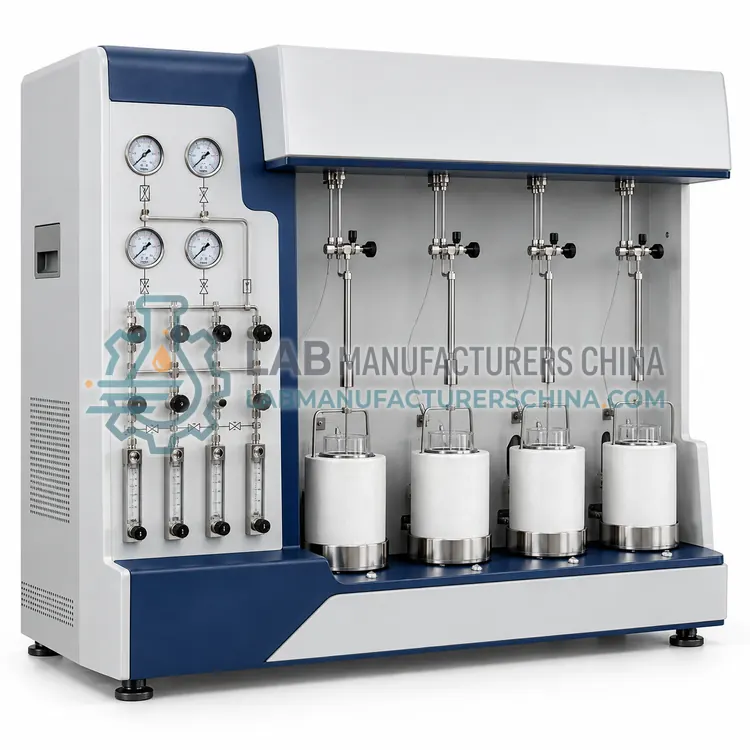
多工位静态容量法粉体 BET 比表面积分析仪
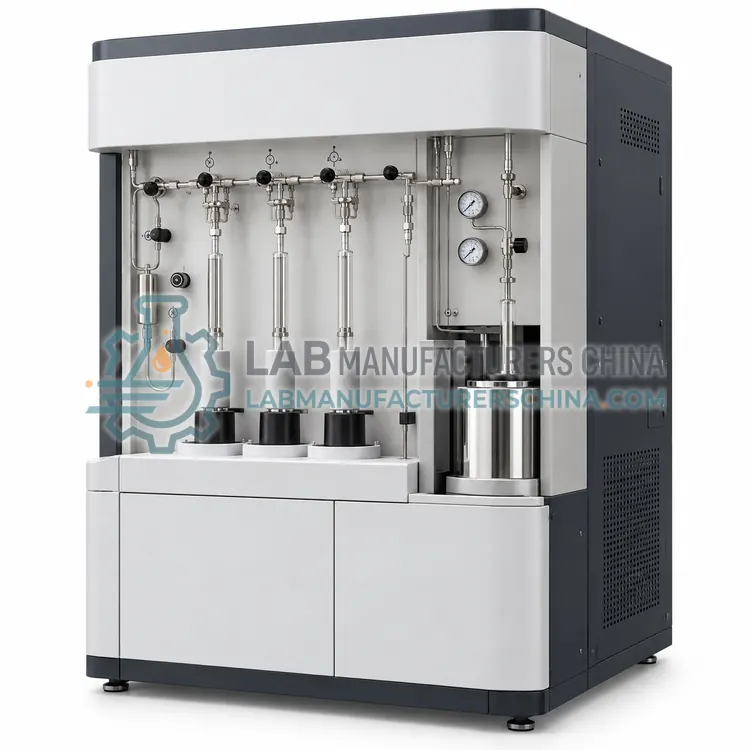
带微孔选项的纳米粉体细颗粒 BET 比表面积分析仪
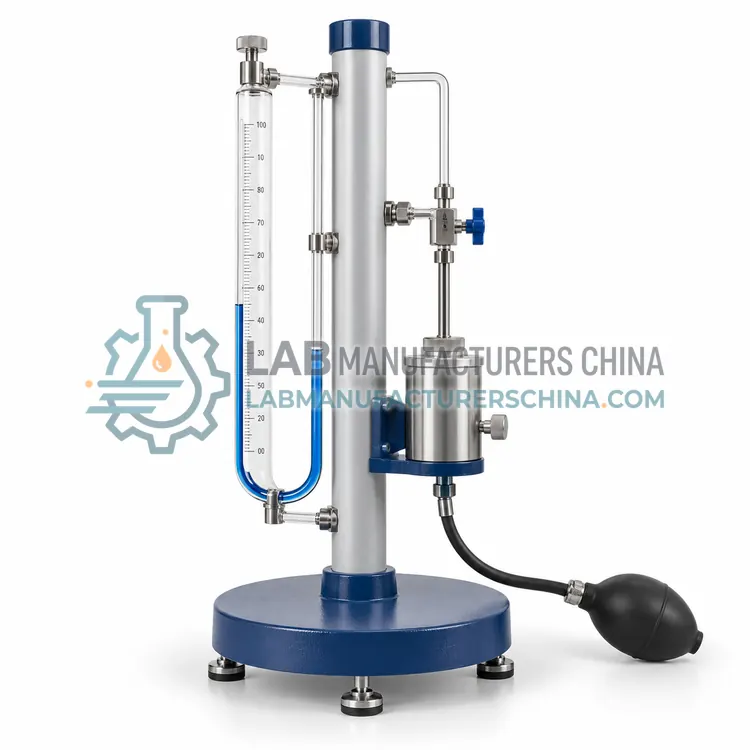
水泥和细粉用 Blaine 透气仪