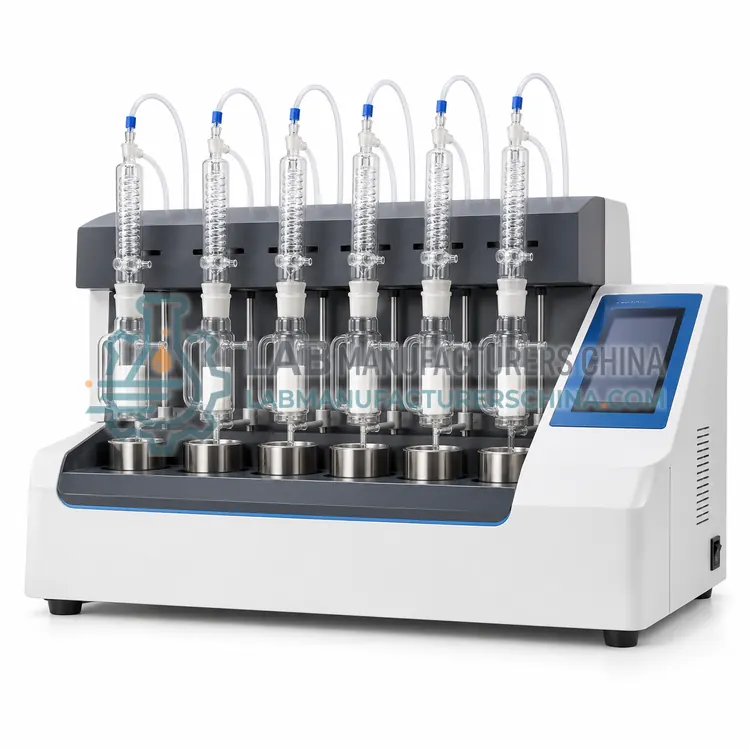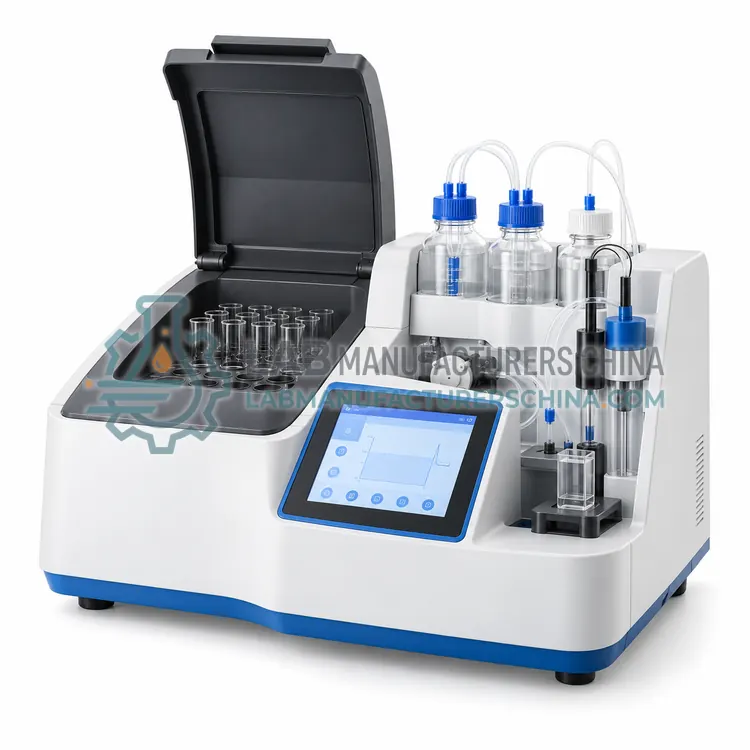
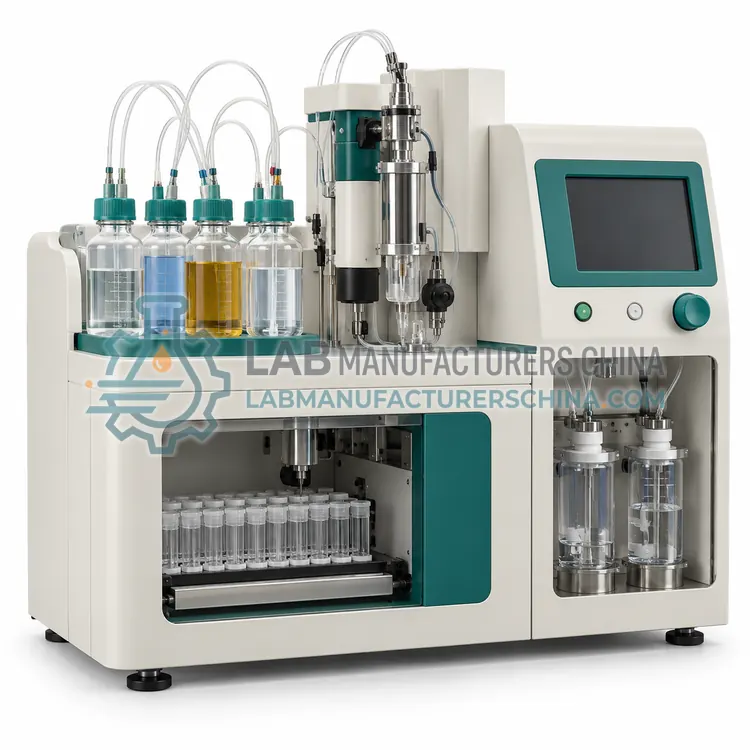
Automated Amino Acid Analyzer
自动化氨基酸分析仪
- SKU PRO-0005
- Protein Analyzers
- CE (to be confirmed)
- ISO 9001 manufacturing (to be confirmed)
Price on request — FOB / CIF quoted per order
Prices depend on configuration, quantity and destination port.
Key specifications
| Separation | Cation-exchange chromatography |
|---|---|
| Detection | Ninhydrin at 570 and 440 nm or fluorescence |
| Amino acids resolved | Up to 20 plus related compounds |
| Detection limit | 10–50 pmol per amino acid |
| Run time | 60–120 min per sample |
| Sample volume | 10–100 µL hydrolysate |
Request a quote Download brochure · to be provided
By Lab Manufacturers China Technical TeamLast reviewed Standards: ISO 16634, AOAC 990.03, AOAC 992.15
What is the Automated Amino Acid Analyzer?
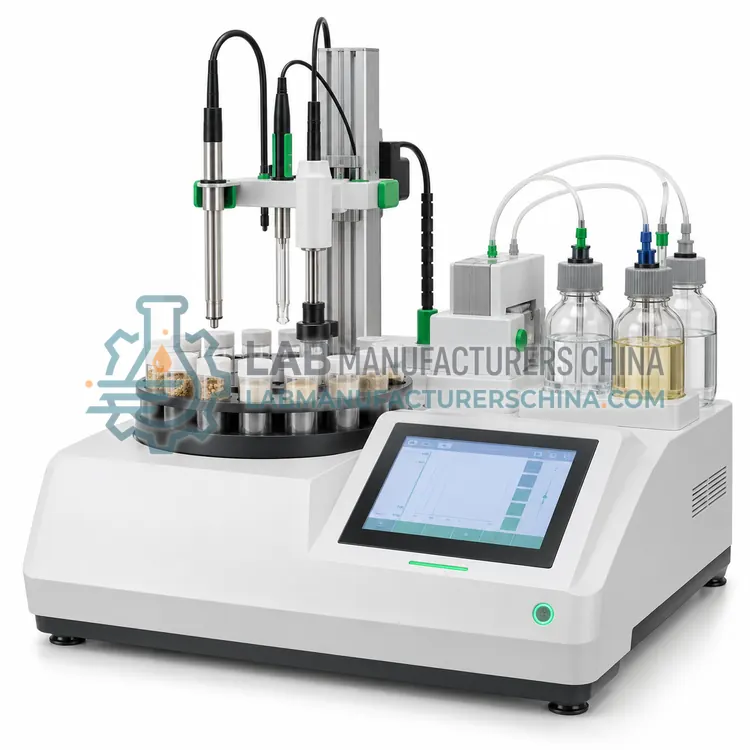
An automated amino acid analyzer hydrolyses a food sample and separates individual amino acids by ion-exchange chromatography with ninhydrin or fluorescence detection. It reports the full amino acid profile for nutritional and quality assessment.
What is the Automated Amino Acid Analyzer?
An automated amino acid analyzer hydrolyses a food sample and separates individual amino acids by ion-exchange chromatography with ninhydrin or fluorescence detection. It reports the full amino acid profile for nutritional and quality assessment.
Overview
Protein is hydrolysed in 6 mol/L hydrochloric acid under vacuum or nitrogen at about 110 °C for 20 to 24 hours, releasing free amino acids, although tryptophan is destroyed and must be determined by alkaline hydrolysis. The hydrolysate is loaded onto a cation-exchange column and eluted with buffers of increasing pH and ionic strength, and each amino acid reacts with ninhydrin to form a coloured product measured at 570 and 440 nm, or is derivatised for fluorescence detection. Modern analysers automate injection, buffer gradients, reagent addition and peak integration, delivering results in about 60 to 120 minutes per sample. Data support protein quality scoring, feed formulation, authenticity checks and investigation of heat damage through markers such as available lysine.
How does it work?
Protein content is normally calculated from nitrogen, using a conversion factor such as 6.25 for most foods or 5.7 for wheat flour. Combustion instruments (Dumas) burn the sample at high temperature in oxygen, reduce the nitrogen oxides to molecular nitrogen and measure it with a thermal conductivity detector, which is fast, solvent-free and low in waste. Dye-binding methods for milk rely on the binding of anionic dyes such as amido black to protein, which changes the dye concentration in solution. Near-infrared analysers measure absorption bands from N–H bonds and predict protein with a calibration model. Colorimetric methods such as Bradford or Lowry use dyes or reducing reagents whose absorbance changes with protein concentration. Amino acid analysers hydrolyse the sample and separate individual amino acids by ion-exchange chromatography with ninhydrin or fluorescence detection.
What are the key features?
- Ion-exchange separation with ninhydrin or fluorescence detection
- Automated buffer gradients and reagent addition
- Dual-wavelength detection at 570 and 440 nm
- Hydrolysis workstation for acid and alkaline methods
- Quantification against amino acid standard mixtures
- Method packages for physiological and protein hydrolysate runs
What are the technical specifications?
A typical automated amino acid analyzer configuration offers separation of Cation-exchange chromatography, detection of Ninhydrin at 570 and 440 nm or fluorescence, amino acids resolved of Up to 20 plus related compounds, detection limit of 10–50 pmol per amino acid, run time of 60–120 min per sample and sample volume of 10–100 µL hydrolysate. Values are indicative of the product class; the exact figures for each configuration are confirmed on the quotation and the calibration documents supplied with the instrument.
Which applications is it used for?
The Automated Amino Acid Analyzer is used in protein quality and amino acid scoring, feed and pet food amino acid balancing, heat damage assessment via available lysine and authenticity and adulteration investigation. Across the wider Protein Analyzers class, laboratories also deploy it for protein declaration for nutrition labelling, grain and flour protein specification and payment and feed and pet food protein control.
Which standards and certifications apply?
Relevant standards and methods include ISO 16634, AOAC 990.03, AOAC 992.15, ISO 8968, ISO 5542, ISO 13903 and ISO/IEC 17025. Certification candidates for this model are CE and ISO 9001 manufacturing; each is to be confirmed for the specific configuration before shipment, and certificates are supplied only where they have been issued.
Whichever method is used, sampling and sample homogeneity matter because protein varies within a lot. Combustion systems need adequate oxygen supply, leak-free seals, leak and blank checks, and regular replacement of consumables such as the reduction column and combustion catalyst. Dye-binding instruments require fresh reagent, calibrated pipettes and careful tube cleaning to avoid residual dye. Near-infrared models need control samples and periodic bias correction against reference chemistry. Amino acid analysis requires careful hydrolysis, since tryptophan is destroyed by acid hydrolysis and must be determined separately. Keep conversion factors documented for each product and participate in proficiency testing.
How do I select the right Automated Amino Acid Analyzer?
Choose an amino acid analyser when you must report individual amino acids for protein quality, feed balancing or authenticity work. Confirm the resolution required for closely eluting pairs and whether physiological or hydrolysate methods apply. Plan the hydrolysis workflow, since it dominates time and variability.
How does it compare with other Protein Analyzers variants?
Choose combustion when you need fast, clean nitrogen determination for cereals, feed, meat or dairy and your authority accepts the Dumas method. Combine it with the correct nitrogen-to-protein factor for each product. Near-infrared analysers suit grain and feed at intake, where many similar samples need answers in under a minute, but require a maintained calibration set. Dye-binding analysers give rapid, low-cost protein results in milk intake laboratories. Colorimetric methods are best for small numbers of samples in research and for assays where only a relative protein value is needed. Amino acid analysers answer nutritional and quality questions that nitrogen determination cannot, such as amino acid profile and available lysine.
Full specifications
| Separation | Cation-exchange chromatography |
|---|---|
| Detection | Ninhydrin at 570 and 440 nm or fluorescence |
| Amino acids resolved | Up to 20 plus related compounds |
| Detection limit | 10–50 pmol per amino acid |
| Run time | 60–120 min per sample |
| Sample volume | 10–100 µL hydrolysate |
| Hydrolysis | 6 mol/L HCl, 110 °C, 20–24 h |
| Buffers | Citrate or lithium gradient |
| Autosampler | 50–120 positions |
| Software | Peak integration, calibration, audit trail |
Indicative values for this product class. Final specifications are confirmed on the quotation and in the calibration documents supplied with the instrument.
Applications
- Protein quality and amino acid scoring
- Feed and pet food amino acid balancing
- Heat damage assessment via available lysine
- Authenticity and adulteration investigation
Key features
- Ion-exchange separation with ninhydrin or fluorescence detection
- Automated buffer gradients and reagent addition
- Dual-wavelength detection at 570 and 440 nm
- Hydrolysis workstation for acid and alkaline methods
- Quantification against amino acid standard mixtures
- Method packages for physiological and protein hydrolysate runs
Frequently asked questions about Automated Amino Acid Analyzer
Tryptophan is destroyed during acid hydrolysis because its indole ring is labile under those conditions. It is therefore determined after alkaline hydrolysis, usually with a separate chromatographic or colorimetric method.
Acid hydrolysis takes 20 to 24 hours, and chromatographic separation adds 60 to 120 minutes per sample. Laboratories therefore batch hydrolysis overnight and run samples in sequence the following day.
Available lysine is the fraction whose side chain remains free and nutritionally accessible. It falls during heat processing because lysine reacts with sugars in the Maillard reaction, so it indicates heat damage better than total lysine.
Most laboratories multiply the measured nitrogen content by a conversion factor. The general factor for food is 6.25, while wheat flour uses 5.7 and milk uses 6.38, so the factor must match the product and the method used.
Dumas combustion burns the sample and measures nitrogen gas by thermal conductivity, needing no acid or catalyst and taking a few minutes. Kjeldahl digests with sulfuric acid and catalyst and titrates the distilled ammonia, which is slower but is the traditional reference method.
Dye-binding analysers mix the milk with amido black or a similar anionic dye, and protein binds the dye so that absorbance of the remaining solution indicates protein content. Results are available in minutes and correlate with the reference Kjeldahl method.