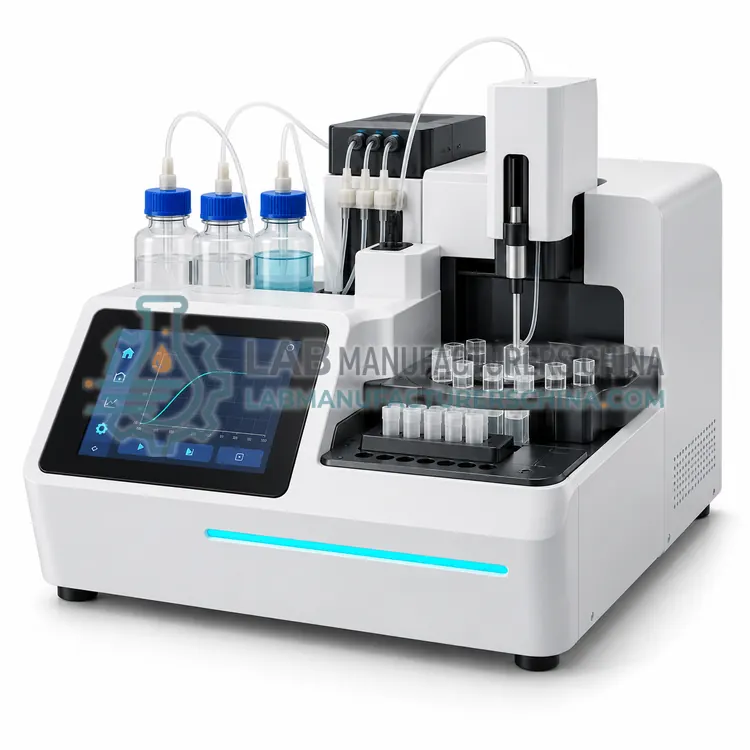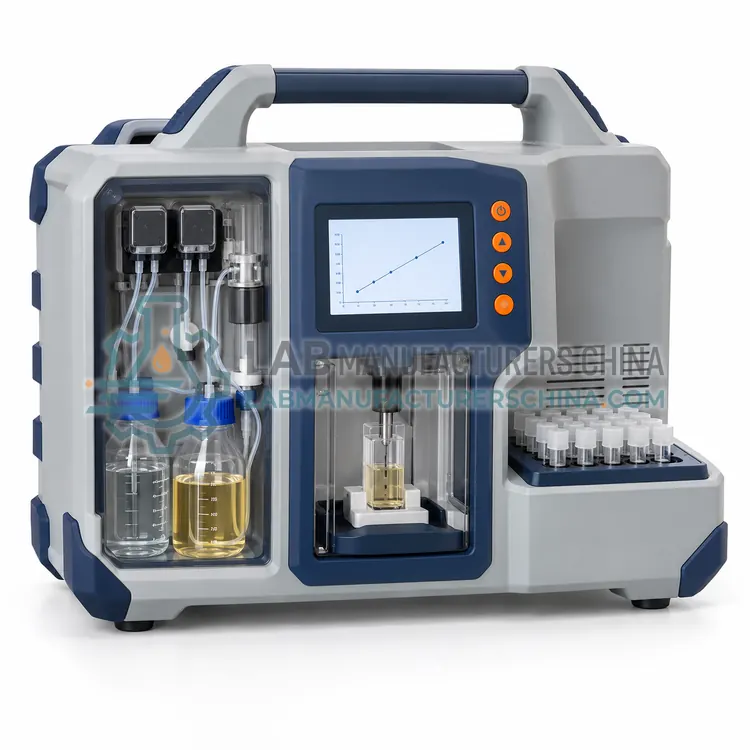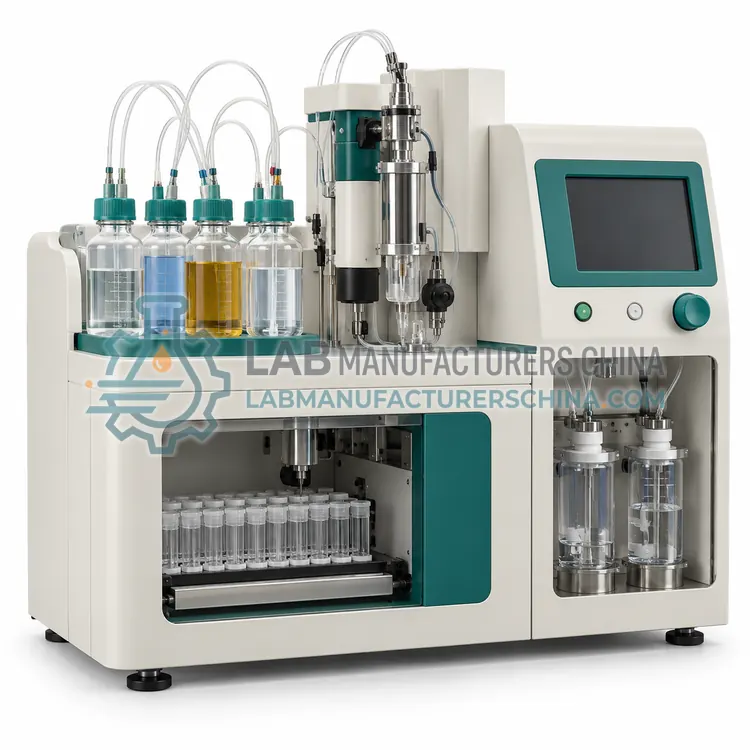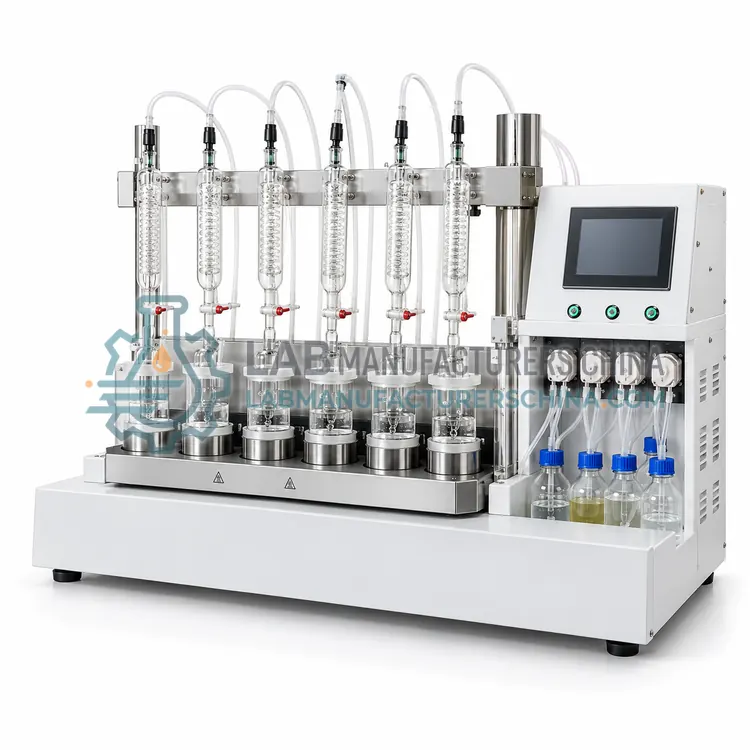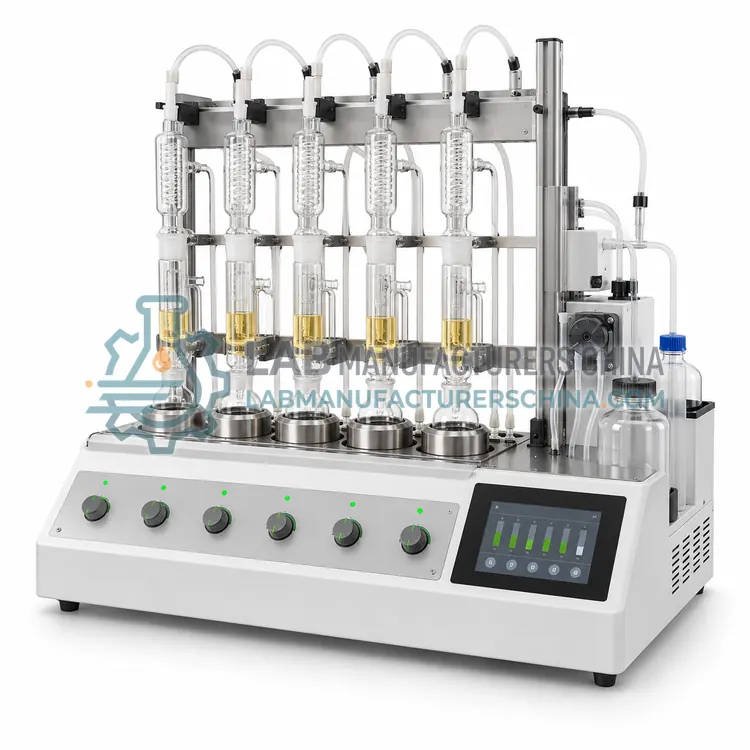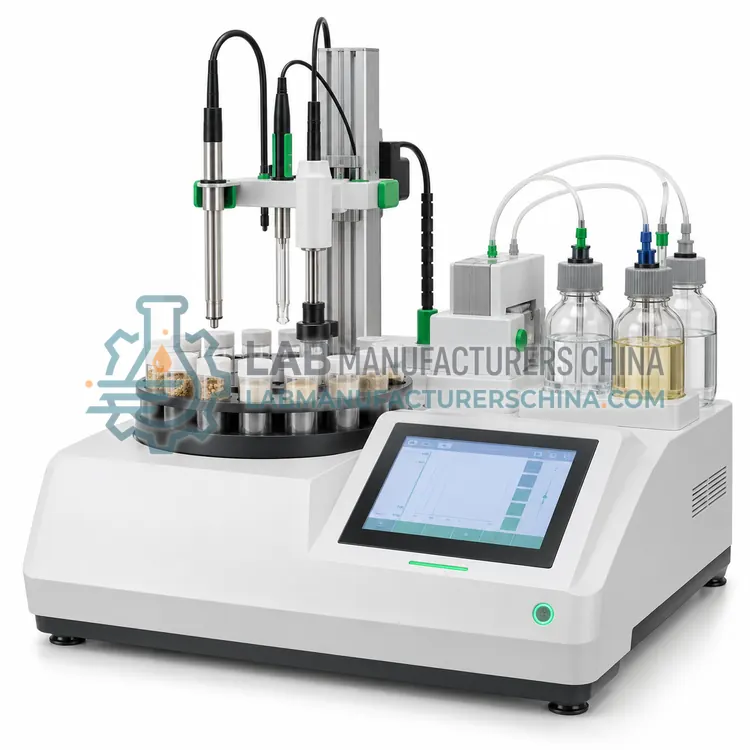
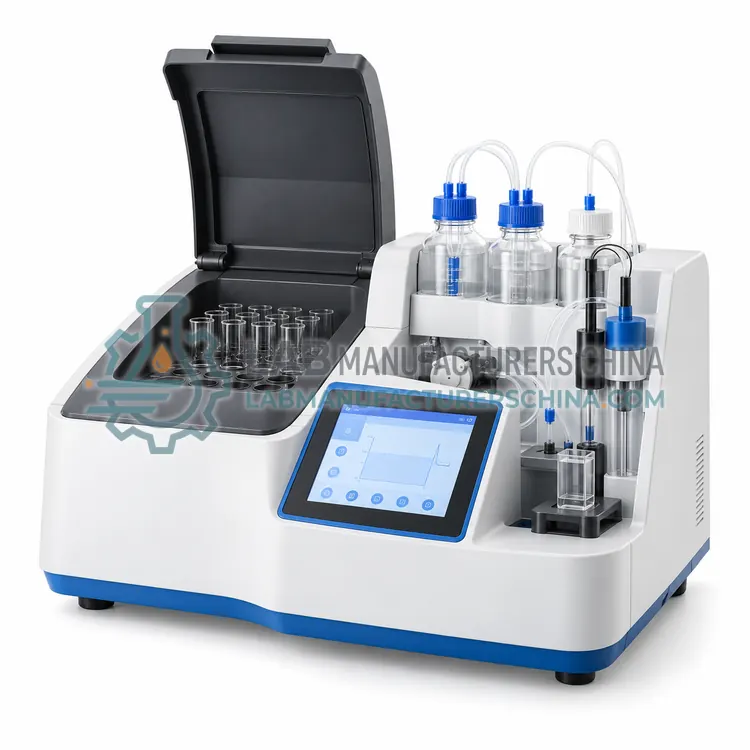
Dumas Combustion Protein Analyzer
杜马斯燃烧蛋白质分析仪
- SKU PRO-0001
- Protein Analyzers
- CE (to be confirmed)
- ISO 9001 manufacturing (to be confirmed)
Price on request — FOB / CIF quoted per order
Prices depend on configuration, quantity and destination port.
Key specifications
| Furnace temperature | 900–1000 °C |
|---|---|
| Detection | Thermal conductivity detector |
| Run time | 3–5 min per sample |
| Nitrogen range | 0.01–50 mg N absolute |
| Protein range | 0.1–100 percent with factor |
| Sample mass | 50–500 mg |
Request a quote Download brochure · to be provided
By Lab Manufacturers China Technical TeamLast reviewed Standards: ISO 16634, AOAC 990.03, AOAC 992.15
What is the Dumas Combustion Protein Analyzer?
A Dumas combustion protein analyzer burns food or feed in oxygen and measures the released nitrogen by thermal conductivity. It gives protein results in three to five minutes with no acid digestion, catalyst or titration steps.
What is the Dumas Combustion Protein Analyzer?
A Dumas combustion protein analyzer burns food or feed in oxygen and measures the released nitrogen by thermal conductivity. It gives protein results in three to five minutes with no acid digestion, catalyst or titration steps.
Overview
A weighed sample is dropped into a furnace at about 900 to 1000 °C in a stream of pure oxygen, where it flashes to combustion gases. Water and interfering gases are removed by traps, nitrogen oxides are reduced to molecular nitrogen over heated copper, and a thermal conductivity detector measures the nitrogen against a helium carrier reference. The instrument calculates nitrogen percentage and multiplies by the selected protein factor to give protein content, with typical run times of three to five minutes and no hazardous reagents. Calibration uses certified standards such as EDTA or aspartic acid, with blanks checked daily. A single instrument can cover cereals, feed, meat, dairy and pet food by loading the appropriate method and factor.
How does it work?
Protein content is normally calculated from nitrogen, using a conversion factor such as 6.25 for most foods or 5.7 for wheat flour. Combustion instruments (Dumas) burn the sample at high temperature in oxygen, reduce the nitrogen oxides to molecular nitrogen and measure it with a thermal conductivity detector, which is fast, solvent-free and low in waste. Dye-binding methods for milk rely on the binding of anionic dyes such as amido black to protein, which changes the dye concentration in solution. Near-infrared analysers measure absorption bands from N–H bonds and predict protein with a calibration model. Colorimetric methods such as Bradford or Lowry use dyes or reducing reagents whose absorbance changes with protein concentration. Amino acid analysers hydrolyse the sample and separate individual amino acids by ion-exchange chromatography with ninhydrin or fluorescence detection.
What are the key features?
- Combustion furnace at 900–1000 °C in pure oxygen
- Thermal conductivity detection of nitrogen gas
- Run time of 3–5 minutes per sample
- No acid, catalyst or titration reagents required
- Autosampler with 60 or more positions
- Stored protein factors and methods per product
What are the technical specifications?
A typical dumas combustion protein analyzer configuration offers furnace temperature of 900–1000 °C, detection of Thermal conductivity detector, run time of 3–5 min per sample, nitrogen range of 0.01–50 mg N absolute, protein range of 0.1–100 percent with factor and sample mass of 50–500 mg. Values are indicative of the product class; the exact figures for each configuration are confirmed on the quotation and the calibration documents supplied with the instrument.
Which applications is it used for?
The Dumas Combustion Protein Analyzer is used in cereal and flour protein specification, feed, forage and pet food protein control, meat, dairy and egg protein testing and high-throughput quality control laboratories. Across the wider Protein Analyzers class, laboratories also deploy it for protein declaration for nutrition labelling, grain and flour protein specification and payment and feed and pet food protein control.
Which standards and certifications apply?
Relevant standards and methods include ISO 16634, AOAC 990.03, AOAC 992.15, ISO 8968, ISO 5542, ISO 13903 and ISO/IEC 17025. Certification candidates for this model are CE and ISO 9001 manufacturing; each is to be confirmed for the specific configuration before shipment, and certificates are supplied only where they have been issued.
Whichever method is used, sampling and sample homogeneity matter because protein varies within a lot. Combustion systems need adequate oxygen supply, leak-free seals, leak and blank checks, and regular replacement of consumables such as the reduction column and combustion catalyst. Dye-binding instruments require fresh reagent, calibrated pipettes and careful tube cleaning to avoid residual dye. Near-infrared models need control samples and periodic bias correction against reference chemistry. Amino acid analysis requires careful hydrolysis, since tryptophan is destroyed by acid hydrolysis and must be determined separately. Keep conversion factors documented for each product and participate in proficiency testing.
How do I select the right Dumas Combustion Protein Analyzer?
Choose Dumas combustion when you want fast, clean nitrogen determination and your methods or customers accept it. Confirm the nitrogen range and autosampler capacity for your workload, and check the cost and availability of high-purity helium, which dominates running cost in many laboratories.
How does it compare with other Protein Analyzers variants?
Choose combustion when you need fast, clean nitrogen determination for cereals, feed, meat or dairy and your authority accepts the Dumas method. Combine it with the correct nitrogen-to-protein factor for each product. Near-infrared analysers suit grain and feed at intake, where many similar samples need answers in under a minute, but require a maintained calibration set. Dye-binding analysers give rapid, low-cost protein results in milk intake laboratories. Colorimetric methods are best for small numbers of samples in research and for assays where only a relative protein value is needed. Amino acid analysers answer nutritional and quality questions that nitrogen determination cannot, such as amino acid profile and available lysine.
Full specifications
| Furnace temperature | 900–1000 °C |
|---|---|
| Detection | Thermal conductivity detector |
| Run time | 3–5 min per sample |
| Nitrogen range | 0.01–50 mg N absolute |
| Protein range | 0.1–100 percent with factor |
| Sample mass | 50–500 mg |
| Carrier gas | Helium, 99.999 percent |
| Oxygen supply | 99.999 percent, 2–3 bar |
| Autosampler | 60–120 positions |
| Software | Calibration, factor library, audit trail |
Indicative values for this product class. Final specifications are confirmed on the quotation and in the calibration documents supplied with the instrument.
Applications
- Cereal and flour protein specification
- Feed, forage and pet food protein control
- Meat, dairy and egg protein testing
- High-throughput quality control laboratories
Key features
- Combustion furnace at 900–1000 °C in pure oxygen
- Thermal conductivity detection of nitrogen gas
- Run time of 3–5 minutes per sample
- No acid, catalyst or titration reagents required
- Autosampler with 60 or more positions
- Stored protein factors and methods per product
Frequently asked questions about Dumas Combustion Protein Analyzer
Helium has very low thermal conductivity compared with nitrogen, giving a large, stable signal in the thermal conductivity detector. Argon can be substituted in some instruments but sensitivity is lower and method verification is needed.
Calibrate at installation and after major maintenance, then verify daily with a certified standard and a blank. If the check falls outside the acceptance range, recalibrate before running samples to avoid systematic bias.
No. It measures total nitrogen, which includes non-protein nitrogen from urea, ammonia or nitrates. Protein is calculated with a conversion factor, so products high in non-protein nitrogen may show a higher apparent protein content.
Most laboratories multiply the measured nitrogen content by a conversion factor. The general factor for food is 6.25, while wheat flour uses 5.7 and milk uses 6.38, so the factor must match the product and the method used.
Dumas combustion burns the sample and measures nitrogen gas by thermal conductivity, needing no acid or catalyst and taking a few minutes. Kjeldahl digests with sulfuric acid and catalyst and titrates the distilled ammonia, which is slower but is the traditional reference method.
Dye-binding analysers mix the milk with amido black or a similar anionic dye, and protein binds the dye so that absorbance of the remaining solution indicates protein content. Results are available in minutes and correlate with the reference Kjeldahl method.
Related models