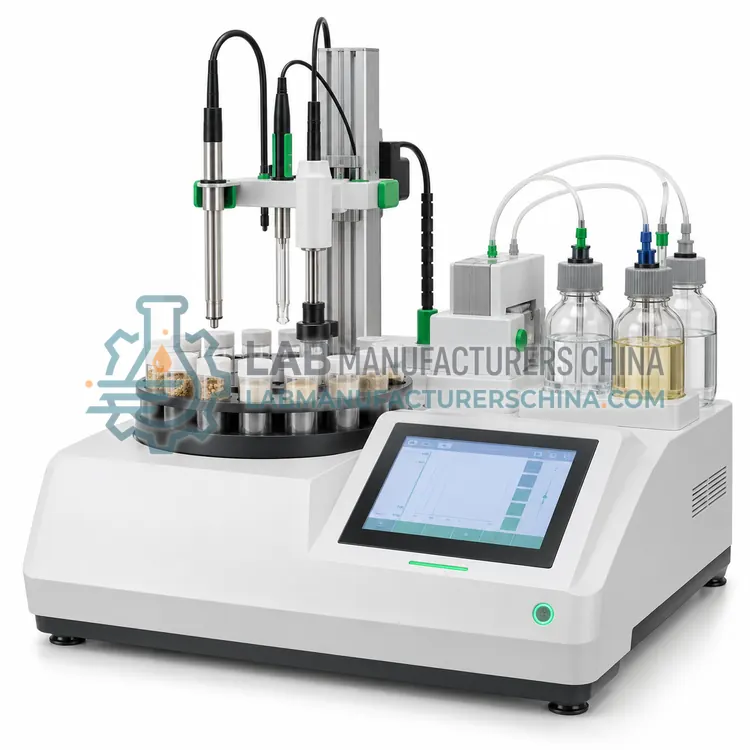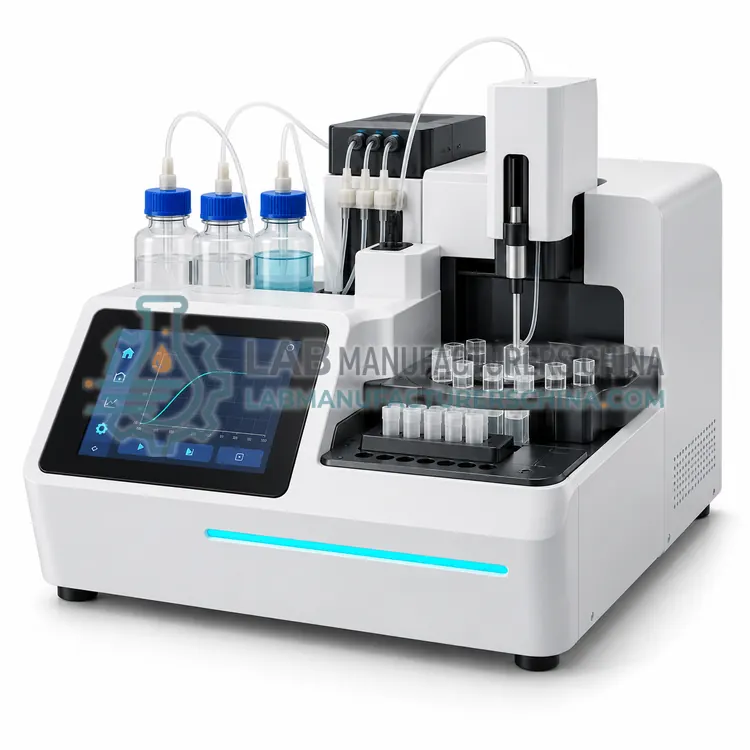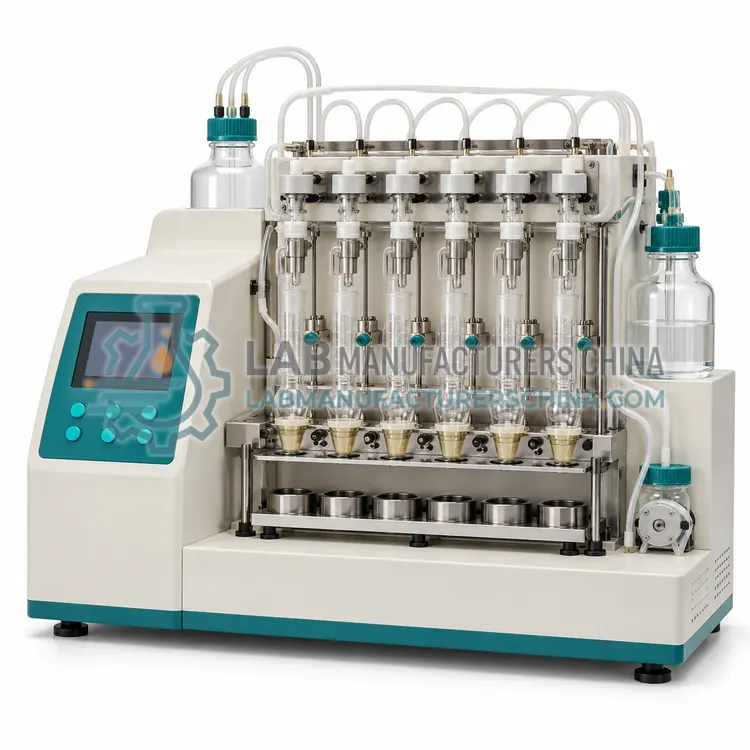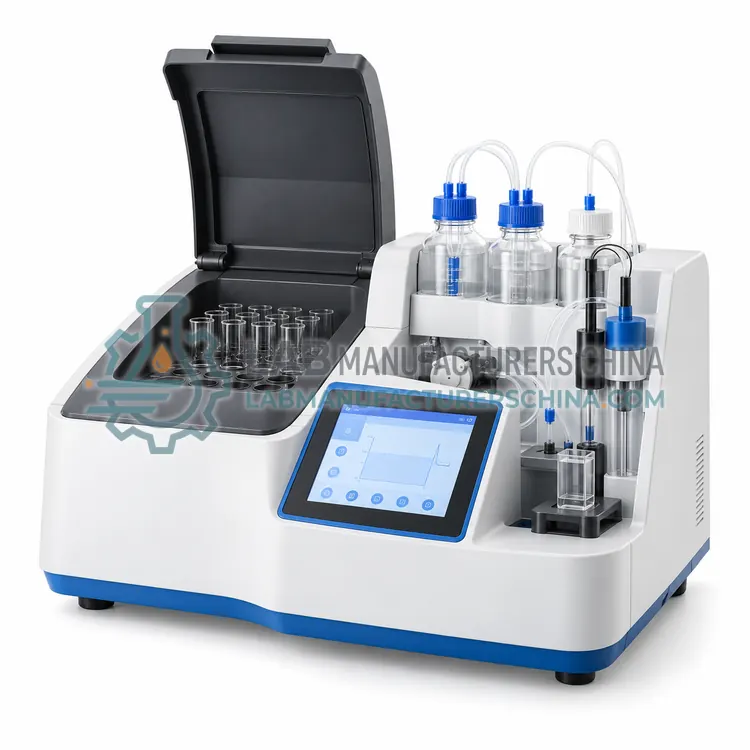
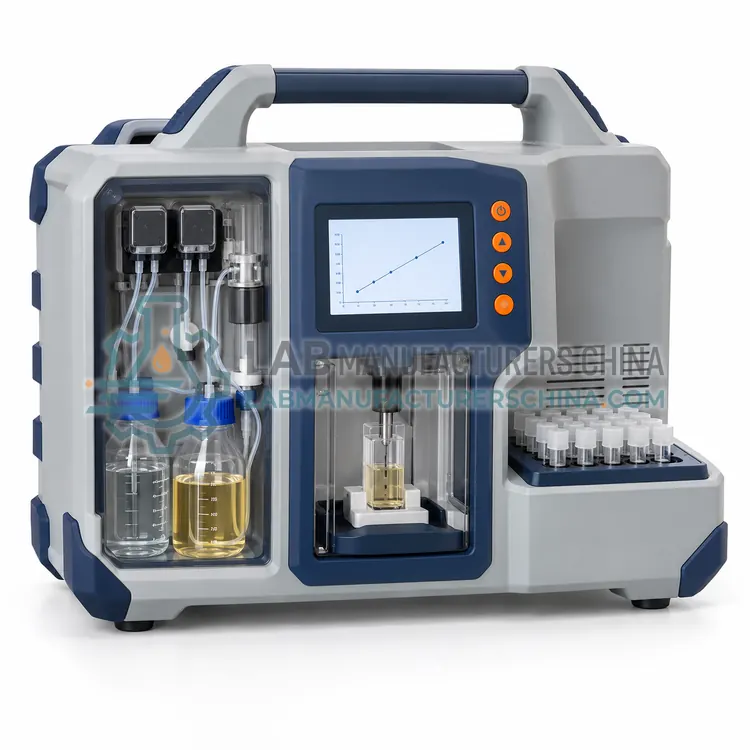
Colorimetric Protein Analyzer for Food
食品比色蛋白质分析仪
- SKU PRO-0004
- Protein Analyzers
- CE (to be confirmed)
- ISO 9001 manufacturing (to be confirmed)
Price on request — FOB / CIF quoted per order
Prices depend on configuration, quantity and destination port.
Key specifications
| Assay chemistries | Bradford, Lowry, BCA, dye binding |
|---|---|
| Wavelength range | 400–750 nm |
| Wavelength accuracy | ±1 nm |
| Protein range | 1–2000 µg/mL assay dependent |
| Sample volume | 10–100 µL |
| Formats | Cuvette and 96-well microplate |
Request a quote Download brochure · to be provided
By Lab Manufacturers China Technical TeamLast reviewed Standards: ISO 16634, AOAC 990.03, AOAC 992.15
What is the Colorimetric Protein Analyzer for Food?
A colorimetric protein analyzer uses dye-binding, Bradford or Lowry chemistry read on a spectrophotometer to quantify protein in food extracts and fractions. It suits method development, fraction testing and small-batch protein assays.
What is the Colorimetric Protein Analyzer for Food?
A colorimetric protein analyzer uses dye-binding, Bradford or Lowry chemistry read on a spectrophotometer to quantify protein in food extracts and fractions. It suits method development, fraction testing and small-batch protein assays.
Overview
Colorimetric assays rely on reagents whose colour intensity changes when they bind or react with protein. Bradford reagent shifts from brown to blue when it binds basic and aromatic residues, Lowry and bicinchoninic acid methods reduce copper in the presence of peptide bonds, and dye-binding assays such as Amido black are used for specific applications. The sample is mixed with reagent in a cuvette or microplate, incubated for a set time, and absorbance is read at the appropriate wavelength. Results are calculated from a standard curve built with bovine serum albumin or a food-relevant standard. The approach needs little sample and simple equipment, which makes it useful for research, but it is comparative rather than absolute and requires validation against nitrogen methods for reporting.
How does it work?
Protein content is normally calculated from nitrogen, using a conversion factor such as 6.25 for most foods or 5.7 for wheat flour. Combustion instruments (Dumas) burn the sample at high temperature in oxygen, reduce the nitrogen oxides to molecular nitrogen and measure it with a thermal conductivity detector, which is fast, solvent-free and low in waste. Dye-binding methods for milk rely on the binding of anionic dyes such as amido black to protein, which changes the dye concentration in solution. Near-infrared analysers measure absorption bands from N–H bonds and predict protein with a calibration model. Colorimetric methods such as Bradford or Lowry use dyes or reducing reagents whose absorbance changes with protein concentration. Amino acid analysers hydrolyse the sample and separate individual amino acids by ion-exchange chromatography with ninhydrin or fluorescence detection.
What are the key features?
- Bradford, Lowry, BCA and dye-binding assay support
- Cuvette and 96-well microplate formats
- Wavelength range covering 400–750 nm
- Standard curves from bovine serum albumin
- Small sample volume from 10 µL
- Simple workflow with stored methods
What are the technical specifications?
A typical colorimetric protein analyzer for food configuration offers assay chemistries of Bradford, Lowry, BCA, dye binding, wavelength range of 400–750 nm, wavelength accuracy of ±1 nm, protein range of 1–2000 µg/mL assay dependent, sample volume of 10–100 µL and formats of Cuvette and 96-well microplate. Values are indicative of the product class; the exact figures for each configuration are confirmed on the quotation and the calibration documents supplied with the instrument.
Which applications is it used for?
The Colorimetric Protein Analyzer for Food is used in protein fraction and extract measurement, enzymatic hydrolysis and digest studies, product development screening and validation of rapid protein methods. Across the wider Protein Analyzers class, laboratories also deploy it for protein declaration for nutrition labelling, grain and flour protein specification and payment and feed and pet food protein control.
Which standards and certifications apply?
Relevant standards and methods include ISO 16634, AOAC 990.03, AOAC 992.15, ISO 8968, ISO 5542, ISO 13903 and ISO/IEC 17025. Certification candidates for this model are CE and ISO 9001 manufacturing; each is to be confirmed for the specific configuration before shipment, and certificates are supplied only where they have been issued.
Whichever method is used, sampling and sample homogeneity matter because protein varies within a lot. Combustion systems need adequate oxygen supply, leak-free seals, leak and blank checks, and regular replacement of consumables such as the reduction column and combustion catalyst. Dye-binding instruments require fresh reagent, calibrated pipettes and careful tube cleaning to avoid residual dye. Near-infrared models need control samples and periodic bias correction against reference chemistry. Amino acid analysis requires careful hydrolysis, since tryptophan is destroyed by acid hydrolysis and must be determined separately. Keep conversion factors documented for each product and participate in proficiency testing.
How do I select the right Colorimetric Protein Analyzer for Food?
Select a colorimetric analyser for research and fraction work where sample volumes are small and relative protein values are sufficient. Confirm that the chemistries you need are supported and that the wavelength range covers them, and plan validation against a nitrogen method if results must support labelling or specification claims.
How does it compare with other Protein Analyzers variants?
Choose combustion when you need fast, clean nitrogen determination for cereals, feed, meat or dairy and your authority accepts the Dumas method. Combine it with the correct nitrogen-to-protein factor for each product. Near-infrared analysers suit grain and feed at intake, where many similar samples need answers in under a minute, but require a maintained calibration set. Dye-binding analysers give rapid, low-cost protein results in milk intake laboratories. Colorimetric methods are best for small numbers of samples in research and for assays where only a relative protein value is needed. Amino acid analysers answer nutritional and quality questions that nitrogen determination cannot, such as amino acid profile and available lysine.
Full specifications
| Assay chemistries | Bradford, Lowry, BCA, dye binding |
|---|---|
| Wavelength range | 400–750 nm |
| Wavelength accuracy | ±1 nm |
| Protein range | 1–2000 µg/mL assay dependent |
| Sample volume | 10–100 µL |
| Formats | Cuvette and 96-well microplate |
| Incubation | 5–30 min with temperature control |
| Standards | Bovine serum albumin or food protein |
| Calibration | Multi-point standard curve |
| Data output | USB, spreadsheet export, audit trail |
Indicative values for this product class. Final specifications are confirmed on the quotation and in the calibration documents supplied with the instrument.
Applications
- Protein fraction and extract measurement
- Enzymatic hydrolysis and digest studies
- Product development screening
- Validation of rapid protein methods
Key features
- Bradford, Lowry, BCA and dye-binding assay support
- Cuvette and 96-well microplate formats
- Wavelength range covering 400–750 nm
- Standard curves from bovine serum albumin
- Small sample volume from 10 µL
- Simple workflow with stored methods
Frequently asked questions about Colorimetric Protein Analyzer for Food
Each chemistry responds to different amino acid residues and is calibrated with a different standard protein. Bradford responds mainly to basic and aromatic residues, Lowry to peptide bonds and tyrosine, so results are comparative rather than absolute.
Bovine serum albumin is the common default, but a protein closer to the sample, such as casein for dairy or gliadin for wheat, gives a more accurate calibration. The standard should always be stated in the report.
Normally not on their own. Labelling requires the reference nitrogen method, so colorimetric values are used for screening and development and are correlated with Kjeldahl or Dumas results before any claim is made.
Most laboratories multiply the measured nitrogen content by a conversion factor. The general factor for food is 6.25, while wheat flour uses 5.7 and milk uses 6.38, so the factor must match the product and the method used.
Dumas combustion burns the sample and measures nitrogen gas by thermal conductivity, needing no acid or catalyst and taking a few minutes. Kjeldahl digests with sulfuric acid and catalyst and titrates the distilled ammonia, which is slower but is the traditional reference method.
Dye-binding analysers mix the milk with amido black or a similar anionic dye, and protein binds the dye so that absorbance of the remaining solution indicates protein content. Results are available in minutes and correlate with the reference Kjeldahl method.
Related models