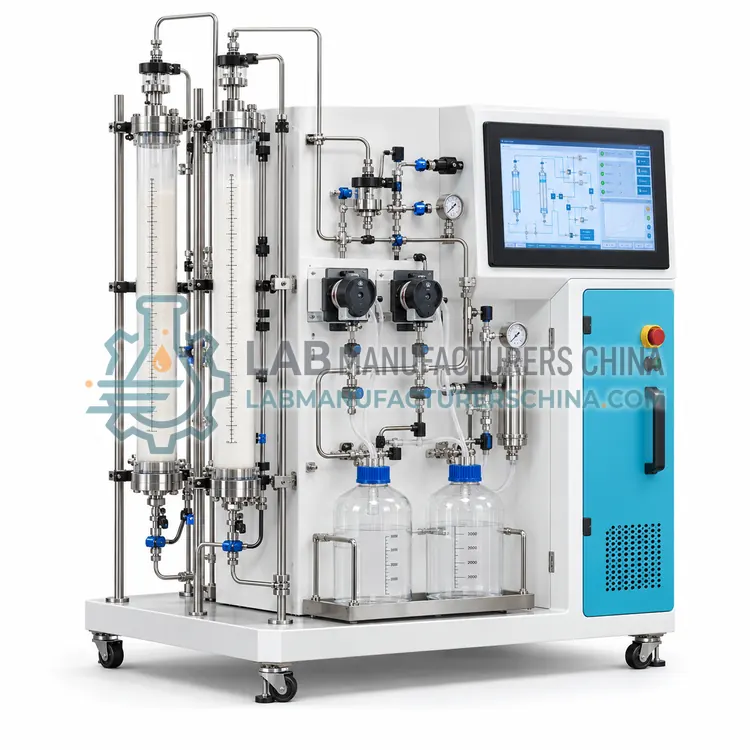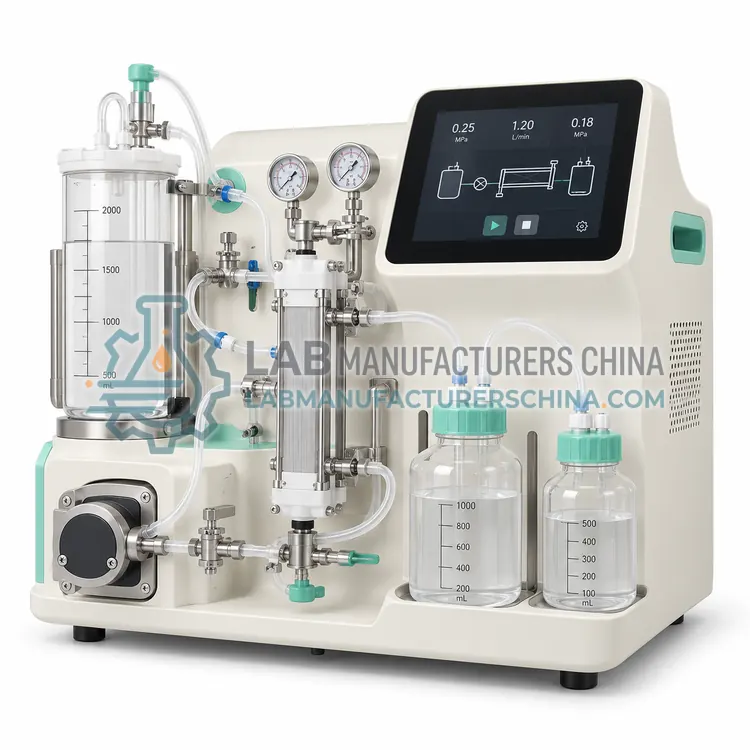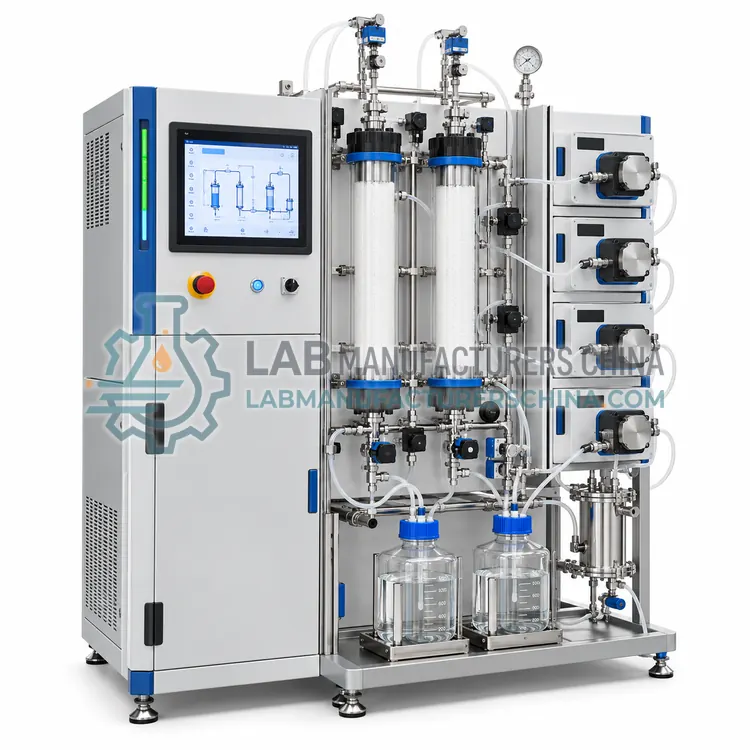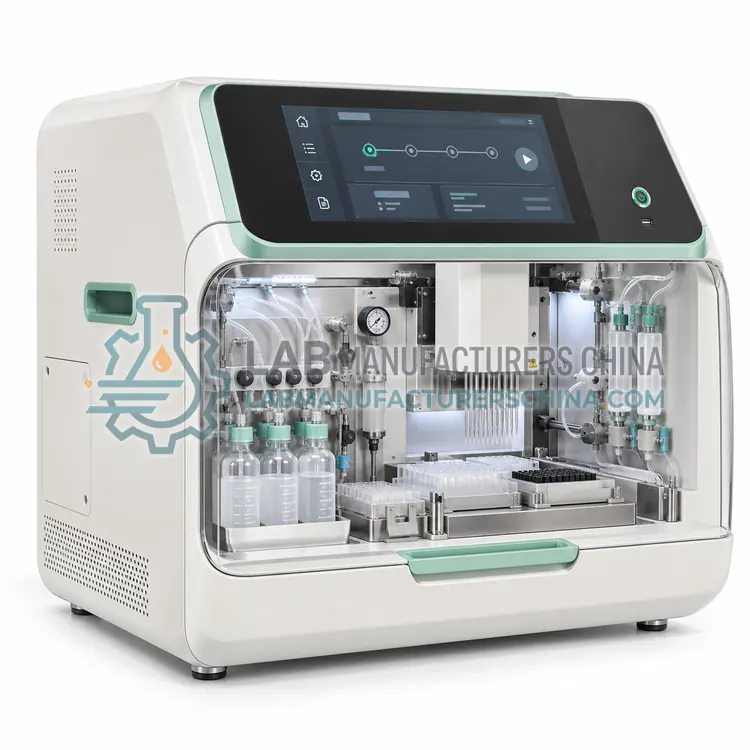
Single-Use Protein Purification System
一次性使用蛋白纯化系统
- SKU PPU-0003
- Protein Purification
- CE (to be confirmed)
- ISO 13485 manufacturing (to be confirmed)
- ISO 11137 sterilization (to be confirmed)
Price on request — FOB / CIF quoted per order
Prices depend on configuration, quantity and destination port.
Key specifications
| Flow rate range | 1–1,000 mL/min |
|---|---|
| Operating pressure | Up to 0.5 MPa |
| Column formats | Pre-packed disposable columns |
| Filtration | Disposable capsules and cartridges |
| Connectors | Aseptic, sterile-weldable |
| Sterilization | Gamma irradiation or autoclaving |
Request a quote Download brochure · to be provided
By Lab Manufacturers China Technical TeamLast reviewed Standards: USP <1050>, USP <661>, ICH Q7
What is the Single-Use Protein Purification System?
A single-use protein purification system uses disposable flow paths, pre-packed columns and capsules so that no cleaning or cleaning validation of product contact parts is required. It suits clinical, small-batch and multi-product manufacturing.
What is the Single-Use Protein Purification System?
A single-use protein purification system uses disposable flow paths, pre-packed columns and capsules so that no cleaning or cleaning validation of product contact parts is required. It suits clinical, small-batch and multi-product manufacturing.
Overview
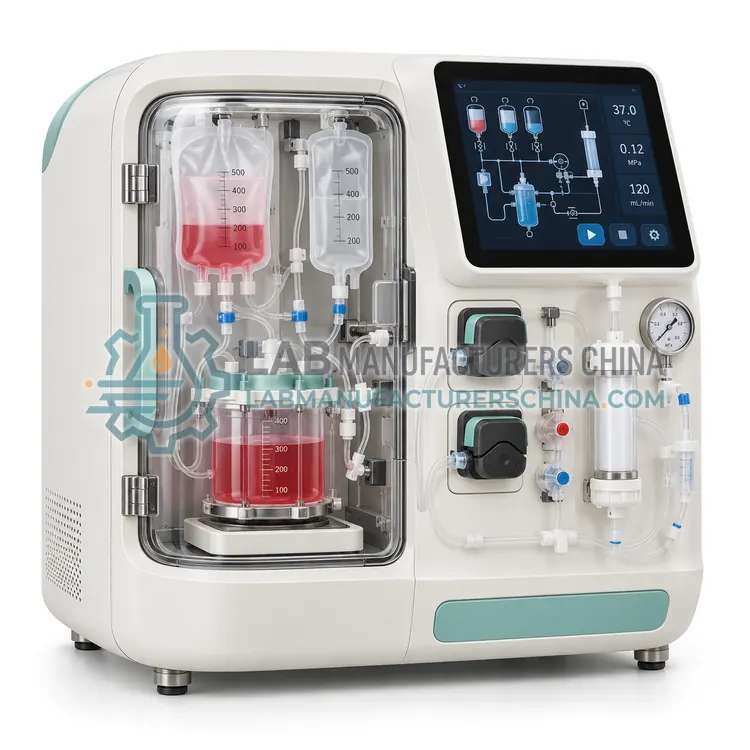
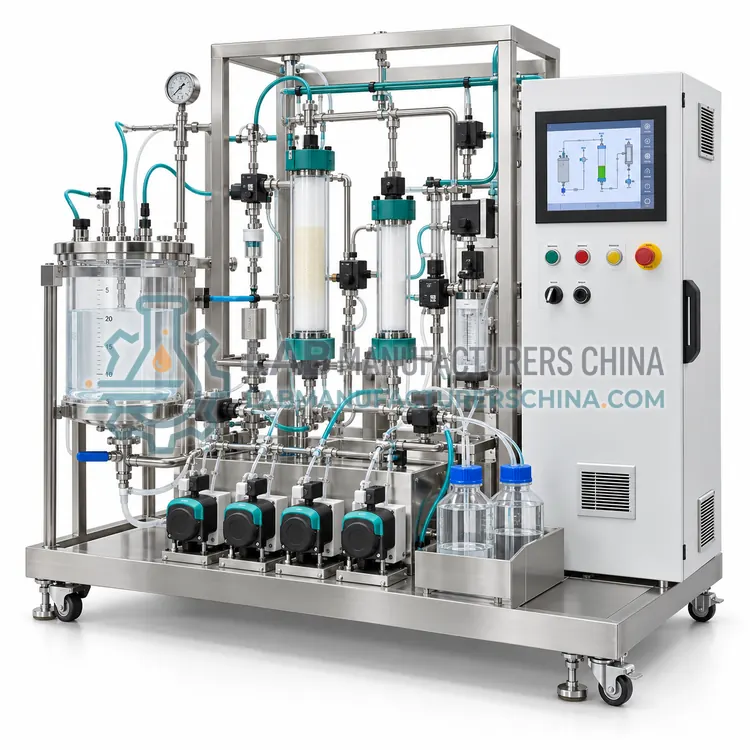
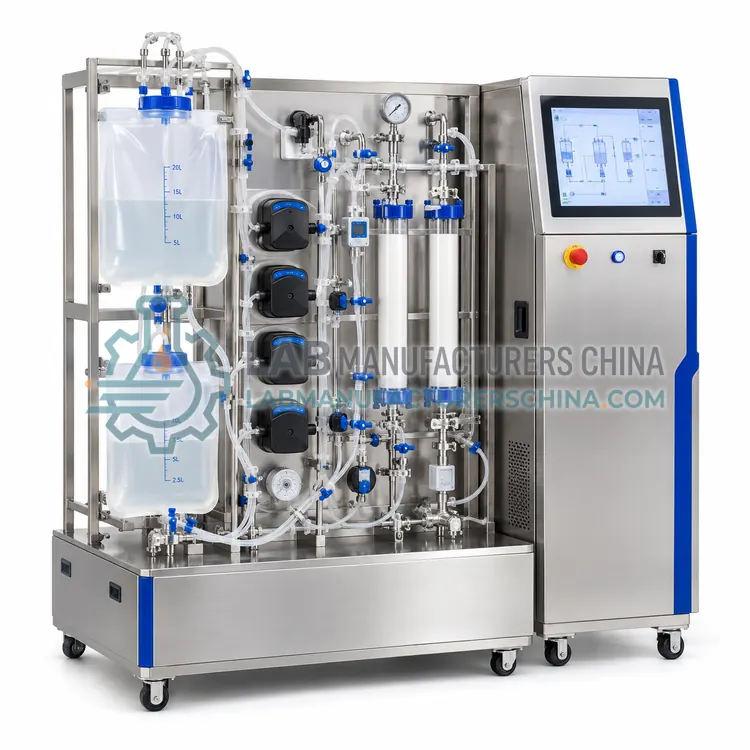
A single-use protein purification system replaces the stainless-steel fluid path with sterilized or sanitized disposables such as bags, tubing sets, pre-packed chromatography columns, capsules and aseptic connectors. Hardware provides pumps, valves, detectors and control, while wetted parts are used once and discarded. Pre-packed columns remove the need for in-house packing and compression, and disposable filtration capsules simplify clarification and concentration. The approach shortens changeover between products, lowers cleaning validation effort and reduces cross-contamination risk, which suits clinical batches and multi-product facilities. Constraints include limited pressure and flow ratings, the need to characterize extractables and leachables, and dependence on supplier quality and supply. Column and filter performance data, integrity tests and aseptic technique are essential for reliable, documented operation.
How does it work?
Protein purification systems separate a target protein from host-cell proteins, nucleic acids, aggregates and process impurities by exploiting differences in binding, charge, hydrophobicity or size. A typical train begins with clarification by centrifugation or filtration, then capture chromatography, often affinity, which binds the target strongly and allows most impurities to flow through. Low-pH or other elution releases the product, which is then neutralized and further purified by ion exchange, hydrophobic interaction or multimodal chromatography, and polishing by size-exclusion or a second ion-exchange step removes aggregates and residual impurities. Tangential flow filtration concentrates the pool and exchanges it into the formulation buffer. Pumps, valves, detectors and software control flow rate, gradients, pooling and cleaning, and record the chromatogram and batch data.
What are the key features?
- Disposable fluid path, columns and filtration capsules
- Pre-packed columns avoid in-house packing
- Aseptic connectors for closed operation
- No cleaning validation for product contact parts
- Column and filter performance documentation
What are the technical specifications?
A typical single-use protein purification system configuration offers flow rate range of 1–1,000 mL/min, operating pressure of Up to 0.5 MPa, column formats of Pre-packed disposable columns, filtration of Disposable capsules and cartridges, connectors of Aseptic, sterile-weldable and sterilization of Gamma irradiation or autoclaving. Values are indicative of the product class; the exact figures for each configuration are confirmed on the quotation and the calibration documents supplied with the instrument.
Which applications is it used for?
The Single-Use Protein Purification System is used in clinical batch purification, multi-product manufacturing, rapid process development and viral vector and plasmid purification. Across the wider Protein Purification class, laboratories also deploy it for monoclonal antibody purification, recombinant protein purification and vaccine antigen purification.
Which standards and certifications apply?
Relevant standards and methods include USP <1050>, USP <661>, ICH Q7, ICH Q11, EU GMP Annex 1, 21 CFR Part 11 and IEC 61010-1. Certification candidates for this model are CE, ISO 13485 manufacturing and ISO 11137 sterilization; each is to be confirmed for the specific configuration before shipment, and certificates are supplied only where they have been issued.
Maintain resins according to the manufacturer's cleaning-in-place and storage instructions, and track cycle numbers against the validated lifetime. Verify column packing with an asymmetry and plate-count test before use and record it. Calibrate pumps, detectors, pH and conductivity sensors on schedule, and check that gradient performance meets method requirements. Use sanitary fittings, validated cleaning agents and documented cleaning verification for multi-product equipment. Control buffer preparation and microbial quality, since contamination reduces resolution and can introduce impurities. For regulated manufacture, review chromatogram data, pooling criteria and deviations as part of batch review, and confirm that software supports audit trails. Electrical safety follows IEC 61010-1.
How do I select the right Single-Use Protein Purification System?
Choose single-use purification when changeover, cleaning validation or cross-contamination risk dominates. In an RFQ specify flow and pressure ranges, column and filtration formats, connector types, extractables and leachables data, integrity testing and the recording features required.
How does it compare with other Protein Purification variants?
Select from the target molecule, expression level and scale. For capture, affinity resins give high selectivity and yield when a suitable ligand exists, while ion exchange or hydrophobic interaction suit cost-sensitive or ligand-free processes. Match column dimensions to the mass of product per batch and to the linear velocity the resin tolerates at the required cycle time. Choose the system format by scale: an automated laboratory system with method development software for development, a process skid with sanitary design and cleaning-in-place for production, and single-use flow paths for multi-product facilities. Determine the filtration area and membrane format required for clarification and concentration from the volumetric throughput. Confirm detection wavelengths, gradient and flow ranges, automation, data recording and the validation documentation you need.
Full specifications
| Flow rate range | 1–1,000 mL/min |
|---|---|
| Operating pressure | Up to 0.5 MPa |
| Column formats | Pre-packed disposable columns |
| Filtration | Disposable capsules and cartridges |
| Connectors | Aseptic, sterile-weldable |
| Sterilization | Gamma irradiation or autoclaving |
| Extractables testing | BPOG and USP <661> aligned studies |
| Control | Automated with method and record keeping |
Indicative values for this product class. Final specifications are confirmed on the quotation and in the calibration documents supplied with the instrument.
Applications
- Clinical batch purification
- Multi-product manufacturing
- Rapid process development
- Viral vector and plasmid purification
Key features
- Disposable fluid path, columns and filtration capsules
- Pre-packed columns avoid in-house packing
- Aseptic connectors for closed operation
- No cleaning validation for product contact parts
- Column and filter performance documentation
Frequently asked questions about Single-Use Protein Purification System
Modern pre-packed columns are tested for asymmetry, plate count and pressure, and their performance is consistent because packing is controlled by the supplier. Self-packing still offers more flexibility in bed height and resin choice for development work.
Disposables have lower pressure and flow ratings than stainless steel, generate plastic waste, require extractables and leachables data and depend on supplier quality and availability. For very large volumes these factors can make stainless steel more economical.
Tubing sets and bags are inspected and pressure- or vacuum-tested before use, and connections are made with aseptic techniques that maintain closure. Filter integrity is confirmed by bubble point or pressure-hold tests either before or after use.
It captures and purifies recombinant proteins, antibodies and other biological products from harvested culture fluid. Chromatography steps bind the target and remove impurities, while filtration concentrates the product and places it in the formulation buffer for downstream use.
Capture is usually performed first, and affinity chromatography is preferred when a selective ligand exists because it removes most impurities in one step. Ion exchange or hydrophobic interaction capture is used when no affinity ligand is available or when cost and resin lifetime favor it.
Column diameter follows from the flow rate and the linear velocity the resin tolerates within the target cycle time, and bed height follows from the required resolution and dynamic binding capacity. Together they are set from the mass of product to process per batch.
Related models