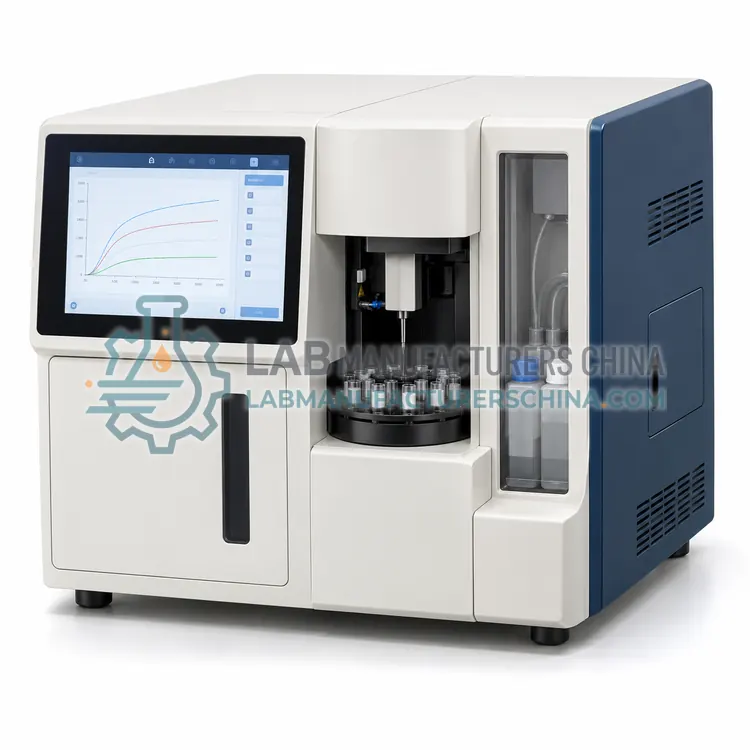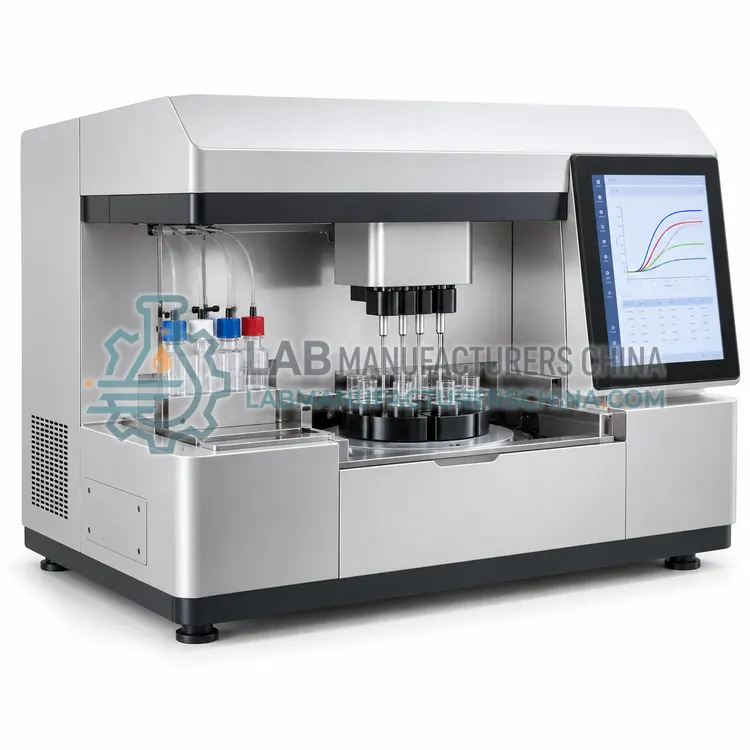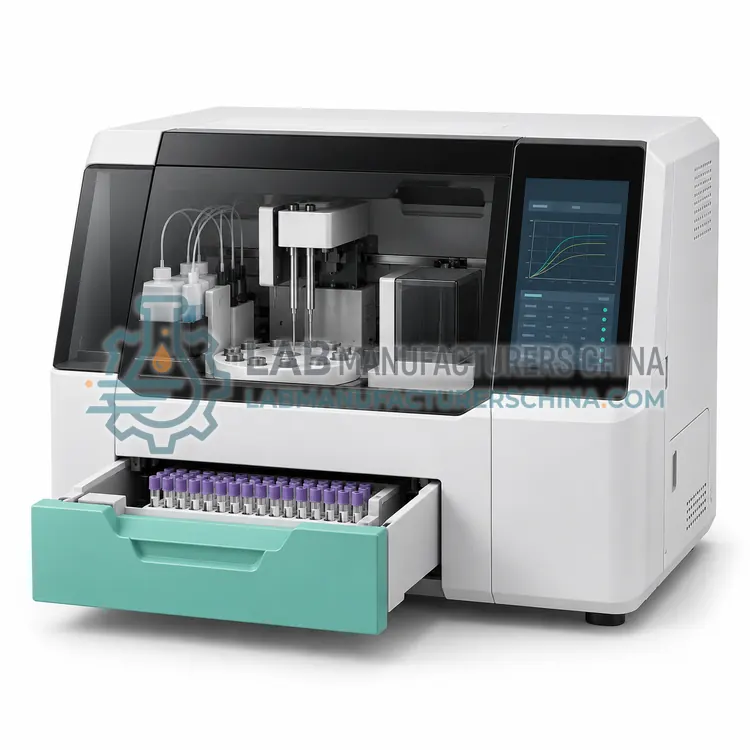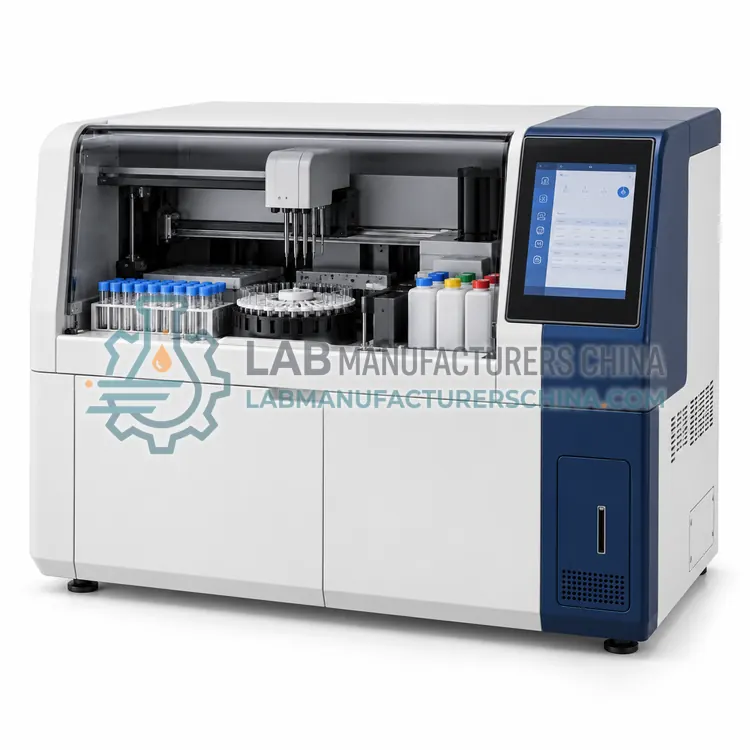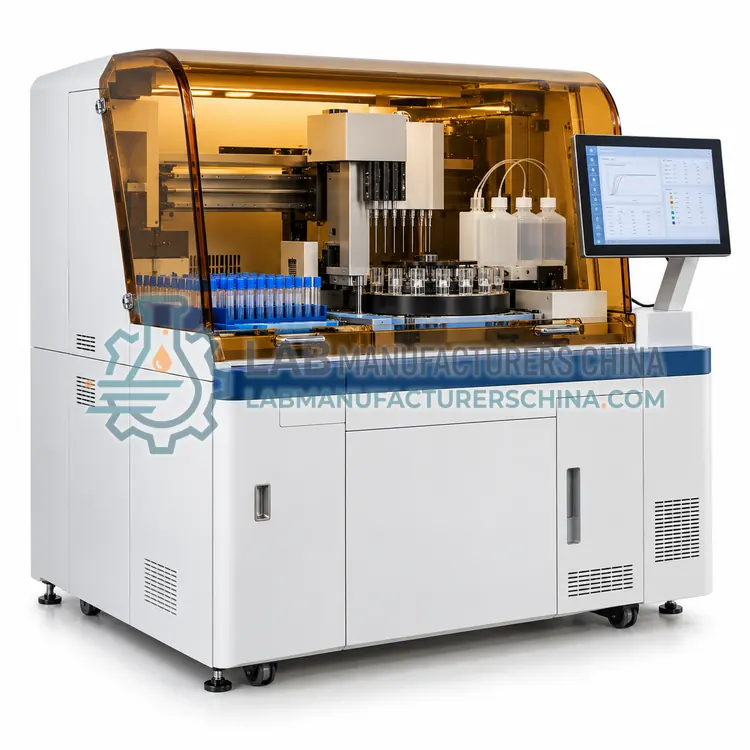
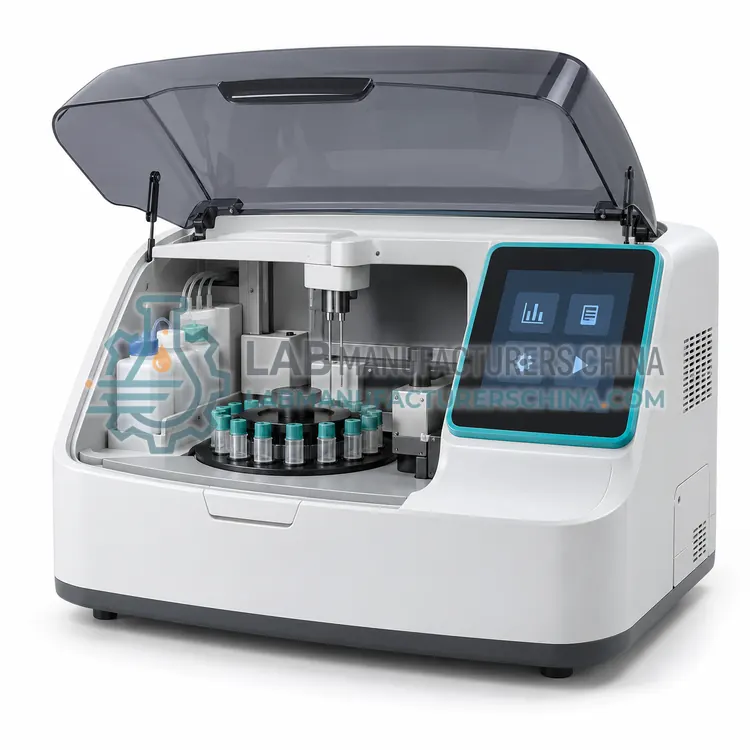
Whole Blood Impedance Aggregometer
全血阻抗聚集仪
- SKU PLA-0002
- Platelet Analyzers
- CE (to be confirmed)
- ISO 13485 manufacturing (to be confirmed)
- NMPA class II registration (to be confirmed)
Price on request — FOB / CIF quoted per order
Prices depend on configuration, quantity and destination port.
Key specifications
| Detection principle | Electrical impedance between two electrode wires |
|---|---|
| Channels | 2–5 channels |
| Sample volume | 300–500 µL diluted whole blood per channel |
| Dilution | 1:1 to 1:2 with saline or buffer |
| Stir speed | 800–1000 rpm |
| Temperature | 37 °C ±0.2 °C |
Request a quote Download brochure · to be provided
By Lab Manufacturers China Technical TeamLast reviewed Standards: ISO 15189, CLSI H58, CLSI EP05
What is the Whole Blood Impedance Aggregometer?
An impedance aggregometer measures the rise in electrical impedance between two electrodes as platelets aggregate onto them in diluted whole blood. It needs no centrifugation, uses less sample and is less affected by lipemia and low platelet counts.
What is the Whole Blood Impedance Aggregometer?
An impedance aggregometer measures the rise in electrical impedance between two electrodes as platelets aggregate onto them in diluted whole blood. It needs no centrifugation, uses less sample and is less affected by lipemia and low platelet counts.
Overview
Diluted whole blood and an agonist are stirred in a cuvette containing two fine electrode wires. As platelets aggregate and adhere to the wires, the impedance between them rises, and the change is plotted over several minutes. Because corpuscles remain in the sample, the method does not require preparation of platelet-rich plasma, which shortens the workflow and reduces sample handling. The presence of red cells makes the measurement less sensitive to lipemia and to platelet count variation than light transmission aggregometry, and the required blood volume is small, often 300 to 500 microliters per channel. Results are reported as ohms of impedance at a defined time or as the maximum change, and reference ranges are instrument specific, so each laboratory must establish its own values.
How does it work?
Platelet function testing uses two main approaches. In aggregation methods, platelet-rich plasma or whole blood is stirred at 37 degrees Celsius with an agonist such as adenosine diphosphate, collagen, arachidonic acid or ristocetin. In light transmission aggregometry the sample clarifies as platelets clump and the increase in transmitted light is recorded as an aggregation curve. In impedance aggregometry platelets adhere to electrode wires and the rise in electrical impedance between them is recorded. In luminescence aggregometry, ATP released from dense granules reacts with luciferin-luciferase reagent and the emitted light is measured alongside the aggregation trace. In high-shear systems, blood is aspirated through a capillary coated with collagen and adenosine diphosphate or epinephrine, and the time until the aperture occludes is reported as the closure time. All methods depend on controlled temperature, agonist quality and prompt processing of citrated samples.
What are the key features?
- Impedance measurement between electrode wires in diluted whole blood
- No centrifugation or platelet-rich plasma preparation
- Small blood volume of 300 to 500 microliters per channel
- Tolerance of lipemic samples and low platelet counts
- Results expressed as ohms at a defined time or maximum change
- Instrument-specific reference ranges established locally
What are the technical specifications?
A typical whole blood impedance aggregometer configuration offers detection principle of Electrical impedance between two electrode wires, channels of 2–5 channels, sample volume of 300–500 µL diluted whole blood per channel, dilution of 1:1 to 1:2 with saline or buffer, stir speed of 800–1000 rpm and temperature of 37 °C ±0.2 °C. Values are indicative of the product class; the exact figures for each configuration are confirmed on the quotation and the calibration documents supplied with the instrument.
Which applications is it used for?
The Whole Blood Impedance Aggregometer is used in platelet function testing in whole blood, anti platelet therapy monitoring, neonatal and pediatric platelet studies and platelet function assessment in thrombocytopenia. Across the wider Platelet Analyzers class, laboratories also deploy it for investigation of inherited platelet disorders, testing for aspirin and P2Y12 inhibitor response and diagnosis of von Willebrand disease with ristocetin.
Which standards and certifications apply?
Relevant standards and methods include ISO 15189, CLSI H58, CLSI EP05, ICSH recommendations on platelet function testing, IEC 61010-1 and IEC 61010-2-101. Certification candidates for this model are CE, ISO 13485 manufacturing and NMPA class II registration; each is to be confirmed for the specific configuration before shipment, and certificates are supplied only where they have been issued.
Collect blood into citrate or hirudin as specified, avoid traumatic venepuncture and process samples within one to four hours, because platelet reactivity declines with time. Keep the aggregometer at 37 degrees Celsius, verify the temperature with an external thermometer and ensure the stir bar rotates at the specified speed. Reagents must be reconstituted and stored exactly as instructed, since degraded agonists give falsely low aggregation. Verify performance with normal control samples and review curves for shape and amplitude, not only the maximum value. Low platelet counts, hemolysis, lipemia and certain drugs affect results, so medication history should be documented before testing.
How do I select the right Whole Blood Impedance Aggregometer?
Specify this variant when sample volume is limited, when samples are often lipemic, or when a simpler workflow without centrifugation is preferred. In the RFQ confirm the anticoagulant supported, dilution protocol, electrode replacement interval and the reference range study the supplier can provide, because ranges are not transferable between instruments.
How does it compare with other Platelet Analyzers variants?
Choose the method according to the clinical question. Light transmission aggregometry is the classical approach and allows a full agonist panel, while impedance aggregometry accepts whole blood and is less affected by low platelet counts and lipemia. Luminescence aggregometry adds dense granule storage pool assessment. High-shear closure time systems are simple to operate and useful for screening and for monitoring antiplatelet therapy, but they give limited mechanistic information. Consider sample volume, which matters for pediatric patients, the number of channels available per run, and the reagent or agonist supply. Confirm whether your laboratory can maintain proficiency in interpretation, because aggregation curves require experience, and take part in external quality assessment where a scheme exists.
Full specifications
| Detection principle | Electrical impedance between two electrode wires |
|---|---|
| Channels | 2–5 channels |
| Sample volume | 300–500 µL diluted whole blood per channel |
| Dilution | 1:1 to 1:2 with saline or buffer |
| Stir speed | 800–1000 rpm |
| Temperature | 37 °C ±0.2 °C |
| Measuring range | 0–40 ohms impedance |
| Anticoagulant | Hirudin preferred; citrate accepted in some protocols |
| Interfaces | USB, RS-232 with software export |
Indicative values for this product class. Final specifications are confirmed on the quotation and in the calibration documents supplied with the instrument.
Applications
- Platelet function testing in whole blood
- Anti platelet therapy monitoring
- Neonatal and pediatric platelet studies
- Platelet function assessment in thrombocytopenia
Key features
- Impedance measurement between electrode wires in diluted whole blood
- No centrifugation or platelet-rich plasma preparation
- Small blood volume of 300 to 500 microliters per channel
- Tolerance of lipemic samples and low platelet counts
- Results expressed as ohms at a defined time or maximum change
- Instrument-specific reference ranges established locally
Frequently asked questions about Whole Blood Impedance Aggregometer
Hirudin is often preferred because it preserves calcium and avoids the reduced responsiveness seen with citrate, especially for low agonist concentrations. Citrate is acceptable for some protocols but reference ranges differ, so the anticoagulant must be stated with the result.
Electrodes are generally replaced after a defined number of tests or when the baseline impedance or response becomes unstable, and the interval is specified by the manufacturer. Fibrin deposits on the wires change the effective surface area and reduce sensitivity if they are not replaced.
Impedance values depend on electrode geometry, dilution, stir speed and haematocrit, all of which vary between instruments and protocols. Each laboratory should test at least twenty healthy donors with each agonist and record its own range for clinical interpretation.
It performs better than optical methods at low platelet counts, but very low counts still reduce the measured impedance, so the result may need to be reported with a comment. Platelet count at the time of testing should be recorded alongside the aggregation result.
It measures the increase in light transmitted through stirred platelet-rich plasma as platelets aggregate in response to an agonist. The resulting curve shows the rate, extent and reversibility of aggregation for each agonist, and comparison with normal patterns supports the diagnosis of specific platelet disorders.
Common agonists are adenosine diphosphate to assess P2Y12 and P2Y1 receptors, arachidonic acid to assess the cyclooxygenase pathway, collagen for the glycoprotein VI pathway, ristocetin for von Willebrand factor and glycoprotein Ib, and epinephrine or thrombin receptor peptide for additional receptor studies.
Collect blood with minimal stasis into citrate or, for some assays, hirudin, keep it at room temperature and test within one to four hours. Do not refrigerate, shake vigorously or delay processing, because platelet activation and disaggregation change the curves and can make interpretation unreliable.
Related models