Oxygen-Nitrogen-Hydrogen Analyzer for Titanium and Reactive Metals
钛和活泼金属用氧氮氢分析仪
- CE (to be confirmed)
- +1
Welcome to Lab Manufacturers China — laboratory instruments direct from a Chinese manufacturer
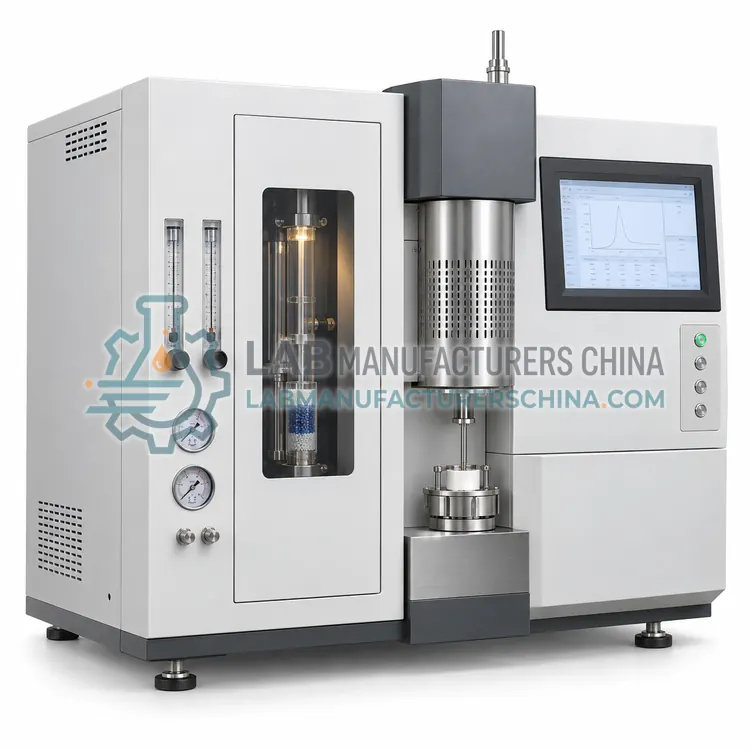
钢用氧氮分析仪
Price on request — FOB / CIF quoted per order
Prices depend on configuration, quantity and destination port.
| Oxygen range | 0.1 ppm–0.5% |
|---|---|
| Nitrogen range | 0.1 ppm–3% |
| Sample mass | 0.3–1 g |
| Furnace temperature | 2500–3000 °C |
| Oxygen precision (RSD) | ≤1.5% at 50 ppm |
| Nitrogen precision (RSD) | ≤1.5% at 50 ppm |
By Lab Manufacturers China Technical TeamLast reviewed Standards: ASTM E1409, ASTM E1447, ASTM E1019
An oxygen-nitrogen analyzer for steel uses an impulse furnace and infrared and thermal conductivity detection to measure total O and N in steels and iron alloys. It supports routine melt shop control of oxide inclusions and nitrogen content.
An oxygen-nitrogen analyzer for steel uses an impulse furnace and infrared and thermal conductivity detection to measure total O and N in steels and iron alloys. It supports routine melt shop control of oxide inclusions and nitrogen content.
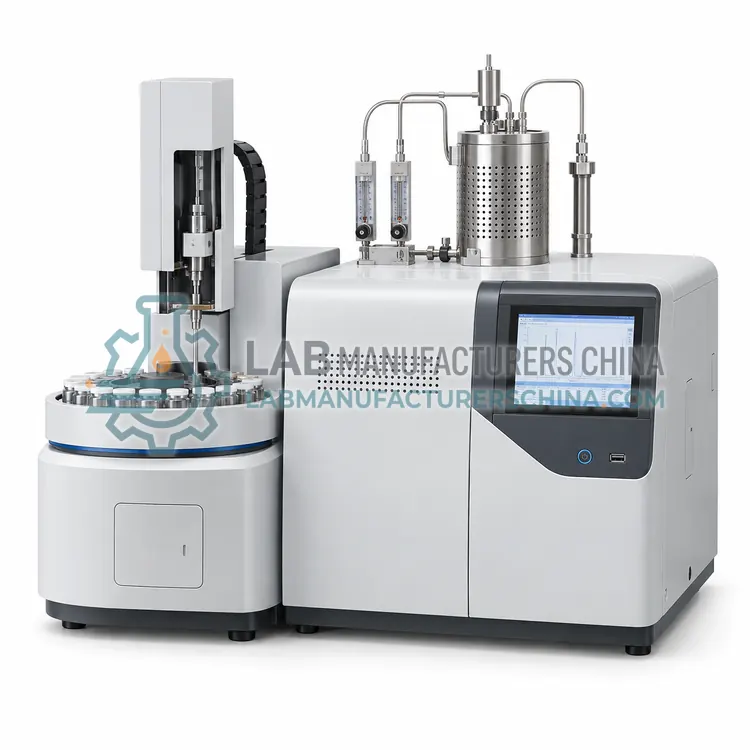
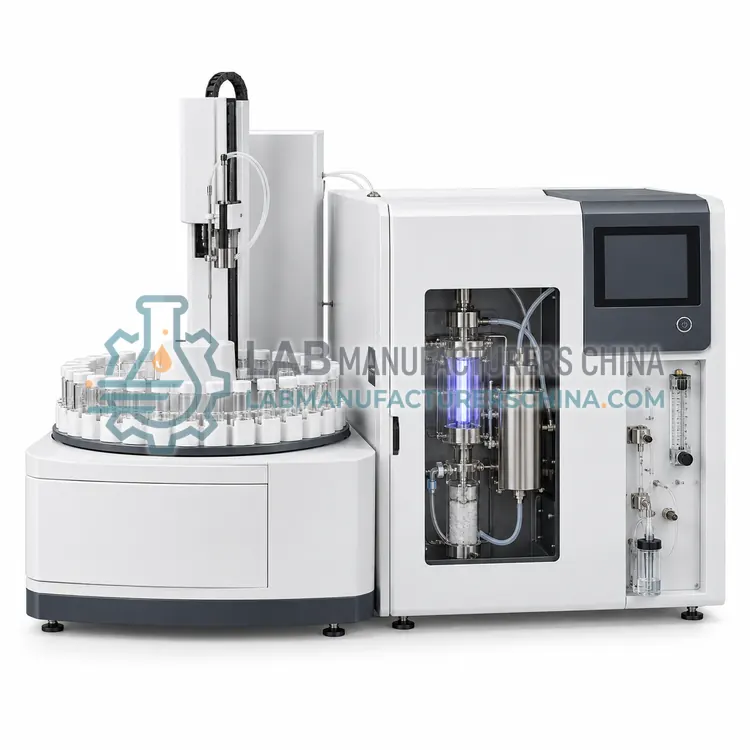
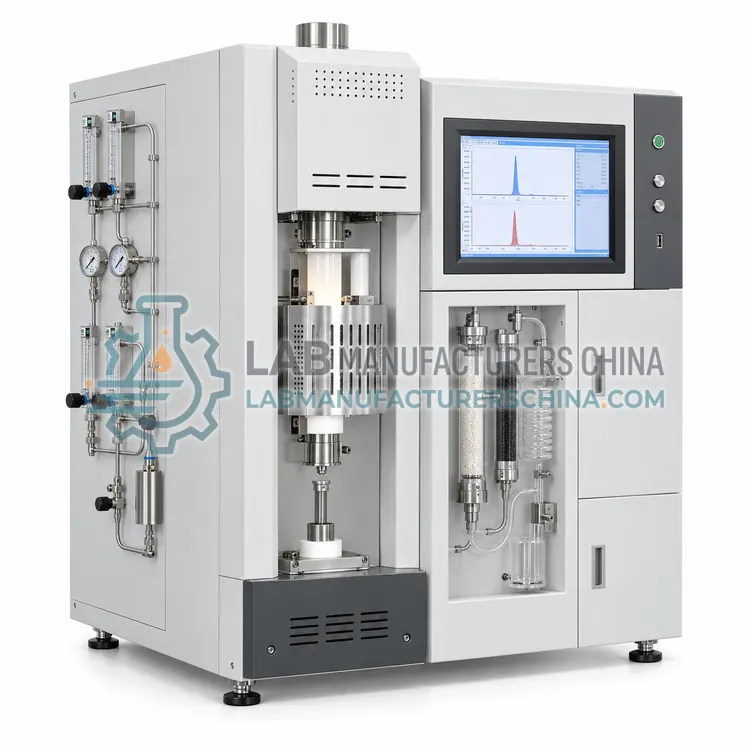
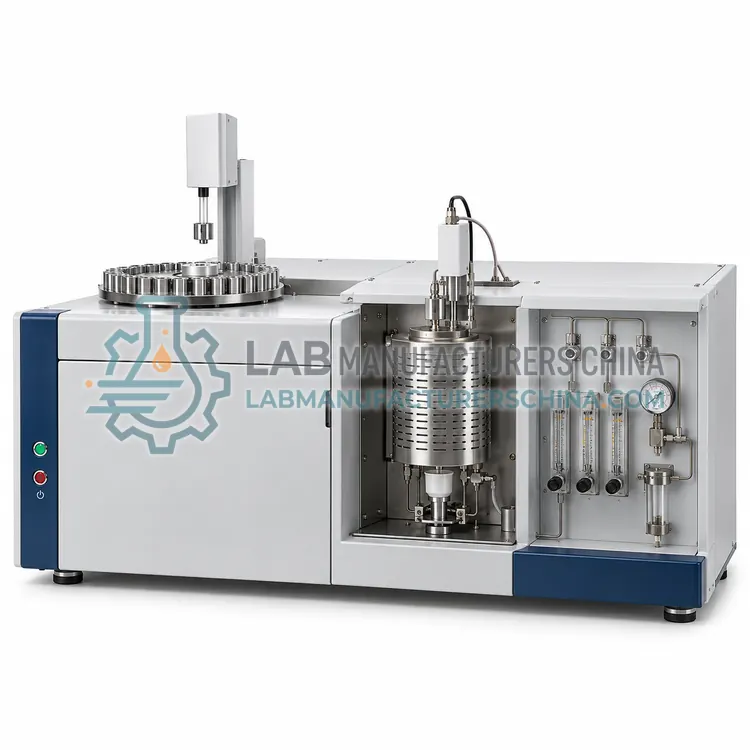
The oxygen-nitrogen analyzer for steel is an impulse furnace system that heats a graphite crucible to 2500–3000 °C under helium. A sample of 0.3–1 g melts and releases oxygen as CO, which is measured by an infrared cell, and nitrogen as N2, measured by a thermal conductivity cell after purification. Typical ranges are oxygen 0.1 ppm to 0.5% and nitrogen 0.1 ppm to 3%. An analysis takes 60–120 seconds including outgassing. Stable carrier flow, electrode cooling, and dust handling are essential for reproducible results. Steel pins cut from lollipop or dip samples are common, and sample preparation includes surface grinding or chemical cleaning to eliminate oxide scale. The instrument can be paired with an optional hydrogen channel. Laboratories use it to evaluate deoxidation practice, nitride formation, and total oxygen as a measure of inclusion content.
An oxygen nitrogen hydrogen analyzer places a sample of 0.1–1 g in a high-purity graphite crucible clamped between two electrodes in a sealed furnace flushed with helium or argon. A high current heats the crucible to 2000–3000 °C, melting the sample and releasing its gases. Oxygen reacts with graphite to form CO, nitrogen leaves as N2, and hydrogen as H2. CO and, after oxidation, CO2 are detected by non-dispersive infrared cells, while N2 and H2 are measured by a thermal conductivity cell after the gas stream passes rare earth copper oxide and absorbent traps. Hydrogen may be separated by a molecular sieve column. Results are calibrated against certified reference materials such as steel, titanium, and nickel alloys. Since gases are extracted from the bulk, the analysis gives total content, not surface contamination.
A typical oxygen-nitrogen analyzer for steel configuration offers oxygen range of 0.1 ppm–0.5%, nitrogen range of 0.1 ppm–3%, sample mass of 0.3–1 g, furnace temperature of 2500–3000 °C, oxygen precision (RSD) of ≤1.5% at 50 ppm and nitrogen precision (RSD) of ≤1.5% at 50 ppm. Values are indicative of the product class; the exact figures for each configuration are confirmed on the quotation and the calibration documents supplied with the instrument.
The Oxygen-Nitrogen Analyzer for Steel is used in steel melt shop gas control, inclusion assessment by total oxygen, bearing and tool steel qualification and welding consumable testing. Across the wider Oxygen Nitrogen Hydrogen Analyzers class, laboratories also deploy it for steel cleanliness and gas content control, titanium and zirconium alloy qualification and hydrogen embrittlement investigation.
Relevant standards and methods include ASTM E1409, ASTM E1447, ASTM E1019, ISO 10720, GB/T 11261, GB/T 20124 and IEC 61010-1. Certification candidates for this model are CE and ISO 9001 manufacturing; each is to be confirmed for the specific configuration before shipment, and certificates are supplied only where they have been issued.
Hydrogen and oxygen results depend strongly on sample handling. Steel hydrogen specimens must be quenched in cold water and stored in liquid nitrogen or dry ice to prevent diffusion, and analyzed promptly. Oxygen and nitrogen samples are cleaned, dried, and handled with tongs. Use helium of at least 99.995% purity, regulated pneumatic gas, and cooling water at 15–25 °C. Crucible outgassing is performed before each run and furnace electrodes and dust filters need cleaning after a defined number of analyses, usually 30–100. Calibrate frequently with certified standards and check blanks daily. Installation requires fume extraction and adequate power, since the impulse furnace draws high current. Validate methods against ASTM E1409, ASTM E1447, and ISO 4295-type procedures.
Choose this variant for steels where oxygen and nitrogen are the main targets and hydrogen is tested separately. If hydrogen is also needed in the same sample, specify an O/N/H version. In an RFQ, define ranges, sample shapes, crucible supply, and standards such as ISO 10720 or GB/T 11261.
Decide which gases matter and in which matrices. Oxygen and nitrogen in steel and titanium require a standard impulse furnace, while hydrogen in steel at 0.5–10 ppm often calls for a dedicated hydrogen channel or a separate hydrogen analyzer with a thermal conductivity cell. For ceramics and refractory powders that release gas slowly, higher furnace power up to 5–8 kW and longer integration are needed. Specify expected ranges, because ppm-level oxygen needs low-range infrared cells and careful blank control. Consider sample geometry: pins and rods need a cutting station, whereas powders require tin or nickel capsules. Autosamplers with 20–50 positions and automatic crucible handling increase throughput. Check the availability of certified reference materials for your alloys and ask for detection limits, typically 0.05 ppm to 1 ppm, verified on matching materials.
| Oxygen range | 0.1 ppm–0.5% |
|---|---|
| Nitrogen range | 0.1 ppm–3% |
| Sample mass | 0.3–1 g |
| Furnace temperature | 2500–3000 °C |
| Oxygen precision (RSD) | ≤1.5% at 50 ppm |
| Nitrogen precision (RSD) | ≤1.5% at 50 ppm |
| Analysis time | 60–120 s |
| Carrier gas | Helium ≥99.995%, 450 mL/min |
| Cooling water | 15–25 °C, about 4 L/min |
| Power requirement | 220 V, 50 Hz, about 5 kW |
Indicative values for this product class. Final specifications are confirmed on the quotation and in the calibration documents supplied with the instrument.
Total oxygen is the sum of dissolved oxygen and oxygen bound in oxide inclusions. In deoxidized steel it is used as an indicator of cleanliness, since higher total oxygen corresponds to more oxide inclusions that can reduce fatigue life.
Pins or chips are ground or chemically cleaned to remove scale, degreased with acetone, dried, and weighed to 0.1 mg. They are handled with tongs to avoid contamination. Sampling method, such as lollipop or vacuum-tube sampling, also affects representativeness.
A graphite crucible is single-use for each analysis in standard impulse furnaces. Crucibles are purchased in lots with controlled blanks and outgassed at high power before each run to minimize oxygen and nitrogen contribution.
It is a technique in which a metal or ceramic sample is melted in a graphite crucible under helium or argon at 2000–3000 °C. Released oxygen forms CO, while nitrogen and hydrogen escape as N2 and H2, and each gas is detected to give total content.
Hydrogen dissolved in steel diffuses to defects and causes embrittlement, cracking, and delayed fracture, even at single-digit ppm levels. Measuring hydrogen after melting, welding, or plating helps manufacturers verify that specifications and baking treatments were effective.
Typically 0.1–1 g for metals, often as pins, chips, or cut pieces weighed to 0.1 mg. Powders are wrapped in tin or nickel capsules. Smaller masses are used for high-oxygen samples, while larger masses improve precision at sub-ppm levels.
钛和活泼金属用氧氮氢分析仪
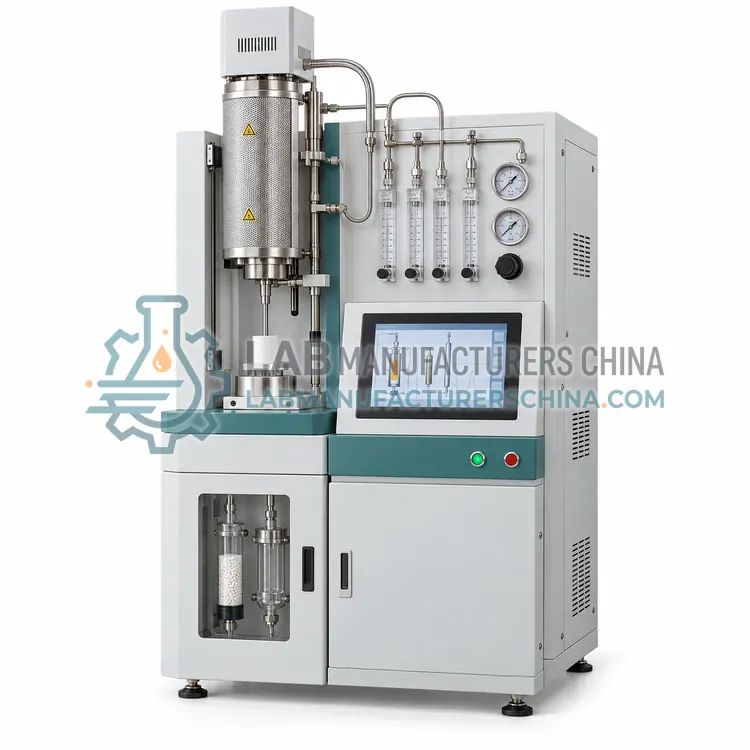
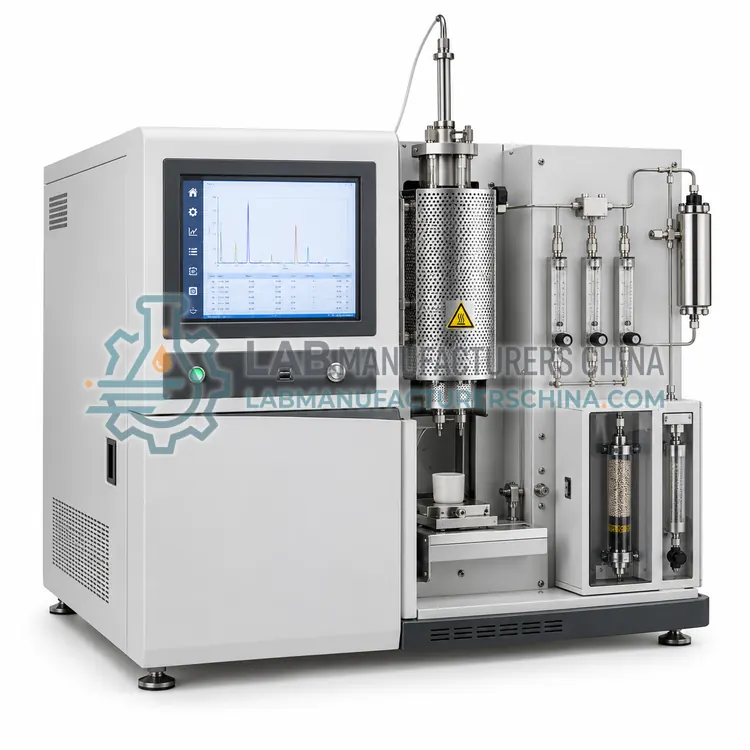
陶瓷和耐火材料用氧氮氢分析仪