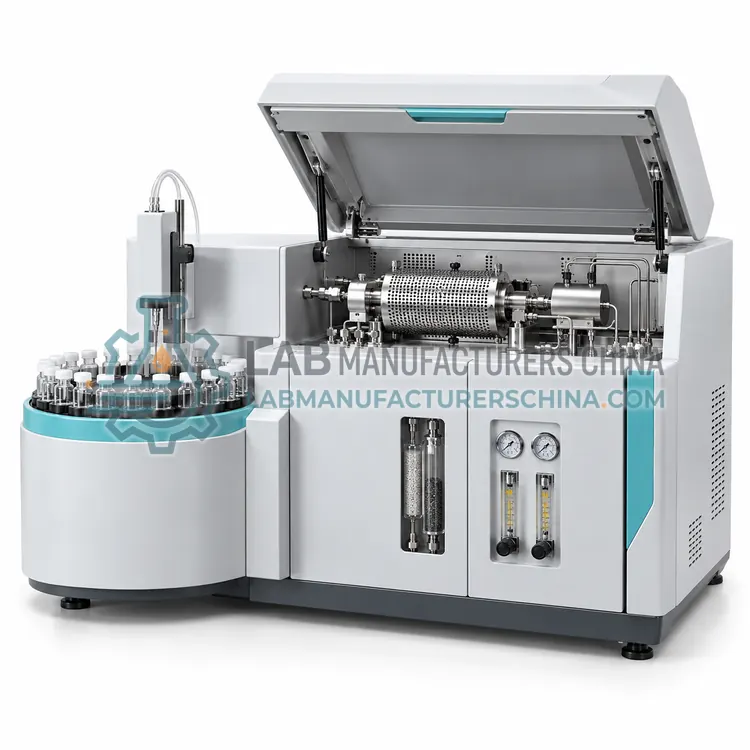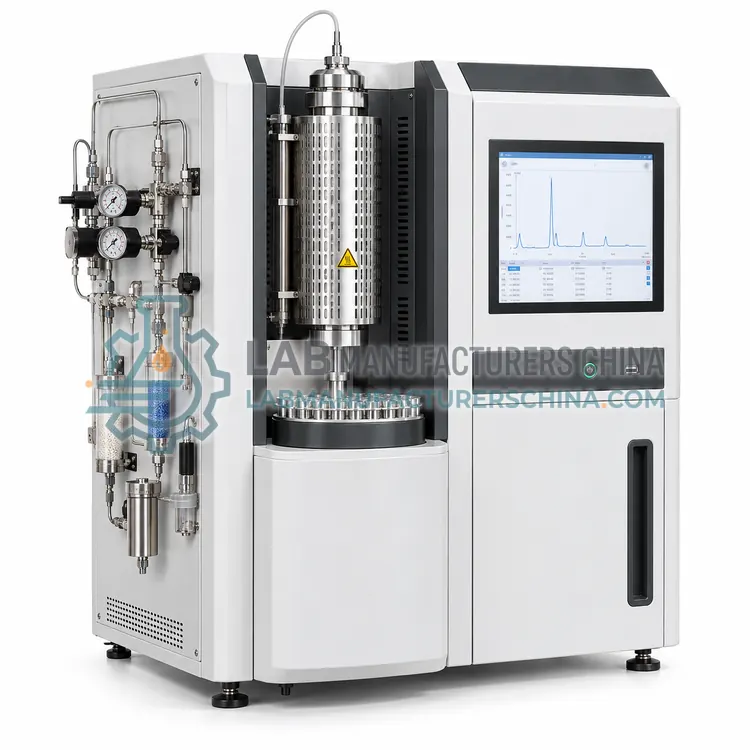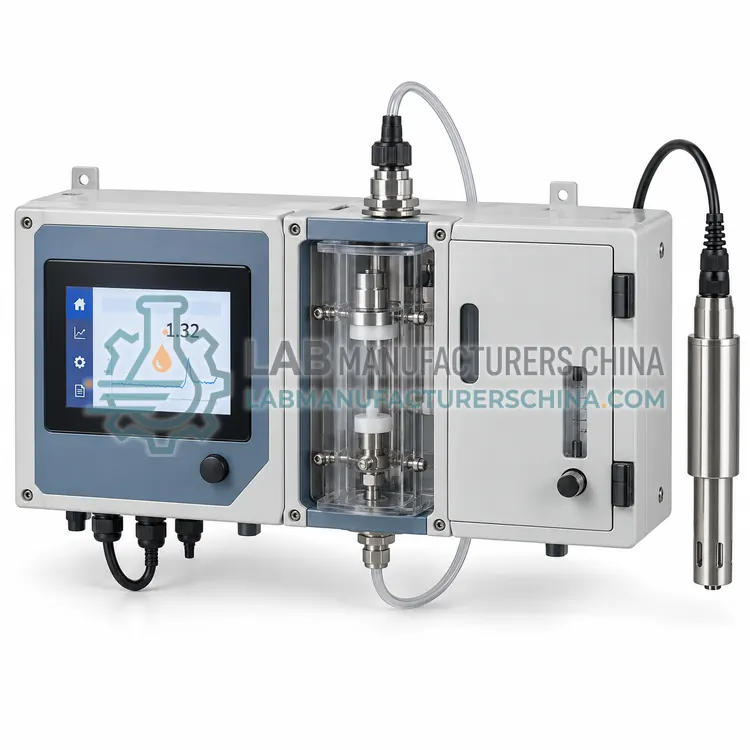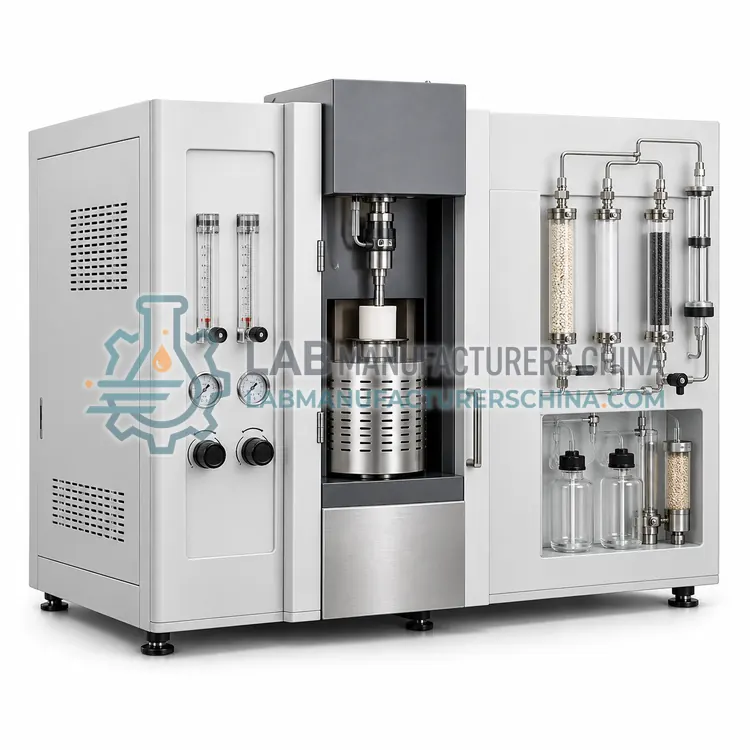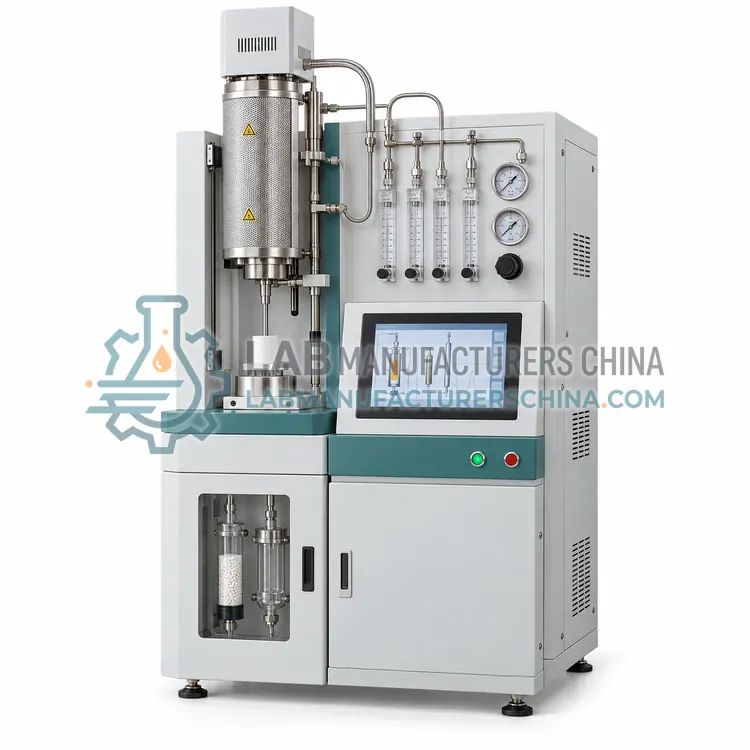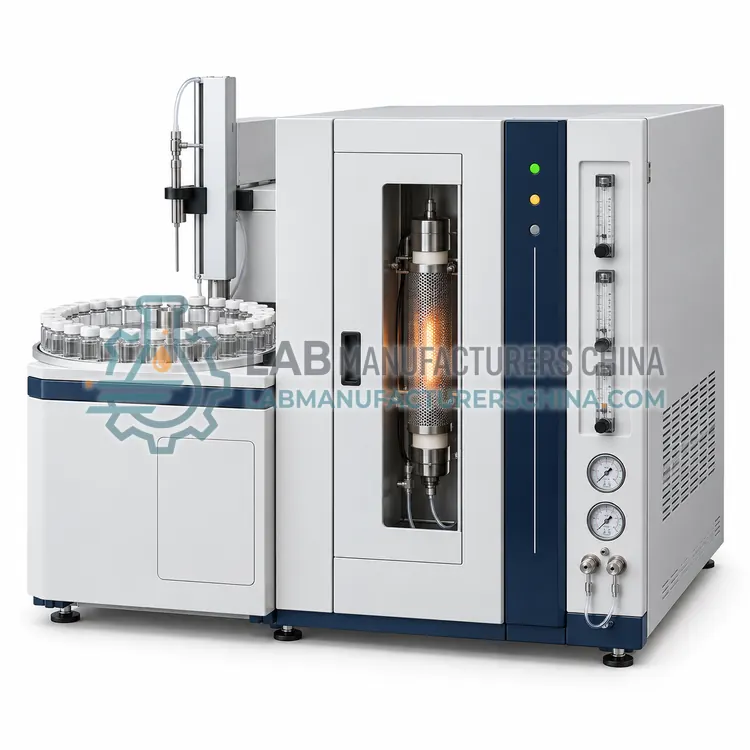
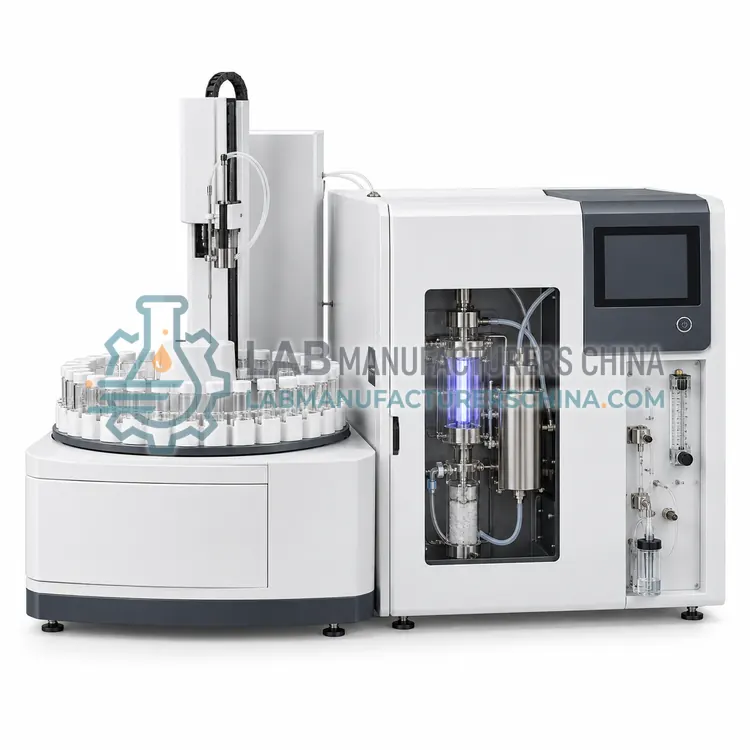
UV-Persulfate TOC Analyzer for Ultrapure Water
超纯水 UV-过硫酸盐 TOC 分析仪
- SKU TOA-0002
- TOC Analyzers
- CE (to be confirmed)
- ISO 9001 manufacturing (to be confirmed)
Price on request — FOB / CIF quoted per order
Prices depend on configuration, quantity and destination port.
Key specifications
| Measurement range | 0.5 µg/L–50 mg/L |
|---|---|
| Detection limit | 0.5 µg/L |
| Oxidation method | UV (185/254 nm) plus sodium persulfate |
| Reactor temperature | 60–100 °C |
| Sample volume | 5–20 mL |
| Repeatability (CV) | ≤2% at 100 µg/L |
Request a quote Download brochure · to be provided
By Lab Manufacturers China Technical TeamLast reviewed Standards: ISO 8245, EN 1484, ASTM D7573
What is the UV-Persulfate TOC Analyzer for Ultrapure Water?
A UV-persulfate TOC analyzer oxidizes organic carbon with sodium persulfate and ultraviolet light at low temperature and measures CO2 by NDIR. It reaches detection limits near 0.5 µg/L for purified water, pharmaceutical water, and power plant condensate. It suits low-carbon matrices.
What is the UV-Persulfate TOC Analyzer for Ultrapure Water?
A UV-persulfate TOC analyzer oxidizes organic carbon with sodium persulfate and ultraviolet light at low temperature and measures CO2 by NDIR. It reaches detection limits near 0.5 µg/L for purified water, pharmaceutical water, and power plant condensate. It suits low-carbon matrices.
Overview
The UV-persulfate TOC analyzer acidifies the sample, sparges inorganic carbon, then adds sodium persulfate reagent and irradiates the mixture with a low-pressure mercury lamp emitting 185 and 254 nm. Hydroxyl and sulfate radicals oxidize organic carbon to CO2 at 60–100 °C, and the CO2 is carried by purified gas to a long-path NDIR cell. Sample volumes of 5–20 mL improve sensitivity, and a dual-lamp or extended reactor helps oxidize resistant compounds such as urea. The system avoids a high-temperature furnace, so it has low blanks, few consumables, and minimal salt deposition when conductivity is low. Linear range is typically 0.5 µg/L to 50 mg/L. The method is best suited to clean matrices, because particulates and high salt reduce oxidation efficiency and may clog the reactor.
How does it work?
A TOC analyzer separates carbon into inorganic carbon (carbonate and bicarbonate) and organic carbon. In the NPOC method, the sample is acidified to pH below 2 with hydrochloric or phosphoric acid and sparged with carrier gas so inorganic carbon leaves as CO2, then the remaining organic carbon is oxidized. High-temperature catalytic combustion injects the sample into a furnace at 680–1200 °C with a platinum or cobalt catalyst, converting organic carbon to CO2. Wet chemical oxidation uses persulfate and ultraviolet light to generate hydroxyl radicals at lower temperatures. The resulting CO2 is dried, halogens are scrubbed, and the gas passes through an NDIR cell at about 4.26 µm. Peak area is proportional to carbon mass and is calibrated with potassium hydrogen phthalate. Total nitrogen bound can be measured by chemiluminescence after combustion.
What are the key features?
- Low-temperature oxidation with persulfate and UV at 185 and 254 nm.
- Detection limit near 0.5 µg/L with low blank for purified water.
- Sample volumes of 5–20 mL improve sensitivity at trace levels.
- Long-path NDIR cell and stable gas flow minimize baseline noise.
- Pharmaceutical system suitability routine using sucrose and benzoquinone.
What are the technical specifications?
A typical uv-persulfate toc analyzer for ultrapure water configuration offers measurement range of 0.5 µg/L–50 mg/L, detection limit of 0.5 µg/L, oxidation method of UV (185/254 nm) plus sodium persulfate, reactor temperature of 60–100 °C, sample volume of 5–20 mL and repeatability (CV) of ≤2% at 100 µg/L. Values are indicative of the product class; the exact figures for each configuration are confirmed on the quotation and the calibration documents supplied with the instrument.
Which applications is it used for?
The UV-Persulfate TOC Analyzer for Ultrapure Water is used in pharmaceutical purified water and WFI testing, power plant condensate monitoring, semiconductor ultrapure water and cleaning validation rinse samples. Across the wider TOC Analyzers class, laboratories also deploy it for drinking water and surface water monitoring, wastewater and effluent compliance testing and soil and sediment organic carbon analysis.
Which standards and certifications apply?
Relevant standards and methods include ISO 8245, EN 1484, ASTM D7573, ASTM D4129, USP <643>, Ph. Eur. 2.2.44, ISO 10694 and IEC 61010-1. Certification candidates for this model are CE and ISO 9001 manufacturing; each is to be confirmed for the specific configuration before shipment, and certificates are supplied only where they have been issued.
Use carbon-free glassware or pre-baked vials and keep samples acidified and refrigerated if not analyzed immediately, because volatile organics are lost and microbial activity changes carbon. Ultra-pure carrier gas and low-blank water for calibration standards are essential at low ppb levels. Replace the combustion catalyst, halogen scrubber, and humidity trap based on sample load, and check the furnace tube for salt build-up with high-salt samples. Verify linearity with potassium hydrogen phthalate and check inorganic carbon recovery with sodium carbonate. System suitability in pharmaceutical use is performed with sucrose and 1,4-benzoquinone standards. Maintain calibration records and blank logs, and ensure ventilation for exhaust gas and acid fumes.
How do I select the right UV-Persulfate TOC Analyzer for Ultrapure Water?
Select the UV-persulfate analyzer for clean water below about 5 mg/L, particularly when USP <643> or Ph. Eur. 2.2.44 system suitability is needed. It is unsuitable for heavily particulate or saline samples. Specify range, blank, sample volume, reagent supply, and whether a validation protocol is required.
How does it compare with other TOC Analyzers variants?
The main selection criterion is the oxidation technique. High-temperature catalytic combustion handles particulate-laden, high-salt, and difficult organics, and covers ranges from 4 µg/L to 30,000 mg/L with suitable catalyst and injection volumes. UV-persulfate oxidation suits clean waters such as ultrapure and pharmaceutical water, with detection limits near 0.5 µg/L. Decide whether total nitrogen is needed and whether solid samples such as soils, sediments, or powders must be analyzed, because that requires a solid sample module with a furnace up to 900–1000 °C. Online process analyzers need continuous sampling, automatic calibration, and relay outputs. Consider autosampler capacity of 30–90 vials, sample volume, and the acid and catalyst consumption. Verify compliance with EN 1484, ISO 8245, and USP <643> when applicable.
Full specifications
| Measurement range | 0.5 µg/L–50 mg/L |
|---|---|
| Detection limit | 0.5 µg/L |
| Oxidation method | UV (185/254 nm) plus sodium persulfate |
| Reactor temperature | 60–100 °C |
| Sample volume | 5–20 mL |
| Repeatability (CV) | ≤2% at 100 µg/L |
| Analysis time | 4–7 min per sample |
| Detector | Long-path NDIR |
| Carrier gas | High-purity nitrogen or synthetic air |
| Reagent consumption | Persulfate and acid, about 0.5 mL per run |
Indicative values for this product class. Final specifications are confirmed on the quotation and in the calibration documents supplied with the instrument.
Applications
- Pharmaceutical purified water and WFI testing
- Power plant condensate monitoring
- Semiconductor ultrapure water
- Cleaning validation rinse samples
Key features
- Low-temperature oxidation with persulfate and UV at 185 and 254 nm.
- Detection limit near 0.5 µg/L with low blank for purified water.
- Sample volumes of 5–20 mL improve sensitivity at trace levels.
- Long-path NDIR cell and stable gas flow minimize baseline noise.
- Pharmaceutical system suitability routine using sucrose and benzoquinone.
Frequently asked questions about UV-Persulfate TOC Analyzer for Ultrapure Water
It can for low-strength samples, but particulates, high salt, and refractory organics reduce oxidation efficiency and may clog the reactor. High-temperature combustion is generally recommended for wastewater and samples above about 50 mg/L.
Blank carbon from reagents, water, carrier gas, and glassware limits sensitivity. Using high-purity persulfate, carbon-free water, and closed sampling minimizes the blank, and performance is verified with low-level standards and system blanks.
A sucrose standard, which is easily oxidized, and a 1,4-benzoquinone standard, which is harder to oxidize, are analyzed at the same carbon concentration. The response efficiency of the harder compound must meet the pharmacopoeia limit, typically 85–115%.
It measures total organic carbon, the carbon bound in organic compounds, by oxidizing it to CO2 and detecting the gas with a non-dispersive infrared cell. Inorganic carbon is removed by acidification and sparging first or measured separately as TIC.
Total carbon (TC) is all carbon in the sample. Total inorganic carbon (TIC) is carbonate, bicarbonate, and dissolved CO2. TOC is TC minus TIC, or the carbon remaining after inorganic carbon is removed in the NPOC method.
Neither is universally better. High-temperature catalytic combustion handles particulates, salts, and hard-to-oxidize organics. UV-persulfate is more sensitive for clean waters such as purified water. Method choice should reflect the sample matrix and required detection limit.
Related models