Standard Mooney Viscometer for Raw Rubber
生胶用标准门尼黏度仪
- SKU MOV-0001
- Mooney Viscometers
- CE (to be confirmed)
- ISO 9001 manufacturing (to be confirmed)
Price on request — FOB / CIF quoted per order
Prices depend on configuration, quantity and destination port.
Key specifications
| Cavity temperature | 100 °C standard condition |
|---|---|
| Temperature accuracy | ±0.3 °C |
| Rotor speed | 2.0 ± 0.02 rpm |
| Rotor diameter | About 30.5 mm |
| Cavity diameter | About 50.8 mm |
| Torque range | 0–200 Mooney units |
Request a quote Download brochure · to be provided
By Lab Manufacturers China Technical TeamLast reviewed Standards: ISO 289-1, ISO 289-2, ISO 289-4
What is the Standard Mooney Viscometer for Raw Rubber?
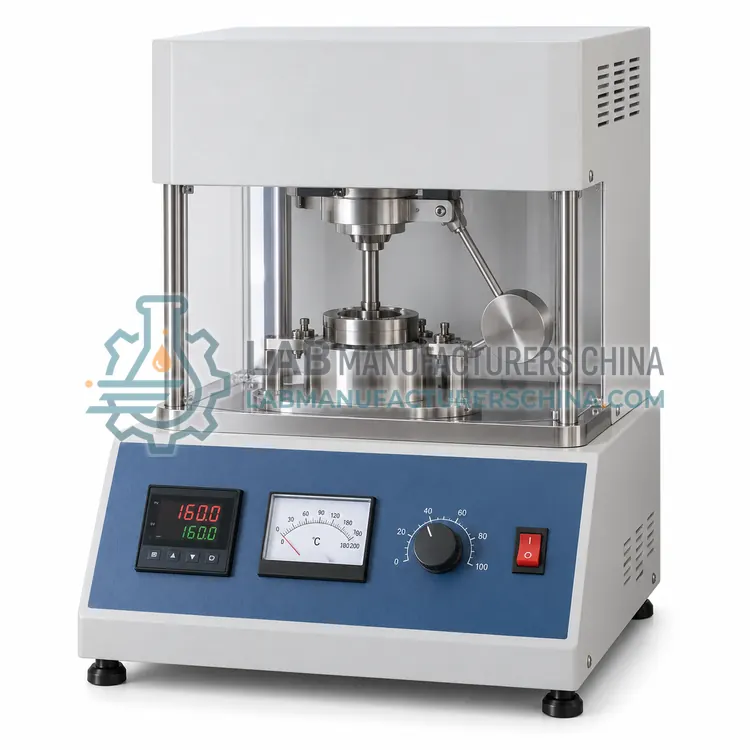
A standard Mooney viscometer measures the shearing torque of an unvulcanised rubber specimen in a heated cavity at one rotor speed. It is the reference instrument for grading raw natural and synthetic rubber and for incoming inspection.
What is the Standard Mooney Viscometer for Raw Rubber?
A standard Mooney viscometer measures the shearing torque of an unvulcanised rubber specimen in a heated cavity at one rotor speed. It is the reference instrument for grading raw natural and synthetic rubber and for incoming inspection.
Overview
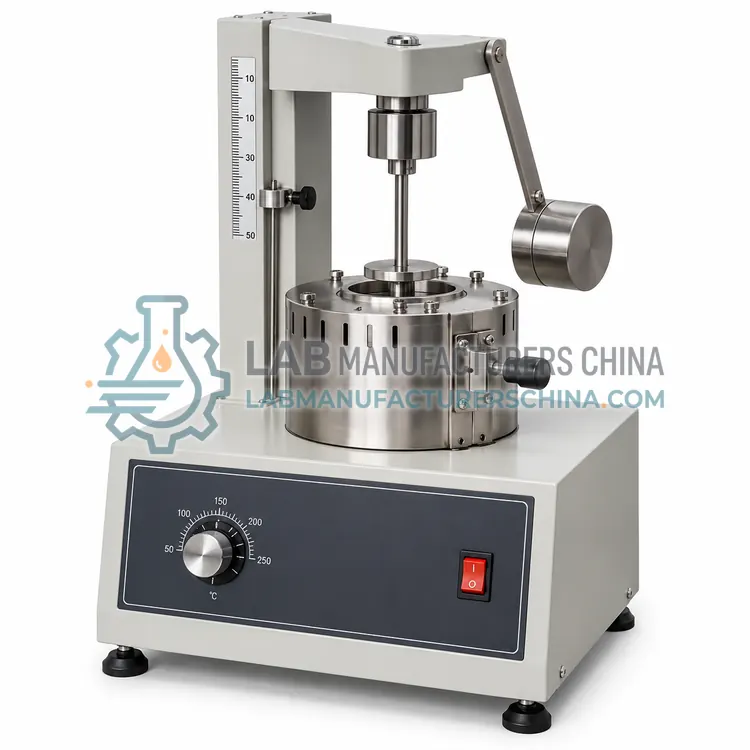
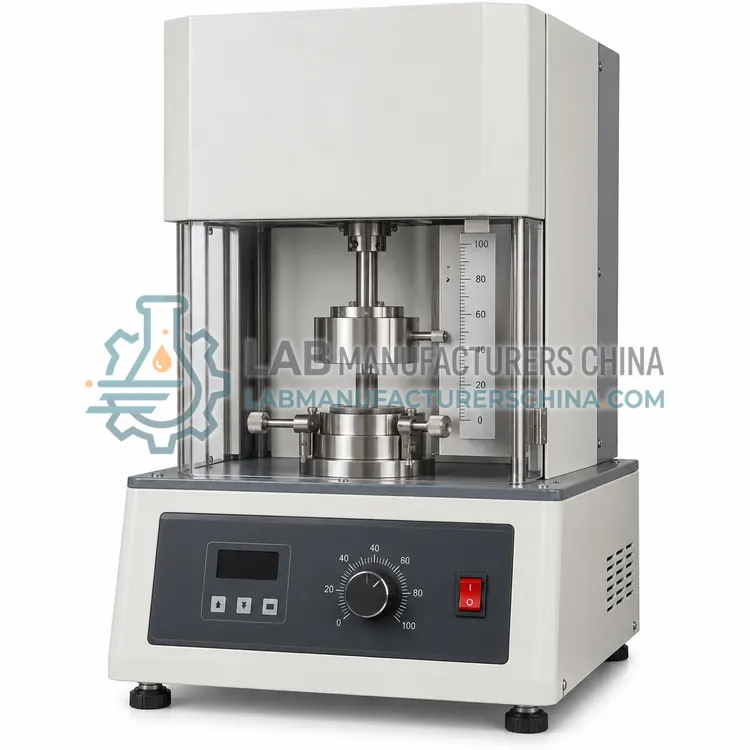
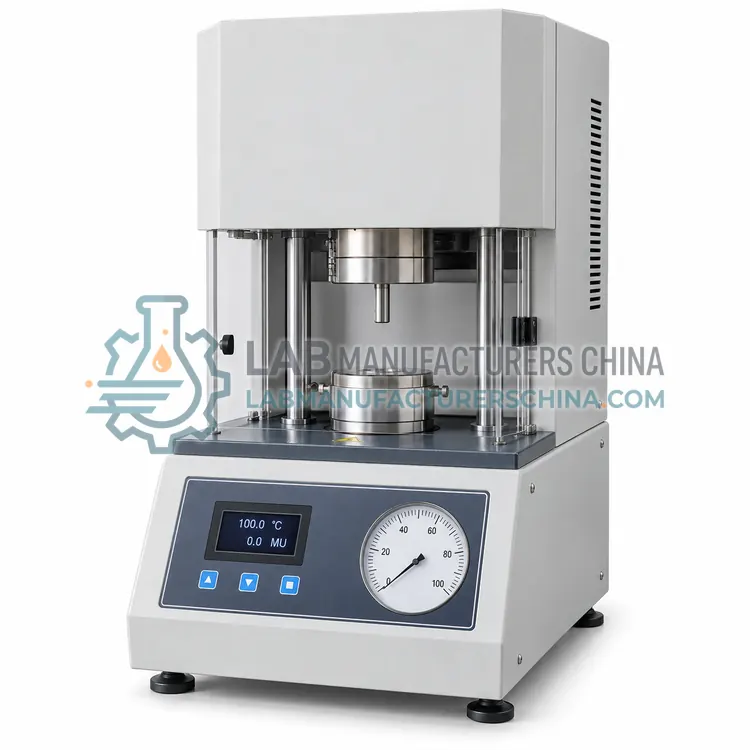
The instrument comprises a cylindrical cavity with radial grooves, a serrated biconical rotor, a direct-drive motor with torque measurement and a temperature controller holding the cavity at the standard test condition. The specimen is pressed into the cavity, preheated and then sheared at 2 rpm for four or eight minutes depending on the material, and the plateau torque is converted to Mooney units. Some models also run a scorch programme, which continues past the standard time and reports the point at which torque begins to rise. Because the geometry, rotor speed and temperature are fixed by the standard, the instrument is geometrically simple and its results are directly comparable with published raw rubber data and with supplier certificates.
How does it work?
A rubber specimen is placed in a grooved cylindrical cavity heated to the standard test temperature, usually 100 °C, and a serrated disc rotor is pressed into it. The rotor turns slowly, typically at 2 revolutions per minute, shearing the compound between rotor and cavity wall, and the torque needed to maintain rotation is converted into Mooney units. The specimen is preheated for a defined time so it reaches cavity temperature, then the rotor runs for a fixed period while the torque settles to a plateau, which is reported as the Mooney viscosity. Continued running beyond the standard time reveals scorch, and releasing the rotor at the end of the test allows Mooney stress relaxation to be measured, a parameter sensitive to molecular structure and to compound elasticity.
What are the key features?
- Grooved cylindrical cavity with serrated rotor
- Fixed rotor speed of 2 rpm
- Temperature control at the standard condition
- Standard four and eight minute test programmes
- Torque display in Mooney units
- Scorch programme option
What are the technical specifications?
A typical standard mooney viscometer for raw rubber configuration offers cavity temperature of 100 °C standard condition, temperature accuracy of ±0.3 °C, rotor speed of 2.0 ± 0.02 rpm, rotor diameter of About 30.5 mm, cavity diameter of About 50.8 mm and torque range of 0–200 Mooney units. Values are indicative of the product class; the exact figures for each configuration are confirmed on the quotation and the calibration documents supplied with the instrument.
Which applications is it used for?
The Standard Mooney Viscometer for Raw Rubber is used in raw rubber grading against specification, incoming inspection of natural rubber bales, verification of supplier certificates and scorch screening before mixing. Across the wider Mooney Viscometers class, laboratories also deploy it for mooney viscosity grading of raw natural and synthetic rubber, batch consistency control at mixing plants and scorch and pre-vulcanisation checks.
Which standards and certifications apply?
Relevant standards and methods include ISO 289-1, ISO 289-2, ISO 289-4, ASTM D1646, ASTM D3346, GB/T 1232.1 and IEC 61010-1. Certification candidates for this model are CE and ISO 9001 manufacturing; each is to be confirmed for the specific configuration before shipment, and certificates are supplied only where they have been issued.
Verify cavity temperature with a calibrated probe, because Mooney viscosity falls steeply with temperature and a deviation of one degree changes the value measurably. Keep the rotor and cavity grooves free of cured rubber, since residue reduces the shearing volume and biases results. Use the standard specimen mass, preheat time and rotor speed, and note which of the standard times applies to your material. Condition specimens at standard laboratory temperature and test oily or tacky compounds consistently, because slip at the rotor surface lowers the reading. A reference rubber compound provides the routine check on the complete measurement chain.
How do I select the right Standard Mooney Viscometer for Raw Rubber?
Choose the standard configuration when the requirement is a comparable Mooney value for raw rubber lots, which is the common case in incoming inspection. Confirm the temperature condition and programme times match your material, and order a reference rubber compound for periodic verification, since the rotor and cavity condition affect results over time.
How does it compare with other Mooney Viscometers variants?
Choose the configuration from the compound and the purpose. Standard single-cavity instruments suit raw rubber incoming inspection and are the reference geometry for historical data. An instrument with automatic rotor release and stress relaxation measurement adds information about molecular structure and is preferred where compound elasticity affects shaping. Multi-cavity or automated instruments are justified when many batches are tested per shift or when raw rubber is graded automatically. Higher-temperature operation or a dedicated cavity may be needed for silicone compounds, which are measured at a different condition, and for very stiff or highly filled compounds the torque range and rotor design must be confirmed before selection.
Full specifications
| Cavity temperature | 100 °C standard condition |
|---|---|
| Temperature accuracy | ±0.3 °C |
| Rotor speed | 2.0 ± 0.02 rpm |
| Rotor diameter | About 30.5 mm |
| Cavity diameter | About 50.8 mm |
| Torque range | 0–200 Mooney units |
| Preheat period | 1 min typical |
| Specimen mass | About 8–10 g |
| Data output | Torque curve and Mooney value |
Indicative values for this product class. Final specifications are confirmed on the quotation and in the calibration documents supplied with the instrument.
Applications
- Raw rubber grading against specification
- Incoming inspection of natural rubber bales
- Verification of supplier certificates
- Scorch screening before mixing
Key features
- Grooved cylindrical cavity with serrated rotor
- Fixed rotor speed of 2 rpm
- Temperature control at the standard condition
- Standard four and eight minute test programmes
- Torque display in Mooney units
- Scorch programme option
Frequently asked questions about Standard Mooney Viscometer for Raw Rubber
Test time depends on the material and the specification. A four minute reading is common for routine grading, while longer times or the large rotor condition may be specified for particular polymers. The time has a strong effect on the value, so it must always be reported together with the result and the instrument condition used.
Clean them after every specimen, because the cavity is small and a thin film of cured rubber measurably reduces the shearing volume and the torque. Use approved solvent and soft tools, and inspect the grooves for hardened residue at the end of each shift or test series.
Yes. Small and large rotor configurations differ in shearing volume and are used with different material specifications, so values from one are not directly comparable with the other. The standard defines the geometries, and certificates always state which configuration was used.
It indicates how stiff the unvulcanised compound is under the standard shearing condition. Higher values mean the rubber mixes, extrudes and shapes with more difficulty but usually has higher molecular weight and better green strength, while lower values flow more easily. Specifications set narrow ranges so that processing remains consistent.
After the rotor stops, the torque decays and the rate of decay is recorded. Fast relaxation indicates a narrow molecular weight distribution or less long-chain branching, while slow relaxation indicates the opposite. The parameter helps explain processing differences between raw rubber grades that have similar Mooney viscosity.
The compound must reach cavity temperature before the torque is meaningful, because viscosity depends strongly on temperature. The standard specifies a preheat period in which the rotor turns slowly or remains at low speed, and starting the measurement early gives a value that drifts during the run rather than plateauing.
Related models
Mooney Viscometer for High-Viscosity and Highly Filled Compounds
高黏度高填充胶料用门尼黏度仪
- CE (to be confirmed)
- +1