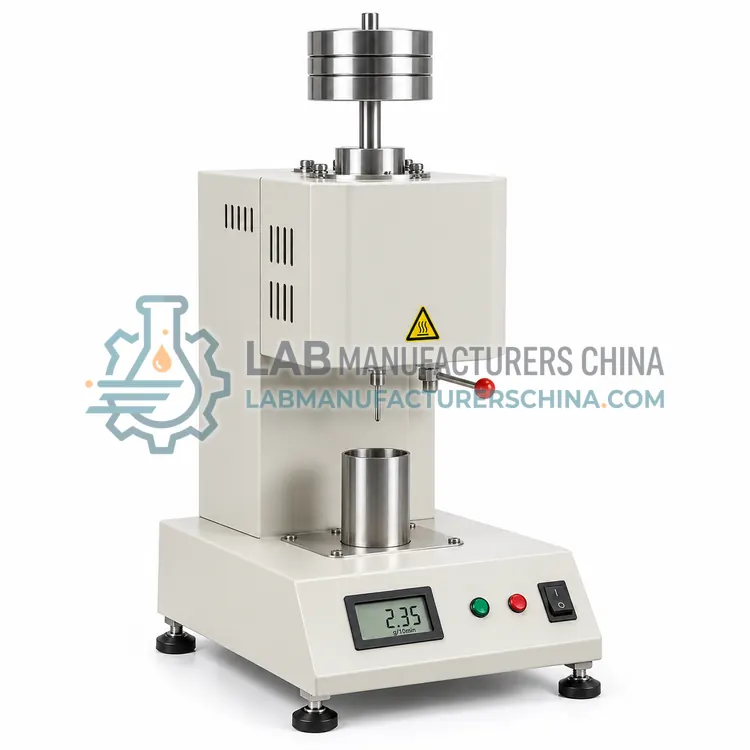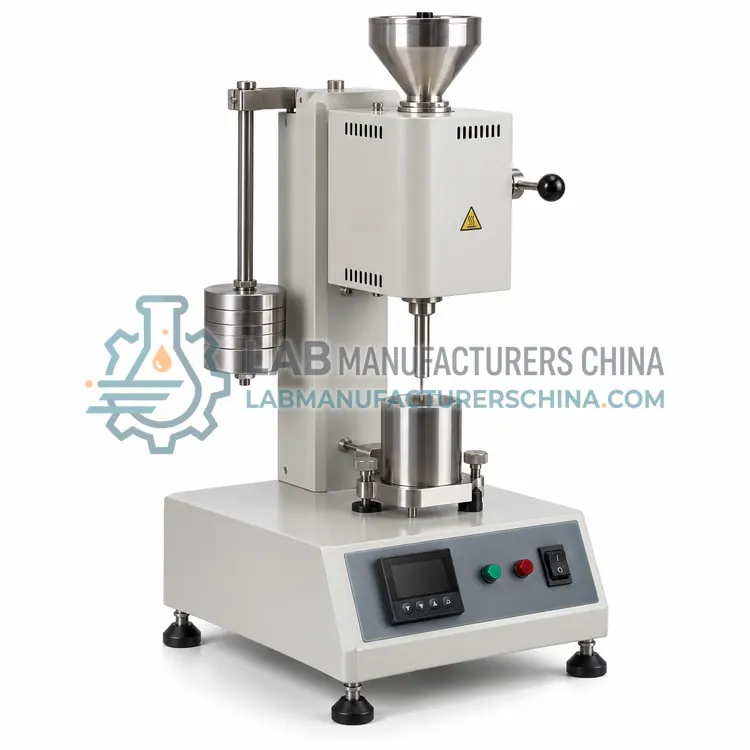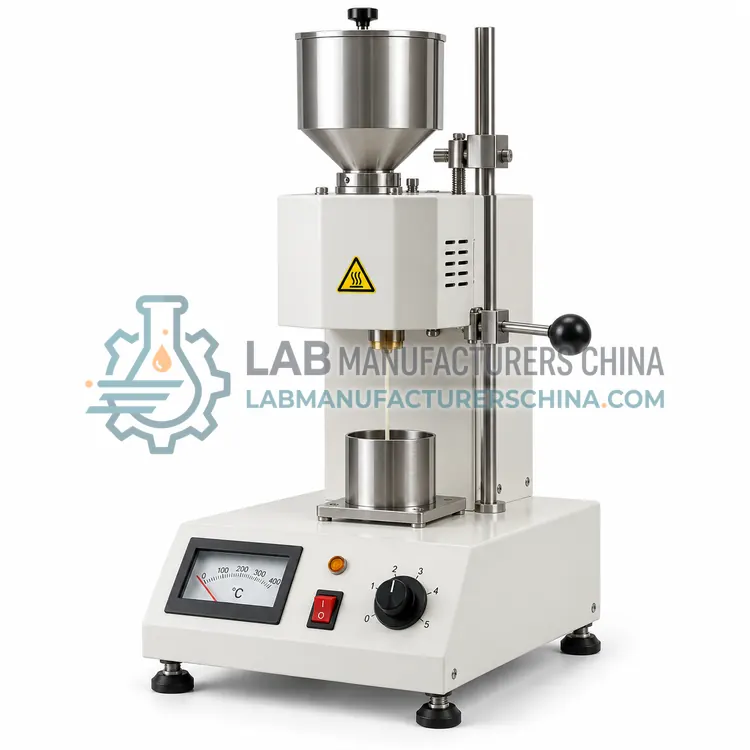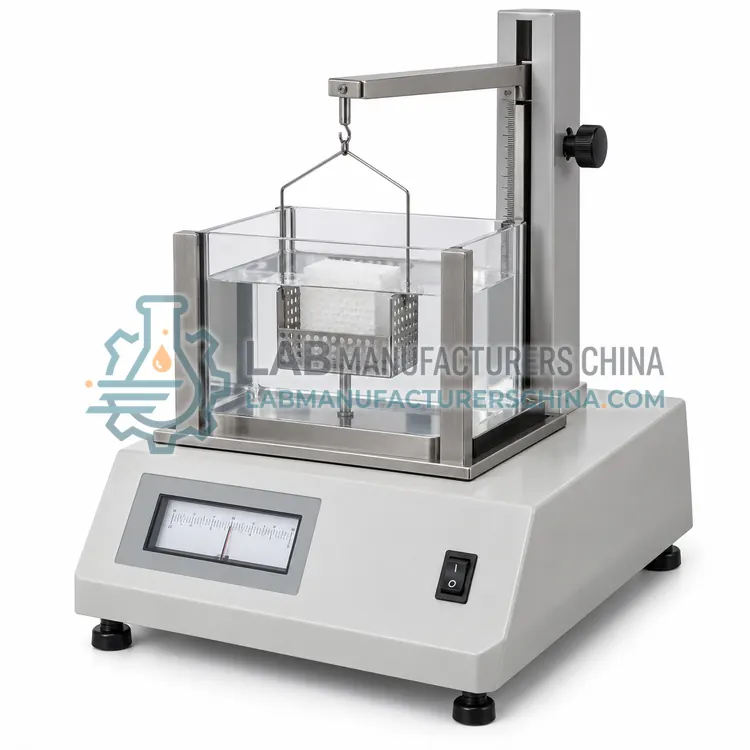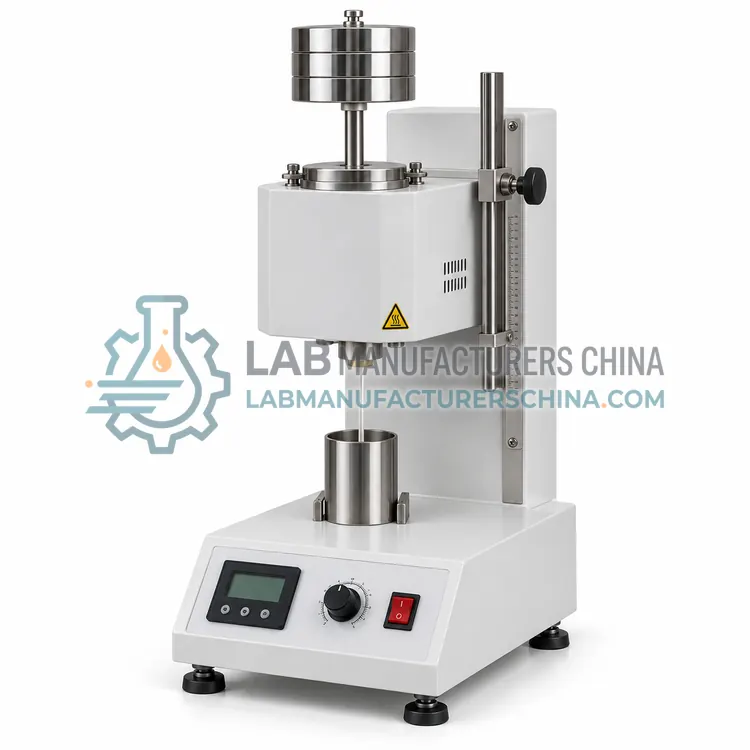
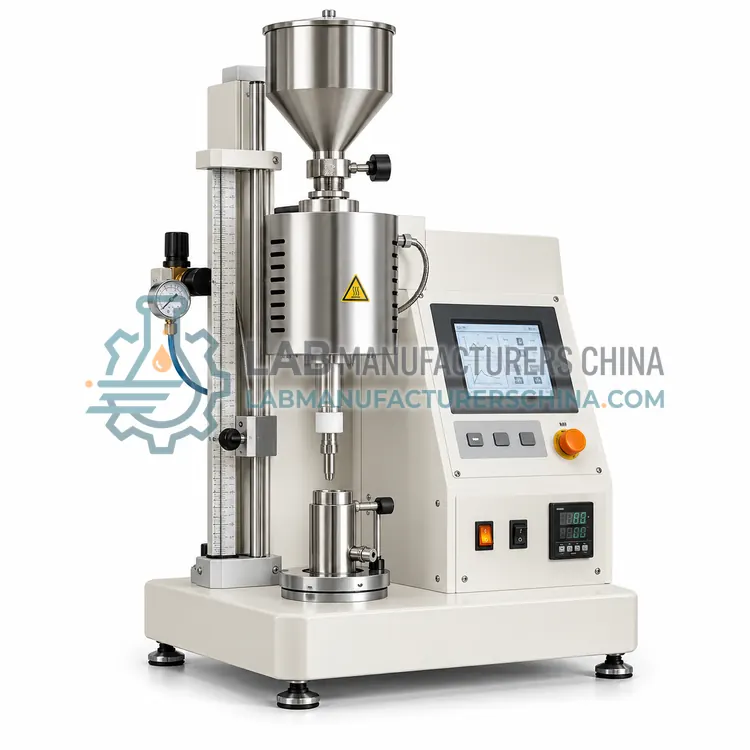
Melt Density Analyzer for Thermoplastics
热塑性塑料熔体密度测定仪
- SKU MFA-0004
- Melt Flow Analysis
- CE (to be confirmed)
- ISO 9001 manufacturing (to be confirmed)
Price on request — FOB / CIF quoted per order
Prices depend on configuration, quantity and destination port.
Key specifications
| Melt density range | 0.6–1.5 g/cm³ typical |
|---|---|
| Displacement resolution | 0.01 mm |
| Temperature range | 50–400 °C |
| Temperature accuracy | ±0.2 °C |
| Balance resolution | 0.1 mg |
| Load weights | 2.16 / 5 / 10 / 21.6 kg |
Request a quote Download brochure · to be provided
By Lab Manufacturers China Technical TeamLast reviewed Standards: ISO 1133-1, ASTM D1238, ASTM D3364
What is the Melt Density Analyzer for Thermoplastics?
A melt density analyzer determines the density of a polymer melt at the test temperature from the ratio of mass-flow rate to volume-flow rate. It is used to control filler loading and to explain flow-rate differences between lots.
What is the Melt Density Analyzer for Thermoplastics?
A melt density analyzer determines the density of a polymer melt at the test temperature from the ratio of mass-flow rate to volume-flow rate. It is used to control filler loading and to explain flow-rate differences between lots.
Overview
The instrument measures piston displacement with an encoder to obtain volume flow and simultaneously weighs the extruded material to obtain mass flow, so the ratio gives melt density at the test temperature. This value differs from room-temperature solid density and cannot be substituted for it. Because melt density responds to filler content, mineral or glass loading, and to differences in comonomer content, it is a useful independent quality parameter for filled compounds and masterbatches. The measurement also supports conversion between mass-flow rate and volume-flow rate, so a laboratory can report either unit from a single test and remain consistent with customer specifications. Software usually holds melt density values per material, and these values should be verified periodically with a reference material.
How does it work?
The method heats a plastic sample in a barrel of defined bore, compacts it with a piston and extrudes it through a die of defined diameter and length under a controlled load. Mass-flow rate is obtained by weighing extrudate cut over a known time, and volume-flow rate by recording piston displacement with an encoder. Dividing mass flow by volume flow gives melt density at the test temperature, which is a useful check on filler loading and on batch consistency. Temperature, load, die geometry and preheat time are fixed by the standard condition applicable to the plastic, so results from different laboratories are comparable only when the same condition letter is used. Comparative testing, where a reference material is run on the same instrument, is often the most practical way to confirm instrument condition.
What are the key features?
- Encoder-based volume flow measurement
- Integrated or linked balance for mass flow
- Melt density calculated at test temperature
- Conversion between MFR and MVR units
- Material-specific density value library
- Comparison with room-temperature density data
What are the technical specifications?
A typical melt density analyzer for thermoplastics configuration offers melt density range of 0.6–1.5 g/cm³ typical, displacement resolution of 0.01 mm, temperature range of 50–400 °C, temperature accuracy of ±0.2 °C, balance resolution of 0.1 mg and load weights of 2.16 / 5 / 10 / 21.6 kg. Values are indicative of the product class; the exact figures for each configuration are confirmed on the quotation and the calibration documents supplied with the instrument.
Which applications is it used for?
The Melt Density Analyzer for Thermoplastics is used in filler loading control in filled compounds, masterbatch consistency verification, explanation of flow-rate differences between lots and conversion between MFR and MVR specifications. Across the wider Melt Flow Analysis class, laboratories also deploy it for lot release of polyethylene and polypropylene grades, verification of recycled plastic melt flow consistency and effect of filler and reinforcement on flow behaviour.
Which standards and certifications apply?
Relevant standards and methods include ISO 1133-1, ASTM D1238, ASTM D3364, GB/T 3682.1, GB/T 3682.2 and IEC 61010-1. Certification candidates for this model are CE and ISO 9001 manufacturing; each is to be confirmed for the specific configuration before shipment, and certificates are supplied only where they have been issued.
Level the instrument and allow full thermal equilibration before the first measurement, then verify barrel temperature with an external probe. Check die bore and length against the standard tolerance and replace worn dies, because an enlarged bore lowers the measured value. Use only dried material for hygroscopic plastics stated in the method, and discard any extrudate containing bubbles or voids. Clean the barrel between materials with purging compound, not with metal tools. Keep weights traceable and record the standard condition, sample mass, preheat time and any melt density value with every result so that a reviewer can reconstruct the test.
How do I select the right Melt Density Analyzer for Thermoplastics?
Select melt density measurement when filler or reinforcement content varies between lots, when customers specify MVR while your historical data is in MFR, or when a flow-rate change must be attributed to formulation rather than to molecular structure. Confirm the balance resolution and the temperature accuracy at the working point, because both propagate directly into the density result.
How does it compare with other Melt Flow Analysis variants?
Define the output you need first. For routine lot release, a gravimetric instrument that weighs timed cuts is adequate and easiest to defend against the standard. When results must be traceable in a digital system or the material is difficult to cut, an instrument with piston displacement measurement is preferable. Where throughput dominates, choose a multi-position analyzer or a robotic loading configuration. Add a melt density capability when filler content or batch-to-batch density variation is a quality concern. For filled, reinforced or very high molecular weight plastics, specify the load set and a corrosion- or abrasion-resistant barrel and die, because standard hardware may not reach the required condition or may wear quickly.
Full specifications
| Melt density range | 0.6–1.5 g/cm³ typical |
|---|---|
| Displacement resolution | 0.01 mm |
| Temperature range | 50–400 °C |
| Temperature accuracy | ±0.2 °C |
| Balance resolution | 0.1 mg |
| Load weights | 2.16 / 5 / 10 / 21.6 kg |
| Die dimensions | Ø 2.095 mm × 8.0 mm |
| Measurement uncertainty | ±0.005 g/cm³ typical |
| Data output | MFR, MVR and melt density per test |
| Power supply | 220 V, 50/60 Hz |
Indicative values for this product class. Final specifications are confirmed on the quotation and in the calibration documents supplied with the instrument.
Applications
- Filler loading control in filled compounds
- Masterbatch consistency verification
- Explanation of flow-rate differences between lots
- Conversion between MFR and MVR specifications
Key features
- Encoder-based volume flow measurement
- Integrated or linked balance for mass flow
- Melt density calculated at test temperature
- Conversion between MFR and MVR units
- Material-specific density value library
- Comparison with room-temperature density data
Frequently asked questions about Melt Density Analyzer for Thermoplastics
No. Melt density is measured at the test temperature and is generally lower than the room-temperature solid value because of thermal expansion and changes in packing. The two values must not be interchanged: converting between MFR and MVR requires the melt density at the test condition.
Mineral fillers such as calcium carbonate and talc have higher density than polyolefins, so increasing the filler fraction raises melt density, while glass fibre has an intermediate effect. Measuring melt density therefore provides a rapid indirect check on filler loading that complements ashing or thermogravimetric determination.
With a 0.01 mm displacement encoder and a 0.1 mg balance, uncertainties around 0.005 g/cm³ are realistic for homogeneous material. Filled or foaming compounds give larger scatter, and any bubbles in the extrudate bias the volume upwards and the density downwards, so segments must be inspected.
It indicates how easily the grade flows at the test condition, which correlates with processability: a high value suits thin-wall or complex mouldings, a low value suits extrusion of thick sections and gives better melt strength. Because it is sensitive to molecular weight and filler content, it also serves as a lot-to-lot consistency check.
Melt density is obtained by dividing the mass-flow rate by the volume-flow rate, both measured at the same condition. It changes if filler loading, polymer grade or additive content changes, so it provides an independent check that a flow-rate difference is caused by molecular structure rather than by a formulation change.
Grind or use a representative portion of the compound, dry it if the base resin requires it, and expect poorer repeatability because filler particles disturb flow and may block the die. Report the filler content with the result and consider abrasive-resistant dies, since fillers such as glass fibre wear the die land and change the geometry.
Related models