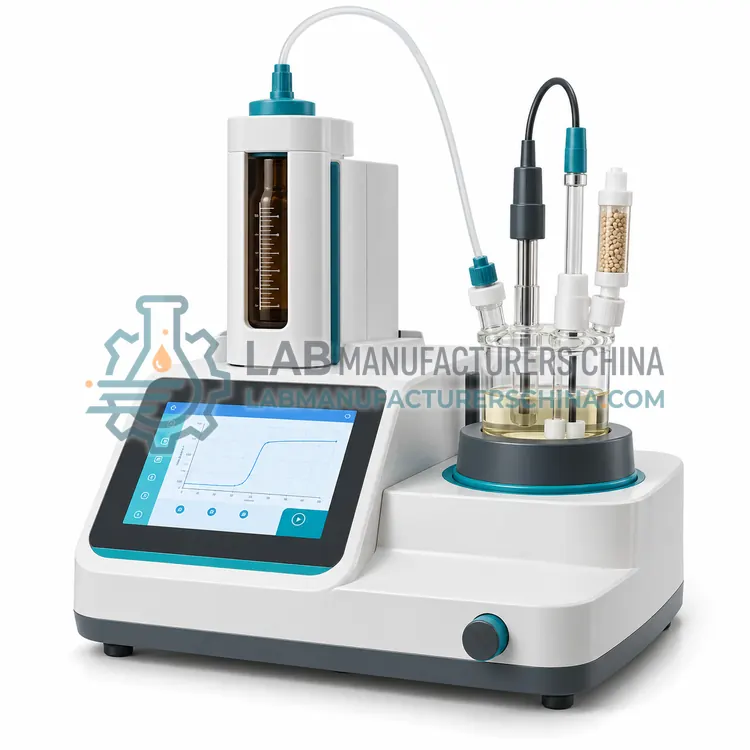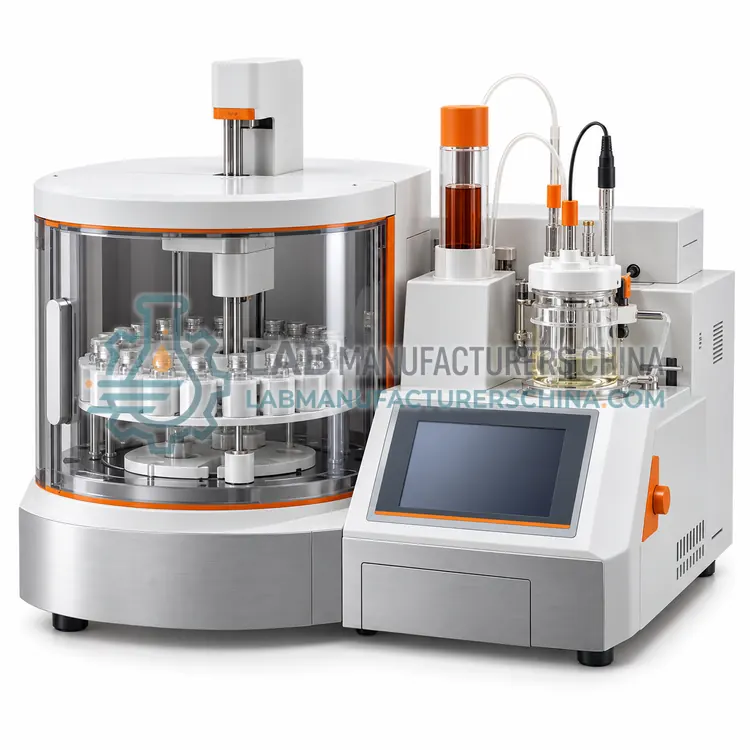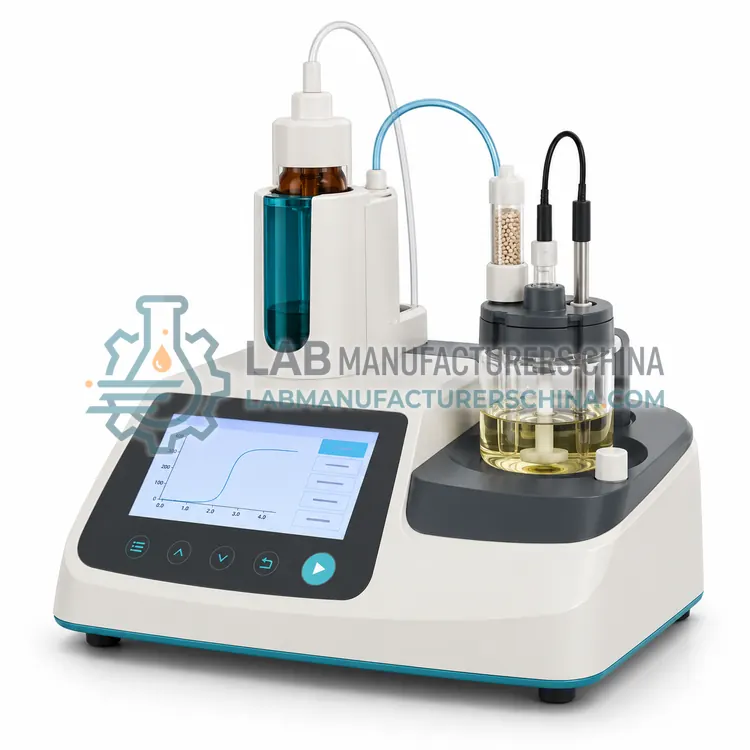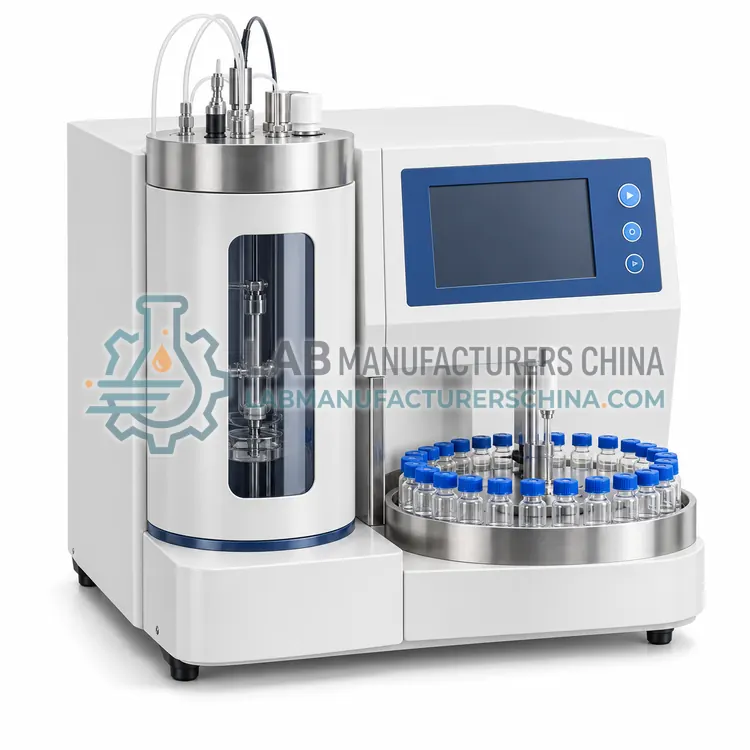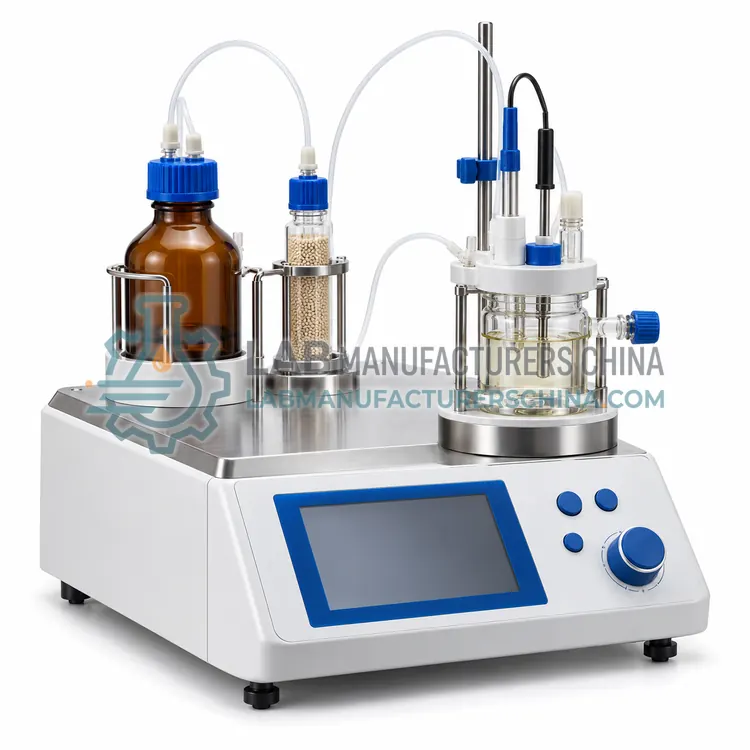
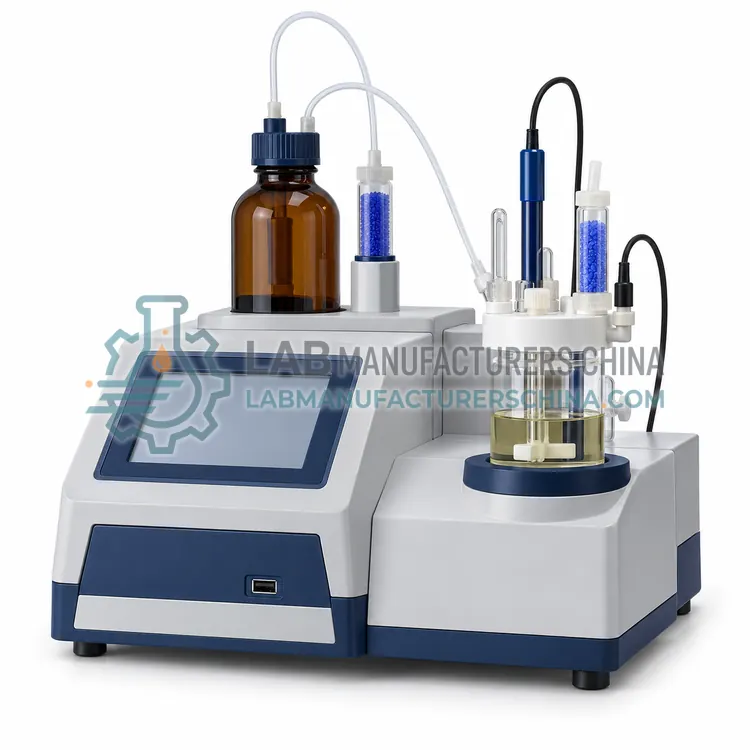
Volumetric Karl Fischer Titrator
容量法卡尔费休滴定仪
- SKU KFT-0001
- Karl Fischer Titrators
- CE (to be confirmed)
- IEC 61010-1 compliance (to be confirmed)
- ISO 13485 manufacturing (to be confirmed)
Price on request — FOB / CIF quoted per order
Prices depend on configuration, quantity and destination port.
Key specifications
| Measuring range | 100 ppm to 100 percent water |
|---|---|
| Burette volume | 10–25 mL |
| Volume resolution | 0.001 mL or better |
| Endpoint detection | Bipotentiometric platinum electrode |
| Precision | about 0.5 percent RSD |
| Titration cell | Sealed glass with desiccant tube |
Request a quote Download brochure · to be provided
By Lab Manufacturers China Technical TeamLast reviewed Standards: USP <921>, Ph. Eur. 2.5.12, JP 2.48
What is the Volumetric Karl Fischer Titrator?
A volumetric Karl Fischer titrator adds iodine-containing reagent from a burette until all water has reacted, and suits water contents from about 0.1 to 100 percent. It is chosen for routine moisture testing of solids, liquids and excipients.
What is the Volumetric Karl Fischer Titrator?
A volumetric Karl Fischer titrator adds iodine-containing reagent from a burette until all water has reacted, and suits water contents from about 0.1 to 100 percent. It is chosen for routine moisture testing of solids, liquids and excipients.
Overview
In volumetric Karl Fischer titration the sample is added to an anhydrous solvent in a sealed cell, and a reagent containing iodine, sulfur dioxide and an alcohol is added from a motorised burette. Water reacts immediately with the iodine, and when all water has been consumed free iodine appears, which the platinum electrode detects as a change in conductivity or potential. The volume consumed, corrected for drift and for the titrant's water equivalence, gives the water content. Volumetric titration handles water contents from about 0.1 percent to 100 percent and tolerates less soluble samples better than coulometric methods. Titrant strength is verified by standardisation against a certified water standard, and cell sealing, solvent freshness and efficient stirring are the main factors in reliable results.
How does it work?
The Karl Fischer method reacts water stoichiometrically with iodine, sulfur dioxide and an alcohol, usually methanol, to form hydrogen iodide and a sulfate ester. The amount of water is therefore proportional to the iodine consumed. In volumetric titration a reagent containing iodine is added from a burette until all water has reacted, and the endpoint is detected by a platinum electrode pair as a rise in conductivity or a drop in potential once free iodine appears. In coulometric titration iodine is generated electrochemically at the anode, and the charge required gives the water content directly by Faraday's law, which suits very low water levels. Anhydrous conditions, dry reagents and a sealed titration cell are essential, since atmospheric moisture is the main source of error.
What are the key features?
- Motorised burette delivering iodine reagent
- Water content from about 0.1 to 100 percent
- Platinum electrode endpoint detection
- Drift determination before each run
- Titrant standardisation with certified standard
- Sealed titration cell with efficient stirring
What are the technical specifications?
A typical volumetric karl fischer titrator configuration offers measuring range of 100 ppm to 100 percent water, burette volume of 10–25 mL, volume resolution of 0.001 mL or better, endpoint detection of Bipotentiometric platinum electrode, precision of about 0.5 percent RSD and titration cell of Sealed glass with desiccant tube. Values are indicative of the product class; the exact figures for each configuration are confirmed on the quotation and the calibration documents supplied with the instrument.
Which applications is it used for?
The Volumetric Karl Fischer Titrator is used in drug substance moisture testing, excipient water content, solvent water content and tablet and granule moisture. Across the wider Karl Fischer Titrators class, laboratories also deploy it for water content of drug substances, excipient moisture testing and lyophilised product water content.
Which standards and certifications apply?
Relevant standards and methods include USP <921>, Ph. Eur. 2.5.12, JP 2.48, ICH Q2(R2), IEC 61010-1 and ISO 17025. Certification candidates for this model are CE, IEC 61010-1 compliance and ISO 13485 manufacturing; each is to be confirmed for the specific configuration before shipment, and certificates are supplied only where they have been issued.
Work with dry glassware and fresh reagents, and keep the titration cell sealed when not in use, because the drift rate caused by atmospheric moisture is the main indicator of system condition. Perform a drift determination before starting, and replace solvent and reagent when drift rises. Calibrate the titrant against a certified water standard such as sodium tartrate or a water-in-methanol standard, and verify with an independent standard at defined intervals. Check sealing, electrodes and drying tubes, and record drift, standardisation and results. For oven methods, verify the temperature programme and the transfer line, since incomplete release or condensation causes low and variable results.
How do I select the right Volumetric Karl Fischer Titrator?
Choose volumetric titration when water content is above about 0.1 percent and samples dissolve in the Karl Fischer solvent. Confirm measuring range, burette resolution, endpoint detection and cell sealing. Evaluate solvent and titrant consumption, since these dominate running cost.
How does it compare with other Karl Fischer Titrators variants?
Choose the technique by expected water content. Volumetric titration suits water contents from about 0.1 to 100 percent and is faster for samples with appreciable water. Coulometric titration suits very low water levels, down to micrograms of water, and is preferred for lyophilised products and anhydrous solvents. Combined instruments switch between modes. For solids that do not dissolve or react with the reagent, an oven sample changer or a headspace method releases water by heating and carries it into the cell with a dry gas, which avoids side reactions and contamination. Compare measuring range, resolution, endpoint detection, titration cell sealing, sample changer capacity and software with audit trails.
Full specifications
| Measuring range | 100 ppm to 100 percent water |
|---|---|
| Burette volume | 10–25 mL |
| Volume resolution | 0.001 mL or better |
| Endpoint detection | Bipotentiometric platinum electrode |
| Precision | about 0.5 percent RSD |
| Titration cell | Sealed glass with desiccant tube |
| Sample handling | Direct injection or weighing |
| Power supply | 220 V, 50 Hz, about 0.1 kW |
Indicative values for this product class. Final specifications are confirmed on the quotation and in the calibration documents supplied with the instrument.
Applications
- Drug substance moisture testing
- Excipient water content
- Solvent water content
- Tablet and granule moisture
Key features
- Motorised burette delivering iodine reagent
- Water content from about 0.1 to 100 percent
- Platinum electrode endpoint detection
- Drift determination before each run
- Titrant standardisation with certified standard
- Sealed titration cell with efficient stirring
Frequently asked questions about Volumetric Karl Fischer Titrator
Enough to consume a measurable volume of titrant, typically giving a titration between about 20 and 80 percent of the burette volume. The exact mass depends on the expected water content, and it should be weighed accurately and recorded.
The solvent accumulates water and reaction products, which slows the endpoint and raises drift. It is replaced when drift exceeds a set value or after a defined number of titrations, and fresh solvent should be conditioned before use.
Atmospheric moisture ingress, contaminated solvent, wet glassware or a sample that reacts with the reagent to release or consume iodine. Checking sealing, blank and drift, and using fresh dry reagents usually identifies the cause.
It is a specific titrimetric method that determines water content from the stoichiometric reaction of water with iodine, sulfur dioxide and an alcohol. It measures water directly and is therefore suitable for water content limits in pharmacopoeial monographs.
Use volumetric for water contents from about 0.1 to 100 percent, where a burette delivers iodine reagent. Use coulometric for very low water levels, typically micrograms to a few milligrams of water per sample, where iodine is generated electrochemically.
Drift is the rate at which the cell gains water from the atmosphere or from reaction with residual moisture, and it is subtracted from the titration result. High or rising drift indicates a sealing problem, wet reagent or contaminated solvent, and causes inaccurate low results.