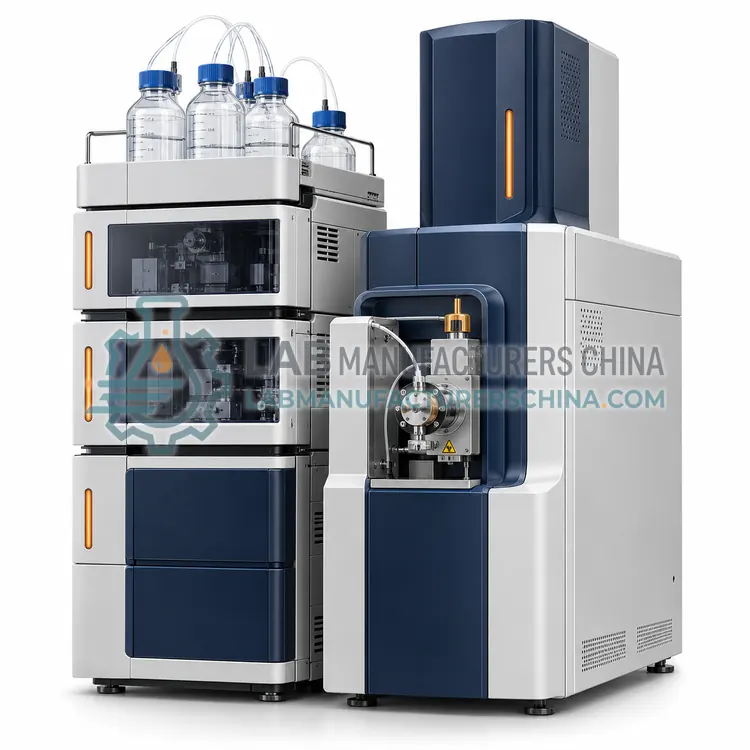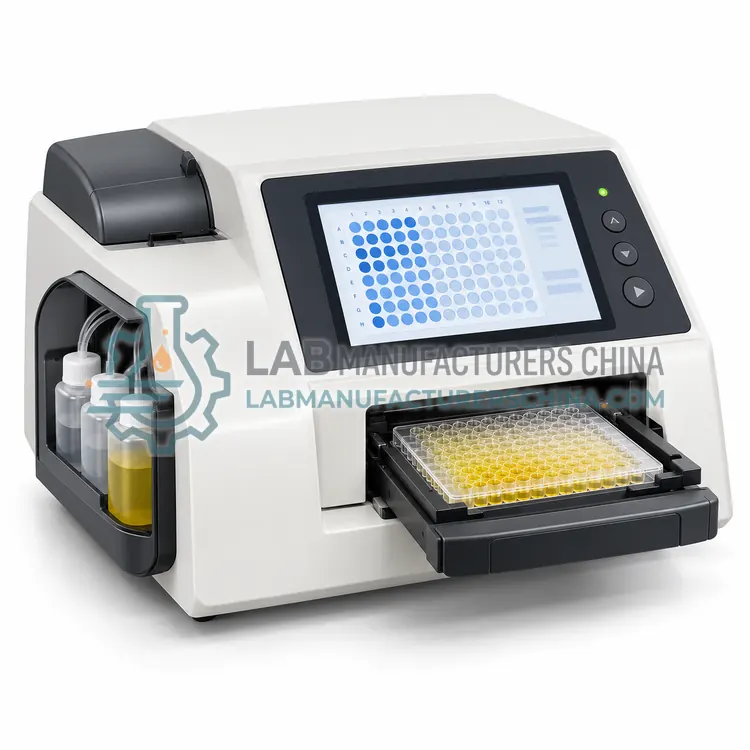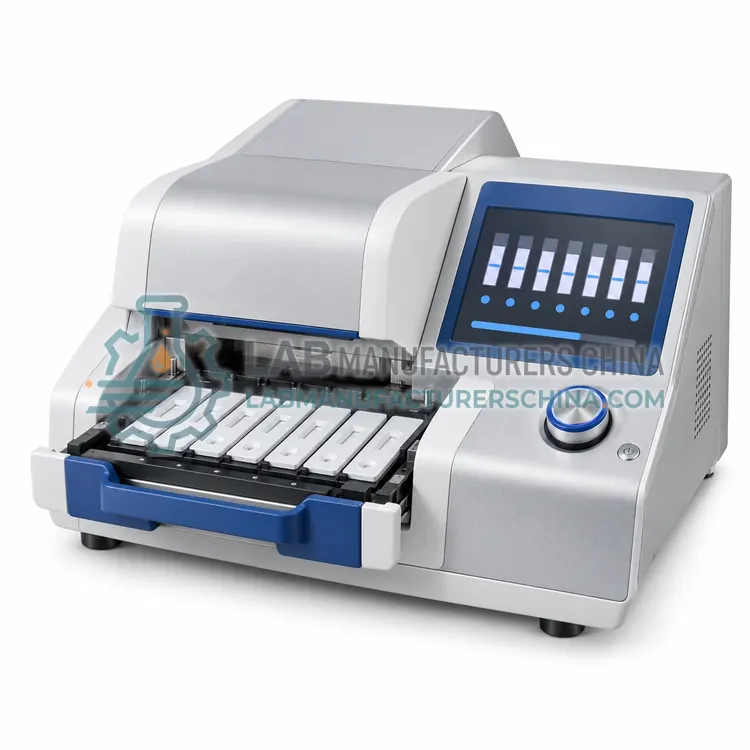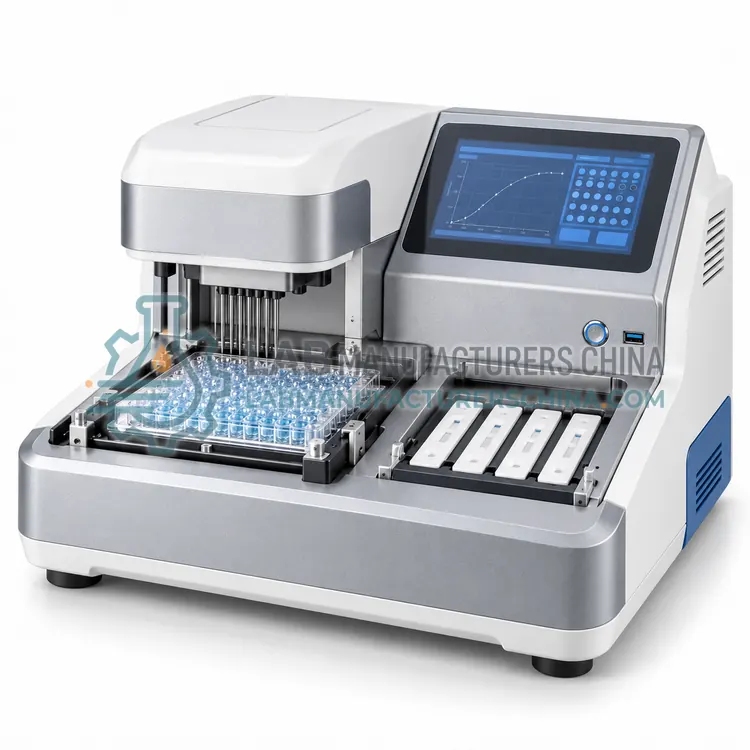
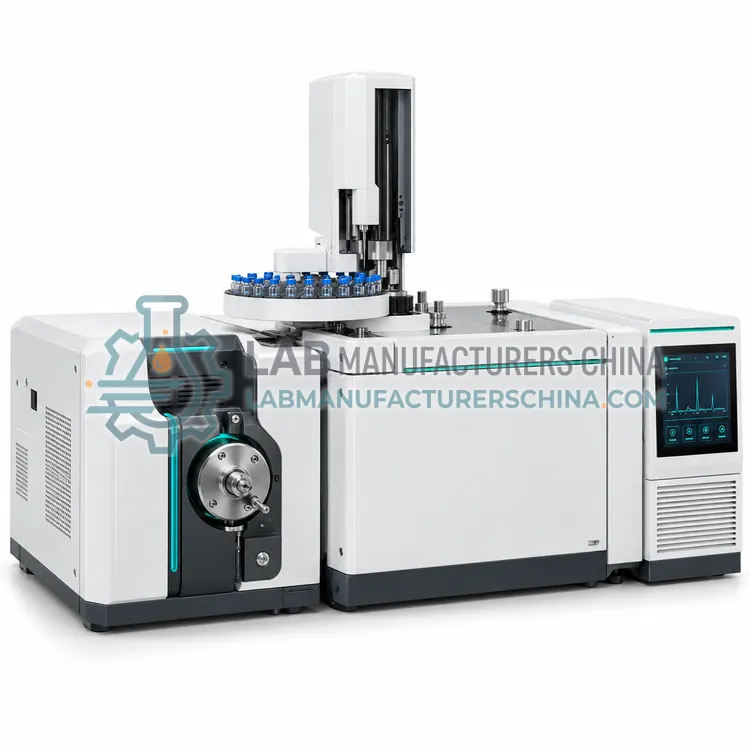
GC-MS System for Flavour and Solvent Residue Analysis
风味与溶剂残留分析 GC-MS 系统
- SKU FSA-0003
- Food Safety Analysis
- CE (to be confirmed)
- ISO 9001 manufacturing (to be confirmed)
Price on request — FOB / CIF quoted per order
Prices depend on configuration, quantity and destination port.
Key specifications
| Mass range | 10–1000 m/z |
|---|---|
| Ionisation | Electron impact, 70 eV |
| Scan rate | Up to 10,000 Da/s |
| Column oven range | 40–350 °C |
| Inlet | Split/splitless, programmable temperature |
| Sampling options | Liquid, headspace, SPME |
Request a quote Download brochure · to be provided
By Lab Manufacturers China Technical TeamLast reviewed Standards: ISO/IEC 17025, AOAC Official Methods of Analysis, EN 15633-1
What is the GC-MS System for Flavour and Solvent Residue Analysis?
A GC-MS system separates and identifies volatile and semi-volatile compounds such as solvents, flavour compounds and some pesticide classes. It supports residue checks, packaging migrant testing and flavour authenticity work in food and beverage laboratories.
What is the GC-MS System for Flavour and Solvent Residue Analysis?
A GC-MS system separates and identifies volatile and semi-volatile compounds such as solvents, flavour compounds and some pesticide classes. It supports residue checks, packaging migrant testing and flavour authenticity work in food and beverage laboratories.
Overview
The sample is introduced by liquid injection or headspace sampling into a heated inlet, then carried by helium through a capillary column where compounds separate according to volatility and polarity. Electron-impact ionisation produces reproducible fragmentation patterns that are matched against reference libraries, and selected ion monitoring improves sensitivity for target analytes. Headspace and solid-phase microextraction accessories allow solvent-free analysis of volatiles such as ethanol, acetaldehyde, residual monomers and packaging migrants from plastics. Quantification uses internal or external standards and requires matrix-matched calibration. The technique complements LC-MS/MS, which covers non-volatile and thermally labile compounds. Typical scan ranges run from 10 to 1000 m/z with library identification scores above 80 as a common acceptance criterion.
How does it work?
Food safety analysis separates the analyte from the food matrix and then quantifies it with a detector matched to its chemistry. High-performance liquid chromatography suits non-volatile additives, sweeteners and preservatives, with UV or diode-array detection and confirmation by mass spectrometry. LC-MS/MS gives the sensitivity and selectivity needed for pesticide residues at microgram per kilogram levels. Gas chromatography with mass detection covers volatile compounds such as solvents, flavours and some pesticide classes. Immunoassays rely on antibodies that bind allergens or toxins, producing a colorimetric signal proportional to concentration. PCR amplifies species-specific DNA sequences to identify allergens or adulterants. Rapid screening kits are confirmed by instrumental methods when a result is positive or disputed.
What are the key features?
- Electron-impact ionisation with reference spectral library matching
- Split/splitless inlet plus headspace and SPME options
- Selected ion monitoring for trace target analysis
- Capillary column oven programmable from 40 to 350 °C
- Scan range 10–1000 m/z with fast scan rates
- Software for library search, quantitation and audit trail
What are the technical specifications?
A typical gc-ms system for flavour and solvent residue analysis configuration offers mass range of 10–1000 m/z, ionisation of Electron impact, 70 eV, scan rate of Up to 10,000 Da/s, column oven range of 40–350 °C, inlet of Split/splitless, programmable temperature and sampling options of Liquid, headspace, SPME. Values are indicative of the product class; the exact figures for each configuration are confirmed on the quotation and the calibration documents supplied with the instrument.
Which applications is it used for?
The GC-MS System for Flavour and Solvent Residue Analysis is used in residual solvent and packaging migrant testing, flavour and aroma profiling of beverages, volatile pesticide and fumigant residues and off-odour and taint investigation. Across the wider Food Safety Analysis class, laboratories also deploy it for pesticide residue monitoring in fruit and vegetables, additive and preservative limit checks and allergen verification and cleaning validation.
Which standards and certifications apply?
Relevant standards and methods include ISO/IEC 17025, AOAC Official Methods of Analysis, EN 15633-1, EN 15634-1, Regulation (EC) No 396/2005, SANTE/11312/2021 and Codex Alimentarius. Certification candidates for this model are CE and ISO 9001 manufacturing; each is to be confirmed for the specific configuration before shipment, and certificates are supplied only where they have been issued.
Food matrices vary widely, so method validation must cover each commodity group, including fatty, acidic and high-pigment samples that cause ion suppression or interference. Standard solutions, antibodies and enzyme kits have limited shelf life and need controlled storage. Laboratories should participate in proficiency testing and keep traceable records of calibrations, control charts and confirmatory analysis. Allergen testing demands strict cleaning and segregation to avoid cross-contamination between samples. Confirm that your chosen platform has local service, spare parts and consumables, and that software meets data-integrity requirements when results support regulatory decisions.
How do I select the right GC-MS System for Flavour and Solvent Residue Analysis?
Choose GC-MS when your target analytes are volatile and thermally stable, including solvents, aroma compounds, fumigants and many organochlorine or organophosphorus pesticides. Specify headspace or SPME accessories if solvent-free analysis matters, and confirm the library and target-method packages you need. Verify detection limits against your regulatory reporting levels.
How does it compare with other Food Safety Analysis variants?
Match the detection technology to the analyte and to the limit you must reach. HPLC with UV or diode-array detection is sufficient and economical for many additives and preservatives at milligram per kilogram levels. Pesticide residue work at microgram per kilogram levels requires LC-MS/MS or GC-MS/MS, and multi-residue methods should cover the classes in your monitoring plan. Choose ELISA or lateral-flow kits when speed, low cost and on-site use matter, accepting them as screening tests. Real-time PCR is required for species identification and authenticity claims. Confirm the availability of certified reference standards, matrix-matched calibration and validated methods for your specific commodities.
Full specifications
| Mass range | 10–1000 m/z |
|---|---|
| Ionisation | Electron impact, 70 eV |
| Scan rate | Up to 10,000 Da/s |
| Column oven range | 40–350 °C |
| Inlet | Split/splitless, programmable temperature |
| Sampling options | Liquid, headspace, SPME |
| Detection limits | 0.005–0.1 mg/kg |
| Library | NIST-compatible, 200,000+ spectra |
| Carrier gas | Helium, 1–2 mL/min |
| Software | Quantitation, audit trail, LIMS export |
Indicative values for this product class. Final specifications are confirmed on the quotation and in the calibration documents supplied with the instrument.
Applications
- Residual solvent and packaging migrant testing
- Flavour and aroma profiling of beverages
- Volatile pesticide and fumigant residues
- Off-odour and taint investigation
Key features
- Electron-impact ionisation with reference spectral library matching
- Split/splitless inlet plus headspace and SPME options
- Selected ion monitoring for trace target analysis
- Capillary column oven programmable from 40 to 350 °C
- Scan range 10–1000 m/z with fast scan rates
- Software for library search, quantitation and audit trail
Frequently asked questions about GC-MS System for Flavour and Solvent Residue Analysis
Use GC-MS for volatile and thermally stable compounds such as solvents, aroma substances, fumigants and non-polar pesticides. LC-MS/MS is better for polar, non-volatile or heat-sensitive analytes, and the two techniques are often used together.
Headspace sampling heats the sample and injects only the vapour, so non-volatile matrix components never enter the column. That reduces contamination and maintenance and improves reproducibility, which is why it is standard for ethanol, residual solvents and packaging migrants.
A high library match is presumptive evidence. Confirmation requires comparison with an authentic standard under the same conditions, agreement of retention time and at least two or three characteristic ions, as described in common forensic and residue guidance.
Typical targets are pesticide residues, veterinary drug residues, additives and preservatives, allergens, mycotoxins, illegal dyes, heavy metals and adulterants. The exact panel depends on the commodity, the country of sale and the monitoring plan of the competent authority.
LC-MS/MS is used for most polar and semi-polar pesticides, and GC-MS/MS for volatile and non-polar compounds. Multi-residue methods based on QuEChERS extraction cover several hundred analytes in one run, with isotope-labelled internal standards correcting for matrix effects.
ELISA is widely used for allergen screening and cleaning verification because it is sensitive and simple, but positive results and label decisions are usually confirmed by a second method, and quantitative reporting requires proper validation for each matrix.
Related models