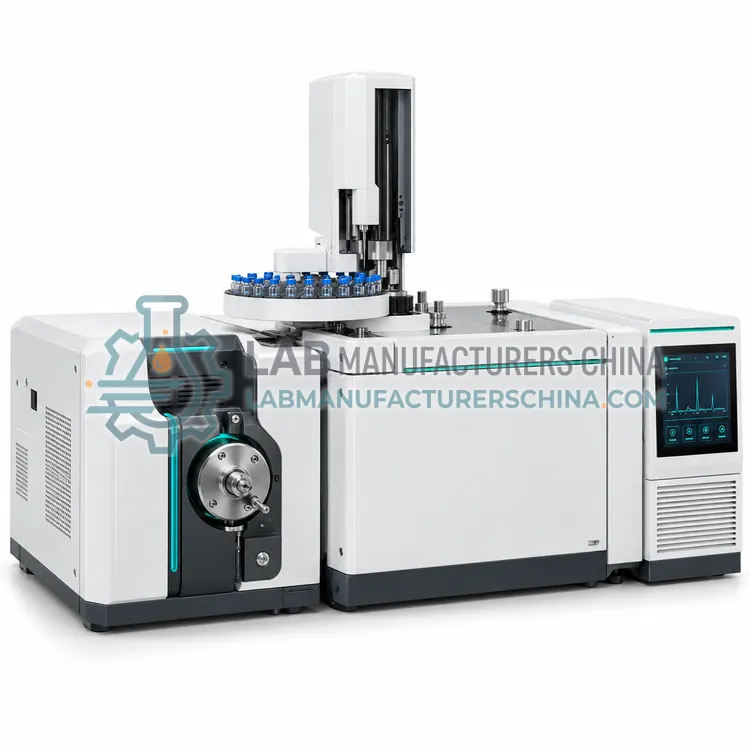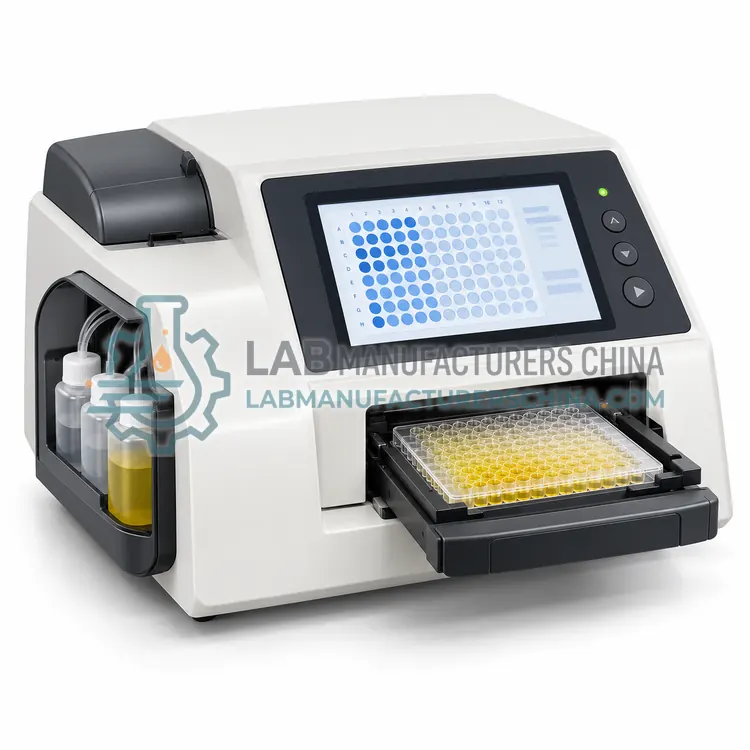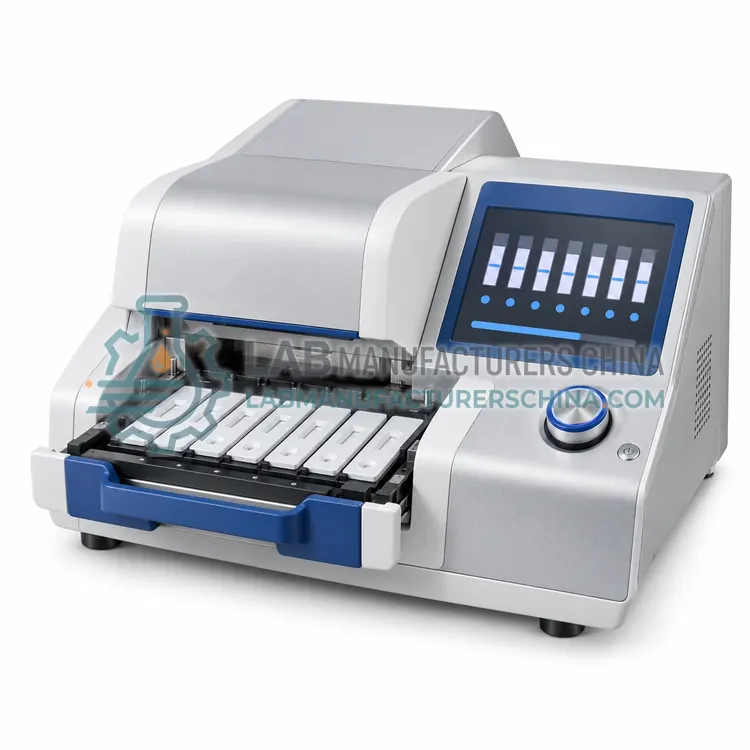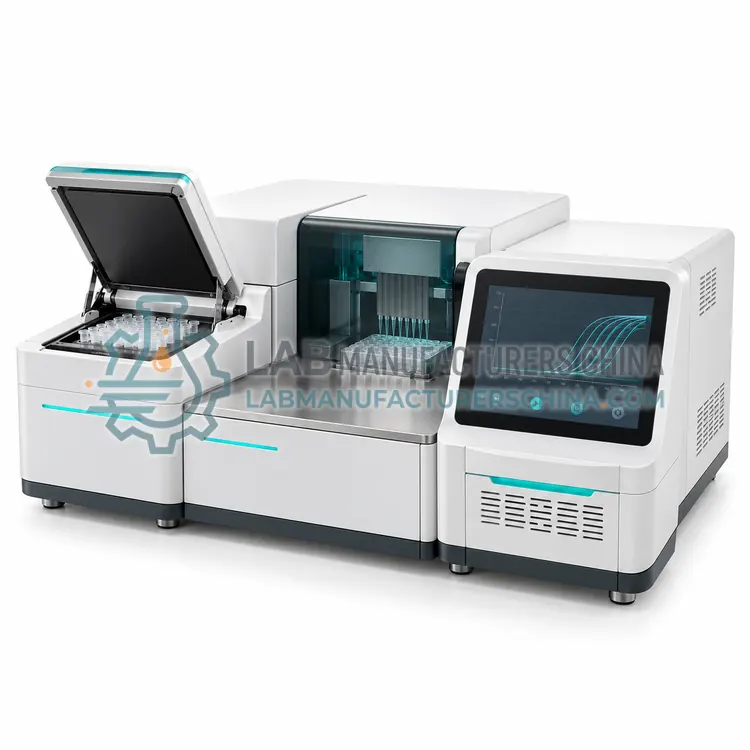
HPLC System for Food Additive and Preservative Analysis
食品添加剂与防腐剂分析 HPLC 系统
- SKU FSA-0001
- Food Safety Analysis
- CE (to be confirmed)
- ISO 9001 manufacturing (to be confirmed)
- IQ/OQ documentation (to be confirmed)
Price on request — FOB / CIF quoted per order
Prices depend on configuration, quantity and destination port.
Key specifications
| Pump type | Binary or quaternary gradient |
|---|---|
| Flow rate range | 0.001–10 mL/min |
| Maximum pressure | Up to 600 bar |
| Detector | Diode array, 190–800 nm |
| Wavelength accuracy | ±1 nm |
| Column temperature | Ambient to 80 °C, ±0.5 °C |
Request a quote Download brochure · to be provided
By Lab Manufacturers China Technical TeamLast reviewed Standards: ISO/IEC 17025, AOAC Official Methods of Analysis, EN 15633-1
What is the HPLC System for Food Additive and Preservative Analysis?
An HPLC system for additive analysis separates and quantifies sweeteners, preservatives, colours and antioxidants with UV or diode-array detection. It is the routine workhorse for checking that additive levels stay within legal limits in beverages, sauces and snacks.
What is the HPLC System for Food Additive and Preservative Analysis?
An HPLC system for additive analysis separates and quantifies sweeteners, preservatives, colours and antioxidants with UV or diode-array detection. It is the routine workhorse for checking that additive levels stay within legal limits in beverages, sauces and snacks.
Overview
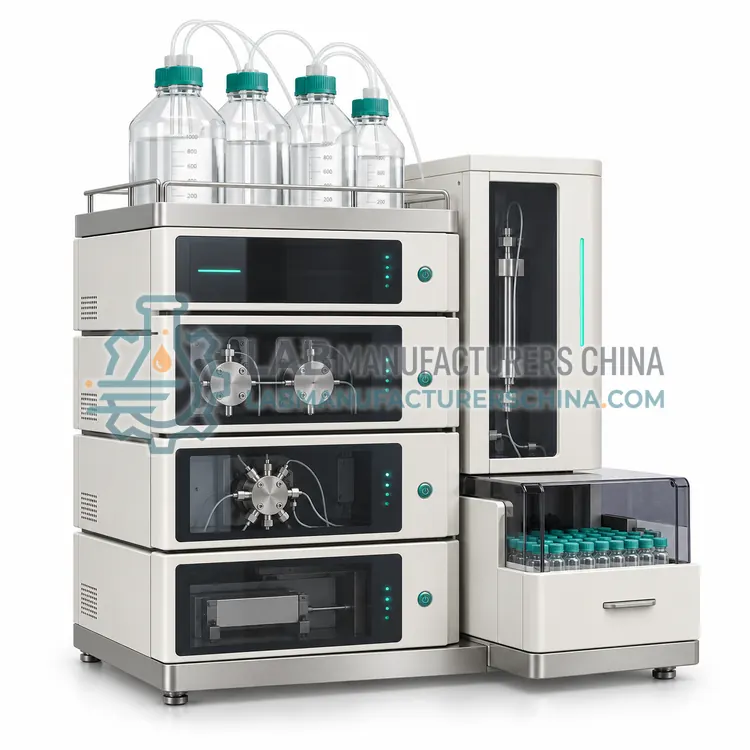
The system uses a binary or quaternary pump to deliver a buffered or ion-pair mobile phase through a C18 column at controlled temperature. Injected sample components separate by polarity and are detected by UV or a diode array, which records a full spectrum for each peak and supports identity confirmation by spectrum matching. Typical analytes include benzoates, sorbates, sulfites, aspartame, acesulfame K, saccharin, caffeine and synthetic colours, many of which are separated in a single gradient run of 15–30 minutes. Method development follows the relevant standard or AOAC procedure, and quantification uses external standards with matrix-matched calibration. Autosamplers allow unattended batches, and a column oven keeps retention times stable.
How does it work?
Food safety analysis separates the analyte from the food matrix and then quantifies it with a detector matched to its chemistry. High-performance liquid chromatography suits non-volatile additives, sweeteners and preservatives, with UV or diode-array detection and confirmation by mass spectrometry. LC-MS/MS gives the sensitivity and selectivity needed for pesticide residues at microgram per kilogram levels. Gas chromatography with mass detection covers volatile compounds such as solvents, flavours and some pesticide classes. Immunoassays rely on antibodies that bind allergens or toxins, producing a colorimetric signal proportional to concentration. PCR amplifies species-specific DNA sequences to identify allergens or adulterants. Rapid screening kits are confirmed by instrumental methods when a result is positive or disputed.
What are the key features?
- Binary or quaternary pump for gradient additive separation
- Diode-array detector recording full UV-Vis spectra for peak identity
- Column oven controlling temperature to ±0.5 °C
- Autosampler with 100-vial tray and needle wash
- Chromatography software with calibration curves and audit trail
- Optional mass detector for confirmation of suspicious peaks
What are the technical specifications?
A typical hplc system for food additive and preservative analysis configuration offers pump type of Binary or quaternary gradient, flow rate range of 0.001–10 mL/min, maximum pressure of Up to 600 bar, detector of Diode array, 190–800 nm, wavelength accuracy of ±1 nm and column temperature of Ambient to 80 °C, ±0.5 °C. Values are indicative of the product class; the exact figures for each configuration are confirmed on the quotation and the calibration documents supplied with the instrument.
Which applications is it used for?
The HPLC System for Food Additive and Preservative Analysis is used in preservative limits in beverages and sauces, artificial sweetener quantification, synthetic colour identification in confectionery and antioxidant content in oils and snacks. Across the wider Food Safety Analysis class, laboratories also deploy it for pesticide residue monitoring in fruit and vegetables, additive and preservative limit checks and allergen verification and cleaning validation.
Which standards and certifications apply?
Relevant standards and methods include ISO/IEC 17025, AOAC Official Methods of Analysis, EN 15633-1, EN 15634-1, Regulation (EC) No 396/2005, SANTE/11312/2021 and Codex Alimentarius. Certification candidates for this model are CE, ISO 9001 manufacturing and IQ/OQ documentation; each is to be confirmed for the specific configuration before shipment, and certificates are supplied only where they have been issued.
Food matrices vary widely, so method validation must cover each commodity group, including fatty, acidic and high-pigment samples that cause ion suppression or interference. Standard solutions, antibodies and enzyme kits have limited shelf life and need controlled storage. Laboratories should participate in proficiency testing and keep traceable records of calibrations, control charts and confirmatory analysis. Allergen testing demands strict cleaning and segregation to avoid cross-contamination between samples. Confirm that your chosen platform has local service, spare parts and consumables, and that software meets data-integrity requirements when results support regulatory decisions.
How do I select the right HPLC System for Food Additive and Preservative Analysis?
Choose this configuration when your monitoring plan centres on additives and preservatives at milligram per kilogram levels and you want a robust routine system. Specify detector type, column oven and autosampler capacity, and decide whether a mass detector is needed for confirmation. In the RFQ, request a validated method list and references for additives in your main commodities.
How does it compare with other Food Safety Analysis variants?
Match the detection technology to the analyte and to the limit you must reach. HPLC with UV or diode-array detection is sufficient and economical for many additives and preservatives at milligram per kilogram levels. Pesticide residue work at microgram per kilogram levels requires LC-MS/MS or GC-MS/MS, and multi-residue methods should cover the classes in your monitoring plan. Choose ELISA or lateral-flow kits when speed, low cost and on-site use matter, accepting them as screening tests. Real-time PCR is required for species identification and authenticity claims. Confirm the availability of certified reference standards, matrix-matched calibration and validated methods for your specific commodities.
Full specifications
| Pump type | Binary or quaternary gradient |
|---|---|
| Flow rate range | 0.001–10 mL/min |
| Maximum pressure | Up to 600 bar |
| Detector | Diode array, 190–800 nm |
| Wavelength accuracy | ±1 nm |
| Column temperature | Ambient to 80 °C, ±0.5 °C |
| Autosampler capacity | 100 × 2 mL vials |
| Injection volume | 0.1–100 µL |
| Detection limits | 0.1–1 mg/kg for common additives |
| Software | Audit trail, 21 CFR Part 11 option |
Indicative values for this product class. Final specifications are confirmed on the quotation and in the calibration documents supplied with the instrument.
Applications
- Preservative limits in beverages and sauces
- Artificial sweetener quantification
- Synthetic colour identification in confectionery
- Antioxidant content in oils and snacks
Key features
- Binary or quaternary pump for gradient additive separation
- Diode-array detector recording full UV-Vis spectra for peak identity
- Column oven controlling temperature to ±0.5 °C
- Autosampler with 100-vial tray and needle wash
- Chromatography software with calibration curves and audit trail
- Optional mass detector for confirmation of suspicious peaks
Frequently asked questions about HPLC System for Food Additive and Preservative Analysis
Yes. Gradient elution on a C18 column can separate common preservatives, sweeteners and colours in a single run of 15 to 30 minutes, provided the mobile phase and wavelength programme suit all analytes and no co-elution occurs.
A diode array records the whole UV-Vis spectrum of each peak, so a suspicious peak can be compared with a reference spectrum for identity. It also allows peak purity checks, which help detect overlapping compounds in complex food extracts.
Liquid samples are usually diluted and filtered, while solid or fatty foods need extraction, protein precipitation and clean-up by filtration or solid-phase extraction. Matrix-matched standards compensate for recovery losses and interferences from sugars, acids and pigments.
Typical targets are pesticide residues, veterinary drug residues, additives and preservatives, allergens, mycotoxins, illegal dyes, heavy metals and adulterants. The exact panel depends on the commodity, the country of sale and the monitoring plan of the competent authority.
LC-MS/MS is used for most polar and semi-polar pesticides, and GC-MS/MS for volatile and non-polar compounds. Multi-residue methods based on QuEChERS extraction cover several hundred analytes in one run, with isotope-labelled internal standards correcting for matrix effects.
ELISA is widely used for allergen screening and cleaning verification because it is sensitive and simple, but positive results and label decisions are usually confirmed by a second method, and quantitative reporting requires proper validation for each matrix.