LC-MS/MS System for Pesticide Residue Analysis
农药残留分析 LC-MS/MS 系统
- SKU FSA-0002
- Food Safety Analysis
- CE (to be confirmed)
- ISO 9001 manufacturing (to be confirmed)
- IQ/OQ documentation (to be confirmed)
Price on request — FOB / CIF quoted per order
Prices depend on configuration, quantity and destination port.
Key specifications
| Mass analyser | Triple quadrupole |
|---|---|
| Mass range | 5–2000 m/z |
| Scan speed | Up to 20,000 Da/s |
| MRM transitions | Up to 800 per run |
| Ion source | Electrospray, ± polarity switching |
| Detection limits | 0.1–10 µg/kg |
Request a quote Download brochure · to be provided
By Lab Manufacturers China Technical TeamLast reviewed Standards: ISO/IEC 17025, AOAC Official Methods of Analysis, EN 15633-1
What is the LC-MS/MS System for Pesticide Residue Analysis?
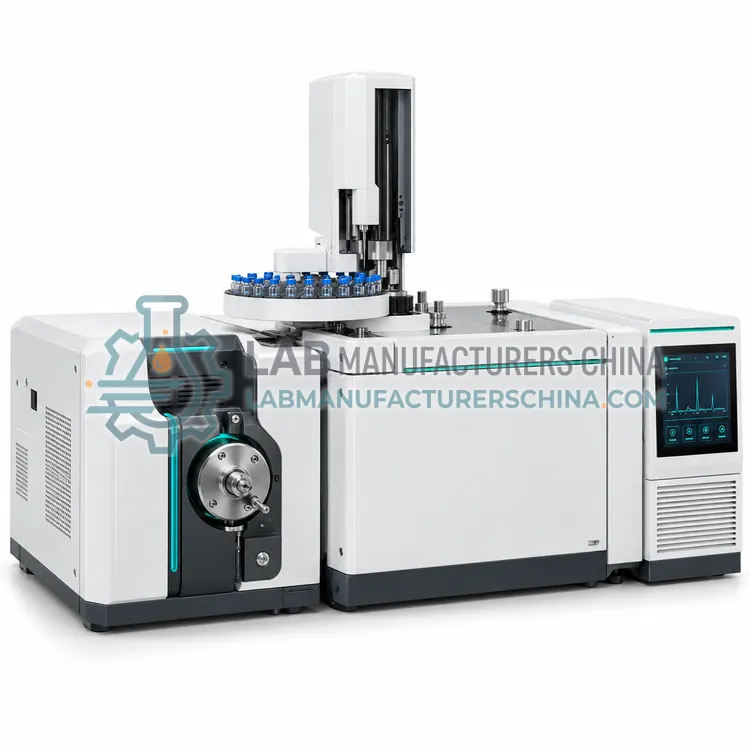
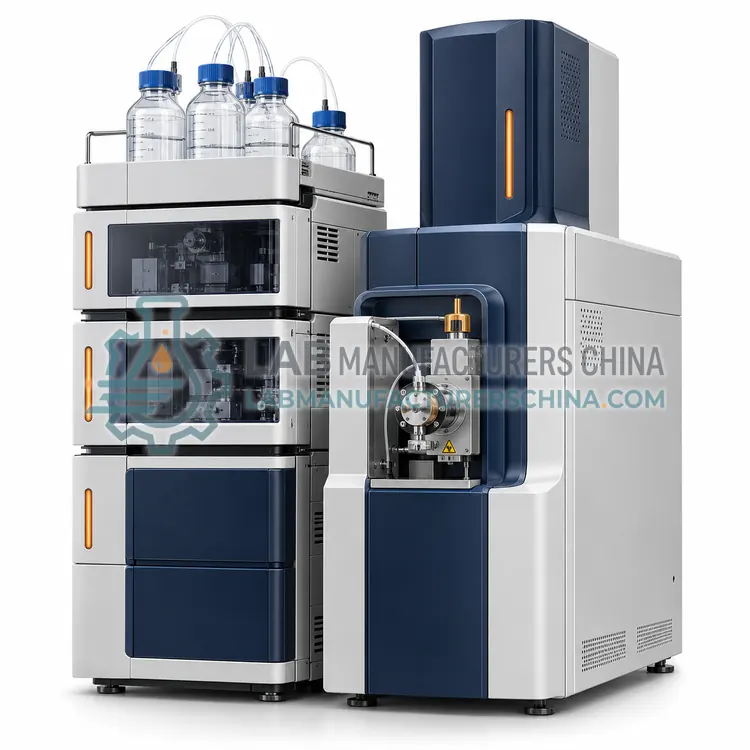
An LC-MS/MS system for pesticide residues detects and quantifies hundreds of compounds at microgram per kilogram levels using tandem mass spectrometry. It is the primary confirmatory platform for multi-residue monitoring of fruit, vegetables, cereals and processed foods.
What is the LC-MS/MS System for Pesticide Residue Analysis?
An LC-MS/MS system for pesticide residues detects and quantifies hundreds of compounds at microgram per kilogram levels using tandem mass spectrometry. It is the primary confirmatory platform for multi-residue monitoring of fruit, vegetables, cereals and processed foods.
Overview
The instrument couples a high-performance liquid chromatograph with a triple-quadrupole or quadrupole-linear ion trap mass spectrometer. Samples prepared by QuEChERS or solid-phase extraction are separated on a reversed-phase column and ionised by electrospray, and the selected reaction monitoring mode records characteristic fragment transitions for each pesticide. That design gives detection limits in the range of 0.1–10 µg/kg and supports confirmation according to ion-ratio criteria. Scheduled MRM acquisition allows 400–800 compounds in a single 15–20 minute run, and isotope-labelled internal standards correct for matrix effects and recovery. The software manages method lists, quantitation and reporting for regulatory maximum residue level checks.
How does it work?
Food safety analysis separates the analyte from the food matrix and then quantifies it with a detector matched to its chemistry. High-performance liquid chromatography suits non-volatile additives, sweeteners and preservatives, with UV or diode-array detection and confirmation by mass spectrometry. LC-MS/MS gives the sensitivity and selectivity needed for pesticide residues at microgram per kilogram levels. Gas chromatography with mass detection covers volatile compounds such as solvents, flavours and some pesticide classes. Immunoassays rely on antibodies that bind allergens or toxins, producing a colorimetric signal proportional to concentration. PCR amplifies species-specific DNA sequences to identify allergens or adulterants. Rapid screening kits are confirmed by instrumental methods when a result is positive or disputed.
What are the key features?
- Triple-quadrupole MS with scheduled MRM for 400–800 analytes per run
- Electrospray source with polarity switching in one injection
- Detection limits of 0.1–10 µg/kg depending on compound
- QuEChERS-ready method templates and matrix-matched calibration
- Isotope-labelled internal standard support for recovery correction
- Quantitation software with MRL checking and audit trail
What are the technical specifications?
A typical lc-ms/ms system for pesticide residue analysis configuration offers mass analyser of Triple quadrupole, mass range of 5–2000 m/z, scan speed of Up to 20,000 Da/s, MRM transitions of Up to 800 per run, ion source of Electrospray, ± polarity switching and detection limits of 0.1–10 µg/kg. Values are indicative of the product class; the exact figures for each configuration are confirmed on the quotation and the calibration documents supplied with the instrument.
Which applications is it used for?
The LC-MS/MS System for Pesticide Residue Analysis is used in multi-residue monitoring of fruit and vegetables, cereal, tea and spice residue testing, honey and animal-product residue screening and processed food and baby food compliance. Across the wider Food Safety Analysis class, laboratories also deploy it for pesticide residue monitoring in fruit and vegetables, additive and preservative limit checks and allergen verification and cleaning validation.
Which standards and certifications apply?
Relevant standards and methods include ISO/IEC 17025, AOAC Official Methods of Analysis, EN 15633-1, EN 15634-1, Regulation (EC) No 396/2005, SANTE/11312/2021 and Codex Alimentarius. Certification candidates for this model are CE, ISO 9001 manufacturing and IQ/OQ documentation; each is to be confirmed for the specific configuration before shipment, and certificates are supplied only where they have been issued.
Food matrices vary widely, so method validation must cover each commodity group, including fatty, acidic and high-pigment samples that cause ion suppression or interference. Standard solutions, antibodies and enzyme kits have limited shelf life and need controlled storage. Laboratories should participate in proficiency testing and keep traceable records of calibrations, control charts and confirmatory analysis. Allergen testing demands strict cleaning and segregation to avoid cross-contamination between samples. Confirm that your chosen platform has local service, spare parts and consumables, and that software meets data-integrity requirements when results support regulatory decisions.
How do I select the right LC-MS/MS System for Pesticide Residue Analysis?
Select an LC-MS/MS system when your monitoring plan spans hundreds of pesticides and requires microgram per kilogram sensitivity. Confirm the transitions per compound, polarity-switching speed and the size of the compound library supplied. Evaluate sample throughput, ion-source robustness with dirty extracts, and the service footprint, since these systems depend on skilled maintenance.
How does it compare with other Food Safety Analysis variants?
Match the detection technology to the analyte and to the limit you must reach. HPLC with UV or diode-array detection is sufficient and economical for many additives and preservatives at milligram per kilogram levels. Pesticide residue work at microgram per kilogram levels requires LC-MS/MS or GC-MS/MS, and multi-residue methods should cover the classes in your monitoring plan. Choose ELISA or lateral-flow kits when speed, low cost and on-site use matter, accepting them as screening tests. Real-time PCR is required for species identification and authenticity claims. Confirm the availability of certified reference standards, matrix-matched calibration and validated methods for your specific commodities.
Full specifications
| Mass analyser | Triple quadrupole |
|---|---|
| Mass range | 5–2000 m/z |
| Scan speed | Up to 20,000 Da/s |
| MRM transitions | Up to 800 per run |
| Ion source | Electrospray, ± polarity switching |
| Detection limits | 0.1–10 µg/kg |
| LC flow rate | 0.2–0.6 mL/min |
| Column temperature | Ambient to 60 °C |
| Dynamic range | Up to 5 orders of magnitude |
| Software | MRL library, audit trail, LIMS export |
Indicative values for this product class. Final specifications are confirmed on the quotation and in the calibration documents supplied with the instrument.
Applications
- Multi-residue monitoring of fruit and vegetables
- Cereal, tea and spice residue testing
- Honey and animal-product residue screening
- Processed food and baby food compliance
Key features
- Triple-quadrupole MS with scheduled MRM for 400–800 analytes per run
- Electrospray source with polarity switching in one injection
- Detection limits of 0.1–10 µg/kg depending on compound
- QuEChERS-ready method templates and matrix-matched calibration
- Isotope-labelled internal standard support for recovery correction
- Quantitation software with MRL checking and audit trail
Frequently asked questions about LC-MS/MS System for Pesticide Residue Analysis
Tandem mass spectrometry provides both retention time and characteristic ion transitions for each compound, giving unambiguous confirmation at microgram per kilogram levels in complex food extracts. Two transitions per analyte are typically required for regulatory reporting.
QuEChERS is a quick, easy, cheap, effective, rugged and safe extraction method using salting-out with magnesium sulfate and sodium chloride, followed by dispersive solid-phase clean-up. It recovers a wide polarity range of pesticides in one procedure.
Food extracts can suppress or enhance ionisation, so calibrations are prepared in blank matrix or isotope-labelled internal standards are added to every sample. Both approaches correct the signal and are expected in validated multi-residue methods.
Typical targets are pesticide residues, veterinary drug residues, additives and preservatives, allergens, mycotoxins, illegal dyes, heavy metals and adulterants. The exact panel depends on the commodity, the country of sale and the monitoring plan of the competent authority.
LC-MS/MS is used for most polar and semi-polar pesticides, and GC-MS/MS for volatile and non-polar compounds. Multi-residue methods based on QuEChERS extraction cover several hundred analytes in one run, with isotope-labelled internal standards correcting for matrix effects.
ELISA is widely used for allergen screening and cleaning verification because it is sensitive and simple, but positive results and label decisions are usually confirmed by a second method, and quantitative reporting requires proper validation for each matrix.