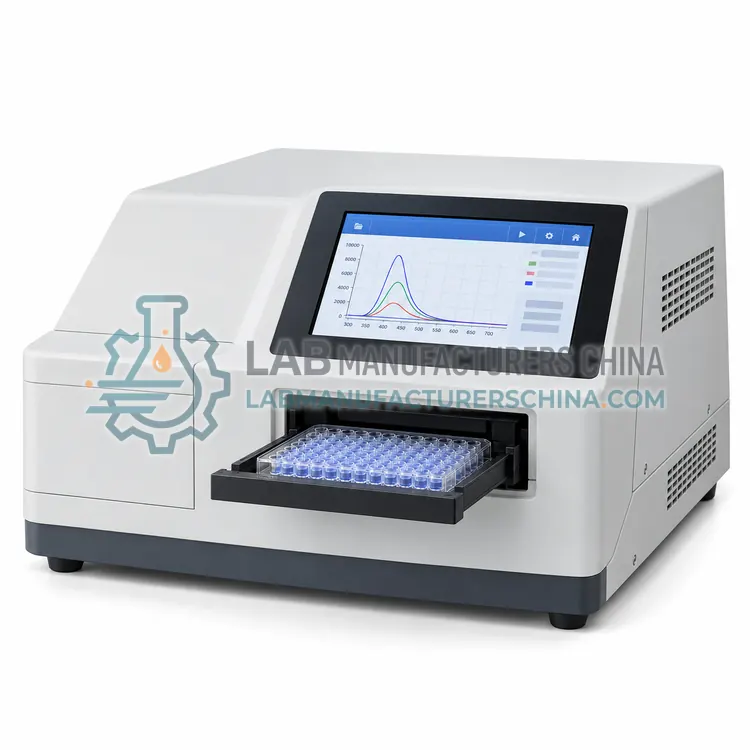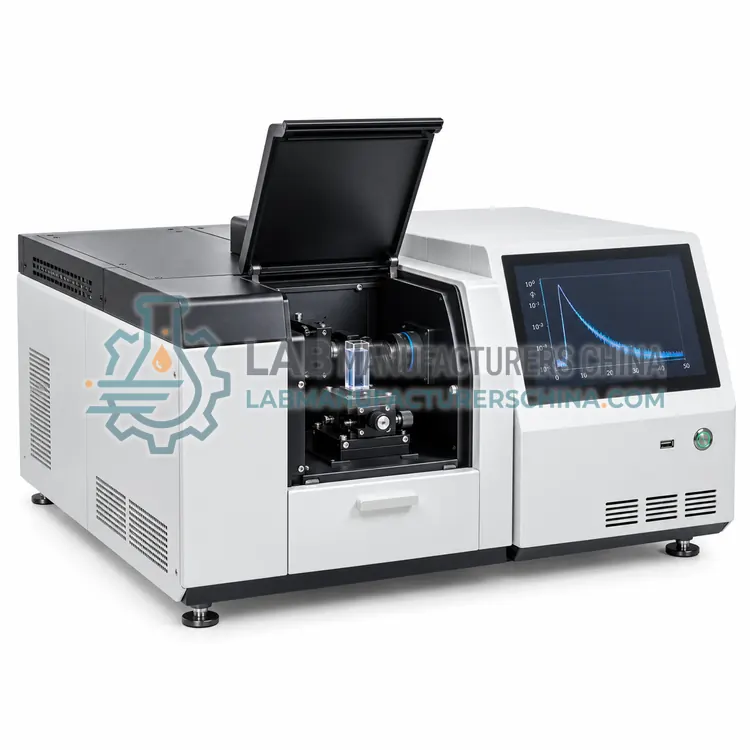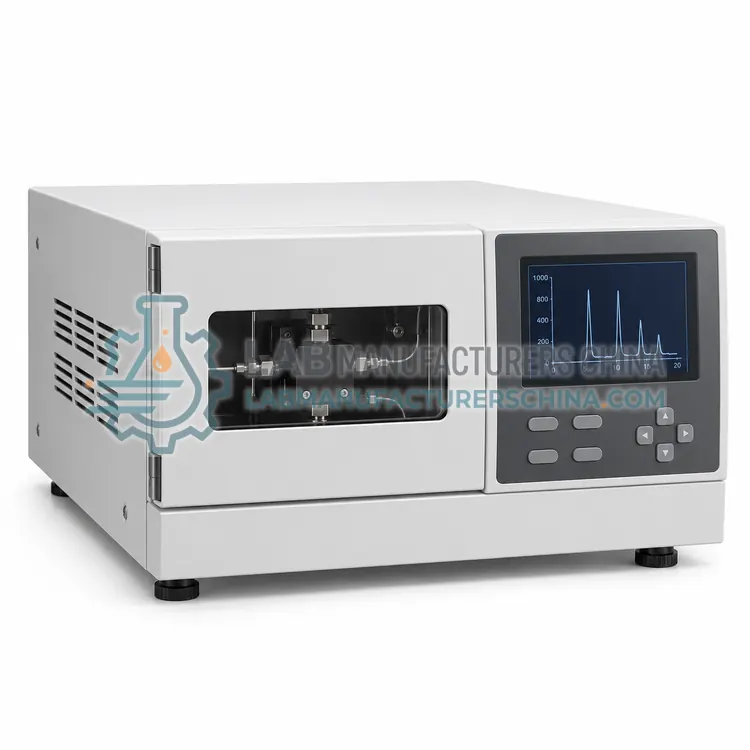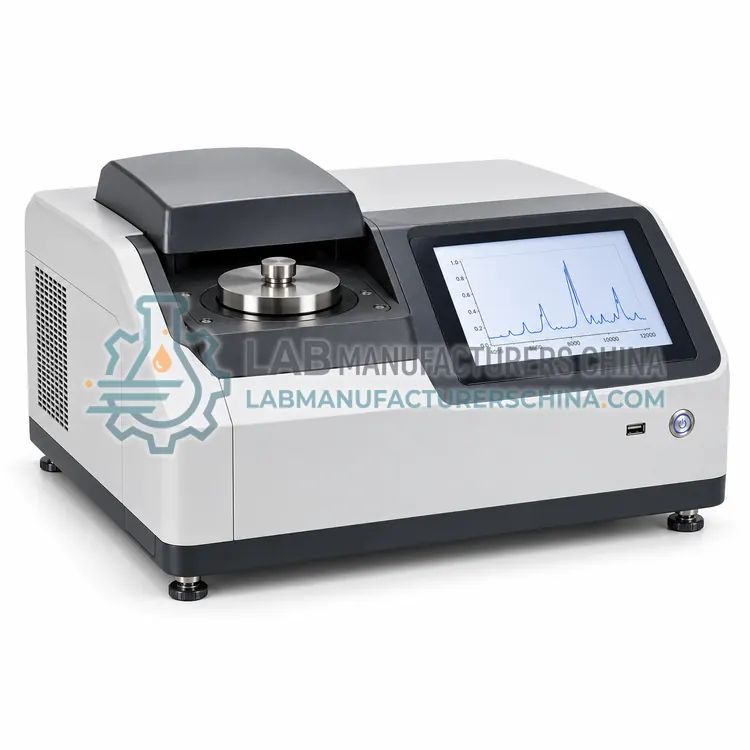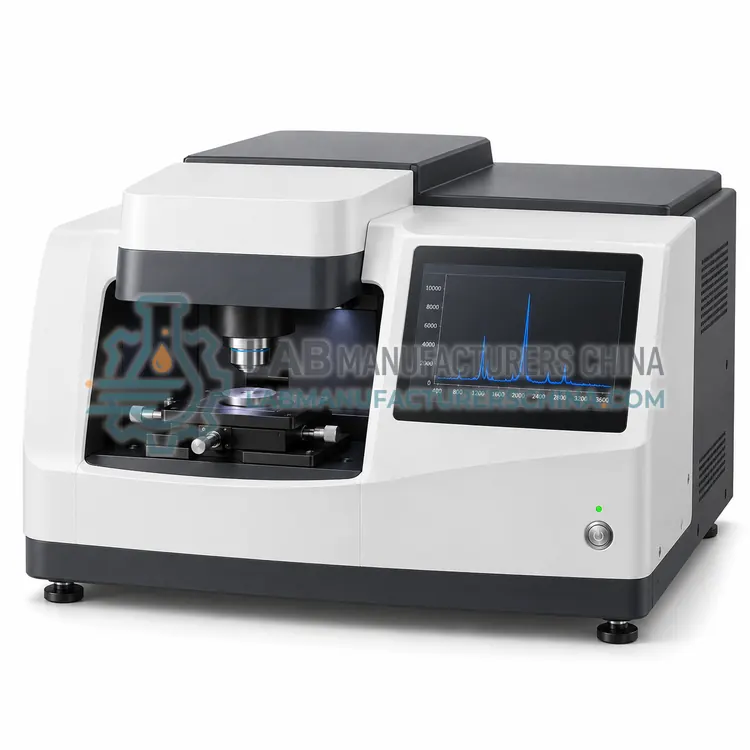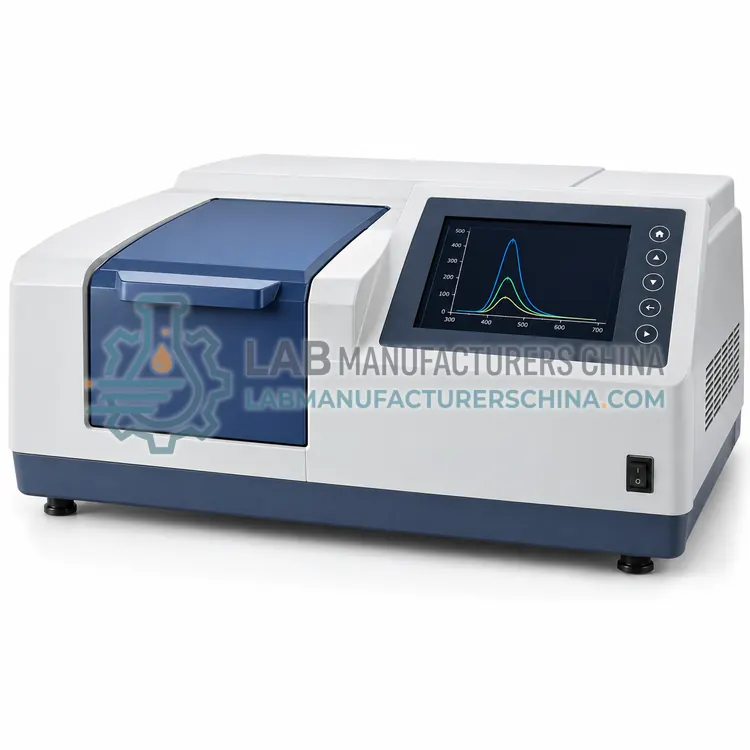
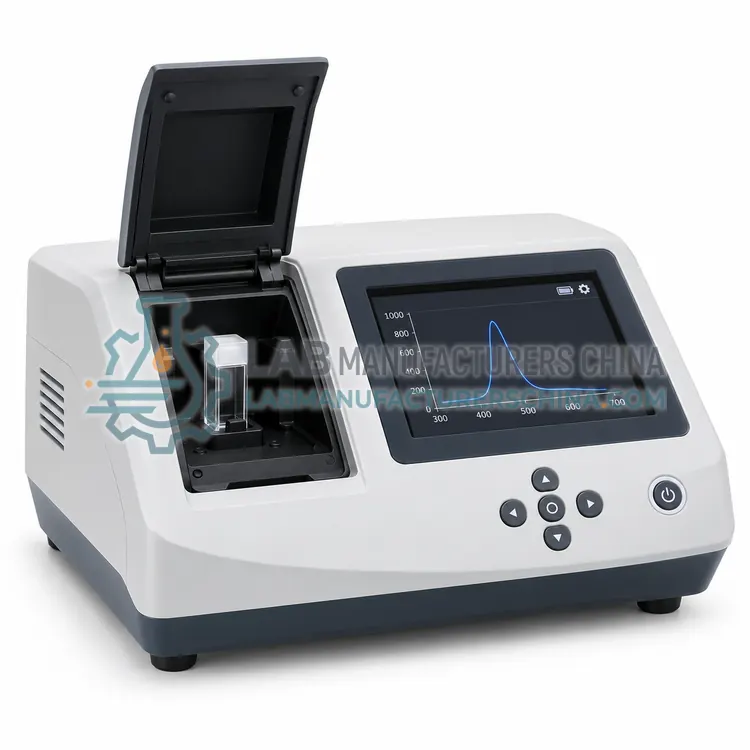
Field Fluorometer for Water Quality
水质现场荧光计
- SKU FLU-0005
- Fluorescence
- CE (to be confirmed)
- IP68 enclosure rating (to be confirmed)
- ISO 9001 manufacturing (to be confirmed)
Price on request — FOB / CIF quoted per order
Prices depend on configuration, quantity and destination port.
Key specifications
| Excitation wavelengths | 470 nm and 535 nm typical |
|---|---|
| Emission wavelengths | 520–700 nm filtered |
| Detection range | 0.01–500 µg/L rhodamine |
| Detection limit | ≤ 0.05 µg/L fluorescein |
| Housing depth rating | up to 200 m |
| Power supply | rechargeable battery, 8 AA or external |
Request a quote Download brochure · to be provided
By Lab Manufacturers China Technical TeamLast reviewed Standards: USP <853> Fluorescence Spectroscopy, ASTM E579 Standard Practice for Limit of Detection of Fluorescence, ICH Q2(R2) Validation of analytical procedures
What is the Field Fluorometer for Water Quality?
A field fluorometer measures fluorescence of dyes, chlorophyll or dissolved organic matter directly in water samples or streams. It is chosen for rapid on-site water quality checks and tracer studies where laboratory analysis is too slow.
What is the Field Fluorometer for Water Quality?
A field fluorometer measures fluorescence of dyes, chlorophyll or dissolved organic matter directly in water samples or streams. It is chosen for rapid on-site water quality checks and tracer studies where laboratory analysis is too slow.
Overview
This rugged, battery-powered instrument uses a fixed-excitation LED or lamp and a filtered emission detector, often in a submersible housing for continuous deployment. Models target specific fluorophores such as rhodamine, fluorescein, chlorophyll a, phycocyanin or fluorescent dissolved organic matter, and report concentration in nanograms per litre or relative units. Some units measure several channels simultaneously and log data with time stamps and temperature. Because optics are fixed, the instrument is simple to operate in the field and can be calibrated with solid or liquid standards before and after deployment. Anti-fouling wipers, copper guards and low-power sleep modes extend deployment time. Data support tracer hydrology, algae bloom warning, wastewater monitoring and source tracking, and complement grab samples sent to the laboratory for confirmation.
How does it work?
A fluorophore absorbs photons at an excitation wavelength, moves to an excited electronic state, loses some energy by non-radiative relaxation, and then emits photons at a longer wavelength when it returns to the ground state. The difference between excitation and emission maxima is the Stokes shift. A fluorescence spectrometer consists of an excitation source such as a xenon arc lamp, laser or LED, excitation and emission monochromators or filters, a sample holder for cuvettes, microplates or flow cells, and a detector such as a photomultiplier tube, avalanche photodiode or CCD. Because the detector is positioned at 90 degrees to the excitation beam, transmitted light is largely excluded and sensitivity can be orders of magnitude higher than absorption methods. Signal intensity depends on quantum yield, concentration, path length and quenching by oxygen, pH or matrix components.
What are the key features?
- Rugged submersible housing for continuous field deployment
- Fixed-wavelength LED excitation with filtered detection
- Battery power with low-power sleep and data logging
- Optional anti-fouling wiper and copper guard
- Single or multi-channel configurations for several fluorophores
- Calibration with solid or liquid reference standards
What are the technical specifications?
A typical field fluorometer for water quality configuration offers excitation wavelengths of 470 nm and 535 nm typical, emission wavelengths of 520–700 nm filtered, detection range of 0.01–500 µg/L rhodamine, detection limit of ≤ 0.05 µg/L fluorescein, housing depth rating of up to 200 m and power supply of rechargeable battery, 8 AA or external. Values are indicative of the product class; the exact figures for each configuration are confirmed on the quotation and the calibration documents supplied with the instrument.
Which applications is it used for?
The Field Fluorometer for Water Quality is used in surface water dye tracer studies, harmful algal bloom and chlorophyll monitoring, wastewater and effluent organic matter tracking and drinking water source and contamination surveys. Across the wider Fluorescence class, laboratories also deploy it for pharmaceutical assay and impurity testing, nucleic acid and protein quantitation with fluorescent dyes and water quality monitoring of algae, chlorophyll and fluorescent tracers.
Which standards and certifications apply?
Relevant standards and methods include USP <853> Fluorescence Spectroscopy, ASTM E579 Standard Practice for Limit of Detection of Fluorescence, ICH Q2(R2) Validation of analytical procedures, ISO/IEC 17025 and IEC 61010-1. Certification candidates for this model are CE, IP68 enclosure rating and ISO 9001 manufacturing; each is to be confirmed for the specific configuration before shipment, and certificates are supplied only where they have been issued.
Install fluorescence instruments away from bright daylight and strong UV sources because stray light raises background. Xenon lamps produce ozone and heat and need adequate ventilation and lamp-hour tracking. Verify wavelength accuracy with reference standards and check sensitivity using the water Raman band or quinine sulfate in dilute sulfuric acid. Fluorescence is highly sensitive to dissolved oxygen, pH, temperature and quenching agents, so control and record these factors. Avoid photobleaching by limiting exposure of strongly fluorescent samples. Clean cuvettes and microplates must be free of fluorescent contaminants, and instrument qualification should follow IEC 61010-1 for safety and internal quality procedures for performance.
How do I select the right Field Fluorometer for Water Quality?
Select a field fluorometer when measurements must be made on site or continuously in water, for tracer studies, algae monitoring or rapid screening. Specify the target fluorophore and concentration range, required channels, deployment depth and duration, and whether an anti-fouling wiper is needed. Plan calibration and post-deployment checks, since biofouling and drift are the main limits on data quality.
How does it compare with other Fluorescence variants?
Select a fluorescence system by the sample format and the sensitivity required. Cuvette-based spectrofluorometers are best for method development and identity work because both excitation and emission wavelengths can be scanned. Microplate readers are the choice for high-throughput screening and enzyme assays in 96, 384 or 1536 wells. Time-resolved instruments measure fluorescence lifetimes and reject short-lived background for assays with long-lived labels. HPLC fluorescence detectors add selective quantitation to chromatographic separations. Portable filter fluorometers serve field water and tracer measurements where wavelength coverage matters less than speed. Compare excitation and emission ranges, stray-light rejection, detector type, minimum detectable concentration and software features such as spectral correction and blank subtraction.
Full specifications
| Excitation wavelengths | 470 nm and 535 nm typical |
|---|---|
| Emission wavelengths | 520–700 nm filtered |
| Detection range | 0.01–500 µg/L rhodamine |
| Detection limit | ≤ 0.05 µg/L fluorescein |
| Housing depth rating | up to 200 m |
| Power supply | rechargeable battery, 8 AA or external |
| Data logging | internal memory with time stamps |
| Operating temperature | 0–50 °C |
| Output | digital and 4–20 mA |
| Warm-up time | < 10 s |
Indicative values for this product class. Final specifications are confirmed on the quotation and in the calibration documents supplied with the instrument.
Applications
- Surface water dye tracer studies
- Harmful algal bloom and chlorophyll monitoring
- Wastewater and effluent organic matter tracking
- Drinking water source and contamination surveys
Key features
- Rugged submersible housing for continuous field deployment
- Fixed-wavelength LED excitation with filtered detection
- Battery power with low-power sleep and data logging
- Optional anti-fouling wiper and copper guard
- Single or multi-channel configurations for several fluorophores
- Calibration with solid or liquid reference standards
Frequently asked questions about Field Fluorometer for Water Quality
Deployment time depends on biofouling, suspended solids and the anti-fouling method used. With a wiper and copper guard, weeks to several months are realistic in many waters, while uncleaned units may drift within days. Schedule cleaning and calibration checks based on site conditions and required data quality.
Multi-channel instruments can excite and detect several fluorophores with overlapping but distinguishable spectra, logging each channel separately. Spectral overlap and matrix fluorescence still require careful calibration and sometimes correction algorithms. Confirm channel separation and any cross-sensitivity specifications for the targets you need.
Most units are calibrated with solid secondary standards for daily checks and with liquid primary standards in the laboratory for traceability. Pre-deployment and post-deployment checks bracket each deployment, and the difference is used to correct drift. Temperature and turbidity effects are corrected by the firmware or by separate sensors where available.
Fluorescence measures emitted photons against a dark background at 90 degrees to the excitation beam, so even a small number of emitted photons is detectable. Absorbance measures a small difference between two large light intensities. This signal-to-noise advantage lets fluorescence reach picomolar or lower concentrations that absorption methods cannot resolve.
Quenching reduces fluorescence intensity through collisions, energy transfer, dissolved oxygen or absorption of emitted light by the matrix. Control it by deoxygenating with nitrogen, matching solvent and pH to the validated method, diluting the matrix, and correcting with internal standards. Heavy atoms and colored compounds are common quenchers that must be identified during method development.
Standard cuvette instruments are designed for clear solutions, but front-face and solid-sample holders allow powders, films and turbid suspensions to be measured with reduced inner-filter effects. Integrating spheres improve reproducibility for scattering solids. For quantitative work, validated methods and reference materials for the specific matrix are essential because scattering complicates the relationship between intensity and concentration.
Related models