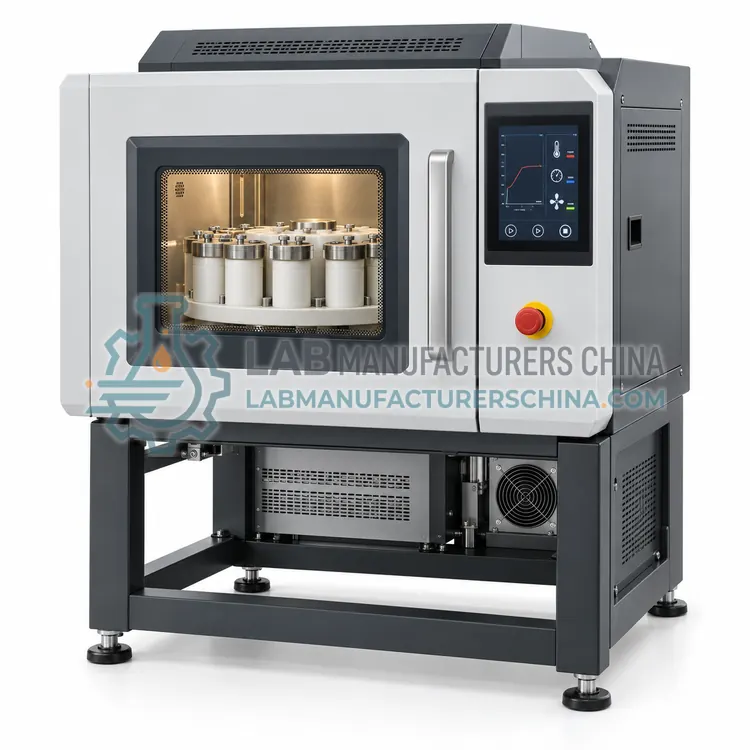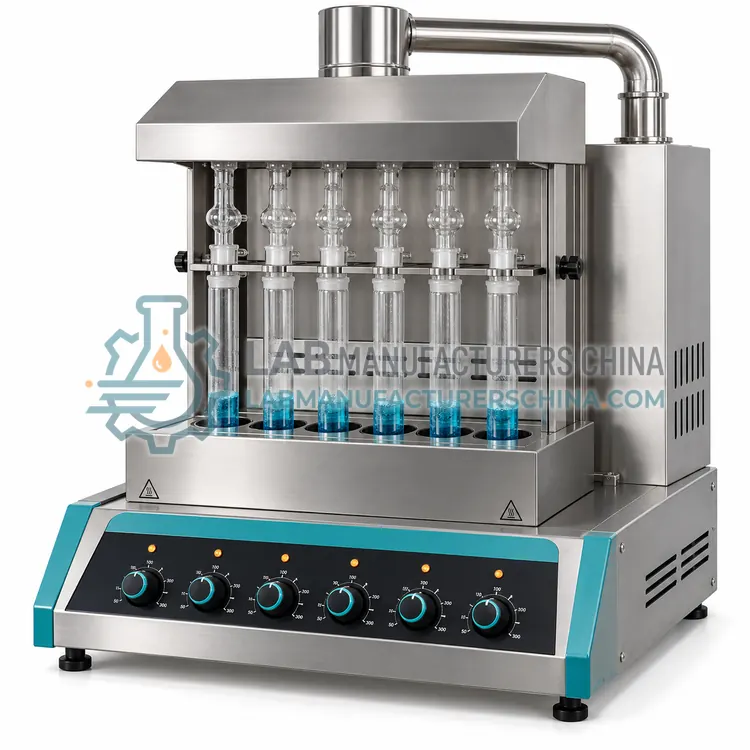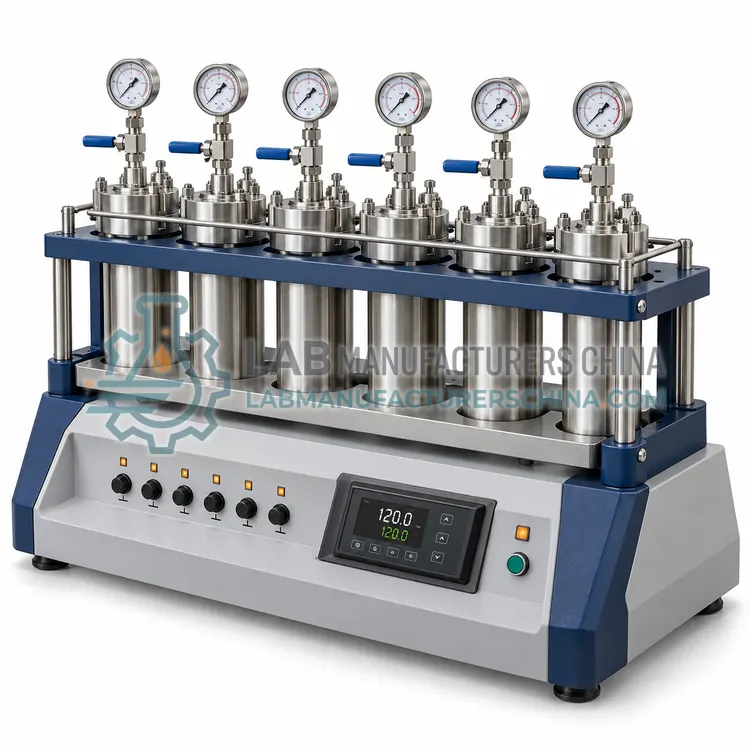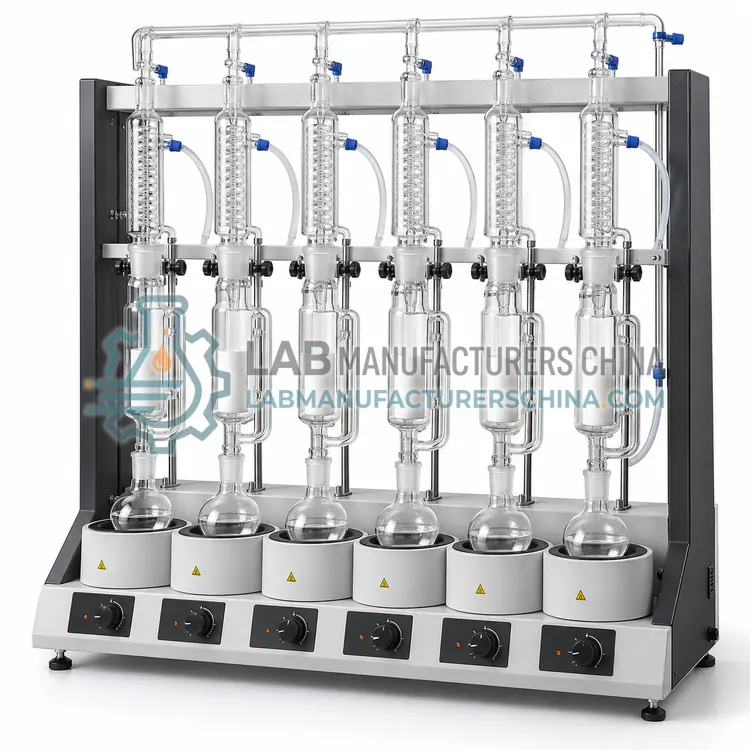
Automated Digestion System
自动消解系统
- SKU DIG-0005
- Digesters
- CE (to be confirmed)
- ISO 9001 manufacturing (to be confirmed)
Price on request — FOB / CIF quoted per order
Prices depend on configuration, quantity and destination port.
Key specifications
| Max temperature | Up to 260 °C |
|---|---|
| Max pressure | Up to 100 bar |
| Vessel positions | 12–60 |
| Reagent dosing | Automated metering pumps |
| Mixing | Automated or vortex |
| Cooking programmes | Stored recipes, editable |
Request a quote Download brochure · to be provided
By Lab Manufacturers China Technical TeamLast reviewed Standards: EPA 3051A, EPA 3050B, EPA 200.2
What is the Automated Digestion System?
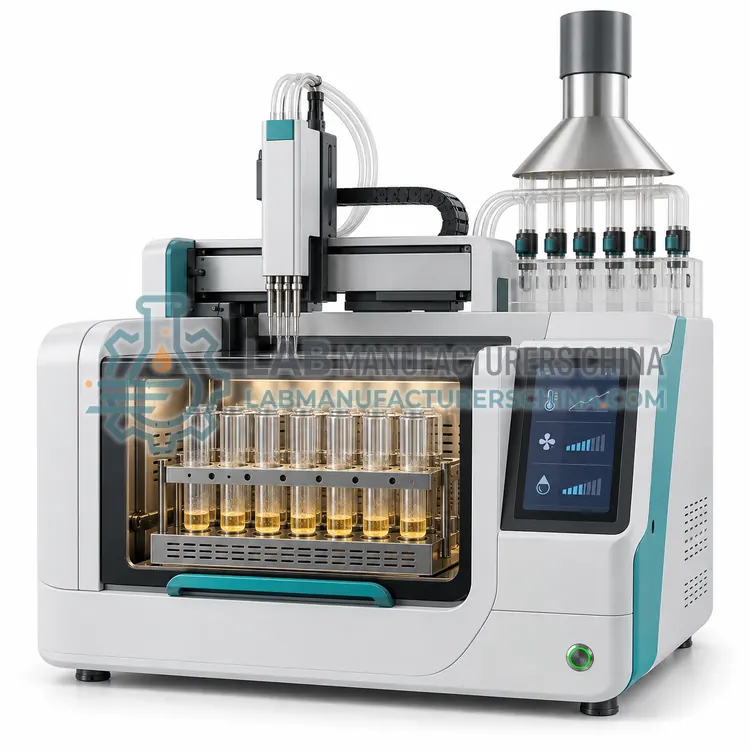
An automated digestion system performs reagent addition, heating, mixing and cooling under program control. It improves reproducibility and safety and suits busy laboratories processing many samples using consistent validated methods every day.
What is the Automated Digestion System?
An automated digestion system performs reagent addition, heating, mixing and cooling under program control. It improves reproducibility and safety and suits busy laboratories processing many samples using consistent validated methods every day.
Overview
An automated digestion system combines a digestion block or microwave cavity with mechanisms for reagent dosing, mixing, heating and cooling under software control. Recipes are programmed with acid volumes, temperature ramps, hold times and cooling, so every batch follows the same sequence and operator variability is reduced. Safety is improved because acid addition and heating occur in a closed or ventilated system, with sensors monitoring temperature and pressure. Some systems also perform sample weighing or transfer to analysis vessels. The approach suits high-throughput laboratories, regulated methods and any workflow where reproducibility and traceability of the preparation step are important.
How does it work?
Digestion breaks down a sample matrix so that the analytes of interest enter solution in a measurable form. In block digestion, tubes or vessels are heated on a temperature-controlled aluminium block and acid is added, often with reflux. In Kjeldahl digestion, the sample is heated with sulfuric acid and a catalyst to convert nitrogen compounds to ammonium sulfate. In closed-vessel and microwave digestion, acid and sample are sealed in a pressure-rated vessel and heated rapidly, so higher temperatures are reached, volatiles are retained and less acid and time are needed. Reagent choice, temperature, pressure and time determine completeness, and the resulting digest is diluted and filtered before measurement.
What are the key features?
- Programmed reagent addition and mixing
- Automated temperature ramps and cooling
- Reduced operator variability
- Closed or ventilated operation for safety
- Batch records for traceability
What are the technical specifications?
A typical automated digestion system configuration offers max temperature of Up to 260 °C, max pressure of Up to 100 bar, vessel positions of 12–60, reagent dosing of Automated metering pumps, mixing of Automated or vortex and cooking programmes of Stored recipes, editable. Values are indicative of the product class; the exact figures for each configuration are confirmed on the quotation and the calibration documents supplied with the instrument.
Which applications is it used for?
The Automated Digestion System is used in high-throughput environmental analysis, regulated food and pharmaceutical testing, contract laboratory sample preparation and method standardisation across sites. Across the wider Digesters class, laboratories also deploy it for environmental soil, sediment and sludge analysis, food and feed elemental analysis and metals and alloy trace analysis.
Which standards and certifications apply?
Relevant standards and methods include EPA 3051A, EPA 3050B, EPA 200.2, ISO 11466 and IEC 61010-1. Certification candidates for this model are CE and ISO 9001 manufacturing; each is to be confirmed for the specific configuration before shipment, and certificates are supplied only where they have been issued.
Add acids in a fume hood and use the protective equipment specified for the reagent, including face and eye protection, gloves and an acid-resistant apron. Do not exceed the rated temperature or pressure of the vessels, and allow closed vessels to cool before opening to avoid acid spray. Digest a reagent blank and, where required, a certified reference material to verify recovery and completeness. Check vessels for scratches and damage, and replace them on schedule, since worn vessels may fail. Follow the applicable method, such as EPA 3051A, EPA 3050B, ISO 11466 or the Kjeldahl procedure, and record all temperatures, times and reagent volumes.
How do I select the right Automated Digestion System?
Choose an automated digestion system for high-throughput or regulated work where reproducibility and records matter. Confirm the vessel capacity and programme flexibility suit the methods, and that reagent dosing, temperature control and safety features meet requirements. Check that batch records can be exported for the quality system.
How does it compare with other Digesters variants?
Choose a digester according to the sample matrix, the analytes and the required detection limits. Block digestion suits routine, high-throughput work with simple matrices and volatile analytes that are retained, such as nitrogen and some metals. Kjeldahl systems are specific to nitrogen and protein determination. Closed-vessel and microwave digestion suit difficult matrices, volatile elements and low detection limits, because they reach higher temperatures and retain volatiles. Automated systems add reagent dosing, heating programmes and cooling for reproducibility. Confirm the vessel material and pressure rating suit the acids used, the temperature reaches the method requirement, and the throughput matches the workload.
Full specifications
| Max temperature | Up to 260 °C |
|---|---|
| Max pressure | Up to 100 bar |
| Vessel positions | 12–60 |
| Reagent dosing | Automated metering pumps |
| Mixing | Automated or vortex |
| Cooking programmes | Stored recipes, editable |
| Temperature sensors | Multiple, per vessel or block |
| Safety features | Fume extraction, pressure relief |
| Data records | Batch logs and export |
| Power supply | 220–240 V AC or 380 V AC |
Indicative values for this product class. Final specifications are confirmed on the quotation and in the calibration documents supplied with the instrument.
Applications
- High-throughput environmental analysis
- Regulated food and pharmaceutical testing
- Contract laboratory sample preparation
- Method standardisation across sites
Key features
- Programmed reagent addition and mixing
- Automated temperature ramps and cooling
- Reduced operator variability
- Closed or ventilated operation for safety
- Batch records for traceability
Frequently asked questions about Automated Digestion System
Automation standardises reagent addition, temperature ramps, hold times and cooling, so every batch follows the same programme and operator differences are reduced. It also improves safety by enclosing acid handling and heating, and generates batch records that support traceability in regulated laboratories.
Programmes can be exported and loaded onto identical or compatible instruments, which helps standardise methods across a laboratory or between sites. Vessel type, sensor configuration and instrument model must match, and the transferred method should be verified with a reference material.
No. Even with automation, each new matrix or method must be validated by digesting a certified reference material and confirming recovery. Vessels, sensors and dosing pumps require calibration and maintenance, and a reagent blank should be run with each batch to confirm low contamination.
Open digestion heats the sample in a vessel open to the atmosphere, which is simple but can lose volatile elements and needs more acid and time. Closed digestion seals the sample and acid in a pressure vessel, so higher temperatures are reached, volatiles are retained and less acid is used.
Nitric acid is the most common, often with hydrochloric acid to form aqua regia, or with hydrogen peroxide to improve oxidation. Hydrofluoric acid is used for silicate matrices, and sulfuric acid for Kjeldahl digestion. The choice depends on the matrix, the analytes and the vessel material.
A reagent blank undergoes the same digestion with the same acids and vessels but without sample. It shows the contribution of reagents and vessels to the measured signal, allowing that background to be subtracted and confirming that contamination from the procedure is acceptably low.
Related models