
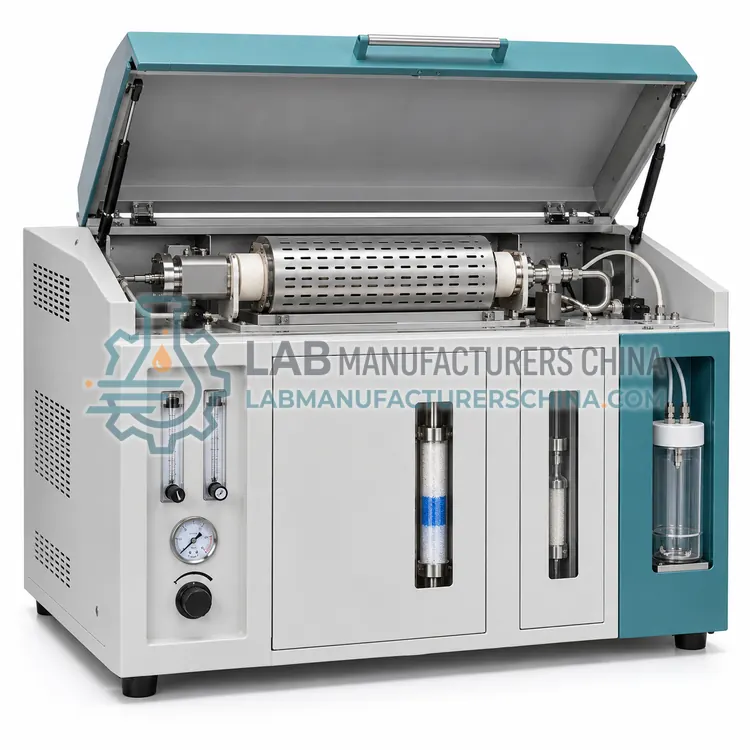
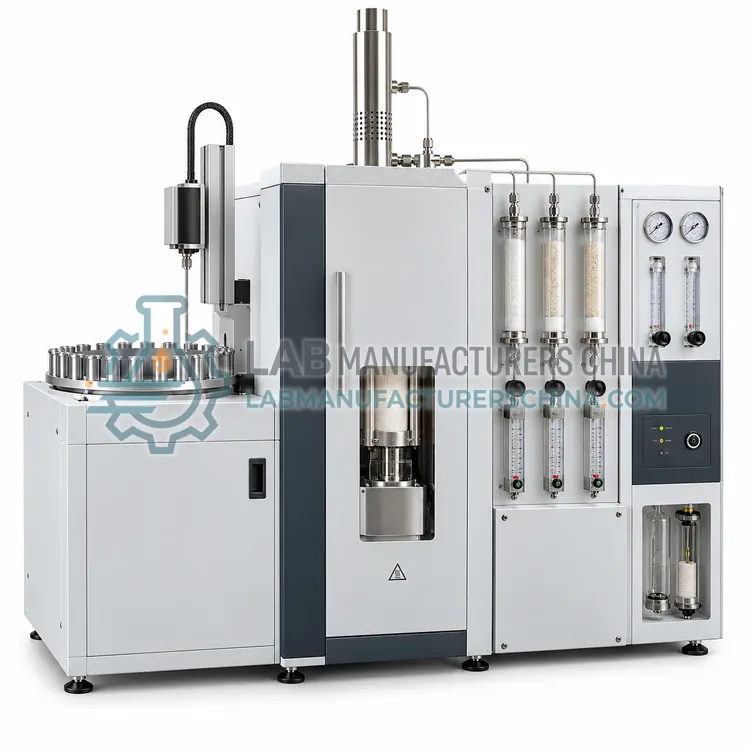
Low-Range Carbon Sulfur Analyzer for High-Purity Metals
高纯金属低量程碳硫分析仪
- SKU CSA-0004
- Carbon Sulfur Analyzers
- CE (to be confirmed)
- ISO 9001 manufacturing (to be confirmed)
Price on request — FOB / CIF quoted per order
Prices depend on configuration, quantity and destination port.
Key specifications
| Carbon range | 0.0005–0.5% (5 ppm to 0.5%) |
|---|---|
| Sulfur range | 0.0005–0.1% |
| Detection limit | About 0.5 ppm for C and S |
| Sample mass | 1–2 g |
| Analysis time | 60–90 s |
| Carbon precision (RSD) | ≤1.0% at 20 ppm C |
Request a quote Download brochure · to be provided
By Lab Manufacturers China Technical TeamLast reviewed Standards: ASTM E1019, ASTM E1941, ISO 15350
What is the Low-Range Carbon Sulfur Analyzer for High-Purity Metals?
A low-range carbon sulfur analyzer is optimized for ppm-level carbon and sulfur in high-purity metals such as titanium, copper, nickel, and electronic-grade alloys. It uses low blanks and high-sensitivity infrared cells to resolve concentrations down to about 0.5 ppm.
What is the Low-Range Carbon Sulfur Analyzer for High-Purity Metals?
A low-range carbon sulfur analyzer is optimized for ppm-level carbon and sulfur in high-purity metals such as titanium, copper, nickel, and electronic-grade alloys. It uses low blanks and high-sensitivity infrared cells to resolve concentrations down to about 0.5 ppm.
Overview
The low-range carbon sulfur analyzer is built around a high-frequency induction furnace with low-blank design: stainless steel and quartz gas paths, ultra-clean crucibles, and high-purity oxygen scrubbed by heated copper oxide and absorbents. High-sensitivity infrared cells with long path length provide detection limits near 0.5 ppm for carbon and 0.5 ppm for sulfur. Sample masses of 1–2 g improve signal-to-blank ratio, while automatic integration delay and blank tracking compensate for baseline drift. Samples are etched, degreased, and handled with gloves or tongs to prevent contamination. Analysis takes 60–90 seconds because complete release of sulfur from refractory matrices needs longer integration. The instrument is typically used for ultra-low-carbon steels, semiconductor-grade metals, and titanium sponge, where small changes in carbon or sulfur affect formability, weldability, or electrical performance.
How does it work?
A carbon sulfur analyzer places a weighed sample of 0.05–1 g in a ceramic crucible, adds tungsten or iron and tin accelerators, and heats it in a high-frequency induction furnace or a resistance tube furnace in flowing oxygen. The accelerators couple with the induction field, melting the sample at 1500–2000 °C and oxidizing carbon to CO2 and sulfur to SO2. Dust is removed by a filter, and the gas passes through infrared absorption cells tuned to about 4.26 µm for CO2 and 7.35 µm for SO2. Absorbance follows the Beer–Lambert relationship, and integrated peak area is converted to mass percent using calibration with certified steel or ore standards. High-carbon and low-carbon channels with different path lengths extend dynamic range from ppm levels to several percent.
What are the key features?
- Low-blank gas path and ultra-clean crucibles support detection near 0.5 ppm.
- Long-path infrared cells raise sensitivity for trace carbon and sulfur.
- Heated copper oxide oxygen purifier removes carbon-containing impurities from the supply gas.
- Automatic blank tracking and integration delay compensate for baseline drift.
- Sample masses up to 2 g improve signal-to-blank ratio for high-purity metals.
What are the technical specifications?
A typical low-range carbon sulfur analyzer for high-purity metals configuration offers carbon range of 0.0005–0.5% (5 ppm to 0.5%), sulfur range of 0.0005–0.1%, detection limit of About 0.5 ppm for C and S, sample mass of 1–2 g, analysis time of 60–90 s and carbon precision (RSD) of ≤1.0% at 20 ppm C. Values are indicative of the product class; the exact figures for each configuration are confirmed on the quotation and the calibration documents supplied with the instrument.
Which applications is it used for?
The Low-Range Carbon Sulfur Analyzer for High-Purity Metals is used in ultra-low-carbon steel production, titanium and titanium alloy testing, semiconductor-grade metal verification and copper and nickel trace impurity analysis. Across the wider Carbon Sulfur Analyzers class, laboratories also deploy it for steel and cast iron composition control, ferroalloy and metal powder testing and ore, cement, and mineral carbon-sulfur content.
Which standards and certifications apply?
Relevant standards and methods include ASTM E1019, ASTM E1941, ISO 15350, ISO 9556, GB/T 20123, GB/T 223.69 and IEC 61010-1. Certification candidates for this model are CE and ISO 9001 manufacturing; each is to be confirmed for the specific configuration before shipment, and certificates are supplied only where they have been issued.
Crucibles must be pre-ignited at about 1000–1100 °C for one to two hours to reduce carbon blanks, and stored in a desiccator. Oxygen of at least 99.5% purity and a regulated supply of 2–3 bar are standard, with compressed air or nitrogen for pneumatic functions. The dust filter, anhydrone or magnesium perchlorate scrubbers, and furnace chamber need cleaning after a defined number of analyses, typically 30–100 for high-dust steels. Calibrate with certified reference materials bracketing the working range and run drift checks every few hours. Extraction of exhaust gases is required because SO2 is released during combustion. Induction furnaces emit radio-frequency energy and should be installed according to manufacturer guidance and IEC 61010-1 safety requirements.
How do I select the right Low-Range Carbon Sulfur Analyzer for High-Purity Metals?
Choose the low-range analyzer when specifications call for carbon or sulfur below 50 ppm in high-purity metals. Carefully control sample preparation and gas purity. In an RFQ, specify required detection limit, matrix, crucible blank guarantee method, oxygen purity, and certified low-level reference materials for verification.
How does it compare with other Carbon Sulfur Analyzers variants?
Choose the furnace type first. High-frequency induction furnaces reach the temperatures needed for refractory metals, alloys, and ferroalloys, and give fast 30–60 second analyses. Resistance tube furnaces suit ores, cement, coal, and minerals, which do not couple with induction, and provide better stability for sulfur in non-metals. Next define the range: ppm-level carbon in ultra-low-carbon steel or titanium requires low-range cells, low blank, and careful crucible handling, while cast iron needs a high-range channel. Consider throughput through autosamplers and automatic cleaning, and check accessory needs such as crucible ovens, balances, and gas purifiers. Confirm that vendor documentation references ASTM E1019 or GB/T 20123, and ask for repeatability on certified reference materials representing your actual grades.
Full specifications
| Carbon range | 0.0005–0.5% (5 ppm to 0.5%) |
|---|---|
| Sulfur range | 0.0005–0.1% |
| Detection limit | About 0.5 ppm for C and S |
| Sample mass | 1–2 g |
| Analysis time | 60–90 s |
| Carbon precision (RSD) | ≤1.0% at 20 ppm C |
| Sulfur precision (RSD) | ≤2.0% at 10 ppm S |
| Furnace | High-frequency induction, low-blank design |
| Oxygen purifier | Heated copper oxide with absorbents |
| Detector | Long-path infrared cells |
Indicative values for this product class. Final specifications are confirmed on the quotation and in the calibration documents supplied with the instrument.
Applications
- Ultra-low-carbon steel production
- Titanium and titanium alloy testing
- Semiconductor-grade metal verification
- Copper and nickel trace impurity analysis
Key features
- Low-blank gas path and ultra-clean crucibles support detection near 0.5 ppm.
- Long-path infrared cells raise sensitivity for trace carbon and sulfur.
- Heated copper oxide oxygen purifier removes carbon-containing impurities from the supply gas.
- Automatic blank tracking and integration delay compensate for baseline drift.
- Sample masses up to 2 g improve signal-to-blank ratio for high-purity metals.
Frequently asked questions about Low-Range Carbon Sulfur Analyzer for High-Purity Metals
Low-range systems with clean crucibles and purified oxygen typically reach about 0.5 ppm for carbon and sulfur, but the practical limit depends on blank stability, sample cleanliness, and environment. Laboratories should verify using low-level certified reference materials.
Surface contamination from oils, fingerprints, and oxide scale can contribute carbon or sulfur that exceeds the bulk content of a high-purity metal. Etching and degreasing remove the surface layer so the result reflects the material itself.
Yes. Trace hydrocarbons in oxygen contribute to carbon blank, so a heated copper oxide purifier, carbon dioxide absorbent, and high-grade oxygen are commonly used. Blanks should be checked at the start of every shift.
It measures total carbon and total sulfur in solids such as steel, cast iron, alloys, ores, cement, and ceramics. The sample is burned in oxygen, and the resulting CO2 and SO2 are detected by infrared absorption cells, giving results from ppm levels to several percent.
Induction furnaces heat metals by electromagnetic coupling to 1500–2000 °C in seconds and suit steels and alloys. Resistance furnaces use heated tubes at 1200–1400 °C and handle non-conductive ores, cement, and minerals. The choice follows sample type.
Accelerators such as tungsten, iron chips, or tin increase induction coupling, raise combustion temperature, and promote complete, rapid oxidation of carbon and sulfur. Correct accelerator mass and purity matter because their carbon blank limits the lowest measurable concentration.
Related models
Benchtop CHN Analyzer for Routine Nitrogen-Protein Testing
用于常规氮-蛋白质检测的台式 CHN 分析仪
- CE (to be confirmed)
- +1