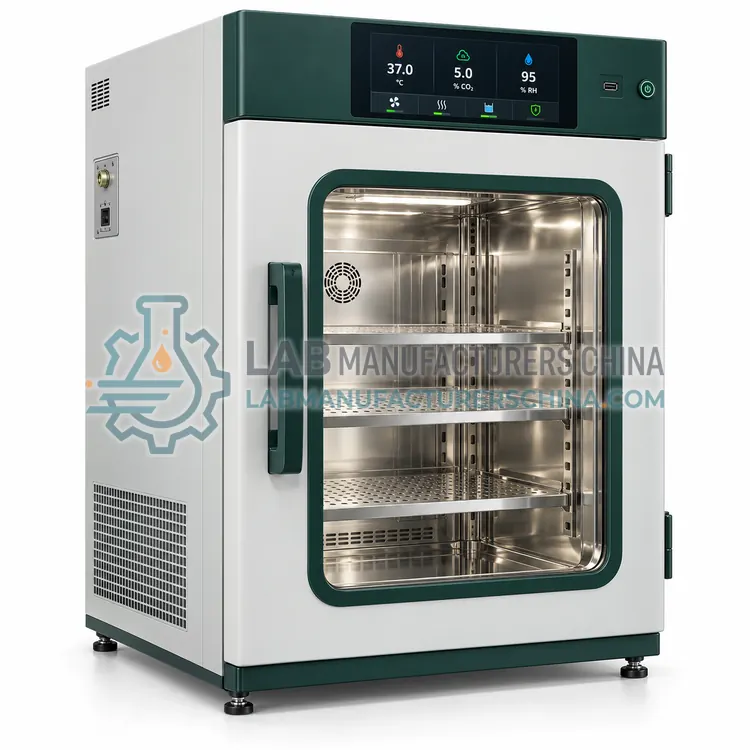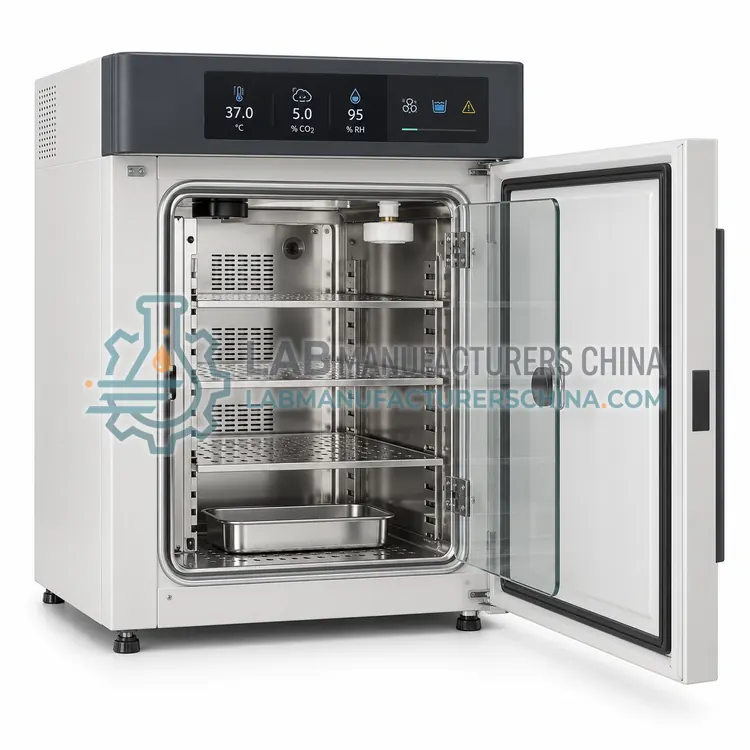
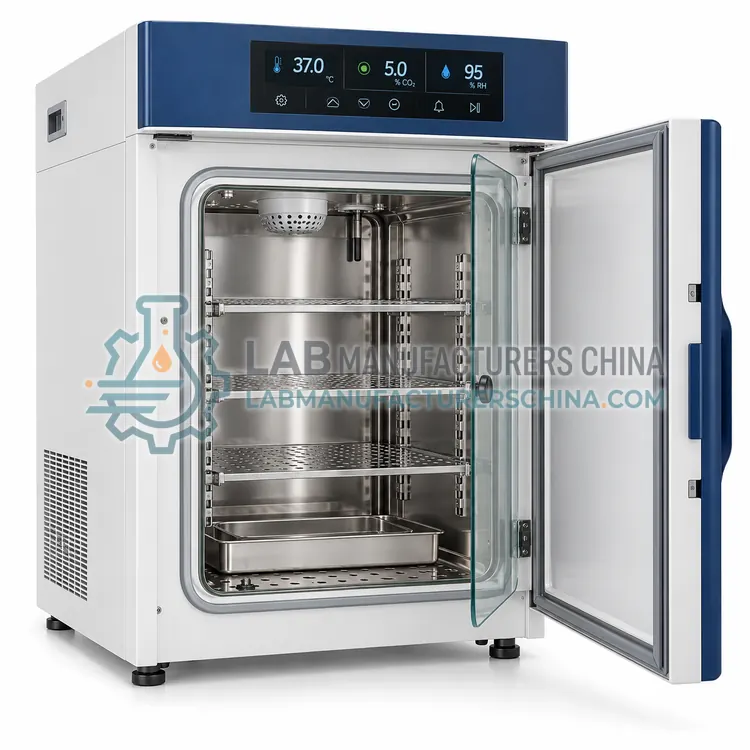
Direct Heat CO2 Incubator
直热式 CO2 培养箱
- SKU COI-0003
- CO2 Incubators
- CE (to be confirmed)
- ISO 9001 manufacturing (to be confirmed)
- RoHS (to be confirmed)
Price on request — FOB / CIF quoted per order
Prices depend on configuration, quantity and destination port.
Key specifications
| Chamber volume | 50–180 L |
|---|---|
| Temperature range | RT+5 to 55 C |
| Temperature uniformity | ±0.3–0.5 C |
| CO2 range | 0–20% |
| CO2 sensor | Infrared (IR) |
| Humidity | 90–95% RH |
Request a quote Download brochure · to be provided
By Lab Manufacturers China Technical TeamLast reviewed Standards: IEC 61010-1, IEC 61010-2-010, DIN 12880
What is the Direct Heat CO2 Incubator?
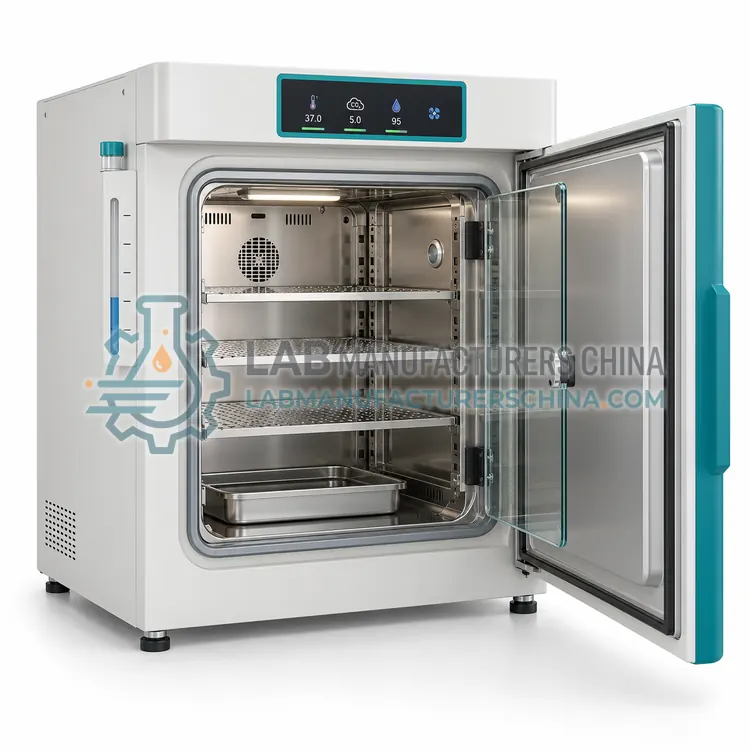
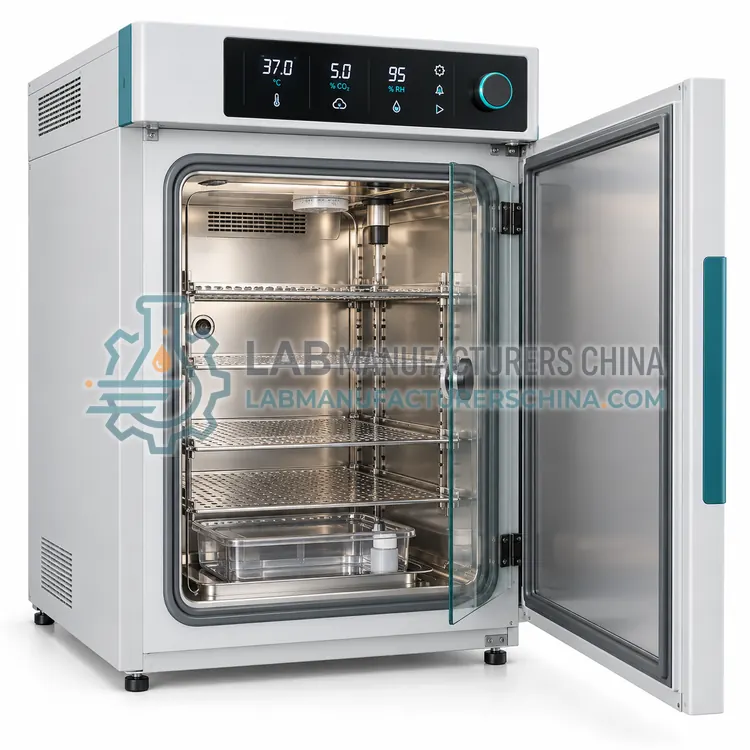
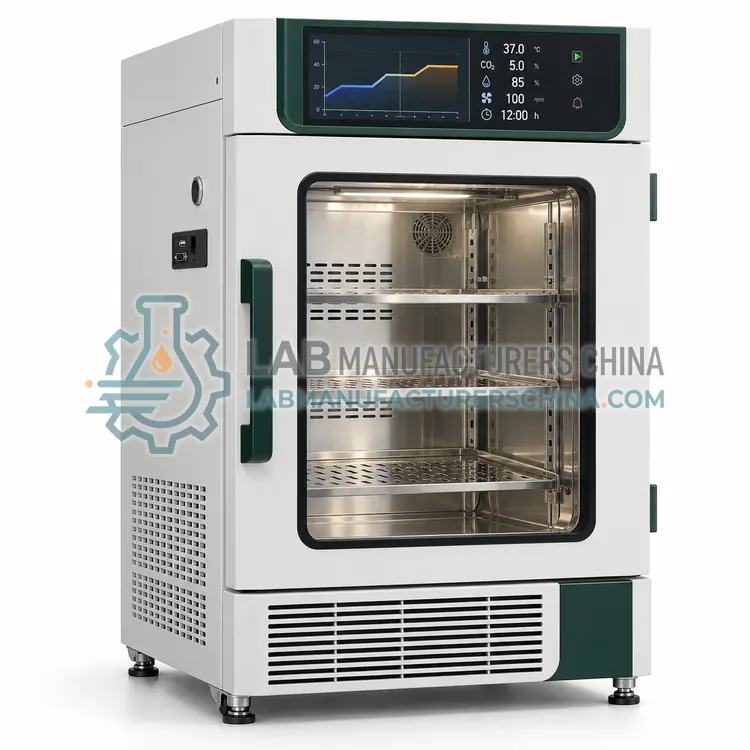
A direct heat CO2 incubator warms the chamber through its walls with no jacket, heating and cooling quickly. It is chosen where fast temperature changes, light weight and easy cleaning are valued.
What is the Direct Heat CO2 Incubator?
A direct heat CO2 incubator warms the chamber through its walls with no jacket, heating and cooling quickly. It is chosen where fast temperature changes, light weight and easy cleaning are valued.
Overview
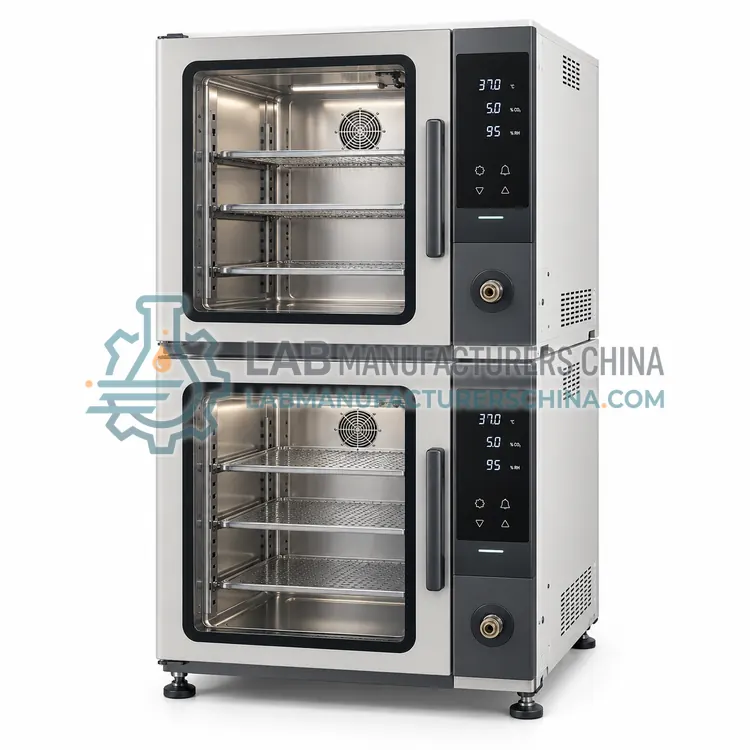
The direct heat incubator places heating elements directly on the outside of a metal-walled chamber, so the walls themselves become the heat source and no air or water jacket is used. Temperature responds quickly, which helps recovery after door openings, and the unit is light and slim for its volume. Uniformity of plus or minus 0.3 to 0.5 C is reached with careful element layout. CO2 is controlled from 0 to 20 percent by an infrared sensor, and humidity runs near 90 to 95 percent from a water pan. Absence of a jacket simplifies cleaning, and high-temperature decontamination cycles integrate easily. It suits multi-user laboratories where units are stacked, moved or cycled frequently, and where fast recovery matters more than long hold through power loss.
How does it work?
A CO2 incubator heats an insulated chamber to a setpoint, usually 37 C, and adds carbon dioxide from an external cylinder to hold the medium pH near 7.4 in bicarbonate buffers. An infrared or thermal-conductivity sensor measures CO2, and a PID loop opens a valve or modulates gas flow to correct deviations. Humidity is maintained near 90 to 95 percent by a water pan or an active humidity generator, which reduces evaporation and keeps osmolality stable. Air circulation may be natural, forced or designed as a gentle laminar flow to limit contamination spread. Door heaters reduce condensation on the glass, and over-temperature and CO2 alarms protect the culture. Interior surfaces are stainless steel or copper alloy, chosen for cleanability and antimicrobial behaviour, with gaskets that allow frequent decontamination.
What are the key features?
- Elements mounted directly on chamber walls
- Fast response and quick recovery
- Light and slim construction for stacking
- Infrared CO2 control from 0 to 20 percent
- Simplified interior without a jacket
- Easy integration of high-temperature decontamination
What are the technical specifications?
A typical direct heat co2 incubator configuration offers chamber volume of 50–180 L, temperature range of RT+5 to 55 C, temperature uniformity of ±0.3–0.5 C, CO2 range of 0–20%, CO2 sensor of Infrared (IR) and humidity of 90–95% RH. Values are indicative of the product class; the exact figures for each configuration are confirmed on the quotation and the calibration documents supplied with the instrument.
Which applications is it used for?
The Direct Heat CO2 Incubator is used in multi-user cell culture laboratories, stacked cell culture installations, frequent-access routine culture and teaching and core facilities. Across the wider CO2 Incubators class, laboratories also deploy it for mammalian cell line culture, tissue and primary cell culture and in vitro fertilization and embryo work.
Which standards and certifications apply?
Relevant standards and methods include IEC 61010-1, IEC 61010-2-010, DIN 12880, USP <1116>, ISO 14644-1, ISO 17025 and ISO 9001. Certification candidates for this model are CE, ISO 9001 manufacturing and RoHS; each is to be confirmed for the specific configuration before shipment, and certificates are supplied only where they have been issued.
Place the incubator in a stable location away from sunlight, draughts and heat sources, with space for the gas cylinder and regulator, and anchor cylinders so they cannot fall. Use instrument-grade CO2 and replace the water in the humidity pan with sterile distilled water regularly to avoid microbial growth. Decontaminate the chamber on a defined schedule, and monitor CO2 concentration, temperature and humidity daily, logging values. Verify temperature and CO2 with calibrated references at intervals and after service. Check door gaskets and filters for wear, keep the chamber loaded so temperature stays stable, and avoid stacking past the manufacturer's limit.
How do I select the right Direct Heat CO2 Incubator?
Select the direct heat incubator when fast recovery, light weight and easy cleaning matter, especially in stacked or multi-user installations. Water jackets suit long power interruptions. In the RFQ, specify volume, recovery time, CO2 sensor, sterilization cycle and stacking kit needs.
How does it compare with other CO2 Incubators variants?
Choose a CO2 incubator when the culture needs a bicarbonate-buffered medium and high humidity, which is typical of mammalian and tissue culture. Decide the heating design first: air-jacketed units are simple and recover steadily, water-jacketed units hold temperature through long power interruptions, and direct-heat units warm and cool quickly. Then set chamber volume from flask count and check the CO2 range and sensor type, since infrared sensors resist humidity drift better than thermal-conductivity sensors. Consider humidity method, decontamination options such as high-temperature cycles, HEPA filtration and stacking. Confirm gas supply, alarm connectivity and power, and require validation support for regulated cell work.
Full specifications
| Chamber volume | 50–180 L |
|---|---|
| Temperature range | RT+5 to 55 C |
| Temperature uniformity | ±0.3–0.5 C |
| CO2 range | 0–20% |
| CO2 sensor | Infrared (IR) |
| Humidity | 90–95% RH |
| Jacket type | None (direct heat) |
| Sterilization cycle | 90–140 C option |
| Recovery after door opening | 3–6 min |
| Power supply | 220 V, 50/60 Hz |
Indicative values for this product class. Final specifications are confirmed on the quotation and in the calibration documents supplied with the instrument.
Applications
- Multi-user cell culture laboratories
- Stacked cell culture installations
- Frequent-access routine culture
- Teaching and core facilities
Key features
- Elements mounted directly on chamber walls
- Fast response and quick recovery
- Light and slim construction for stacking
- Infrared CO2 control from 0 to 20 percent
- Simplified interior without a jacket
- Easy integration of high-temperature decontamination
Frequently asked questions about Direct Heat CO2 Incubator
The walls themselves are the heat source, with little thermal mass to reheat, so the chamber returns to setpoint in a few minutes after a door opening. This suits workflows with frequent access and multiple users.
No better than its insulation allows, since there is no jacket to store heat. Temperature falls within tens of minutes, so cultures needing protection should use a water-jacketed unit or a backup power supply.
Yes. Without a jacket, the chamber walls are thin and the interior is simple, and high-temperature decontamination cycles are easier to integrate. Rounded corners and removable shelves further simplify cleaning and reduce contamination risk.
High humidity near 90 to 95 percent stops culture medium from evaporating, which would concentrate salts and change osmolality. Stable osmolality keeps cells healthy, especially in open dishes and long experiments where even modest evaporation would alter the medium.
An air jacket surrounds the chamber with an insulated air layer, giving simple construction and stable temperature. A water jacket uses a large water mass around the chamber, which holds temperature longer during power interruptions but adds weight and warm-up time.
Infrared sensors measure CO2 directly and resist changes in humidity and temperature, so they drift less and recover faster after door openings. Thermal-conductivity sensors are cheaper but depend on humidity and require more frequent calibration.
Related models