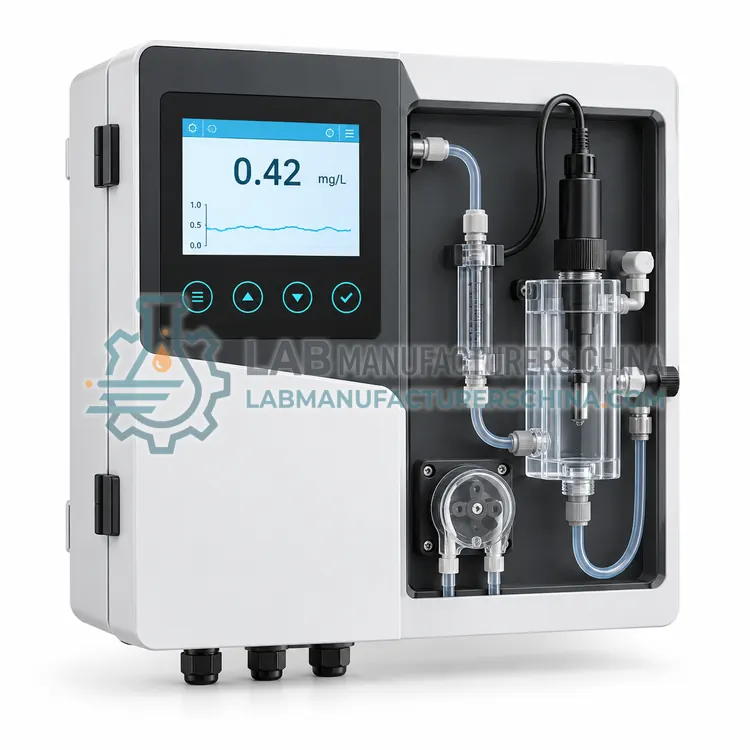
Online Amperometric Residual Chlorine Analyzer
在线电流型余氯分析仪
- SKU CHM-0003
- Chlorine Meters
- CE (to be confirmed)
- ISO 9001 manufacturing (to be confirmed)
Price on request — FOB / CIF quoted per order
Prices depend on configuration, quantity and destination port.
Key specifications
| Measurement principle | Amperometric with chlorine-permeable membrane |
|---|---|
| Range | 0–2 mg/L, 0–20 mg/L selectable |
| Resolution | 0.01 mg/L |
| Response time | 90 percent in under 60 s |
| pH range | 6.0–9.0 with compensation |
| Sample flow | 0.2–1 L/min |
Request a quote Download brochure · to be provided
By Lab Manufacturers China Technical TeamLast reviewed Standards: ISO 7393-1, ISO 7393-2, ISO 7393-3
What is the Online Amperometric Residual Chlorine Analyzer?
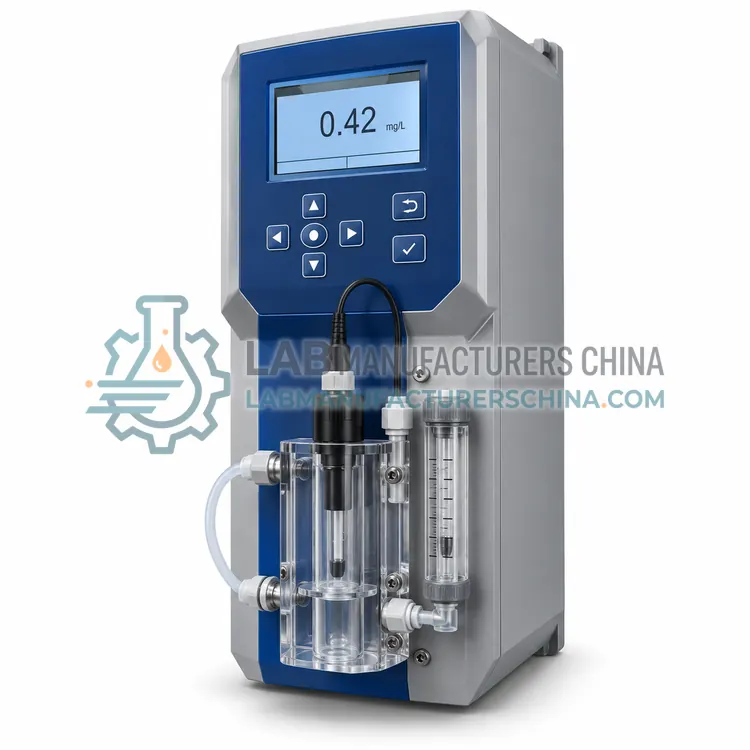
An online amperometric chlorine analyzer measures residual chlorine continuously with a membrane-covered electrode. It responds in seconds and drives chemical dosing pumps and alarm systems for drinking water and wastewater disinfection control.
What is the Online Amperometric Residual Chlorine Analyzer?
An online amperometric chlorine analyzer measures residual chlorine continuously with a membrane-covered electrode. It responds in seconds and drives chemical dosing pumps and alarm systems for drinking water and wastewater disinfection control.
Overview
Sample flows past or through a sensor with a chlorine-permeable membrane, and hypochlorous acid diffuses to the cathode where it is reduced, producing a current proportional to concentration. Temperature compensation, pH compensation and, in some designs, a second sensor for free chlorine versus total chlorine, allow the analyzer to distinguish forms. The instrument outputs 4–20 mA and digital signals for dosing control, and alarm relays alert operators when residual falls below the minimum or exceeds the maximum. Because the sensor consumes chlorine and is affected by flow, pH and fouling, the sample flow must be stabilised and the membrane and electrolyte replaced on schedule. Calibration uses DPD or a colorimetric reference and is verified regularly with grab samples.
How does it work?
Chlorine measurement uses either a colorimetric or an electrochemical principle. In the DPD method, N,N-diethyl-p-phenylenediamine reacts with free chlorine to form a magenta colour whose intensity is proportional to concentration and is measured at about 515 nm; adding potassium iodide then reveals combined chlorine so total chlorine can be determined. Because the colour develops quickly and fades, timing and temperature must be controlled. Amperometric analyzers use a membrane-covered electrode where chlorine diffuses to a cathode and produces a current proportional to concentration, giving continuous measurement without reagents. Optical analyzers use a colorimetric reaction in a flow cell with automatic reagent addition. Results are reported in milligrams per litre as free chlorine, combined chlorine, total chlorine or, in pools, as total chlorine with cyanuric acid present.
What are the key features?
- Membrane-covered amperometric sensor with fast response
- Temperature and pH compensation for stable readings
- Free and total chlorine channels on some models
- 4–20 mA and digital outputs for dosing control
- High and low residual alarm relays
- Scheduled membrane and electrolyte replacement
What are the technical specifications?
A typical online amperometric residual chlorine analyzer configuration offers measurement principle of Amperometric with chlorine-permeable membrane, range of 0–2 mg/L, 0–20 mg/L selectable, resolution of 0.01 mg/L, response time of 90 percent in under 60 s, pH range of 6.0–9.0 with compensation and sample flow of 0.2–1 L/min. Values are indicative of the product class; the exact figures for each configuration are confirmed on the quotation and the calibration documents supplied with the instrument.
Which applications is it used for?
The Online Amperometric Residual Chlorine Analyzer is used in drinking water disinfection and dosing control, wastewater effluent chlorination control, cooling water biofouling control and industrial process water disinfection. Across the wider Chlorine Meters class, laboratories also deploy it for drinking water disinfection monitoring, swimming pool and spa water testing and wastewater effluent chlorination control.
Which standards and certifications apply?
Relevant standards and methods include ISO 7393-1, ISO 7393-2, ISO 7393-3, EPA 330.5, Standard Methods 4500-Cl G and ISO/IEC 17025. Certification candidates for this model are CE and ISO 9001 manufacturing; each is to be confirmed for the specific configuration before shipment, and certificates are supplied only where they have been issued.
DPD reagents and powder pillows have a limited shelf life and are sensitive to heat and moisture, so they must be stored correctly and replaced before expiry. Colour development depends on time and temperature, so sample temperature should be near 20 to 25 °C and readings taken within the specified period. High chlorine concentrations bleach the colour and need dilution, and samples with manganese, ozone or high turbidity can interfere. Membrane electrodes need electrolyte replacement, membrane care and regular calibration against a reference method, and the sample flow, pH and temperature must be within the specified limits. For pools, cyanuric acid affects the ratio of free to combined chlorine and should be known. Keep records of calibration, reagents and reference comparisons.
How do I select the right Online Amperometric Residual Chlorine Analyzer?
Select an online amperometric analyzer when chlorine dosing must be controlled continuously or alarms are required for disinfection failures. Confirm the required range, compensation features and output protocol, and plan membrane and electrolyte maintenance as part of routine operation.
How does it compare with other Chlorine Meters variants?
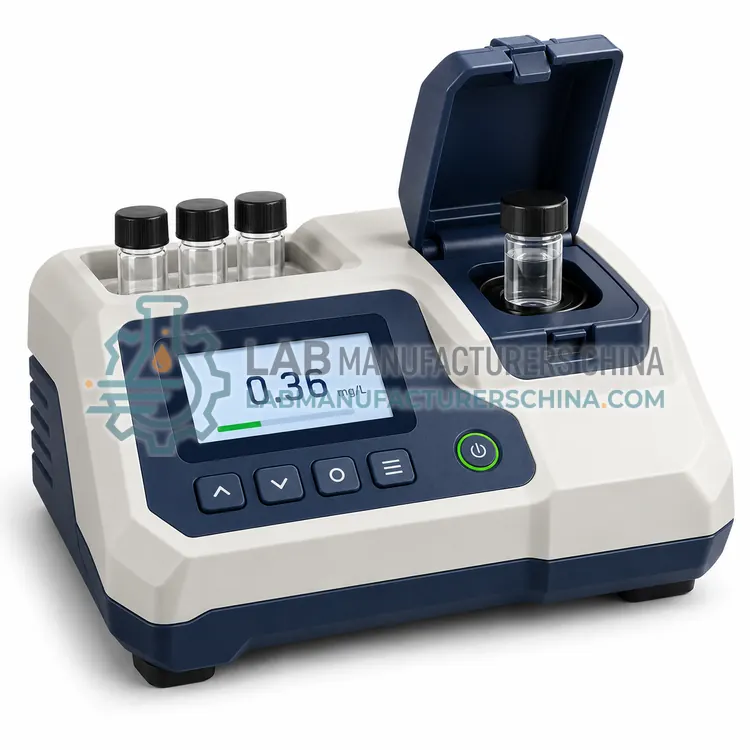
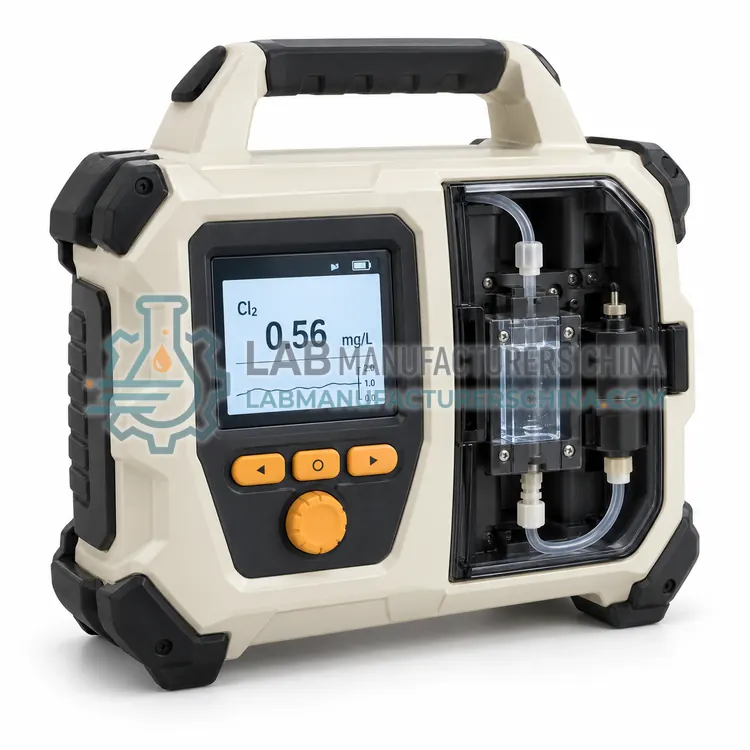
Choose the measurement format from where and how often chlorine is measured. Pocket testers and portable colorimeters suit field checks, pool testing and distribution system sampling, where speed and portability matter. Benchtop colorimeters give better optics and repeatability for laboratories and for verifying portable meters. Online amperometric analyzers are needed wherever chlorine dosing must be continuous, as at treatment works, since they respond in seconds and can drive pumps and alarms directly. Consider the expected range, since disinfection residuals are usually 0.2 to 2 mg/L but pool and shock dosing levels are far higher, and confirm whether free, combined or total chlorine is the reported parameter. Check reagent or membrane availability and the calibration standards you will need.
Full specifications
| Measurement principle | Amperometric with chlorine-permeable membrane |
|---|---|
| Range | 0–2 mg/L, 0–20 mg/L selectable |
| Resolution | 0.01 mg/L |
| Response time | 90 percent in under 60 s |
| pH range | 6.0–9.0 with compensation |
| Sample flow | 0.2–1 L/min |
| Sample temperature | 5–45 °C |
| Outputs | 4–20 mA, Modbus, Ethernet |
| Alarm relays | 2–4 configurable |
| Enclosure | IP65 or IP66 |
Indicative values for this product class. Final specifications are confirmed on the quotation and in the calibration documents supplied with the instrument.
Applications
- Drinking water disinfection and dosing control
- Wastewater effluent chlorination control
- Cooling water biofouling control
- Industrial process water disinfection
Key features
- Membrane-covered amperometric sensor with fast response
- Temperature and pH compensation for stable readings
- Free and total chlorine channels on some models
- 4–20 mA and digital outputs for dosing control
- High and low residual alarm relays
- Scheduled membrane and electrolyte replacement
Frequently asked questions about Online Amperometric Residual Chlorine Analyzer
Chlorine exists as hypochlorous acid and hypochlorite ion in proportions set by pH, and the sensor responds differently to each form. Compensation keeps the reading correct when pH varies, which is common in surface water and wastewater.
Membranes and electrolyte are usually replaced every one to three months, depending on fouling and sample quality. A slow response, drifting readings or reduced slope after calibration indicates that replacement or cleaning is needed.
Yes, with a sensor or method that responds to chloramines as well as free chlorine, although the response to each form differs. Where chloramination is used, the specific configuration and calibration must be selected for the intended parameter.
Free chlorine is hypochlorous acid and hypochlorite ion, the active disinfecting forms. Combined chlorine is chlorine bound to ammonia as chloramines, which is a weaker disinfectant. Total chlorine is the sum of the two and is measured by adding iodide in the DPD method.
The magenta colour develops quickly, then slowly fades as the reaction proceeds and the dye oxidises further. Readings should be taken within one to two minutes of reagent addition, and sample temperature should be near 20 to 25 °C for consistent colour development.
Chlorine diffuses through a membrane to a cathode where it is reduced, producing a current proportional to concentration. The sensor is calibrated against a DPD or reference method and measures continuously, which suits dosing control and alarm functions.
Related models