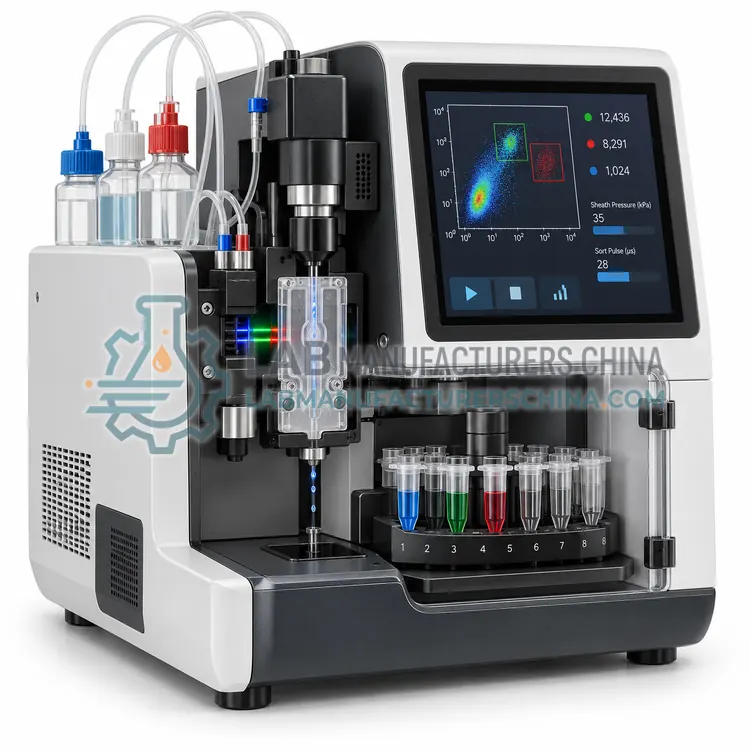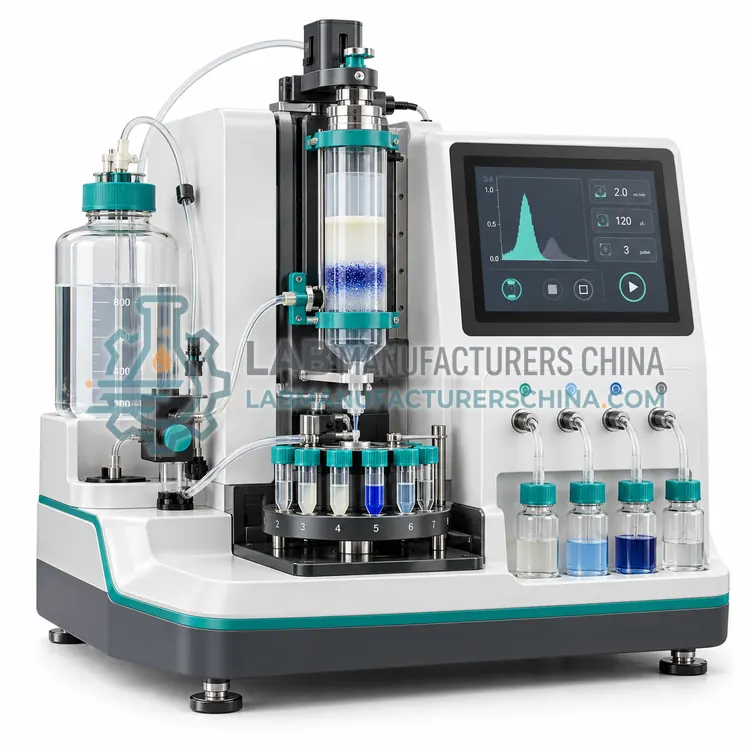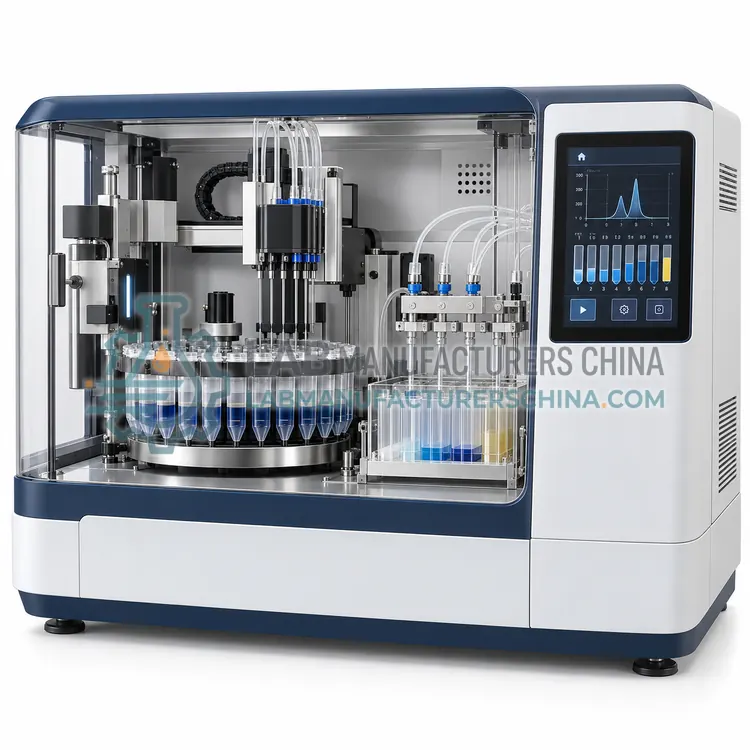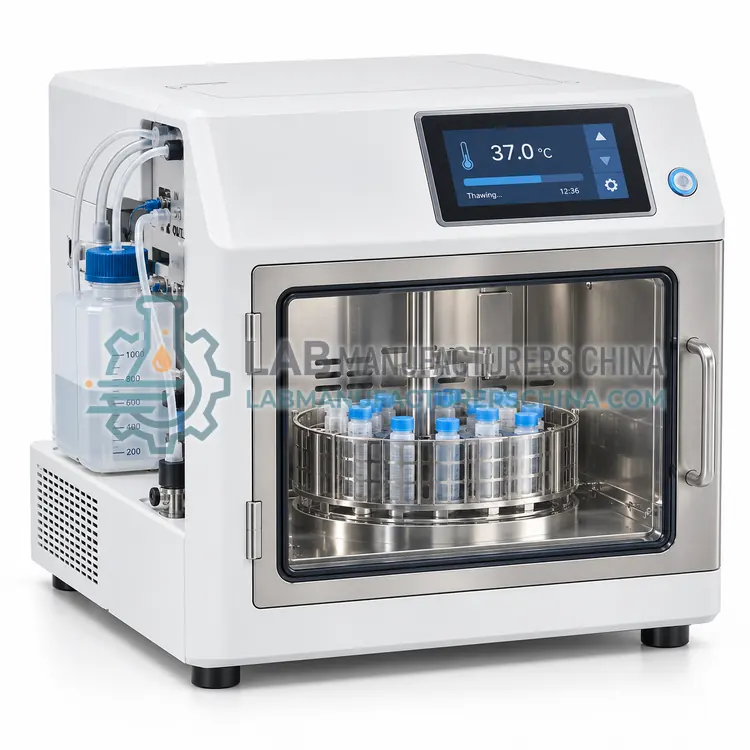
Magnetic-Activated Cell Separation System
磁性激活细胞分离系统
- SKU CES-0001
- Cell Separation
- CE (to be confirmed)
- ISO 9001 manufacturing (to be confirmed)
- ISO 13485 manufacturing (to be confirmed)
Price on request — FOB / CIF quoted per order
Prices depend on configuration, quantity and destination port.
Key specifications
| Column capacity | 10⁷ to 10⁹ cells |
|---|---|
| Purity | 90–98% (marker dependent) |
| Viability | above 90% (typical) |
| Processing time | approx. 15–60 min |
| Sample volume | 0.5–50 mL |
| Magnetic field | Permanent magnet, approx. 0.5–1 T at the column |
Request a quote Download brochure · to be provided
By Lab Manufacturers China Technical TeamLast reviewed Standards: ISO 20387, USP <1046>, IEC 61010-1
What is the Magnetic-Activated Cell Separation System?
A magnetic-activated cell separation system labels cells with antibody-conjugated magnetic particles and passes them through a column in a magnetic field, isolating labelled cells with 90–98% purity from 10⁷ to 10⁹ cells without a sorter.
What is the Magnetic-Activated Cell Separation System?
A magnetic-activated cell separation system labels cells with antibody-conjugated magnetic particles and passes them through a column in a magnetic field, isolating labelled cells with 90–98% purity from 10⁷ to 10⁹ cells without a sorter.
Overview
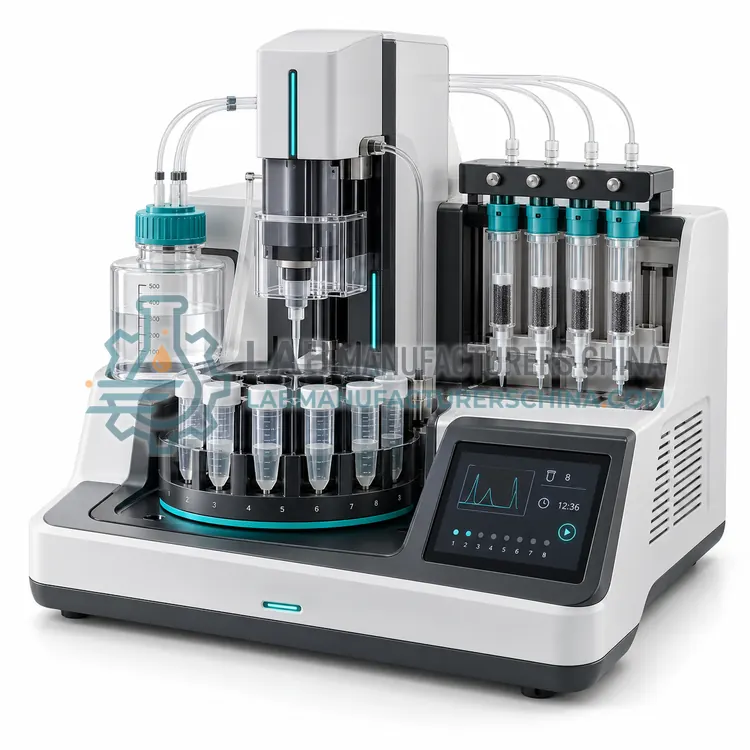
The workflow mixes cells with magnetic beads conjugated to an antibody against the target marker, incubates briefly in cold buffer, then loads the suspension onto a column held in a strong permanent magnet. Retained cells are released by removing the column from the magnet and eluting with buffer. Positive selection yields a labelled population, while negative selection uses a cocktail that labels unwanted cells and leaves the target in the flow-through. Column formats range from small units for 10⁷ cells to larger separators for 10⁹ cells, and a separator magnet holds one or several columns for parallel work. Typical purity is 90–98% and viability above 90% when dead cells are removed first, with processing times of 15–60 minutes depending on sample volume.
How does it work?
Separation exploits a physical or biochemical difference between the target and the rest of the sample. Immunomagnetic methods coat cells with antibody-conjugated magnetic particles and either retain labelled cells in a column placed in a magnetic field, or label everything except the target and let the desired cells flow through untouched. Fluorescence-activated sorting stains cells with fluorescent antibodies, interrogates each cell in a fluid stream and applies a charge to the droplet containing a selected cell, which is then deflected into a collection tube. Microfluidic sorters use narrow channels, acoustic waves or optical forces to deflect cells without droplets. Density-based separation layers the sample over a medium of defined density so that cells of different density band at different interfaces during centrifugation. Each method trades purity, yield, speed and gentleness differently, and downstream assays determine which balance is acceptable.
What are the key features?
- Antibody-conjugated magnetic beads for positive or negative selection
- Column capacity from 10⁷ to 10⁹ cells
- Permanent magnet separator holding one or several columns
- Purity of 90–98% and viability above 90% typical
- Processing time of 15–60 minutes depending on volume
- No sorter required, so contamination and cost stay low
What are the technical specifications?
A typical magnetic-activated cell separation system configuration offers column capacity of 10⁷ to 10⁹ cells, purity of 90–98% (marker dependent), viability of above 90% (typical), processing time of approx. 15–60 min, sample volume of 0.5–50 mL and magnetic field of Permanent magnet, approx. 0.5–1 T at the column. Values are indicative of the product class; the exact figures for each configuration are confirmed on the quotation and the calibration documents supplied with the instrument.
Which applications is it used for?
The Magnetic-Activated Cell Separation System is used in T cell and natural killer cell isolation, CD34-positive progenitor enrichment, depletion of unwanted lineages from blood and cell therapy starting material preparation. Across the wider Cell Separation class, laboratories also deploy it for T cell and immune subset isolation, stem cell and progenitor enrichment and cell therapy starting material preparation.
Which standards and certifications apply?
Relevant standards and methods include ISO 20387, USP <1046>, IEC 61010-1, IEC 61010-2-020, IEC 60825-1 and ISO 15189. Certification candidates for this model are CE, ISO 9001 manufacturing and ISO 13485 manufacturing; each is to be confirmed for the specific configuration before shipment, and certificates are supplied only where they have been issued.
Work in a biosafety cabinet with appropriate containment, and keep separation buffers cold unless the protocol states otherwise, since cells are more sensitive to handling than to the method itself. Use fresh antibodies and beads, avoid vigorous pipetting, and filter samples through a 30–40 µm mesh to prevent column or nozzle blockage. Include a dead-cell removal step, because dead cells bind non-specifically and reduce purity. After separation, verify purity and viability by flow cytometry and record recovery and purity values for each preparation. Aseptic technique and closed systems are required for cell therapy workflows, where separation is part of a validated process under ISO 20387 and USP <1046> expectations, including documented operator training and traceability of reagents and lots.
How do I select the right Magnetic-Activated Cell Separation System?
Select a magnetic separation system when speed, gentleness and scale matter more than maximum purity, or when no sorter is available. Specify column capacity, selection mode, required purity, buffer and temperature control and whether a closed system is needed for clinical work.
How does it compare with other Cell Separation variants?
Choose by the required purity, yield, cell number and downstream application. Magnetic separation is fast, gentle and scalable, works with 10⁷ to 10⁹ cells and needs no sorter, but purity is typically 90–98%, so it may not be sufficient for single-cell sequencing. Fluorescence-activated sorting reaches 98–99.9% purity, can deposit single cells into plates with index information and supports multi-parameter gating, at the cost of lower throughput, higher shear stress and specialised operation. Microfluidic and acoustic methods suit low-volume samples and cell types sensitive to shear. Density gradient separation remains the standard first step for blood and bone marrow, followed by magnetic or flow-based purification. Confirm compatibility of labels, buffers and consumables with downstream culture, functional assays and regulatory requirements.
Full specifications
| Column capacity | 10⁷ to 10⁹ cells |
|---|---|
| Purity | 90–98% (marker dependent) |
| Viability | above 90% (typical) |
| Processing time | approx. 15–60 min |
| Sample volume | 0.5–50 mL |
| Magnetic field | Permanent magnet, approx. 0.5–1 T at the column |
| Buffer temperature | 2–8 °C recommended |
| Consumables | Single-use columns and bead kits |
| Parallel capacity | 1–8 columns depending on magnet |
| Dimensions (W x D x H) | approx. 200 x 150 x 100 mm (magnet) |
Indicative values for this product class. Final specifications are confirmed on the quotation and in the calibration documents supplied with the instrument.
Applications
- T cell and natural killer cell isolation
- CD34-positive progenitor enrichment
- Depletion of unwanted lineages from blood
- Cell therapy starting material preparation
Key features
- Antibody-conjugated magnetic beads for positive or negative selection
- Column capacity from 10⁷ to 10⁹ cells
- Permanent magnet separator holding one or several columns
- Purity of 90–98% and viability above 90% typical
- Processing time of 15–60 minutes depending on volume
- No sorter required, so contamination and cost stay low
Frequently asked questions about Magnetic-Activated Cell Separation System
A standard column handles about 10⁸ cells and can be scaled to 10⁹ with larger columns or repeated loading. Exceeding capacity saturates the magnetic matrix and lowers purity, so the column should be matched to the cell number.
Cold buffers slow receptor internalisation and antibody capping, which would reduce labelling. Working on ice also lowers metabolic activity and non-specific binding, improving both purity and viability of the isolated population.
No. Beads remain attached to the selected cells and are released only under conditions that would also damage the cells. Columns and bead reagents are single-use, and reuse would compromise both purity and sterility.
Positive selection labels the target cells so they are retained or collected. Negative selection labels everything except the target, so the desired cells remain untouched and unlabelled, which is preferred when the downstream assay is sensitive to bound antibody.
Typically 90–98% for positive selection and similar for well-optimised negative selection, depending on the marker and sample. Flow sorting raises purity to 98–99.9%, but yields fewer cells and takes longer.
Clumps and fibrin block magnetic columns and clog sorter nozzles, causing loss of sample and poor reproducibility. Passing the suspension through a 30–40 µm mesh removes aggregates while keeping single cells intact.
Related models