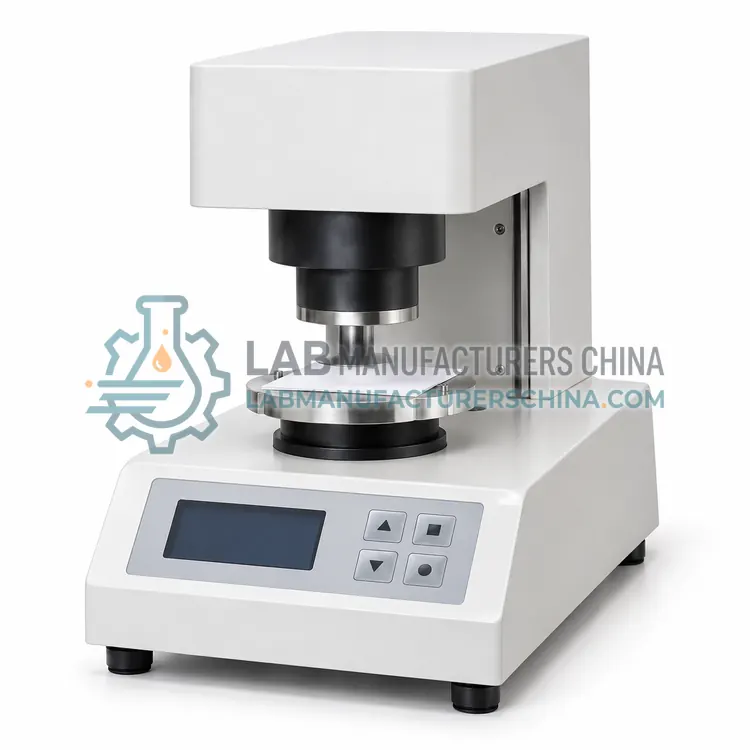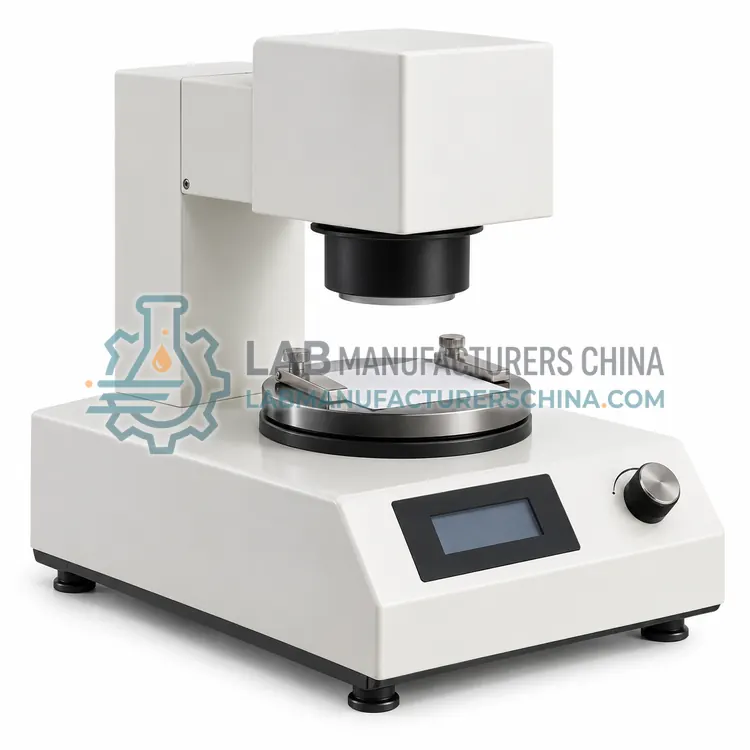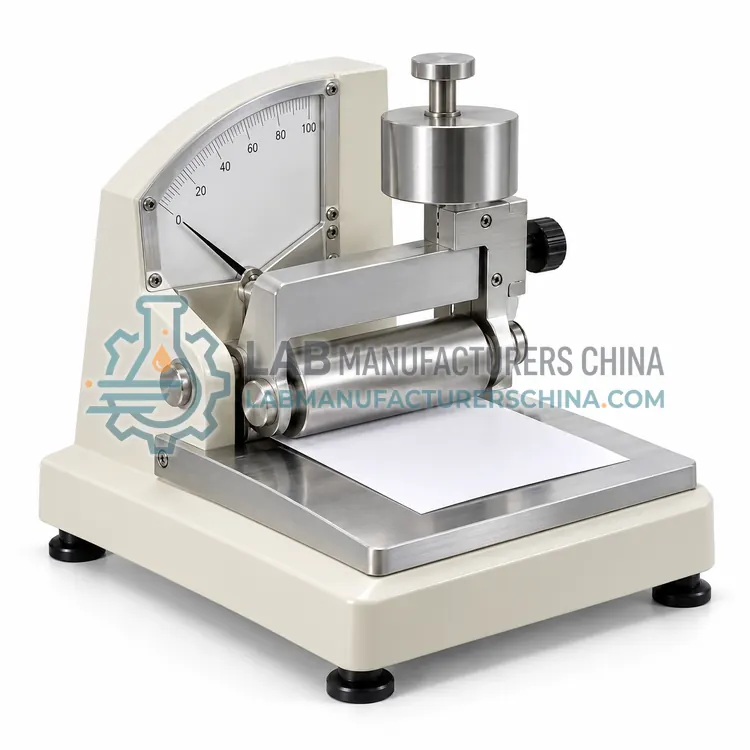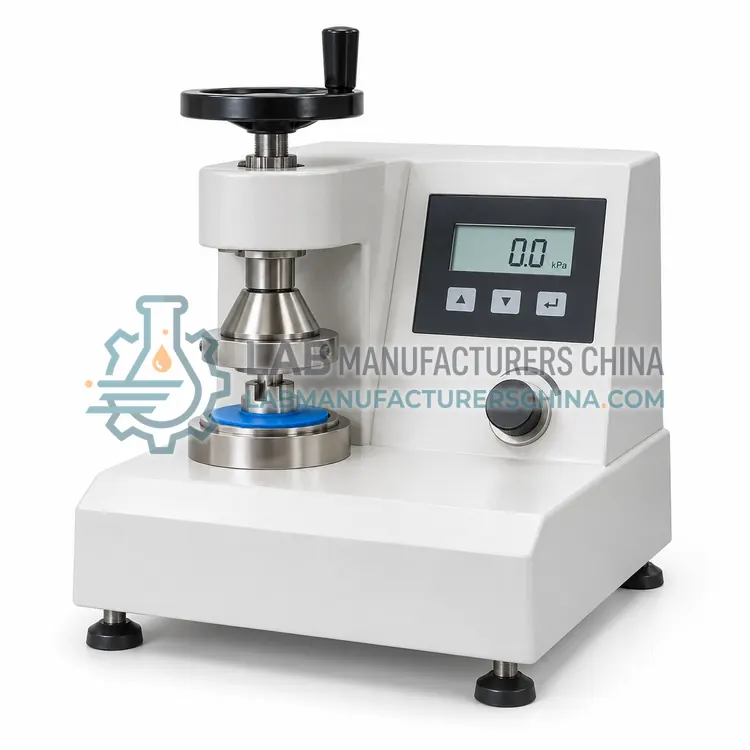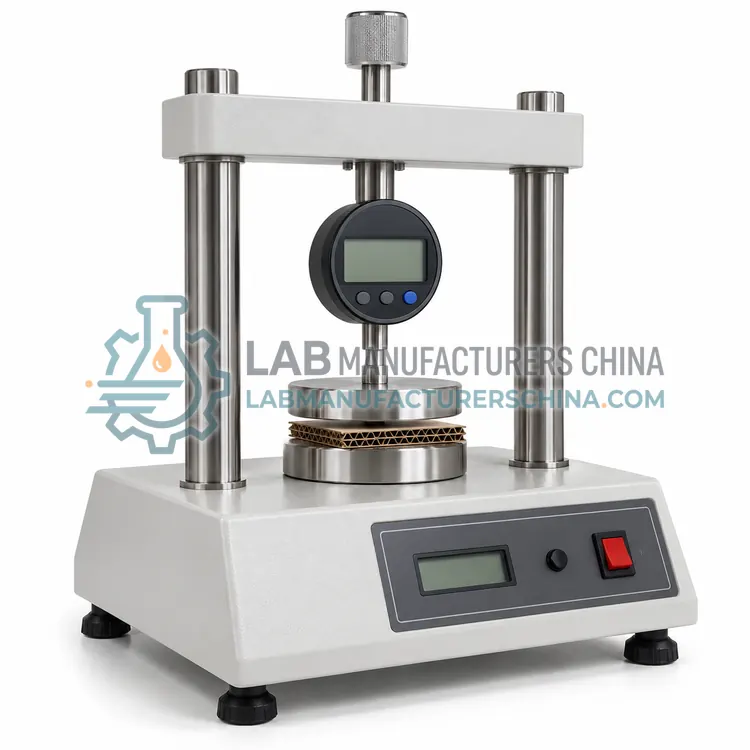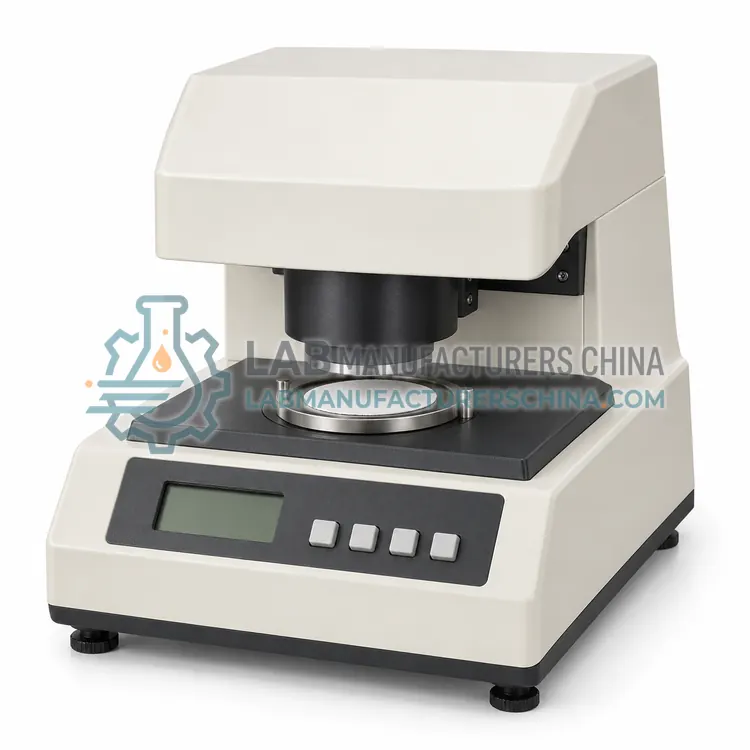
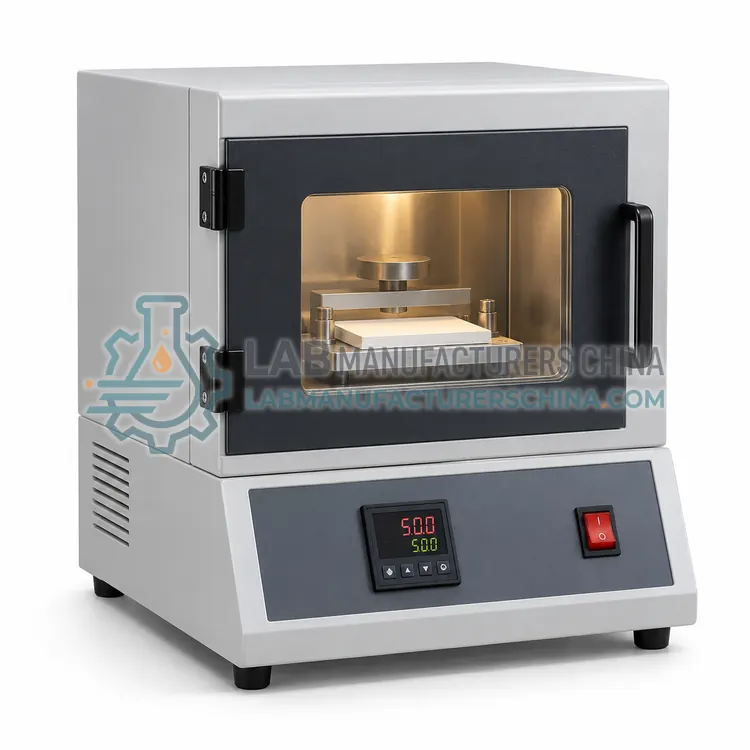
Opacity Tester for Paper
纸张不透明度测定仪
- SKU BRT-0003
- Brightness Testing
- CE (to be confirmed)
- ISO 9001 manufacturing (to be confirmed)
Price on request — FOB / CIF quoted per order
Prices depend on configuration, quantity and destination port.
Key specifications
| Measurement principle | Black to white backing contrast ratio |
|---|---|
| Illumination | Diffuse, 0° viewing |
| Opacities measurable | Up to 100% |
| Repeatability | ±0.2 opacity unit |
| Measuring area | About 30 mm diameter |
| Backing | Black cavity and white standard |
Request a quote Download brochure · to be provided
By Lab Manufacturers China Technical TeamLast reviewed Standards: ISO 2470-1, ISO 2470-2, ISO 2471
What is the Opacity Tester for Paper?
An opacity tester measures how much light a paper transmits by comparing its reflectance over a black backing with that over a white backing. It is specified for lightweight printing papers where show-through affects print quality.
What is the Opacity Tester for Paper?
An opacity tester measures how much light a paper transmits by comparing its reflectance over a black backing with that over a white backing. It is specified for lightweight printing papers where show-through affects print quality.
Overview
Opacity is calculated as the ratio of the reflectance of a single sheet backed by a black cavity to the reflectance of the same sheet backed by a white standard, multiplied by one hundred. The measurement therefore requires a geometry that can be switched between black and white backing without moving the specimen, and a reflectance scale calibrated with traceable standards. Two conventions exist, one using diffuse illumination with luminous reflectance and one using the blue or illuminant-specific reflectance, and the standard must be stated because the values differ slightly. The pad behind the specimen is usually large enough to be opaque, and specimens must be flat and free of creases since even a small air gap changes the reflected signal.
How does it work?
A brightness or reflectance instrument illuminates the specimen diffusely and measures the light reflected at right angles, using a defined geometry, illuminant and observer so that results are reproducible between laboratories. ISO brightness is the diffuse blue reflectance factor measured with an effective wavelength of 457 nm under illuminant C, and it is highly sensitive to fluorescent whitening agents. Whiteness is a single number derived from the full colour coordinates under illuminant D65 or C, while yellowness, tint and shade are obtained from the same measurement. Opacity is the ratio of reflectance of a stack-backed specimen to that of an infinite stack, and can be determined by diffuse reflectance or by the contrast ratio of luminous reflectance. Gloss is measured separately at a fixed angle of incidence, because it depends on surface finish rather than on bulk optical properties.
What are the key features?
- Switchable black cavity and white backing
- Flat specimen clamp without creasing
- Reflectance scale with certified standards
- Contrast ratio calculation in percent
- Compatible with several standard conventions
- Pad thickness verification before measurement
What are the technical specifications?
A typical opacity tester for paper configuration offers measurement principle of Black to white backing contrast ratio, illumination of Diffuse, 0° viewing, opacities measurable of Up to 100%, repeatability of ±0.2 opacity unit, measuring area of About 30 mm diameter and backing of Black cavity and white standard. Values are indicative of the product class; the exact figures for each configuration are confirmed on the quotation and the calibration documents supplied with the instrument.
Which applications is it used for?
The Opacity Tester for Paper is used in lightweight printing paper opacity testing, show-through evaluation for book and newsprint, coated and uncoated grade comparison and specification testing to ISO 2471 or TAPPI T425. Across the wider Brightness Testing class, laboratories also deploy it for brightness verification of printing and writing papers, whiteness and shade control for coated papers and opacity checks for lightweight printing grades.
Which standards and certifications apply?
Relevant standards and methods include ISO 2470-1, ISO 2470-2, ISO 2471, ISO 11475, ISO 11476, ISO 5631-1, TAPPI T452, TAPPI T525 and IEC 61010-1. Certification candidates for this model are CE and ISO 9001 manufacturing; each is to be confirmed for the specific configuration before shipment, and certificates are supplied only where they have been issued.
Keep the instrument calibrated with certified standards traceable to a national laboratory, and check the white standard and black trap at the start of each measurement series. Stack at least the number of sheets the method requires behind the specimen to ensure an opaque backing, because too few sheets allow the backing plate to influence the reading. Condition specimens to the standard atmosphere and protect them from light and heat, since fluorescent whitening agents bleach and papers yellow on exposure. Clean the measuring aperture and the standard regularly, avoid touching the measurement area of the specimen with fingers, and record the geometry, illuminant and observer with every result.
How do I select the right Opacity Tester for Paper?
Specify an opacity tester when opacity is a named specification parameter and results must follow the contrast ratio method directly. Confirm which backing and illumination convention the standard requires, and check the specimen clamp, because flat specimens without creases are essential for repeatable opacity results.
How does it compare with other Brightness Testing variants?
Match the instrument to the parameter named in the product standard. ISO brightness requires a 457 nm effective wavelength with the specified geometry, while D65 whiteness, colour and yellowness require a spectrophotometer covering the visible range under standard illuminants and observers. Opacity is measured with either a dedicated contrast ratio instrument or a spectrophotometer able to compute it from reflectance data. Gloss needs a dedicated meter with the correct incidence angle for the paper grade. Where the laboratory also verifies print appearance or matches shades, a benchtop spectrophotometer with both measurement geometries and a full set of illuminant and observer combinations is more useful than a single purpose meter, even though it costs more.
Full specifications
| Measurement principle | Black to white backing contrast ratio |
|---|---|
| Illumination | Diffuse, 0° viewing |
| Opacities measurable | Up to 100% |
| Repeatability | ±0.2 opacity unit |
| Measuring area | About 30 mm diameter |
| Backing | Black cavity and white standard |
| Pad requirement | Sufficient sheets for opacity |
| Data output | Opacity percentage and reflectance values |
Indicative values for this product class. Final specifications are confirmed on the quotation and in the calibration documents supplied with the instrument.
Applications
- Lightweight printing paper opacity testing
- Show-through evaluation for book and newsprint
- Coated and uncoated grade comparison
- Specification testing to ISO 2471 or TAPPI T425
Key features
- Switchable black cavity and white backing
- Flat specimen clamp without creasing
- Reflectance scale with certified standards
- Contrast ratio calculation in percent
- Compatible with several standard conventions
- Pad thickness verification before measurement
Frequently asked questions about Opacity Tester for Paper
Print on one side of a thin sheet is visible from the other side if opacity is too low, which degrades contrast and legibility, especially with dense text or solid print areas. Printers therefore specify a minimum opacity, and mills adjust refining, filler and coating to reach it without losing strength.
Yes, that is the measurement principle. Opacity compares the reflectance of a single sheet over a black backing with the same sheet over a white backing, so both backings must meet the specification and the specimen must not move between the two readings, otherwise the comparison is invalid.
Standards differ in the illumination geometry, the spectral weighting of the reflectance and the backing used, and each of these changes the calculated ratio slightly. Values obtained under one convention should not be compared with limits written for another, so the standard edition must be recorded with the result.
It measures the diffuse blue reflectance factor of a pad of sheets at an effective wavelength of 457 nm under illuminant C. Because the measurement is in the blue region, it is very sensitive both to the bleaching state of the pulp and to fluorescent whitening agents, which raise the value by converting ultraviolet light into visible blue.
A single sheet is partly translucent, so light reflected from the backing plate would add to the reading. Stacking a defined number of sheets makes the pad optically opaque, so the value depends only on the specimen, and the same number of sheets must be used as in the method to keep results comparable.
Yes. Reflectance scales are instrument dependent, so a certified white standard traceable to a national metrology institute and a black trap are used to set the scale before measurement. The standard's calibration date must be current, and the black trap must be clean to avoid an offset at the low end of the scale.
Related models