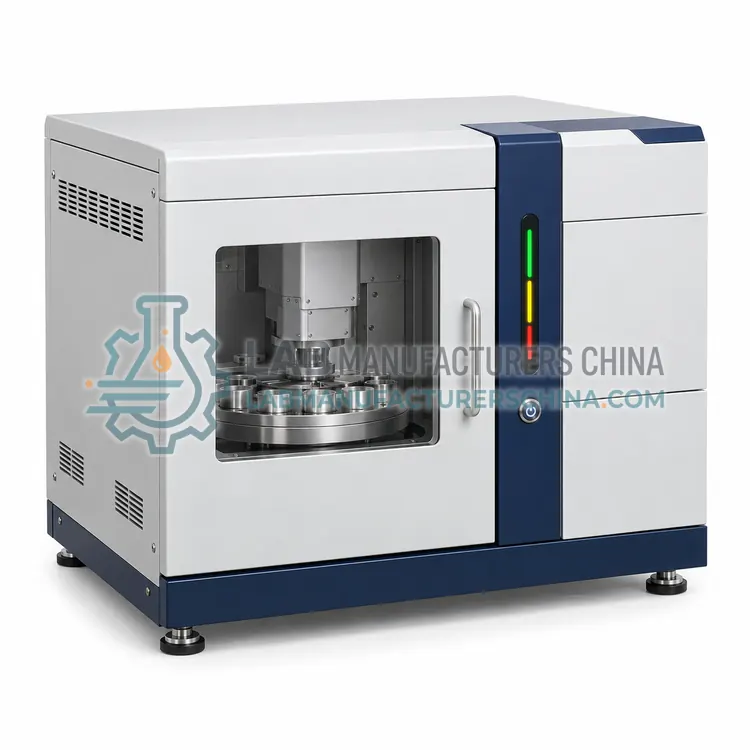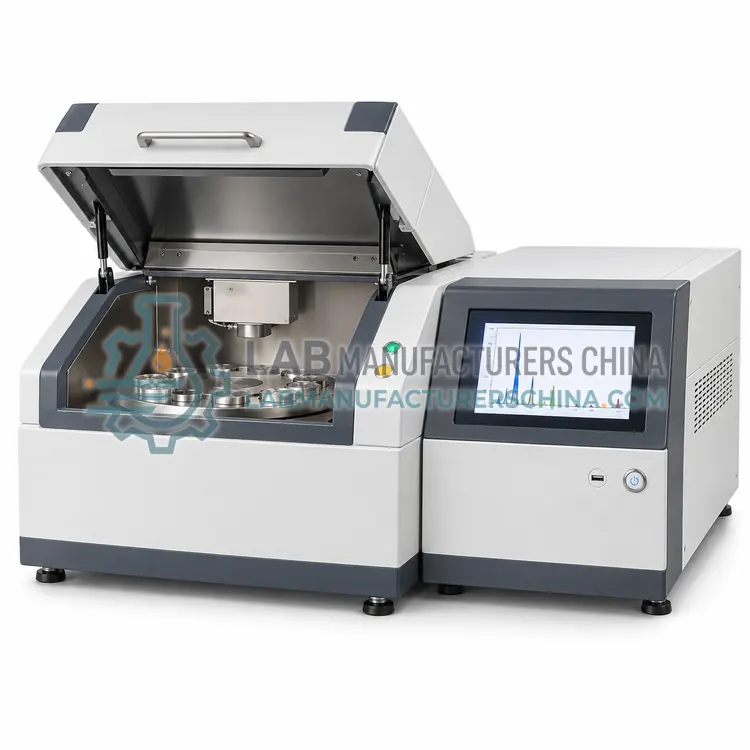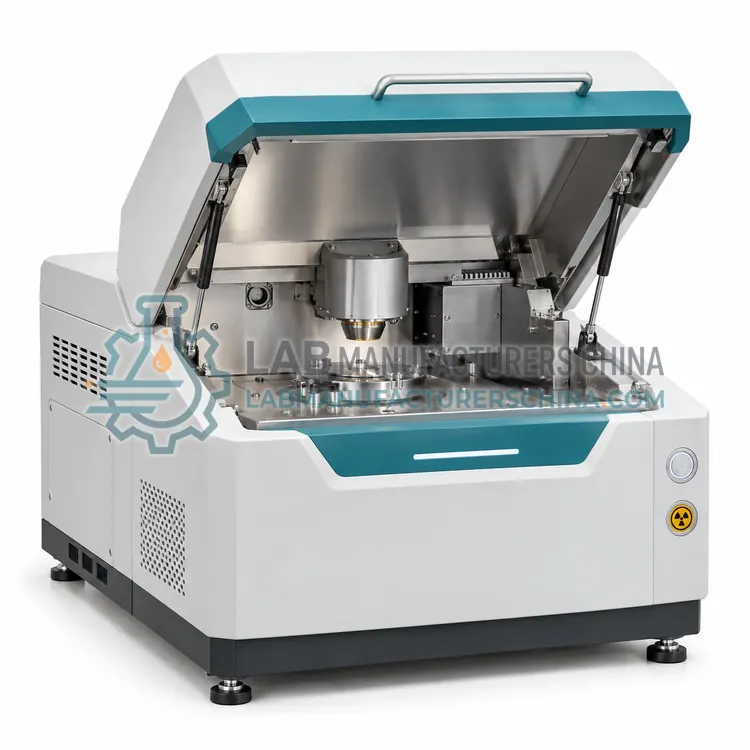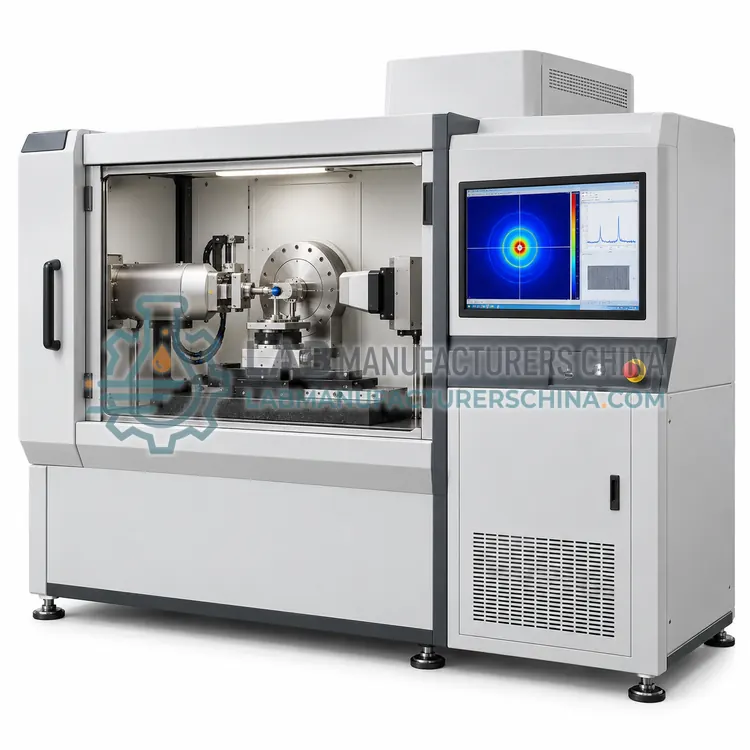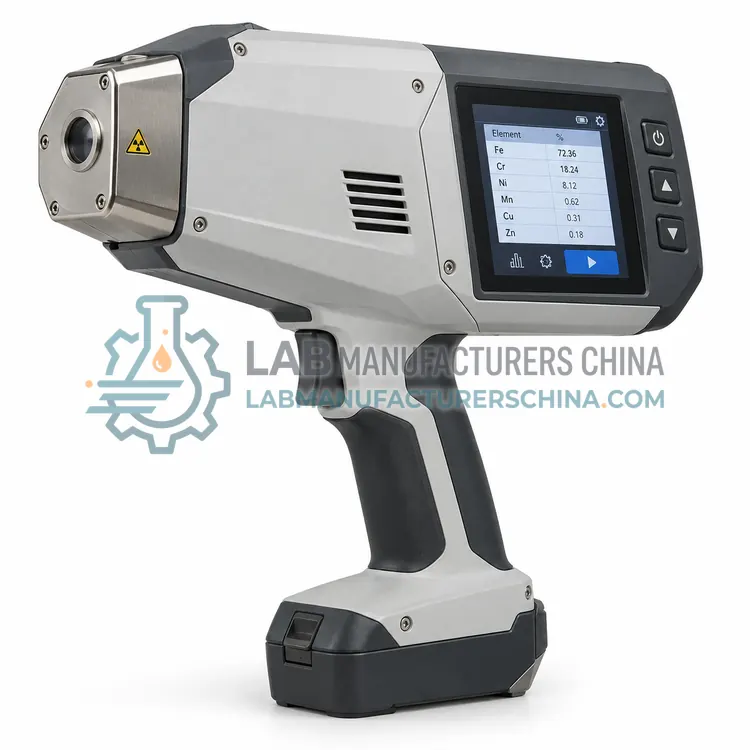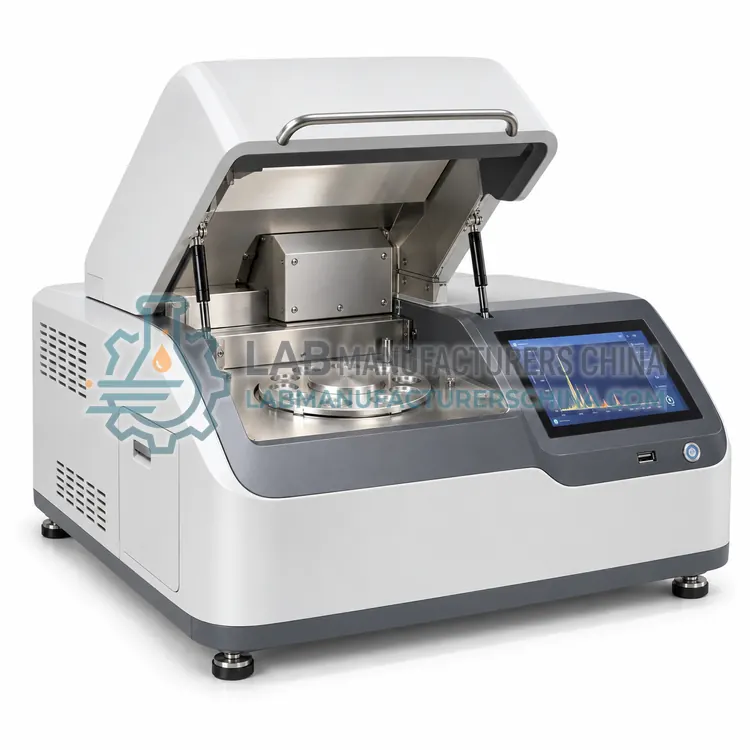
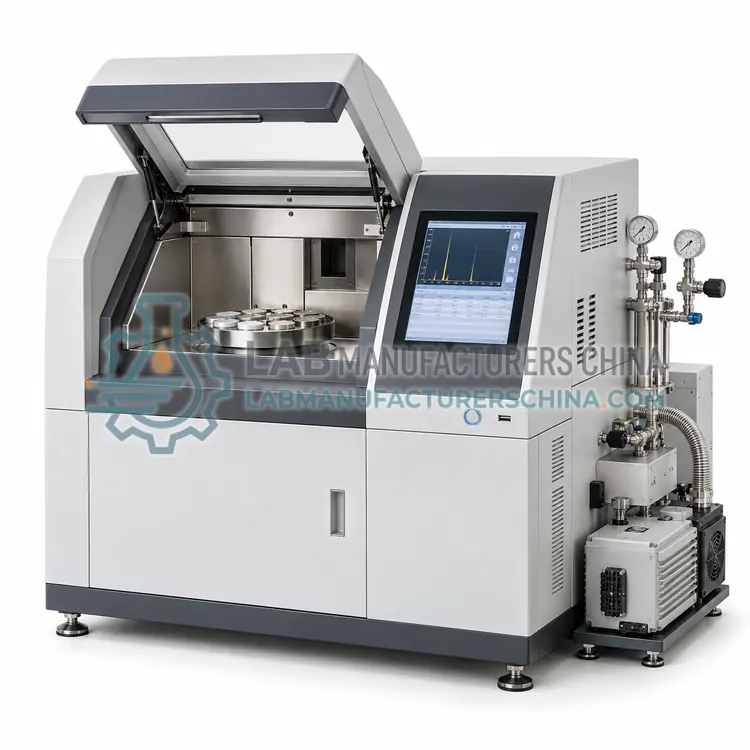
Benchtop XRF Spectrometer with Vacuum and Helium Purge
带真空和氦气吹扫的台式 XRF 光谱仪
- SKU BEX-0005
- Benchtop XRF
- CE (to be confirmed)
- Radiation safety enclosure (to be confirmed)
- ISO 9001 manufacturing (to be confirmed)
Price on request — FOB / CIF quoted per order
Prices depend on configuration, quantity and destination port.
Key specifications
| Element range | Na to U (with vacuum or helium) |
|---|---|
| Detection limit | 5–100 mg/kg for light elements |
| Atmospheres | air, vacuum, helium |
| Vacuum level | < 100 Pa typical |
| Helium flow | 0.5–2 L/min |
| Detector | silicon drift detector with thin window |
Request a quote Download brochure · to be provided
By Lab Manufacturers China Technical TeamLast reviewed Standards: ASTM E1621 Wavelength dispersive X-ray fluorescence, IEC 62321 Determination of restricted substances in electrotechnical products, ISO 3497 Metallic coatings — X-ray spectrometric thickness
What is the Benchtop XRF Spectrometer with Vacuum and Helium Purge?
This benchtop XRF spectrometer adds vacuum and helium purge for routine light-element measurement. It is chosen when sodium, magnesium and aluminum must be accurately quantified in rock, oxide minerals, glass, aluminum alloys or catalysts.
What is the Benchtop XRF Spectrometer with Vacuum and Helium Purge?
This benchtop XRF spectrometer adds vacuum and helium purge for routine light-element measurement. It is chosen when sodium, magnesium and aluminum must be accurately quantified in rock, oxide minerals, glass, aluminum alloys or catalysts.
Overview
Air strongly absorbs the low-energy X-rays emitted by light elements, so benchtop instruments without a purge path cannot measure them. This configuration provides both a vacuum chamber for solid and pressed samples and a helium purge for liquids, loose powders and samples that cannot be placed under vacuum. Helium is lighter than air and absorbs far less, so it extends the measurable element range toward sodium while allowing open sample cups. Switching between air, vacuum and helium modes is controlled by software, and each mode has its own calibration. The pump, seals, valves and gas supply require maintenance, and leaks degrade performance by allowing air into the path. The configuration suits laboratories analyzing minerals, glass, ceramics, aluminum alloys and catalysts where light elements are essential.
How does it work?
A modest-power X-ray tube excites the sample inside a shielded enclosure, and a detector measures the characteristic X-rays emitted by the elements present. Energy-dispersive benchtop models use a silicon drift detector and record the full spectrum simultaneously, which gives fast measurement and a compact design. Wavelength-dispersive benchtop models use analyzing crystals and give better resolution and lower detection limits at higher cost. Vacuum or helium purge extends the element range toward sodium, and filters or secondary targets reduce background. The result is processed with fundamental parameters or empirical calibrations matched to the sample matrix. Enclosed geometry and interlocks ensure that no measurable radiation escapes during normal operation, and sample changers allow unattended sequences.
What are the key features?
- Vacuum chamber for solid and pressed samples
- Helium purge for liquids and loose powders
- Software-switched measurement atmospheres
- Separate calibration per atmosphere
- Extends element range toward sodium
- Pump, seals and gas supply maintenance required
What are the technical specifications?
A typical benchtop xrf spectrometer with vacuum and helium purge configuration offers element range of Na to U (with vacuum or helium), detection limit of 5–100 mg/kg for light elements, atmospheres of air, vacuum, helium, vacuum level of < 100 Pa typical, helium flow of 0.5–2 L/min and detector of silicon drift detector with thin window. Values are indicative of the product class; the exact figures for each configuration are confirmed on the quotation and the calibration documents supplied with the instrument.
Which applications is it used for?
The Benchtop XRF Spectrometer with Vacuum and Helium Purge is used in mineral, rock and glass light-element analysis, aluminum alloy composition, catalyst and ceramic materials and liquid and slurry light-element screening. Across the wider Benchtop XRF class, laboratories also deploy it for alloy and incoming material verification, roHS and restricted substance screening and cement, glass and ceramic analysis.
Which standards and certifications apply?
Relevant standards and methods include ASTM E1621 Wavelength dispersive X-ray fluorescence, IEC 62321 Determination of restricted substances in electrotechnical products, ISO 3497 Metallic coatings — X-ray spectrometric thickness, ASTM D4294 Sulfur in petroleum products by EDXRF, IEC 61010-2-091 and ISO/IEC 17025. Certification candidates for this model are CE, Radiation safety enclosure and ISO 9001 manufacturing; each is to be confirmed for the specific configuration before shipment, and certificates are supplied only where they have been issued.
Enclosed benchtop instruments are radiation devices, so installation requires correct shielding, functional interlocks, radiation survey and operator training. Sample size and thickness must fit the enclosure and the analytical requirement, and powders are best pressed into pellets for reproducibility. Matrix-matched calibration is essential for accuracy, with drift monitored by check standards. Vacuum pumps, filters and X-ray tubes are consumable and wear items. Avoid measuring liquids in unsupported open cups, and use sample spinners or masks where the software recommends them. Keep service and calibration records, and dispose of tubes and detectors according to radiation regulations.
How do I select the right Benchtop XRF Spectrometer with Vacuum and Helium Purge?
Select this configuration when light elements from sodium upward must be measured routinely, and the sample set includes both solids and liquids or powders. Specify the elements, detection limits and sample forms. Confirm that vacuum and helium consumables, seals and pump service are supported locally.
How does it compare with other Benchtop XRF variants?
Select a benchtop XRF configuration by the element range, required detection limits and sample types. Energy-dispersive models are the most common and cost-effective for screening, alloy and material verification and multi-element quantification. Wavelength-dispersive benchtop models suit light elements and more precise analysis when space and budget allow. Add vacuum or helium purge for light elements, and choose application calibrations for RoHS, cement, polymers or catalysts. Micro-XRF versions add spatial resolution for small features and coatings. Consider sample size limits inside the enclosure, the number of sample positions, data export and regulatory methods. Confirm whether a special calibration or reference material set is needed before ordering.
Full specifications
| Element range | Na to U (with vacuum or helium) |
|---|---|
| Detection limit | 5–100 mg/kg for light elements |
| Atmospheres | air, vacuum, helium |
| Vacuum level | < 100 Pa typical |
| Helium flow | 0.5–2 L/min |
| Detector | silicon drift detector with thin window |
| X-ray tube power | 10–50 W |
| Measurement time | 60–300 s |
| Sample types | solids, pellets, liquids, powders |
| Interface | Ethernet / USB |
Indicative values for this product class. Final specifications are confirmed on the quotation and in the calibration documents supplied with the instrument.
Applications
- Mineral, rock and glass light-element analysis
- Aluminum alloy composition
- Catalyst and ceramic materials
- Liquid and slurry light-element screening
Key features
- Vacuum chamber for solid and pressed samples
- Helium purge for liquids and loose powders
- Software-switched measurement atmospheres
- Separate calibration per atmosphere
- Extends element range toward sodium
- Pump, seals and gas supply maintenance required
Frequently asked questions about Benchtop XRF Spectrometer with Vacuum and Helium Purge
Vacuum gives the lowest absorption and best light-element sensitivity for solid and pressed samples. Helium is slightly less effective because some helium remains in the path, but it allows liquids, loose powders and samples that cannot be exposed to vacuum. Many laboratories use both modes.
Vacuum performance is checked by the time needed to reach the operating pressure and by a pump-down test; slow evacuation indicates a leak or worn seal. Seals are inspected and replaced on schedule, and sample cups must seat correctly. Helium mode consumes gas continuously, so flow monitoring also indicates leaks.
No, vacuum is used only for solid, pressed or stable samples. Loose powders can be drawn into the pump, liquids evaporate and boil under vacuum, and some materials outgas and contaminate the chamber. Helium purge or air is used for these samples, with air suitable only for heavier elements.
The sample and primary beam are fully enclosed, and interlocks prevent operation with the lid open, so no measurable radiation escapes during normal use. Some instruments emit a small amount when the shutter opens briefly or when disabled for service. Radiation surveys and dosimetry are used where local rules require them.
Benchtop enclosures typically accept samples from a few millimetres up to about 100 to 300 millimetres across, depending on the model. Larger parts must be cut or measured with a portable analyzer. Powder cups, pressed pellets and thin films are the most common sample forms in benchtop systems.
Yes, liquids are measured in cups with thin film windows, and volatile or reactive liquids require special cups and venting. Light elements in liquids are difficult because of absorption and evaporation. Some matrices are better measured after digestion or as dried residues on a carrier.
Related models