How do Overhead Stirrers work?
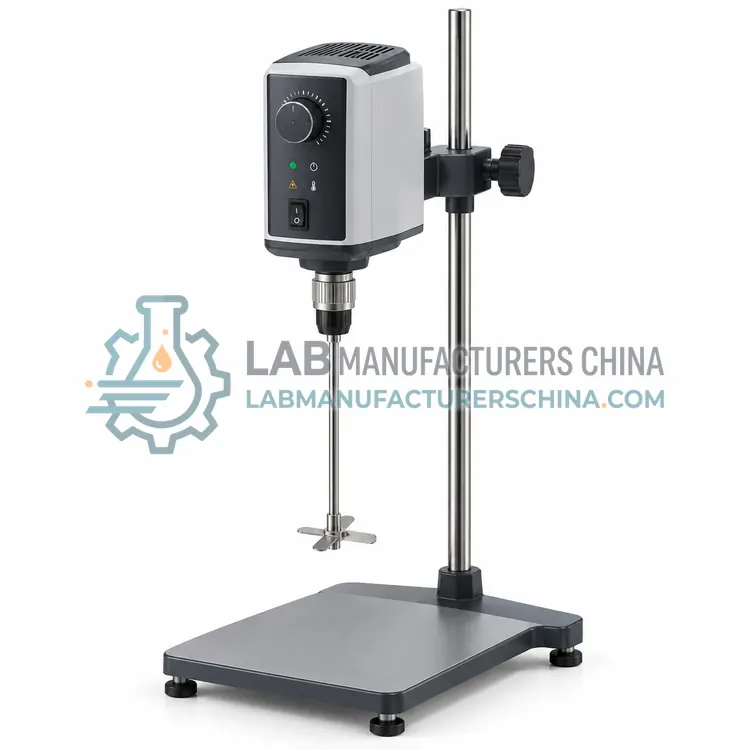
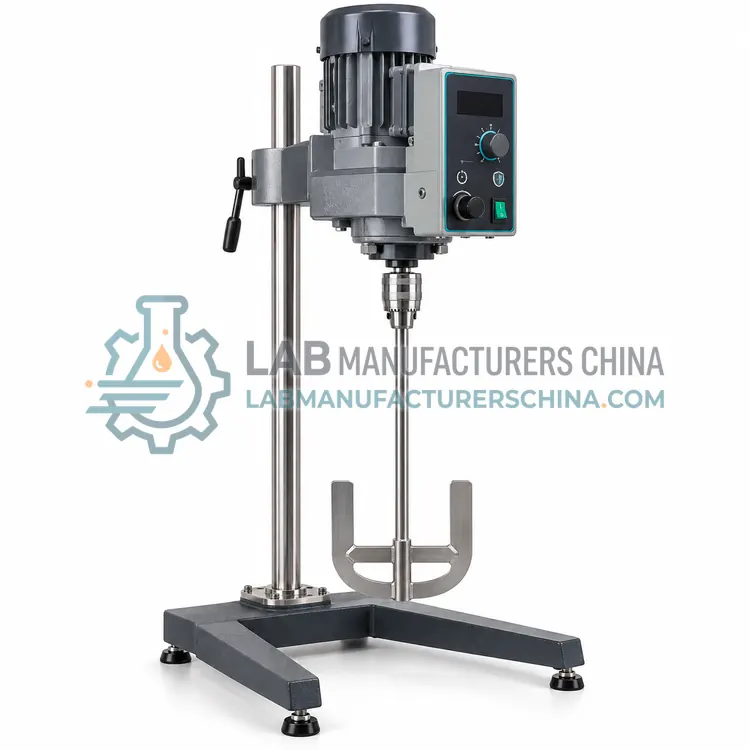
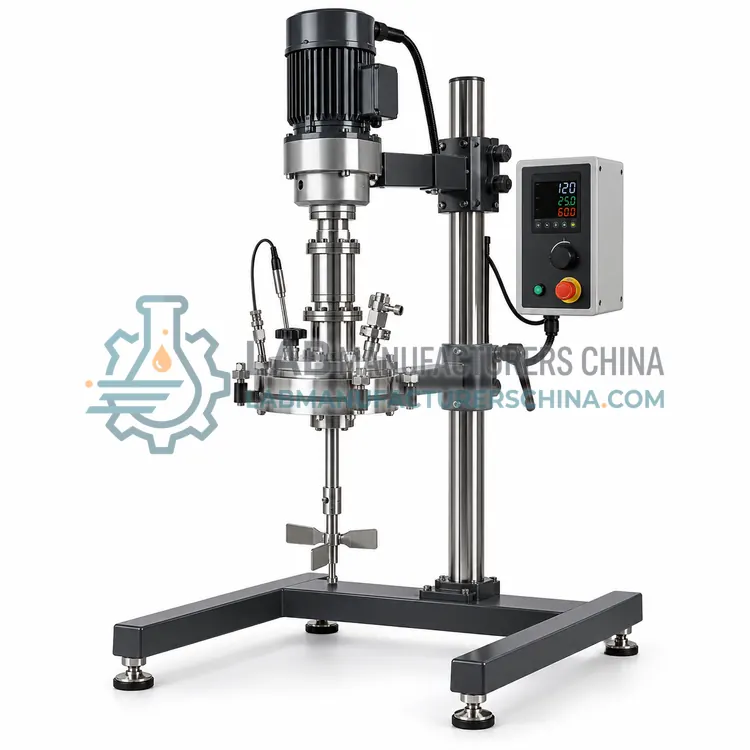
An overhead stirrer mounts on a laboratory stand or clamp above the vessel and transmits rotation through a chuck to a shaft with an impeller. The motor is usually brushless DC or brushed DC, sometimes with a planetary gearbox, and the controller regulates speed using a tachometer or Hall sensor. Because torque equals force times radius and power demand rises with viscosity, stirrer selection is based on torque (N·cm) and viscosity capacity rather than wattage. Many models measure motor current or use a torque sensor to show torque on the display, which helps monitor viscosity changes during reactions such as polymerization. Impeller geometry determines the flow pattern: propeller and pitched-blade impellers give axial flow, anchors and helical ribbons suit viscous media near the wall, and turbines or dissolver discs generate radial shear.
Which Overhead Stirrers variants are available?
- Low-Viscosity Overhead Stirrer — A low-viscosity overhead stirrer is a compact, light-duty unit with torque of roughly 20–60 N·cm and high speed range for mixing liquids up to about 5,000 mPa·s in volumes of a few liters.
- High-Torque Overhead Stirrer — A high-torque overhead stirrer delivers roughly 100–400 N·cm at low speed through a gearbox or high-power motor, allowing it to mix pastes, polymer melts and liquids above 50,000 mPa·s in volumes of up to about 100 L.
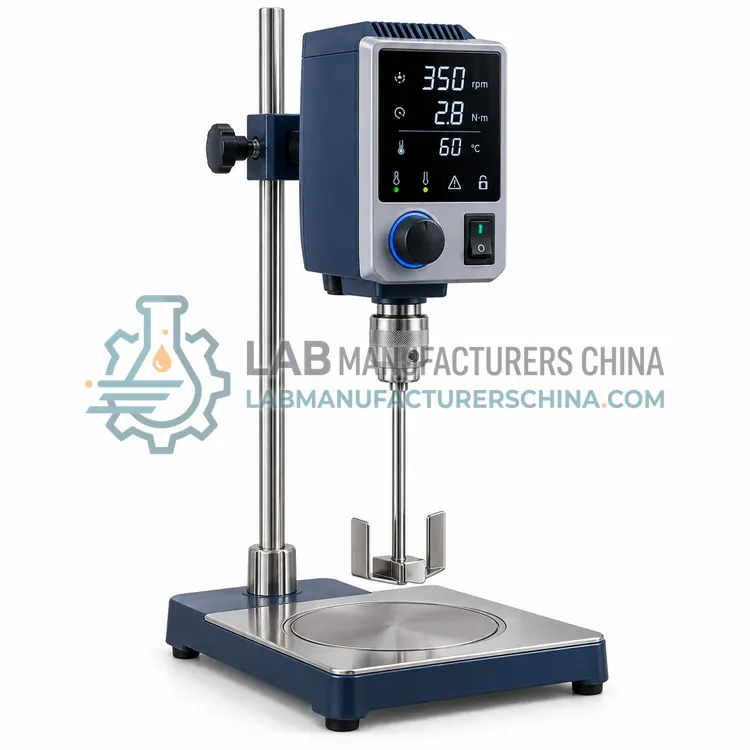
- Digital Overhead Stirrer with Torque Display — This overhead stirrer measures motor torque, shows it with speed and time on a digital display, and offers a PC interface for logging.
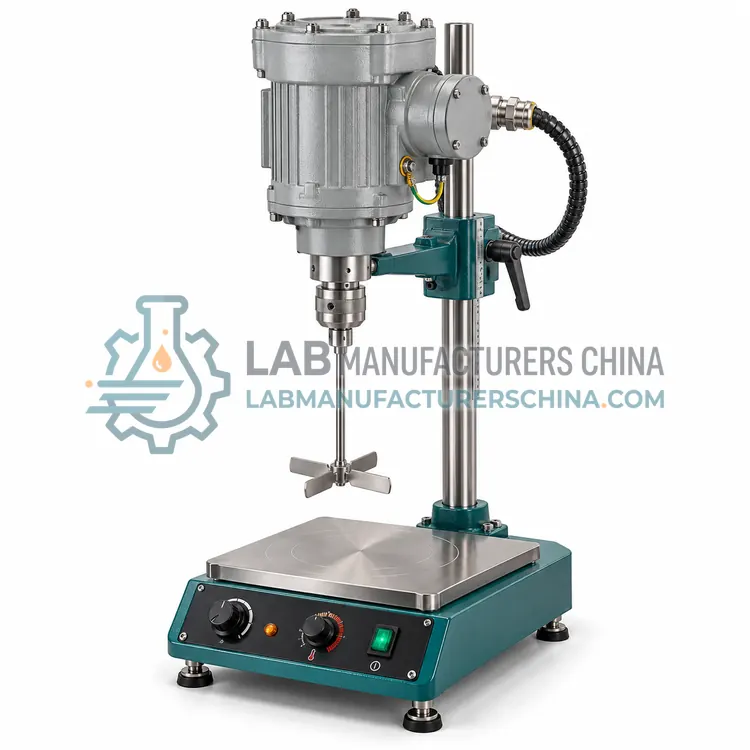
- Explosion-Proof Overhead Stirrer — An explosion-proof overhead stirrer uses a pneumatic motor or a certified flameproof electric drive so it can stir flammable solvents and reactions without creating an ignition source.
- Reactor Overhead Stirrer with Sealed Drive — A reactor overhead stirrer with sealed drive pairs a high-torque motor with a hollow shaft or magnetic coupling so it can agitate closed glass or steel reactors under vacuum, pressure or inert atmosphere without leakage along the shaft.
How do I choose the right variant?
The decisive parameter is maximum torque at the working speed, together with the viscosity and volume of the fluid. As a rule of thumb, small units of 20 to 60 N·cm cover up to a few liters of medium viscosity, while 100 to 400 N·cm models handle tens of liters or pastes above 50,000 mPa·s. Choose the speed range to suit the impeller: low-speed high-torque for anchor and ribbon, high-speed for dispersion. Check whether the unit measures torque and offers a data interface if process monitoring is needed. For flammable atmospheres or reactor jackets, consider air motors or explosion-protected drives. Also verify chuck capacity, compatibility with stand and clamp, shaft sealing options for reactors, and that the controller protects against overload. Include viscosity range, vessel diameter and target rpm in the inquiry.
Where are Overhead Stirrers used?
Overhead Stirrers are specified in polymer synthesis and resin mixing, coatings and adhesive formulation, pharmaceutical suspension and ointment preparation, reactor stirring in chemical synthesis and cosmetic emulsion and cream development.
Which standards and certifications apply?
Work with Overhead Stirrers is commonly governed by IEC 61010-1, IEC 61326-1, GB 4793.1, ASTM D2196, ISO 2555 and ISO 9001. Instrument certifications such as CE marking are confirmed per configuration and never assumed.
What are the key considerations before purchase?
Mount the stirrer on a rigid stand so the shaft runs concentric with the vessel, and clamp the vessel independently. Always increase speed gradually and use a stirring guard or splash shield. Inspect shafts for bending and wear of the chuck, since imbalance causes vibration and shaft whip. Keep the motor housing away from solvent vapors unless it is approved for the environment. Clean impellers promptly so dried residue does not cross-contaminate. Verify speed and, if fitted, the torque display at intervals using a reference tachometer or torque gauge. Confirm electrical safety to IEC 61010-1 and ensure that the emergency stop or overload cutoff operates correctly.