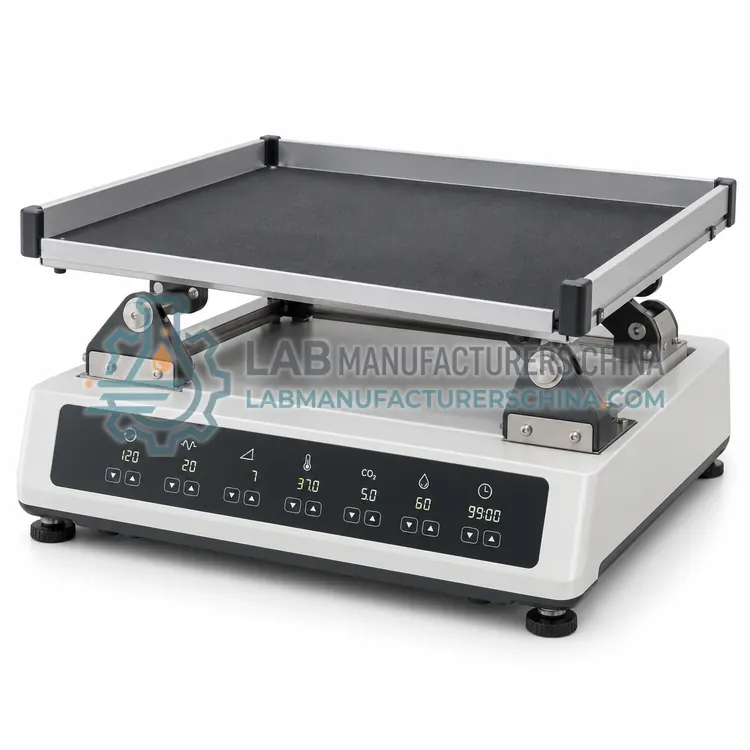
How do Rocking Shakers work?
A rocking shaker pivots the platform about a central axis, so one end rises while the other falls, and the motion reverses each cycle. The drive is a motor turning a cam or crank that lifts the platform on alternating sides, and the tilt angle, usually 3 to 15 degrees, sets how far liquid flows each way. Because the movement is slow and symmetrical, shear is low and liquid spreads evenly over membranes, gels and slides without foaming or splashing. Speed is set in tilts per minute, from about 5 to 80, and rubber mats or dimpled platforms keep items from sliding. The gentle action suits fragile membranes and antibody incubations, and the open platform allows trays, gel frames and boxes to be placed directly. Timers and, on some models, programmable tilt and speed improve reproducibility.
Which Rocking Shakers variants are available?
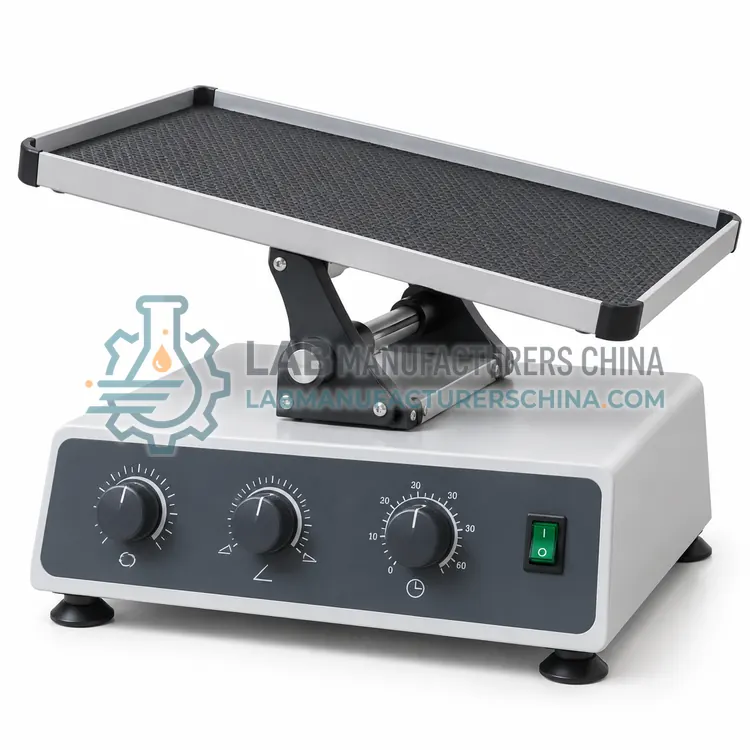
- See-Saw Rocking Shaker — A see-saw rocking shaker uses a simple central pivot to tilt a platform evenly at a fixed angle.
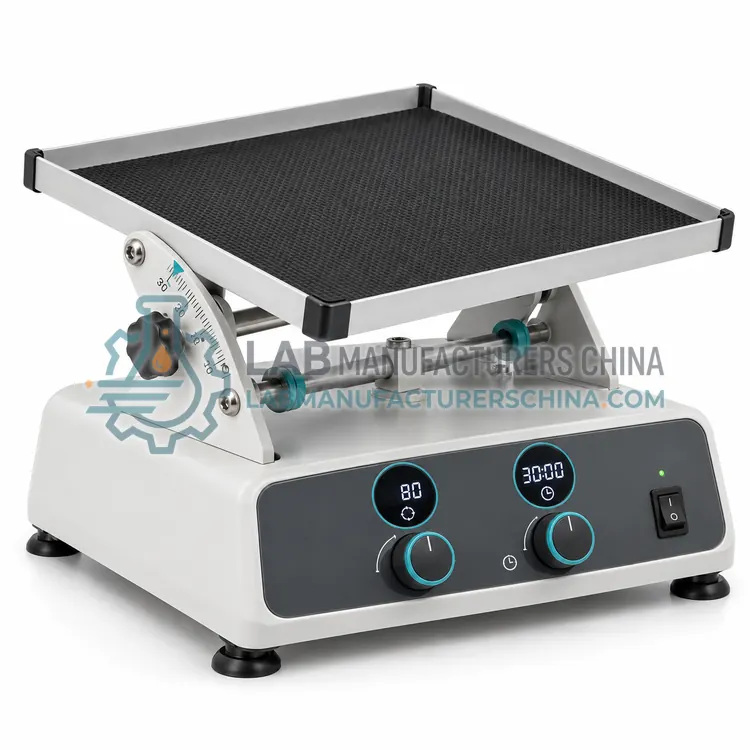
- Adjustable-Tilt Rocking Shaker — An adjustable-tilt rocking shaker lets the user change the tilt angle to suit different tasks.
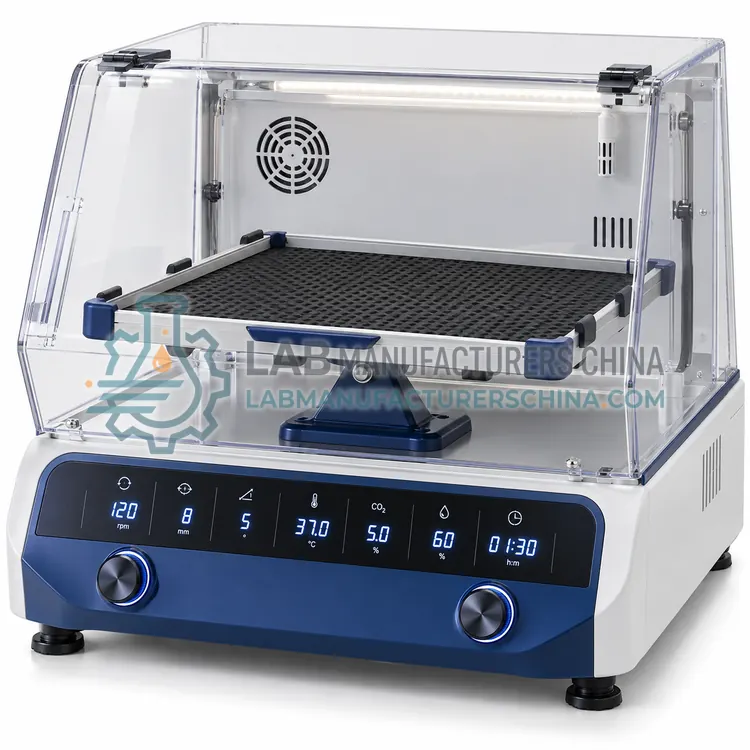
- Digital Rocking Shaker — A digital rocking shaker sets and holds tilt and speed precisely with a microprocessor controller.
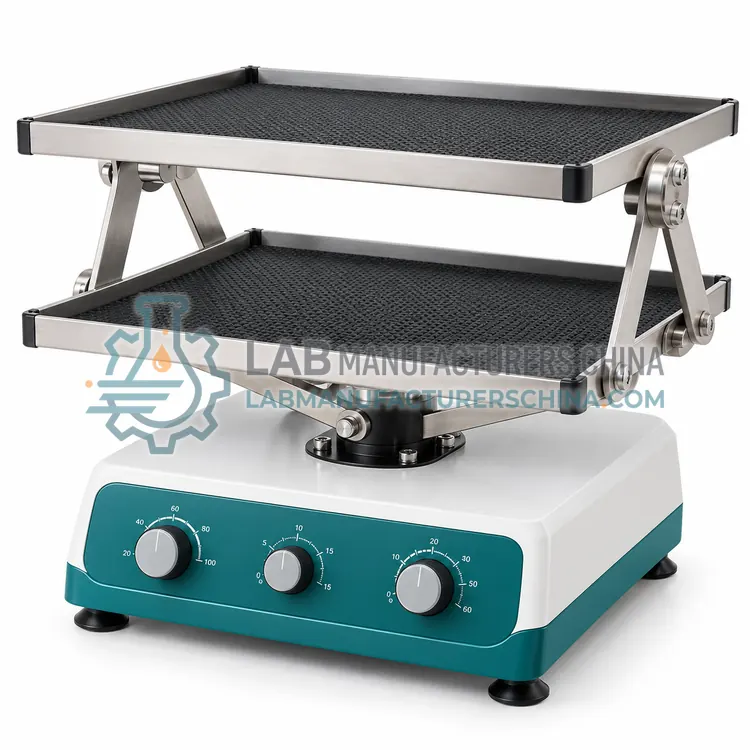
- Dual-Platform Rocking Shaker — A dual-platform rocking shaker carries two independent tilting platforms in one housing.
- Large-Platform Rocking Shaker — A large-platform rocking shaker provides a wide tilting surface for big trays, multiple blots and bulk staining.
How do I choose the right variant?
Choose a rocking shaker when gentle, low-shear movement is needed, as for gel staining, membrane washing, blotting and antibody incubation, where orbital or reciprocal motion could damage the substrate or cause foaming. Set the tilt angle from the task, using 3 to 8 degrees for membranes and slides and 8 to 15 degrees for mixing larger volumes. Match the platform size and mat to the trays, frames or boxes you will place on it, and confirm the load rating. Decide whether a fixed or adjustable tilt is needed, and whether a timer, digital control or dual platform improves your workflow. Confirm that the unit suits the temperature, such as a cold room, where it will be used.
Where are Rocking Shakers used?
Rocking Shakers are specified in gel staining and destaining, western and Southern blotting, antibody and probe incubation, membrane washing, blood and plasma mixing and gentle sample agitation.
Which standards and certifications apply?
Work with Rocking Shakers is commonly governed by IEC 61010-1, IEC 61010-2-051 and ISO 9001. Instrument certifications such as CE marking are confirmed per configuration and never assumed.
What are the key considerations before purchase?
Place the unit on a level, stable surface with clearance for the tilting platform, and use the rubber mat or clips so membranes, gels and boxes do not slide. Load items evenly around the axis so the drive is not strained, and stay within the load rating. For blotting and antibody work, use enough solution to keep the membrane wet but not so much that it floats off. Clean spills promptly and rinse trays to prevent residue that could contaminate later experiments. Check the pivot, cam and belt for wear on schedule, and confirm that the materials suit the solutions and temperatures used, especially in cold rooms.